

P0507 on 2003-2011 Saab 9-3: Causes and Fixes for High Engine Idle
On a 2003-2011 Saab 9-3, code P0507 is most often caused by a vacuum leak from brittle plastic hoses or a dirty electronic throttle body. The most likely fix is replacing a cracked vacuum line or cleaning the throttle body, which are both budget-friendly DIY jobs. A smoke test is the most effective way to confirm a vacuum leak.
- P0507 on your Saab 9-3 means the idle is too high, almost always due to unmetered air from a vacuum leak or a dirty throttle body.
- Before buying any parts, perform a thorough inspection (preferably a smoke test) of all vacuum hoses, especially the brittle plastic ones.
- Cleaning the electronic throttle body is a simple, low-cost procedure that frequently solves this code. Always use a new gasket.
- This vehicle does not have a separate IAC valve; idle is managed by the main throttle body.
- If you replace a vacuum line, consider using a more durable silicone replacement to prevent future failures.
What's Unique About the 2003-2011 Saab 9-3
The Saab 9-3 of this era (the '9440' platform) is particularly known for its hard plastic vacuum lines becoming brittle and cracking over time due to engine heat cycles. This makes vacuum leaks a very high-probability cause for P0507 compared to other vehicles. The issue is common on both the 2.0T 4-cylinder (B207) and the 2.8T V6 (B284) engines, though the specific hose locations may differ. Because idle is controlled by the electronic throttle body, a simple cleaning of the throttle plate and bore often resolves issues caused by carbon buildup that prevents the throttle plate from closing completely.
Symptoms You May Notice
- Check Engine Light is illuminated.
- Engine idle is consistently high (e.g., 1000-2000 RPM).
- Idle speed fluctuates or surges up and down, especially when warm.
- Engine may feel rough or vibrate more than usual when stopped.
- Hissing sound from the engine bay, indicating a vacuum leak.
- Harsh engagement of gears on automatic transmissions.
- Replacing the throttle body assembly when only a cleaning is needed.
- Searching for a separate Idle Air Control (IAC) valve, which this vehicle does not have.
- Replacing oxygen sensors, which are unlikely to be the root cause of this specific code.
Most Likely Causes
- Vacuum Leak from Brittle Hoses 🔴 High Probability The factory-installed hard plastic vacuum lines are notorious for cracking after years of exposure to engine heat. The line running from the intake manifold to the brake booster vacuum pump is a frequent culprit on the 2.0T. On the 2.8T V6, lines near the firewall are especially prone to failure.
How to confirm: Perform a smoke test on the intake system; smoke will emerge from any cracks or loose connections. Alternatively, with the engine running, carefully spray brake cleaner or a propane torch (unlit) near suspected hoses; a change in idle RPM indicates a leak has been found. A visual inspection may also reveal obvious cracks.
Typical fix: Replace the cracked vacuum line assembly. Many owners opt for more durable silicone hose kits as an upgrade. There are excellent DIY video guides available.
Est. part cost: $30-$80 for OEM plastic, $40-$100 for a silicone hose kit. - Dirty Throttle Body 🔴 High Probability → Shop Fuel Injection Throttle Body Over time, carbon and oil residue from the PCV system can build up around the throttle plate and bore. This prevents the plate from closing completely at idle, allowing excess air to leak past it, which the ECU cannot control.
How to confirm: Remove the intake hose connected to the throttle body and visually inspect the throttle plate and bore for a black, sticky film of carbon. The side facing the intake manifold is often the dirtiest.
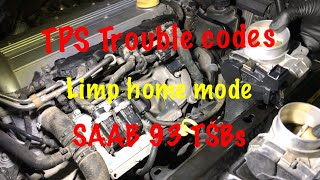
Typical fix: Remove the throttle body, clean it thoroughly with a dedicated throttle body cleaner and a soft cloth/brush, and reinstall with a new gasket. Do not spray cleaner directly into the electronics. 🎬 Watch: Troubleshooting the throttle body and TPS sensor on a 9-3. A YouTube video by 'MV 411' details this process on a 9-3 2.0t.
Est. part cost: $5-$15 for cleaner and a new gasket. - Faulty Positive Crankcase Ventilation (PCV) System 🟡 Medium Probability The rubber and plastic components of the PCV system degrade with heat and age. A common failure is the crankcase breather hose running from the cam cover to the turbo inlet pipe on the B207 engine.
How to confirm: Inspect the PCV valve and associated hoses for cracks, blockages, or mushiness. A stuck-open PCV valve will act as a significant vacuum leak. On the B207, check the breather hose for splits and also inspect the O-ring on the spigot that connects to the turbo inlet, as it is known to fail and cause an air leak.
Typical fix: Replace the faulty PCV valve and/or hoses. Upgraded silicone breather hoses are available.
Est. part cost: $20-$60
Rare But Worth Checking
- Leaking Brake Booster Vacuum Pump or Hoses: → Shop Power Brake Booster The vacuum pump on the 2.0T engine is known to leak oil, but a failure of its gaskets or the hoses connected to it can also introduce a vacuum leak, causing a P0507 code. If the pump runs continuously or you hear a hissing near the brake fluid reservoir, investigate this system.
- Stuck-Open EVAP Purge Valve: → Shop Vapor Canister The EVAP (Evaporative Emission) purge valve can sometimes get stuck open, creating a constant vacuum leak from the fuel tank vapor system into the intake manifold. This can be tested by unplugging the vacuum line to the valve and temporarily capping it to see if the idle returns to normal.
- Faulty Neutral Safety Switch (Manual Transmission): On manual transmission cars, a faulty neutral safety switch can fail to signal to the ECU that the car is in gear. When coasting to a stop, the ECU may think the car is in neutral and attempt to control the idle speed, but be unable to, triggering a P0507.
Diagnosis Steps
- Read the code with an OBD-II scanner to confirm P0507 is present and note any other codes.
- With the engine running, listen for hissing sounds around the engine bay that could indicate a vacuum leak.
- Perform a thorough visual inspection of all vacuum lines, especially the hard plastic lines on the 2.0T and 2.8T engines. Pay close attention to the line running to the brake vacuum pump and the lines at the rear of the engine bay near the firewall.
- For a definitive leak test, use a smoke machine to pressurize the intake system and watch for smoke escaping from cracked hoses or gaskets. This is the most reliable method.
- If no vacuum leaks are found, remove the intake ducting from the throttle body and inspect it for carbon buildup.
- If dirty, remove the throttle body, clean it carefully using throttle body cleaner and a soft cloth, and replace the gasket upon reinstallation.
- Inspect the PCV valve and its hoses for damage or blockages, paying special attention to the crankcase breather hose on the B207 engine.
- After performing repairs, clear the code with the scanner. It may be necessary to perform an 'Idle Relearn Procedure' which typically involves letting the car idle for 5-10 minutes from a cold start for the ECU to adapt to the cleaned/repaired components.
- Perform a test drive to see if the code returns.
Parts You'll Likely Need
- Vacuum Hose / Line Assembly
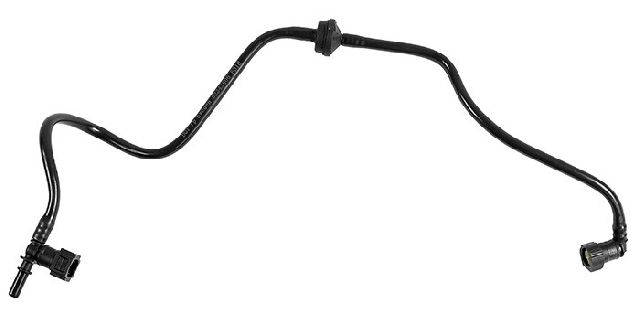
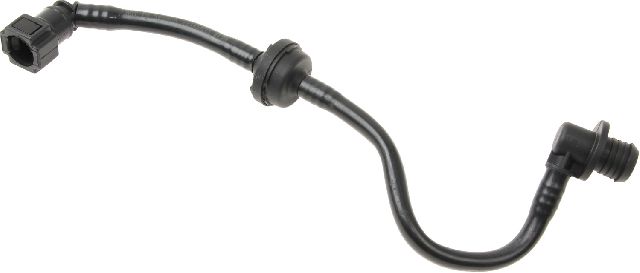
(OEM #12789106 (2.0T Brake Booster Hose, 03-06))— This is the most common failure point leading to a vacuum leak that causes P0507 on this platform.
Trusted brands: Saab Genuine, Proparts Sweden, do88 (Silicone Upgrade)
OEM price range: $60-$90
Aftermarket price range: $30-$60 - Throttle Body Gasket
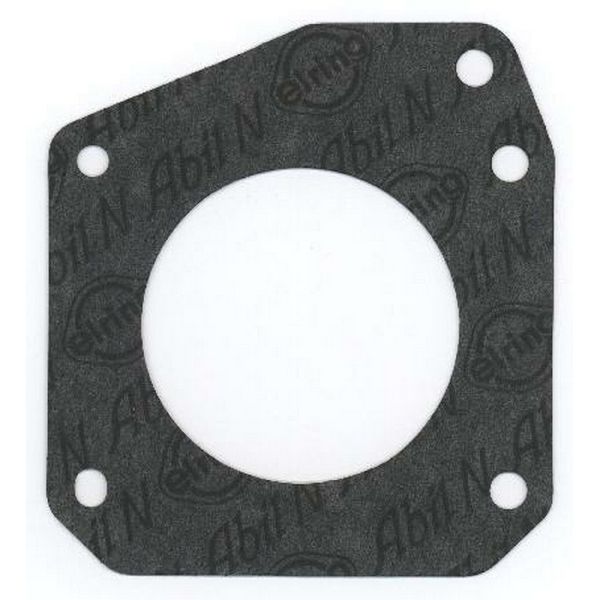
(OEM #90537718 or 32022290 (2.0T B207) / Fel-Pro 61520 (2.8T B284))— Must be replaced whenever the throttle body is removed for cleaning to prevent a new vacuum leak.
Trusted brands: Saab Genuine (Orio), Victor Reinz, Elring, Fel-Pro
OEM price range: $10-$20
Aftermarket price range: $5-$10
Technical Service Bulletins (TSBs) & Recalls
- No specific Technical Service Bulletins (TSBs) directly addressing the P0507 code were found. Diagnosis relies on standard workshop procedures for vacuum leaks and throttle body issues.
Platform-Specific Known Issues
- The hard plastic vacuum line that runs from the intake manifold, under the ignition coil module, and to the brake vacuum pump is a well-documented failure point that causes vacuum leaks and high idle on the 2.0T B207 engine.
- On the 2.8T V6 (B284), the vacuum lines located at the rear of the engine against the firewall are exposed to extreme heat and are very prone to becoming brittle and cracking, causing difficult-to-find vacuum leaks.
- The O-ring for the PCV breather hose spigot on the turbo inlet pipe of the B207 engine can harden and split, creating a small but persistent unmetered air leak.
Mechanic-Grade Diagnostic Values
- Throttle Position Sensor (TPS) Voltage at Idle — expected: Less than 0.7V with key on, engine off, and throttle closed.. Failure: A voltage significantly higher than 0.7V at idle indicates the throttle plate is not fully closed or the sensor is faulty, which can cause a high idle.
- Throttle Position Sensor (TPS) Voltage at Wide Open Throttle (WOT) — expected: Approximately 4.5V. Failure: Voltage that does not smoothly increase from idle to WOT, or does not reach the expected WOT voltage, indicates a faulty sensor.
Hidden / Shadow Codes Worth Checking
- P1230, P1231, P1251, P1261: These are Saab-specific codes related to the throttle valve position, sensor signals, and control motor. While not direct sub-codes of P0507, they often accompany it or point more directly to a failing electronic throttle body, which a generic OBD-II scanner might miss. A Tech 2 scanner will read these manufacturer-specific codes. (see via Saab Tech 2 diagnostic tool.)
Scan Tool Commands That Help
- Saab Tech 2: Read Vehicle DTCs — Use this to read all module codes, not just generic OBD-II engine codes. The Tech 2 can pull specific codes from the throttle body, transmission, and other modules that provide more diagnostic clarity than P0507 alone.
- Saab Tech 2: Throttle Body Calibration / Relearn — After cleaning or replacing the throttle body, the ECU's learned adaptations should be reset. While the car can relearn over time, forcing a recalibration with a Tech 2 ensures the throttle plate's home position is learned correctly and immediately, which can resolve a persistent high idle.
- Saab Tech 2: Idle Speed Control - Data Display — To monitor the 'requested idling speed' vs. the 'actual engine RPM' in real-time. If the ECU is requesting a low idle (e.g., 750 RPM) but the engine is running at 1100 RPM, it confirms unmetered air is the problem.
Wiring & Ground Locations
- G2 — On the side of the left-hand structural member/wheel housing, near the battery and connector bracket.. This is a primary chassis ground point for the engine bay. A corroded or loose connection here can cause erratic behavior in various electronic components, including the ECU and throttle body, potentially leading to incorrect sensor readings or control.
- G25 — A large ground cable from the battery goes directly to the gearbox/left-hand engine mounting.. This is the main engine/drivetrain ground. Poor connection here can affect all engine sensors that ground through the block, including the crankshaft position sensor, which provides the RPM signal. An unstable RPM signal could theoretically confuse the idle control logic.
- G7 — On the side of the intake manifold.. This is a critical ground point for multiple engine sensors. A compromised G7 ground could directly impact the signals the Trionic ECU relies on for fuel and air calculations, potentially contributing to idle control issues.
- Trionic 8 ECU Connector A — The main connector on the Engine Control Unit.. For bench testing or advanced diagnostics, specific pins are used: Pin 63 is ground, Pins 2 & 3 are battery voltage, and Pins 5 & 6 are for CAN communication. This is essential for ruling out a faulty ECU.
"I Checked Everything" — The Actual Cause
- An internal failure of the brake booster can create a vacuum leak that a smoke test on the intake manifold will not detect. The booster's diaphragm can rupture, allowing unmetered air to be drawn into the intake manifold through the booster's vacuum hose. Symptoms include a high, firm brake pedal and a persistent high idle (P0507) that isn't resolved by fixing other visible vacuum leaks.
OEM Part Supersession History
90537718→32022290— Standard part revision by the manufacturer (Orio, the official supplier of Saab Genuine parts).
Heads up: The parts are fully interchangeable for the B207 engine.
Model Year Variations Within This Range
- 2007-2011: In 2007, Saab changed the electronic throttle body connector from an 8-pin to a 6-pin design for the B207 engine. Two redundant sensor ground wires (pins 2 and 8 on the old connector) were eliminated. When replacing a throttle body, it is critical to match the connector type to the vehicle's model year. A 6-pin throttle body will not work on a car wired for 8-pins, and vice-versa, without harness modification.
- 2003: The 2003 model year (and earlier 9-3/9-5s) were part of the era where Saab had an insufficient PCV system design that could lead to oil sludge. While the 2003+ 9-3 (9440 platform) has a redesigned engine, very early production models might still be susceptible to PCV issues that could manifest as pressure problems or leaks, contributing to a P0507. Later models (2004+) have a more robust, redesigned system from the factory.
Diagnostic Flowchart
Used vs. New Parts: Buying Guide for This Vehicle
When a used part is the smart pick: A used electronic throttle body from a reputable Saab recycler (like Goldwing Saab) can be a cost-effective option, especially if sourced from a documented low-mileage vehicle. Given that a new OEM throttle body is expensive, a used part is a reasonable gamble before purchasing new.
Donor-vehicle mileage cap: roughly under 80000 miles for the part to have meaningful remaining life.
What to inspect on the donor part:
- Verify the connector type (6-pin vs. 8-pin) matches your vehicle's model year.
- Inspect the throttle plate for excessive carbon buildup or scoring.
- Ask the seller if the donor car had any throttle-related fault codes.
- Ensure there is no physical damage to the connector or housing.
OEM-only on this vehicle (don't cheap out):
- While not strictly 'OEM-only', using cheap, unbranded electronic throttle bodies from online marketplaces is highly discouraged. Stick with a used OEM (Bosch/Saab) part or a new part from a trusted brand.
Aftermarket brands forum-validated for this vehicle:
- do88 (For silicone vacuum hose upgrades)
- Proparts Sweden (For OEM-quality replacement vacuum hoses)
- Victor Reinz, Elring, Fel-Pro (For gaskets)
Brands owners have reported issues with on this vehicle:
- Unbranded, 'no-name' vacuum hose kits and electronic throttle bodies from platforms like eBay or Amazon often use inferior materials that will fail prematurely.
Real Owner Stories
Aggregated from forums and TSBs cited above. Mileages and costs reflect what owners reported in those sources.
2004 Saab 9-3
Symptoms: Code P0507 appeared without a check engine light, idle was too high, and the engine would sometimes stall at stops. The issue was intermittent.
What fixed it: The owner did not report a final fix after cleaning the idle air control valve, swapping the throttle position sensor, and checking for vacuum leaks.
Source hint: SaabCentral Forums thread titled 'Idle all over and dying at stops'
2006 9-3 Aero 2.8T Sportcombi Wagon
Symptoms: High idle caused by vacuum leaks from brittle hoses located at the back of the engine.
What fixed it: The source describes this as a common issue that requires replacing the failed hoses, but does not detail a specific owner's repair event.
Source hint: Reddit r/saab: '06 9-3 Aero 2.8T Sportcombi Wagon - talk me out of buying one as a daily'
Related OBD-II Codes
Frequently Asked Questions
What is the most common cause of a P0507 code on my 2.0T Saab 9-3?
I have a 2.8T V6 model. Are there specific vacuum lines I should check first?
Is it better to replace the cracked vacuum hoses with OEM parts or is there an upgrade?
Are there any other hidden leak spots on the 2.0T engine besides the main hoses?
How can I definitively confirm I have a vacuum leak?
I cleaned the throttle body and replaced a hose, but the idle is still high. What did I miss?
Is there an official Saab Technical Service Bulletin (TSB) for code P0507?
Helpful Videos
We Have This Part in Stock




The information in this article is provided for general reference and educational purposes only. Vehicle specifications, procedures, and part compatibility can vary by production date, trim level, and region. Always consult your vehicle's factory service manual and verify part numbers before purchasing or performing repairs. Safety-critical components such as airbags, seat belts, and braking systems should be installed by a qualified professional.
- Saab 9-3:
- 🧭 Diagnostic Flowchart
- 🎬 Helpful Videos
- 🛍️ Shop This Part
- What's Unique About the 2003-2011 Saab 9-3
- Symptoms You May Notice
- Most Likely Causes
- Rare But Worth Checking
- Diagnosis Steps
- Parts You'll Likely Need
- Technical Service Bulletins (TSBs) & Recalls
- Platform-Specific Known Issues
- Mechanic-Grade Diagnostic Values
- Hidden / Shadow Codes Worth Checking
- Scan Tool Commands That Help
- Wiring & Ground Locations
- "I Checked Everything" — The Actual Cause
- OEM Part Supersession History
- Model Year Variations Within This Range
- Used vs. New Parts: Buying Guide for This Vehicle
- Real Owner Stories
- 2004 Saab 9-3
- 2006 9-3 Aero 2.8T Sportcombi Wagon
- Related OBD-II Codes
- Frequently Asked Questions
- 🎟️ Get 5% Off