

P0507 on 2011-2018 Volvo S60: High Idle Causes and PCV System Fixes
On a 2011-2018 Volvo S60 with a 5-cylinder turbo, code P0507 is almost always caused by a torn diaphragm in the PCV oil trap system. This creates a significant vacuum leak, resulting in a high, unstable idle (often 1200-1500 RPM) and frequently a loud whistling or squealing noise. Replacing the PCV oil trap assembly is the most common and reliable fix, with parts costing around $150-$300.
- P0507 on your S60 almost certainly means you have a vacuum leak.
- The most likely cause by far is a torn PCV oil trap diaphragm, a very common failure on this engine.
- Listen for a loud whistle or squeal at idle. If you hear one, and it stops when you remove the oil cap, the PCV diaphragm is your problem.
- If there's no noise, the next steps are to check for other vacuum leaks (a smoke test is best) and clean the electronic throttle body.
- Always replace the throttle body gasket if you remove it for cleaning to prevent new leaks.
What's Unique About the 2011-2018 Volvo S60
The 5-cylinder turbocharged engines (like the B5254T5 and B5254T12) used in this generation of S60 have a well-documented weakness in their Positive Crankcase Ventilation (PCV) system, also called the oil trap or breather box. The rubber diaphragm inside this unit is notoriously prone to tearing with age and heat cycles. This single component failure is, by a wide margin, the most common cause of a P0507 code on this specific vehicle, often making diagnosis surprisingly straightforward. The failure is so common that Volvo issued a Technical Journal (TJ 25836) for a similar issue on earlier models, highlighting the known weakness of the PCV diaphragm design.
Symptoms You May Notice
- Check Engine Light is on
- Engine idle speed is higher than normal (e.g., 1200-1500 RPM)
- Erratic or surging idle speed, sometimes causing the car to jerk when stopped in gear.
- A loud whistling, squealing, or howling noise from the engine bay at idle.
- Vehicle feels like it's pushing against the brakes when stopped in gear.
- Increased fuel consumption
- Shuddering when shutting the engine off.
- Replacing the throttle body assembly when it only needs cleaning.
- Replacing other sensors like the MAF sensor before confirming the primary cause, which is almost always a vacuum leak from the PCV system.
- Assuming a clean smoke test rules out all leaks; some internal leaks or the PCV diaphragm failure may not show up clearly.
Most Likely Causes
- Failed PCV Oil Trap / Breather Box Diaphragm 🔴 High Probability The rubber diaphragm in the PCV assembly is a known weak point on this engine platform, frequently tearing over time and creating a significant vacuum leak. This is the most common cause of P0507.
How to confirm: With the engine running and making the whistling noise, carefully remove the oil filler cap or the engine oil dipstick. If the noise immediately stops and a strong vacuum is felt, the PCV diaphragm is torn. Another test is to place a rubber glove over the oil filler opening; if it gets sucked inward, the diaphragm has failed.
Typical fix: Replace the entire PCV oil trap assembly. While cheaper aftermarket diaphragm-only kits exist, the plastic housing can become brittle and break during removal, and the internal passages of the box can become clogged. Replacing the whole unit is the most robust repair.
Est. part cost: $150-$300 for a full assembly, $25-$50 for a diaphragm-only kit. - Dirty Electronic Throttle Body 🟡 Medium Probability → Shop Fuel Injection Throttle Body Oil vapor from the PCV system can build up as carbon deposits around the throttle plate, preventing it from closing completely and allowing excess air to enter.
How to confirm: Remove the intake piping connected to the throttle body and visually inspect the throttle plate and bore for a thick ring of black carbon buildup.
Typical fix: Clean the throttle body bore and plate using a dedicated throttle body cleaner and a soft brush or rag. Do not use carb cleaner. Replace the throttle body gasket upon reinstallation to prevent a new leak.
Est. part cost: $10-$20 for cleaner and a new gasket. - Other Vacuum Leaks ⚪ Low Probability While less common than the PCV failure, other rubber hoses and gaskets can crack with age. The brake booster vacuum line is a potential culprit.
How to confirm: Perform a smoke test on the intake system. This involves feeding pressurized smoke into the intake and watching for where it escapes. Pay close attention to the brake booster vacuum line and intake manifold gaskets.
Typical fix: Replace the specific hose or gasket that is found to be leaking.
Est. part cost: $10-$100
Rare But Worth Checking
- Stuck Open EVAP Purge Valve: → Shop Vapor Canister An EVAP purge valve that is stuck open can create a vacuum leak. This is less common but worth checking if the main causes have been ruled out. One owner on a forum replaced this part, but it did not solve their P0507 issue, indicating it's not a primary cause.
- Internal Air Intake Resonator Leak: → Shop Engine Air Intake Resonator In a documented case on a related Volvo platform, a persistent P0507 code was caused by a torn internal valve/screen inside the air intake resonator where the PCV hose connects. This type of leak may not be found with a standard smoke test.
Diagnosis Steps
- Confirm the Check Engine Light is on and scan for codes. Note if P0171 or other codes are present with P0507.
- With the engine running, listen for a distinct whistling or squealing sound from the engine bay, specifically around the oil filter housing where the PCV is located.
- If the noise is present, carefully remove the oil filler cap. If the noise stops and you feel strong suction, the PCV diaphragm has failed. This is the most likely diagnosis. Alternatively, place a rubber glove over the opening; if it is sucked in, the diaphragm is bad.
- If there is no noise or the oil cap test is inconclusive, inspect the intake tract for obvious cracks or loose connections.
- Remove the intake hose from the throttle body and inspect the throttle plate for heavy carbon buildup. Clean if necessary, using the correct procedure and a new gasket.
- If no issues are found, the most definitive way to find a hidden vacuum leak is to have a professional smoke test performed on the intake system.
- After any repair, clear the diagnostic codes with a scanner and perform a drive cycle, including idling, to ensure the fix was successful and the light does not return.
Parts You'll Likely Need
- PCV Oil Trap / Breather Box Assembly
(OEM #31338685)— This is the most common failure point on the 5-cylinder turbo engine that causes code P0507. Replacing the entire assembly is the most robust repair, as it also addresses clogged passages and brittle plastics.
Trusted brands: Genuine Volvo, Febi, Pro Parts Sweden, URO Parts (with reinforced diaphragm)
OEM price range: $200-$300
Aftermarket price range: $150-$220 - PCV Diaphragm Repair Kit — A budget-friendly alternative if only the diaphragm is torn. Volvo does not sell this part separately, so it is only available from aftermarket brands. Be aware the plastic cap can become brittle and break during removal.
Trusted brands: Dorman, URO Parts, iPd, RKX
OEM price range: $0
Aftermarket price range: $25-$50 - Throttle Body Gasket
(OEM #30637439)— This gasket should always be replaced whenever the throttle body is removed for cleaning to prevent creating a new vacuum leak.
Trusted brands: Genuine Volvo, Victor Reinz, Elring
OEM price range: $10-$15
Aftermarket price range: $5-$10
Related Codes That Often Appear With This One
- P0171 — This code for 'System Too Lean (Bank 1)' is often triggered alongside P0507 because the vacuum leak allows unmetered air into the engine, disrupting the air-fuel ratio and causing the engine to run lean.
- ECM-130A — This is a Volvo-specific manufacturer code for 'Intake air leakage'. It directly points to the root cause of the generic P0507 code and may be visible with a more advanced, Volvo-specific scan tool like VIDA or DiCE.
Technical Service Bulletins (TSBs) & Recalls
- While no TSB directly for P0507 was found, Volvo Technical Journal (TJ) 25836 addresses a similar PCV diaphragm failure (whistling noise) on earlier 5-cylinder engines, indicating a long-standing design weakness.
- Manufacturer TSB Bulletin #KC-187 notes that for certain Volvo chassis with non-common rail fuel systems, Diagnostic Trouble Code (DTC) P0507 will light the Malfunction Indicator Lamp (MIL).
- No specific Technical Service Bulletins (TSBs) directly addressing code P0507 for this vehicle were found in the research. TSBs found for P0507 were for different Volvo models (heavy-duty trucks) or different issues.
Platform-Specific Known Issues
- The PCV oil trap diaphragm is a very common failure item on this platform, often signaled by a loud squeal from the engine that stops when the oil dipstick or filler cap is removed.
- The plastic cap over the diaphragm can become extremely brittle from heat cycles, making a diaphragm-only repair difficult without breaking the cap.
Mechanic-Grade Diagnostic Values
- Long Term Fuel Trim (LTFT) with a major vacuum leak — expected: Close to 0% (+/- 5%). Failure: Sustained high positive values, potentially as high as +25% to +50%, as the ECM adds fuel to compensate for unmetered air.
- Mass Air Flow (MAF) sensor reading at warm idle — expected: Approximately 3.3 - 4.2 g/s (12-15 kg/h).. Failure: Significantly lower readings can indicate a vacuum leak downstream of the sensor. Significantly higher readings (e.g., 30 kg/h at idle) can indicate a faulty sensor.
- Electronic Throttle Module (ETM) motor voltage — expected: Should be equal to battery voltage when tested across pins 5 and 6 of the ETM connector (Key On, Engine Off).. Failure: Low or no voltage indicates a wiring or fuse issue. The fuse is typically located in the engine bay fuse box (position 11B/3).
Hidden / Shadow Codes Worth Checking
- ECM-130A: Intake Air Leakage. This is the Volvo-specific Diagnostic Trouble Code (DTC) that directly corresponds to the generic P0507, confirming the ECM has detected a vacuum leak. (see via Volvo's VIDA/DiCE diagnostic software.)
Scan Tool Commands That Help
- Volvo VIDA: Adaptation of throttle unit — After cleaning or replacing the electronic throttle body. This function resets the learned end-stop positions of the throttle plate, ensuring correct idle control. An adaptation may not run if other fault codes (like for a vacuum leak) are present.
- Volvo VIDA: Resetting adaptation of fuel and air mixture / Resetting fuel trims — After repairing a vacuum leak (like replacing the PCV assembly) or replacing the MAF sensor. This clears the long-term fuel trim values, forcing the ECM to immediately relearn the air/fuel mixture with the new/repaired components, which can resolve lingering rough idle or performance issues faster than waiting for the system to adapt on its own.
Wiring & Ground Locations
- Fuse 11B/3 — In the engine compartment fuse/relay box.. This 10A fuse supplies power to the Engine Control Module (ECM) and the Electronic Throttle Module (ETM) on 5-cylinder models. A fault here would cause a loss of throttle control.
- MAF Sensor Connector Pin 3 — The middle pin on the MAF sensor wiring harness connector.. This is the ground wire for the MAF sensor. A poor ground here can cause incorrect airflow readings, leading to improper fuel mixture and idle control issues. Resistance to chassis ground should be near 0 ohms.
- ETM Connector Pins 5 & 6 — On the wiring harness connector for the Electronic Throttle Module, located under the intake manifold.. These two pins supply power to the throttle plate motor. Checking for battery voltage across these pins (with key on) confirms the ETM is receiving power.
Real Owner Repair Stories
- Reddit user post in r/Volvo (2015.5 Volvo S60 T5 (2.5L 5-cylinder)) — Check Engine Light with codes P0507 and P0171, surging idle, and a shudder when shutting the engine off.
✅ What actually fixed it Replaced the PCV oil trap diaphragm with a $37 aftermarket part from Amazon. The repair took approximately 15 minutes following a YouTube tutorial and resolved all symptoms and codes. - Reddit user post in r/Volvo (2017 Volvo S60 T5 Inscription) — Intermittent high/bouncing idle with code P0507, occurring only during cold months. Idle stabilizes when 'auto hold' brake feature is engaged.
❌ Tried (didn't work) Smoke test for vacuum leaks (none found)., Replaced the PCV box assembly., Replaced the EVAP purge valve.
✅ What actually fixed it The issue remained unresolved. The owner opted to manage the symptom by using the 'auto hold' feature in winter, as the problem disappeared in warmer months. This story highlights a difficult-to-diagnose edge case where the common fixes were ineffective.
"I Checked Everything" — The Actual Cause
- A documented case on a related Volvo platform with a persistent lean condition (P0171) and high idle (P0507) passed a standard intake smoke test. The actual cause was a leaking brake booster. The technician diagnosed it by disconnecting the vacuum hose to the booster, plugging the hose, and observing the fuel trims return to normal with a scan tool.
- In one instance, a P0507 code persisted after a clean smoke test and PCV replacement. The root cause was a torn internal valve inside the plastic air intake resonator box (part of the intake tube before the turbo). This leak is often missed because a smoke test typically pressurizes the system from the throttle body, not from the air filter inlet.
When the Usual Fixes Don't Work
- While the vast majority of P0507 codes on this engine are fixed by addressing the PCV system, there are documented cases where this does not solve the problem. In one instance, a 2017 S60 T5 had a persistent, intermittent P0507 code despite having the PCV box and EVAP purge valve replaced, with a smoke test showing no leaks. The problem only occurred in cold weather, suggesting a temperature-dependent leak in a hose or gasket that standard diagnostic procedures could not find.
OEM Part Supersession History
31338685→31338685 (current)— This part number has remained stable but has wide cross-compatibility. It also fits some Ford Focus ST/RS and other European Fords that used the Volvo 5-cylinder engine design.
Heads up: While the part number is stable, one major retailer (FCP Euro) explicitly notes that they have found aftermarket versions of this assembly to be of consistently poor quality and only recommend the Genuine Volvo part.
Model Year Variations Within This Range
- 2011-2018: The 2.5L 5-cylinder T5 engine was introduced to the P3 S60 in model year 2012. A major facelift occurred for model year 2014, changing the exterior look, but the 5-cylinder engine and its PCV system remained the same. This engine was phased out around 2016, replaced by the 2.0L 4-cylinder 'Drive-E' engine, which has a different PCV design. This article is only relevant for the 5-cylinder models within the 2012-2016 range.
Diagnostic Flowchart
Other Known Issues on This Vehicle
Issues unrelated to this code that are worth knowing about as an owner of this generation:
- Excessive Oil Consumption 🔴 High — Common on 2013-2016 models with 2.0L 4-cylinder and 2.5L 5-cylinder engines. Can start around 70,000-80,000 miles. Caused by clogged/stuck piston oil control rings. (Ref: A class-action lawsuit led to a warranty extension (10 years/150,000 miles) for this issue, but no formal recall.)
- AWD System Failure (Haldex Pump/AOC) 🟠 Medium — Common on AWD models, often appearing after 60,000 miles. The pump's internal filter screen gets clogged with debris from the fluid, causing the pump to fail and disabling the AWD system. (Ref: No recall, but a very well-documented issue. The fix is to replace the Haldex/AOC pump, filter, and fluid.)
- Automatic Transmission Shift Quality Issues 🟠 Medium — Can develop over the life of the vehicle, especially if the 'lifetime' fluid is not changed. Symptoms include hard shifts, delayed engagement from Park to Drive, or flaring between gears. (Ref: No recall. Regular fluid changes (every 50k-60k miles) are recommended by specialists to prevent issues with the Aisin-Warner TF-80 SC transmission, despite Volvo's 'sealed for life' claim.)
- Upper Front Strut Mount Failure 🟡 Low — Common wear item. Owners may notice clunking or popping noises from the front suspension when going over bumps or turning the steering wheel at low speeds.
Used vs. New Parts: Buying Guide for This Vehicle
When a used part is the smart pick: A used Electronic Throttle Body (ETB) from a reputable salvage yard can be a viable option, as models from 2005 onwards typically do not require dealer software programming, only a 'throttle adaptation' reset via a tool like VIDA. A used PCV oil trap assembly should NEVER be used, as the internal diaphragm is a wear item and the primary point of failure.
Donor-vehicle mileage cap: roughly under 80000 miles for the part to have meaningful remaining life.
What to inspect on the donor part:
- For a throttle body, inspect the bore for deep scratches or scoring.
- Ensure the electrical connector pins are straight and free of corrosion.
- Verify the donor vehicle was not in a front-end collision that could have damaged the component.
OEM-only on this vehicle (don't cheap out):
- PCV Oil Trap Assembly (31338685): Multiple sources, including major parts retailers, strongly advise using the Genuine Volvo part. Aftermarket assemblies have been found to have poor quality control, leading to premature failure of the exact same diaphragm.
Aftermarket brands forum-validated for this vehicle:
- RKX (For diaphragm-only repair kits)
- Febi (Often an OEM supplier, but for this specific PCV assembly, Genuine Volvo is still preferred)
Brands owners have reported issues with on this vehicle:
- URO Parts: Widely reported across European car forums to have poor quality and longevity, especially for rubber and plastic components.
- Pro Parts Sweden (formerly Scantech): Often described as 'hit or miss' in quality.
Real Owner Stories
Aggregated from forums and TSBs cited above. Mileages and costs reflect what owners reported in those sources.
2015.5 Volvo S60 T5
Symptoms: P0507 and P0171 with a surging idle.
What fixed it: Replacing the PCV oil trap diaphragm.
Cost: $37-$37
Source hint: Reddit (r/Volvo) user report regarding 2015.5 S60 T5
2014 Volvo S60 T5
Symptoms: Attempted a diaphragm-only replacement but encountered difficulty with the brittle plastic cap.
What fixed it: Diaphragm replacement (noted difficulty due to brittle components).
Source hint: Reddit (r/CarHelp) user report regarding 2014 S60 T5
2011-2018 Volvo S60
Symptoms: Squealing, Creeping Idle, and P0507 P0171; high pitch noise.
What fixed it: Replacement of the PCV kit from FCP Euro.
Source hint: Reddit (r/Volvo): Thread titled 'Squealing, Creeping Idle, and P0507 P0171'
Related OBD-II Codes
Frequently Asked Questions
Does Volvo Technical Journal (TJ) 25836 apply to my 2011-2018 S60 P0507 code?
Can I just replace the rubber diaphragm instead of the whole PCV oil trap assembly?
Why does my S60 feel like it is pushing against the brakes when I am stopped?
Is there a simple test to see if my PCV system is causing the high idle?
Could a dirty throttle body be causing my P0507 code instead of the PCV?
Are there any other major issues I should watch for on my 2013-2016 S60 while fixing this?
Helpful Videos
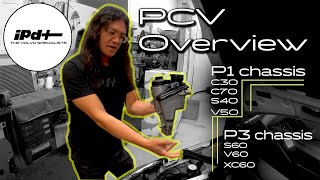
![How to Replace the PCV Diaphragm on a Volvo T5 [Money Saving Way]](https://img.youtube.com/vi/1O4r1ftgJaQ/mqdefault.jpg)

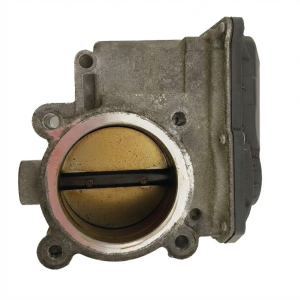
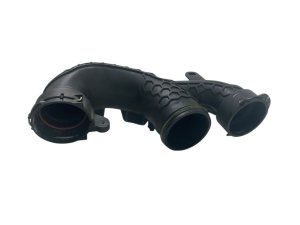
We Have This Part in Stock

The information in this article is provided for general reference and educational purposes only. Vehicle specifications, procedures, and part compatibility can vary by production date, trim level, and region. Always consult your vehicle's factory service manual and verify part numbers before purchasing or performing repairs. Safety-critical components such as airbags, seat belts, and braking systems should be installed by a qualified professional.
- Volvo S60:
- 🧭 Diagnostic Flowchart
- 🎬 Helpful Videos
- 🛍️ Shop This Part
- What's Unique About the 2011-2018 Volvo S60
- Symptoms You May Notice
- Most Likely Causes
- Rare But Worth Checking
- Diagnosis Steps
- Parts You'll Likely Need
- Related Codes That Often Appear With This One
- Technical Service Bulletins (TSBs) & Recalls
- Platform-Specific Known Issues
- Mechanic-Grade Diagnostic Values
- Hidden / Shadow Codes Worth Checking
- Scan Tool Commands That Help
- Wiring & Ground Locations
- Real Owner Repair Stories
- "I Checked Everything" — The Actual Cause
- When the Usual Fixes Don't Work
- OEM Part Supersession History
- Model Year Variations Within This Range
- Other Known Issues on This Vehicle
- Used vs. New Parts: Buying Guide for This Vehicle
- Real Owner Stories
- 2015.5 Volvo S60 T5
- 2014 Volvo S60 T5
- 2011-2018 Volvo S60
- Related OBD-II Codes
- Frequently Asked Questions
- 🎟️ Get 5% Off