

P0513 on 2012-2022 Hyundai Accent: Incorrect Immobilizer Key Causes and Fixes
P0513 on a Hyundai Accent means the car's anti-theft system doesn't recognize your key, preventing it from starting. The most likely fix is a dead battery in the key fob ($5-10). If that doesn't work, the immobilizer antenna coil around the ignition switch may have failed, which is a common issue on this platform.
- P0513 means your car's anti-theft system has locked you out, causing a no-start condition.
- Always start diagnosis by trying your spare key and then replacing the battery in the problematic key.
- If simple key fixes don't work, the immobilizer antenna coil around the ignition is the next most li
What's Unique About the 2012-2022 Hyundai Accent
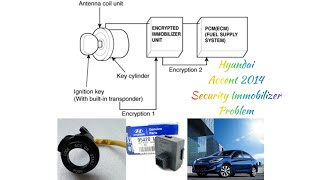
On Hyundai models from this era, including the Accent, the immobilizer system is relatively straightforward and is sometimes referred to as the SMARTRA (Smart Transponder Antenna) system. While key and module failures can happen, a common point of failure that is more frequent than on some other makes is the immobilizer antenna coil. This is the ring around the ignition lock cylinder that reads the key's transponder chip. It can fail due to an internal open or short circuit, leading to the P0513 code even when the key itself is perfectly fine. It's important to note that many base model Accents in this range were sold without an engine immobilizer, a fact which led to widespread thefts and a subsequent software update campaign (Service Campaign 993) to create an 'ignition kill' feature. This code will only appear on vehicles originally equipped with the chip-key immobilizer system.
Generation note: This range covers the fourth generation (RB, 2012-2017) and the fifth generation (HC/YC, 2018-2022) of the Hyundai Accent. The causes, symptoms, and diagnostic procedures for P0513 are consistent across both generations as they use similar transponder key-based immobilizer systems. The Kia Rio is a direct platform-mate and shares these components and issues.
Symptoms You May Notice
- Engine cranks but will not start
- Engine starts and then immediately stalls
- Flashing security indicator light (a car symbol with a key inside) on the dashboard when the key is in the ignition
- Check Engine Light is on
- Replacing the starter motor. A bad starter usually results in a 'click' or no crank at all, whereas with P0513 the engine will typically crank but not fire up.
- Replacing the fuel pump. While a no-start can be a fuel pump issue, the presence of code P0513 specifically points to the anti-theft system as the reason for fuel delivery being cut.
- Replacing the ignition switch. The electrical switch is a separate component from the immobilizer antenna coil that surrounds the lock cylinder. The switch can fail, but it won't typically set a P0513 code.
Most Likely Causes
- Dead or Weak Key Fob Battery 🔴 High Probability → Shop Vehicle Battery Key fob batteries have a finite lifespan, typically 2-4 years. This is the most common and easiest issue to fix, as the transponder chip needs power to send its signal.
How to confirm: Try starting the vehicle with your spare key. If the spare key works, the problem is with your primary key. You can also replace the battery in the non-working key as a simple test.
Typical fix: Replace the CR2032 battery inside the key fob. 🎬 See this quick key fob battery replacement walkthrough
Est. part cost: $2-$10 - Faulty Immobilizer Antenna Coil 🟡 Medium Probability → Shop Antenna The antenna coil, which is a fine wire winding around the ignition switch, can develop an open or short circuit over time, preventing it from energizing and reading the key's transponder chip. This is a well-documented failure point on many Hyundai/Kia models of this era.
How to confirm: A mechanic can test the resistance of the antenna coil and check for a signal using an oscilloscope or a dedicated immobilizer testing tool. Visual inspection of the wiring to the coil for damage is also necessary.
Typical fix: Replace the immobilizer antenna coil. 🎬 Watch: How to diagnose a faulty immobilizer antenna coil This part is typically located around the ignition lock cylinder and requires removing the steering column shrouds.
Est. part cost: $60-$100 - Damaged or Unprogrammed Key 🟡 Medium Probability Keys can be damaged by being dropped or exposed to water, which can harm the internal transponder chip. Using a new, unprogrammed key will also set this code.
How to confirm: If the spare key works and a new battery in the primary key doesn't solve the issue, the key itself is likely faulty. A locksmith or dealer can test the transponder's signal.
Typical fix: The key needs to be replaced and programmed to the vehicle using specialized equipment. This requires a trip to a dealer or a qualified automotive locksmith.
Est. part cost: $150-$400 - Wiring or Connector Issue ⚪ Low Probability Vibrations and time can cause wiring harnesses to chafe or connectors between the antenna coil and the immobilizer module to become loose or corroded.
How to confirm: Visually inspect the wiring around the steering column. A mechanic would use a multimeter to check for continuity and proper voltage at the immobilizer module and antenna coil connectors.
Typical fix: Repair the damaged wiring or clean/replace the faulty connector.
Est. part cost: $5-$50
Rare But Worth Checking
- Faulty Immobilizer Control Module (SMARTRA unit) or PCM: While rare, the control module that manages the immobilizer system (often integrated into the BCM) can fail internally. This is usually a last resort after all other components (key, antenna, wiring) have been verified as working correctly. Replacement requires programming by a dealer.
- Radio Frequency Interference: Strong radio signals from aftermarket devices (chargers, dash cams) or having multiple transponder keys on the same keychain can sometimes interfere with the signal between the key and the antenna coil.
Diagnosis Steps
- Try the Spare Key: This is the most important first step. If the spare key starts the car, the issue is isolated to your primary key.
- Replace the Key Battery: → Shop Vehicle Battery If the spare key works, or if you don't have a spare, replace the CR2032 battery in the suspect key. It's an inexpensive and easy step.
- Check for Other Keys: Ensure no other transponder keys are on the same keychain, as they can interfere with the signal. Also check for other sources of RF interference.
- Inspect the Key: Look for any physical damage, cracks, or signs of water intrusion on the key fob.
- Scan for Codes: Use an OBD-II scanner to confirm P0513 is the only code present. If other communication codes are present, it could indicate a broader electrical issue.
- Inspect Antenna Coil Wiring: Visually inspect the wiring and connector for the immobilizer antenna coil around the ignition switch for any obvious damage.
- Professional Diagnosis: If the above steps do not resolve the issue, the vehicle should be taken to a qualified mechanic or dealership. They will have the tools to test the transponder signal, check the resistance of the antenna coil, and diagnose the immobilizer control module.
Parts You'll Likely Need
- Key Fob Battery
(OEM #CR2032)— This is the most common failure point and the easiest to fix.
Trusted brands: Energizer, Duracell, Panasonic
OEM price range: $5-$10
Aftermarket price range: $2-$8 - Immobilizer Antenna Coil
(OEM #95440-1R000)— A common electrical failure point in the immobilizer system for this vehicle platform.
Trusted brands: Hyundai OE
OEM price range: $60-$100
Aftermarket price range: $40-$70 - Transponder Ignition Key — The transponder chip inside the key can fail, requiring a complete key replacement.
Trusted brands: Hyundai OE
OEM price range: $150-$400 (including programming)
Aftermarket price range: $75-$200 (including programming)
Technical Service Bulletins (TSBs) & Recalls
- Service Campaign 993 (NHTSA ID: 24-01-009H): While not directly for fixing P0513, this is a critical TSB for owners to be aware of. It involves a software update for Accents sold without an engine immobilizer to provide a basic level of anti-theft protection. This highlights that not all Accents from this era have the system that would generate a P0513 code.
Platform-Specific Known Issues
- Real Owner Experience: Crank No-Start: A user on Hyundai-Forums with a 2013 Elantra (platform mate) experienced a classic P0513 scenario: the engine would crank but not start, and the immobilizer light was flashing. The owner confirmed that after trying a spare key and checking batteries, the issue was resolved by replacing the immobilizer antenna coil around the ignition. This is a textbook example of the most common repair beyond a simple key battery.
Mechanic-Grade Diagnostic Values
- Immobilizer Antenna Coil Resistance — expected: 5-20 Ohms. Some technicians report a tighter range of 14-16 Ohms as typical for a good coil.. Failure: A multimeter reading of 'OL' (Open Loop / infinite resistance) or near 0 Ohms (dead short) indicates a failed coil.
Hidden / Shadow Codes Worth Checking
- B1690: SMARTRA No Response From Transponder. This indicates the immobilizer module sent power to the antenna coil but received no signal back from the key's transponder chip. (see via A professional scan tool with access to the Body Control Module (BCM) or Immobilizer module, such as the Hyundai GDS.)
- B1693: Immobilizer - Transponder Malfunction. This code suggests a signal was received from the key, but it was invalid, corrupted, or incorrect. (see via A professional scan tool with access to the Body Control Module (BCM) or Immobilizer module, such as the Hyundai GDS.)
Scan Tool Commands That Help
- Hyundai GDS (Global Diagnostic System): Immobilizer Status Check (Live Data) — Use this as a first step to see what the system reports. It can show the number of keys learned and the status of the ECM and immobilizer module (e.g., 'Virgin', 'Learned', 'Neutral'). This helps differentiate between a component failure and a programming issue.
- Hyundai GDS (Global Diagnostic System): Key Teaching / Smart Key Code Saving — This function is used to program new or existing keys to the vehicle's immobilizer module. It requires a unique PIN code for the vehicle, which can be obtained from the dealer.
- Hyundai GDS (Global Diagnostic System): Neutralization — This function is used to put a used ECM or immobilizer module into a 'neutral' or 'virgin' state, allowing it to be programmed to a different vehicle. This is an advanced function typically used when replacing major control modules.
Wiring & Ground Locations
- Immobilizer Module Connector — The immobilizer module (or BCM) is typically located behind the dashboard, often on the driver's side. The antenna coil connector plugs into this module.. This is the primary connection point to test for power, ground, and signal continuity from the antenna coil. A loose or corroded connector here can mimic a failed coil.
- Gf03 — Located at the left kick panel, near the driver's left foot.. This is a primary ground point for the I/P (Instrument Panel) junction box and Body Control Module. A poor ground here can cause a variety of difficult-to-diagnose electrical issues, including immobilizer communication failures.
Real Owner Repair Stories
- Hyundai-Forums.com user (2013 Hyundai Elantra (platform mate to the Accent)) — Engine cranks but will not start, flashing immobilizer/key symbol on the dashboard.
❌ Tried (didn't work) Trying the spare key, Replacing the key fob battery
✅ What actually fixed it The owner replaced the immobilizer antenna coil (part number 95440-3X000 for their Elantra) located around the ignition cylinder. After replacement, the car started immediately with the original key.
OEM Part Supersession History
95440-1R000→N/A— This part number appears to be consistent for the 4th generation (2012-2017) Hyundai Accent with a keyed ignition.
Heads up: The 5th generation (2018-2022) Accent, especially with push-button start, may use a different part number. Always verify the part number with the vehicle's VIN before ordering.
Model Year Variations Within This Range
- 2012-2022 (Base Models): Many base model Accents were sold without a factory-installed engine immobilizer. These vehicles are not capable of setting a P0513 code. Hyundai later offered a software update under a service campaign to add an 'ignition kill' feature, but this is different from the transponder-based system.
- 2018-2022 (Higher Trims): The introduction of push-button start systems changes the physical location and part number of the antenna coil. Instead of being around a key cylinder, it's typically located near the start button. The diagnostic principle remains the same, but the component part number and replacement procedure will differ from keyed ignition models.
Diagnostic Flowchart
Other Known Issues on This Vehicle
Issues unrelated to this code that are worth knowing about as an owner of this generation:
- Degrading Flexible Steering Coupler 🟠 Medium — Very common on the 4th generation (2012-2017). Typically manifests as a clicking or clunking noise in the steering wheel when turning at low speeds, usually after 60,000 miles.
- Faulty Brake Light Switch 🔴 High — Common enough to trigger a recall (NHTSA #15V566000) for 2009-2011 models, but the issue persists in later years. Can cause brake lights to fail, cruise control to not disengage, and the shifter to get stuck in Park. (Ref: NHTSA Recall 15V566000 / Hyundai Recall 131)
- Engine Oil Consumption (1.6L GDI) 🔴 High — Some owners of the 1.6L GDI engine, particularly in the 2012-2017 models, report excessive oil consumption. This can lead to engine damage or catalytic converter failure if not monitored closely.
- Ignition Coil Failure 🟠 Medium — A frequent cause of engine misfires, rough idling, and hesitation, especially on the 4th generation Accent. Often occurs between 30,000 and 60,000 miles.
- Transmission Hard Shifting / Slipping 🟠 Medium — Owners of 2012-2020 models have reported issues with automatic transmissions, including rough shifting and hesitation, sometimes caused by failing transmission solenoids.
Used vs. New Parts: Buying Guide for This Vehicle
When a used part is the smart pick: The Immobilizer Antenna Coil is an excellent candidate for a used part. It is a simple, non-wear item (a coil of wire in a plastic housing) that either works or it doesn't. Failures are electrical (open/short) rather than due to mechanical wear. A used OEM coil from a reputable salvage yard is a cost-effective and reliable repair.
Donor-vehicle mileage cap: roughly under 150000 miles for the part to have meaningful remaining life.
What to inspect on the donor part:
- Ensure the plastic housing is not cracked or broken.
- Check that the electrical connector pins are clean, straight, and free of corrosion.
- Verify the part number on the used coil matches the original part exactly.
OEM-only on this vehicle (don't cheap out):
- Immobilizer Control Module / SMARTRA Unit
- Body Control Module (BCM)
- Powertrain Control Module (PCM)
- Transponder Chip (inside the key)
Aftermarket brands forum-validated for this vehicle:
- For keys and programming, a reputable automotive locksmith is a well-regarded alternative to the dealership.
Brands owners have reported issues with on this vehicle:
- While some aftermarket antenna coils exist, they are less common. Sticking with a used or new OEM part is the safest bet for compatibility and reliability.
Real Owner Stories
Aggregated from forums and TSBs cited above. Mileages and costs reflect what owners reported in those sources.
2013 Hyundai Elantra
Symptoms: The engine would crank but not start, and the immobilizer light was flashing on the dashboard.
What fixed it: Replacing the immobilizer antenna coil around the ignition.
Source hint: Hyundai-Forums.com thread regarding platform-mate vehicle P0513 scenario
2012-2017 Hyundai Accent
Symptoms: Crank-no-start condition with the immobilizer light identified as the key symptom.
What fixed it: Diagnosis of the immobilizer system/key authentication.
Source hint: r/MechanicAdvice on Reddit
Related OBD-II Codes
Frequently Asked Questions
My 2013 Hyundai Accent won't start and the dashboard shows a car symbol with a key inside. What does this mean?
Does Service Campaign 993 (NHTSA ID: 24-01-009H) fix the P0513 code on my Accent?
I heard the immobilizer antenna coil is a common failure. Where is it located on the Accent?
Can a dead battery in my key fob cause a P0513 'Incorrect Immobilizer Key' code?
How much does it cost to replace the immobilizer antenna coil (Part #95440-3X000) on a Hyundai?
Why does my Accent start and then immediately stall with a flashing security light?
Helpful Videos

We Have This Part in Stock


The information in this article is provided for general reference and educational purposes only. Vehicle specifications, procedures, and part compatibility can vary by production date, trim level, and region. Always consult your vehicle's factory service manual and verify part numbers before purchasing or performing repairs. Safety-critical components such as airbags, seat belts, and braking systems should be installed by a qualified professional.
- Hyundai Accent:
- 🧭 Diagnostic Flowchart
- 🎬 Helpful Videos
- 🛍️ Shop This Part
- What's Unique About the 2012-2022 Hyundai Accent
- Symptoms You May Notice
- Most Likely Causes
- Rare But Worth Checking
- Diagnosis Steps
- Parts You'll Likely Need
- Technical Service Bulletins (TSBs) & Recalls
- Platform-Specific Known Issues
- Mechanic-Grade Diagnostic Values
- Hidden / Shadow Codes Worth Checking
- Scan Tool Commands That Help
- Wiring & Ground Locations
- Real Owner Repair Stories
- OEM Part Supersession History
- Model Year Variations Within This Range
- Other Known Issues on This Vehicle
- Used vs. New Parts: Buying Guide for This Vehicle
- Real Owner Stories
- 2013 Hyundai Elantra
- 2012-2017 Hyundai Accent
- Related OBD-II Codes
- Frequently Asked Questions
- 🎟️ Get 5% Off