

P0520 on 2009-2017 Audi Q5 2.0T: Engine Oil Pressure Sensor Circuit Causes and Fixes
On the 2009-2017 Audi Q5 with the 2.0T EA888 engine, code P0520 is most often caused by a failed low-pressure (brown) oil pressure switch. The switch commonly leaks oil into its own electrical connector, causing a circuit fault. The fix is to replace the switch, and it's highly recommended to replace the high-pressure (blue/grey) switch at the same time. A 24mm deep socket is required. Expect to pay $40-$100 for the pair of OEM-quality parts.
- P0520 on a 2.0T Q5 almost always points to an electrical issue with the oil pressure sensor circuit, not necessarily a dangerous low pressure condition.
- The most important first step is to verify the actual oil pressure with a mechanical gauge to rule out a serious engine problem.
- The most common fix is replacing the brown, low-pressure oil switch on the oil filter housing. It's best practice to replace the blue/grey high-pressure switch at the same time.
- Check the sensor's electrical connector for oil contamination; this is a definitive sign that the sensor has failed internally.
- Do not ignore this code. Driving with a potential oil pressure issue risks severe and expensive engine damage.
What's Unique About the 2009-2017 Audi Q5
The EA888 Gen 2 engine in this generation of Q5 uses a two-stage oil pressure system for efficiency. Instead of a single sensor, it has two separate oil pressure switches on the oil filter housing: a brown, low-pressure switch (F22) for lower RPMs (below ~3500 RPM) and a blue or grey high-pressure switch (F378) for higher RPMs. Code P0520 is most commonly triggered by a fault in the circuit for the brown, low-pressure switch. 🎬 Watch: Understanding the P0520 code and its causes A very common failure mode is the switch leaking oil internally through its diaphragm and into its own electrical connector, which disrupts the signal to the computer.
Symptoms You May Notice
- Check Engine Light is on
- Oil pressure warning light on the dashboard, which may be red or yellow
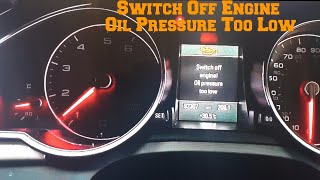
- Warning message on the driver information screen like "Oil Pressure Too Low, Please switch off engine".
- In some cases, no noticeable symptoms other than the warning lights.
- Warning may appear intermittently, often at idle when the engine is hot 🎬 Watch: Fixing intermittent oil pressure warnings at idle and oil viscosity is at its lowest.
- Replacing the engine computer (PCM) when the fault is a simple wiring or sensor issue.
- Replacing the oil pump before confirming the actual oil pressure is low with a mechanical gauge.
- Assuming the code means the oil pressure is actually low without performing a mechanical test first.
Most Likely Causes
- Faulty Low-Pressure (Brown) Oil Pressure Switch 🔴 High Probability → Shop Engine Oil Pressure Switch These switches are a known weak point. The internal diaphragm fails, allowing pressurized engine oil to seep through the sensor body and contaminate the electrical connector, causing a short or open circuit.
How to confirm: Visually inspect the brown sensor's electrical connector. If oil is present inside the connector, the switch has definitively failed and must be replaced. Even if no oil is visible, the switch can still fail internally.
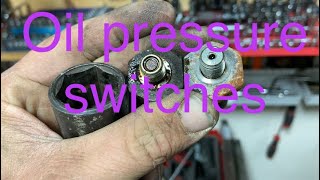
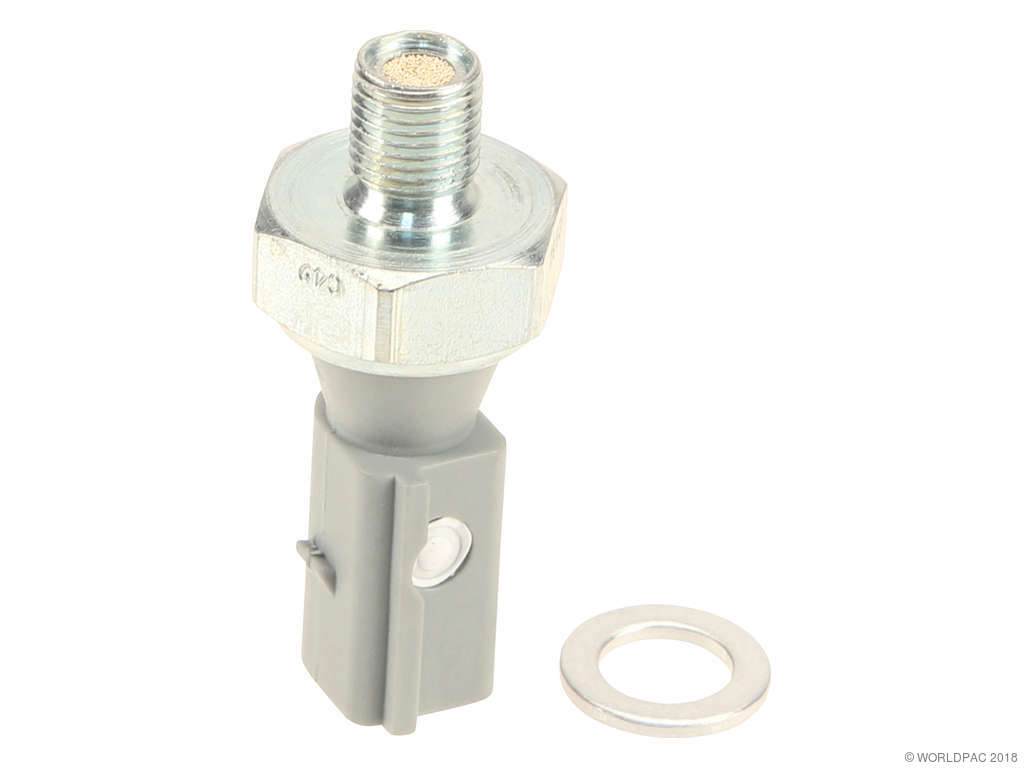
Typical fix: Replace the low-pressure oil pressure switch (and its sealing washer) using a 24mm deep socket. 🎬 See: How to replace the oil pressure switches It is highly recommended to replace the high-pressure (blue/grey) switch at the same time as a preventative measure.
Est. part cost: $20-$50 - Damaged Wiring or Connector 🟡 Medium Probability The wiring is located in a high-heat area near the engine block and oil filter housing, subject to heat and vibration. This can cause wires to become brittle, insulation to crack, or connectors to become oil-soaked and fail over time.
How to confirm: With the sensor disconnected, inspect the wiring harness connector for corrosion, pushed-out pins, or damage. Trace the wiring as far back as possible, looking for breaks, chafing, or heat damage. Perform a continuity test from the connector to the PCM if visual inspection is inconclusive.
Typical fix: Repair the damaged section of wiring using solder and heat-shrink tubing or replace the connector pigtail.
Est. part cost: $15-$40 - Low Engine Oil Level or Incorrect Oil ⚪ Low Probability While this code is electrical, this engine is notorious for oil consumption. A true low oil level or using oil of the wrong viscosity (not meeting VW 502 00 or a subsequent approved spec) can cause pressure fluctuations that may, in some edge cases, trigger circuit faults or unmask a borderline sensor.
How to confirm: Check the engine oil level using the MMI system (as most of these vehicles lack a physical dipstick). Verify that the correct specification of oil is being used.
Typical fix: Top off or change the engine oil and filter with the correct type (e.g., full synthetic 5W-40 meeting VW 502 00) and amount of oil.
Est. part cost: $60-$120
Rare But Worth Checking
- Failing Oil Pump or Clogged Oil Passages: This is a major mechanical failure. If you confirm with a mechanical gauge that the actual oil pressure is low (e.g., below 1.2 bar at hot idle), the engine should not be run. This is a much more serious issue than a simple sensor fault.
- Faulty Oil Pressure Control Valve (N428): This solenoid valve, located near the pressure switches, controls the switch between low and high pressure stages. While less common, its failure can cause pressure regulation issues and may trigger its own specific fault codes like P164E00.
- Faulty Powertrain Control Module (PCM): → Shop Engine Control Module (ECM) This is extremely rare. The PCM should only be considered after all other possibilities (sensor, wiring, mechanical pressure) have been exhaustively tested and ruled out.
Diagnosis Steps
- Check the engine oil level and condition via the MMI system. Ensure it is full and uses the manufacturer-specified oil type (e.g., VW 502 00).
- Scan the vehicle for any other stored trouble codes using a VAG-specific tool like VCDS or OBDeleven for more detailed information.
- CRITICAL: Test the actual engine oil pressure using a mechanical gauge. The port for the pressure switch is a common access point. Compare readings to the manufacturer's specifications. At operating temperature (>80°C), pressure should be >1.2 bar (~17.4 PSI) at idle and 2.7 - 4.5 bar at ~2000-3000 RPM. This step is non-negotiable and determines if you have a sensor/electrical problem or a serious mechanical issue.
- If oil pressure is within spec, proceed to inspect the oil pressure switches. They are located on the oil filter housing, accessible from the top of the engine bay. A 24mm deep socket is required for removal.
- Disconnect and inspect the electrical connector for the brown (low-pressure) switch. Look for any signs of oil inside the connector. Oil contamination confirms a failed switch.
- Inspect the wiring harness for any visible damage, corrosion, or loose connections.
- If no oil is found but the actual pressure is good, the switch is still the most likely culprit. You can test the switch's circuit for proper voltage and ground using a multimeter.
- If the circuit tests good, replace the oil pressure switch. It is highly recommended to replace both the brown and blue/grey switches at the same time.
Parts You'll Likely Need
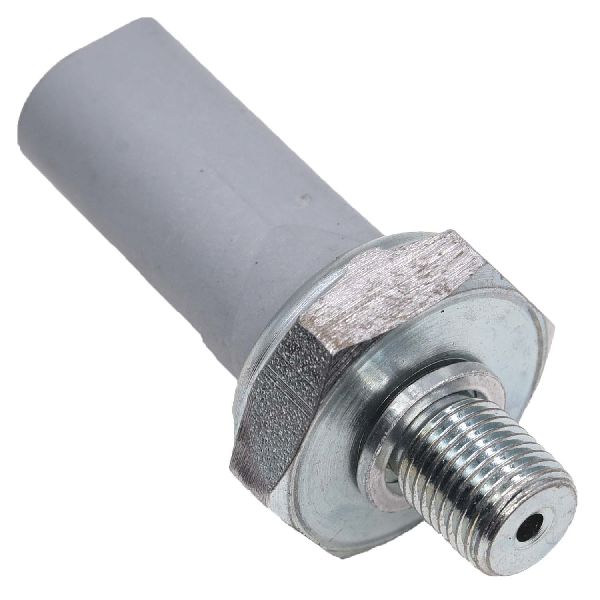
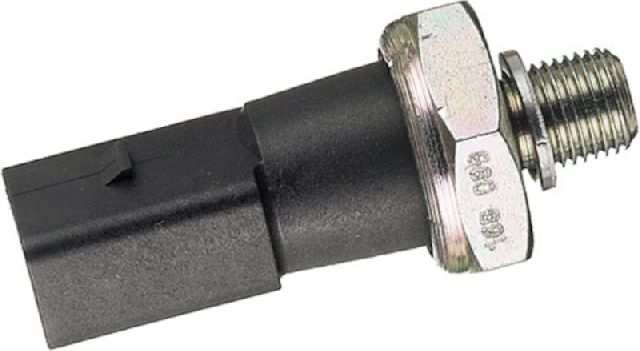
- Engine Oil Pressure Switch (Low Pressure)
(OEM #06H919081A)— This is the most common failure point for code P0520 on this engine. It is brown in color and monitors the low-pressure stage.
Trusted brands: Bosch, HELLA, Febi Bilstein, OEM Audi
OEM price range: $30-$50
Aftermarket price range: $15-$30 - Engine Oil Pressure Switch (High Pressure)
(OEM #06K919081 (or superseding 06K919081A))— It is highly recommended to replace this switch at the same time as the low-pressure switch, as they are co-located, of a similar age, and require the same labor to access. It is blue or grey in color.
Trusted brands: Bosch, HELLA, Febi Bilstein, OEM Audi
OEM price range: $30-$50
Aftermarket price range: $15-$30
Technical Service Bulletins (TSBs) & Recalls
- While no specific TSB for P0520 is widely cited, TSBs related to oil consumption and timing chain tensioners are relevant to overall engine health on this platform.
Platform-Specific Known Issues
- The EA888 engine's two-stage oil pressure system, while efficient, adds a point of complexity with two pressure switches that can fail.
- Early EA888 Gen 2 engines were subject to a class-action lawsuit for excessive oil consumption due to piston ring design, which is a separate issue but means owners should be vigilant about checking their oil level.
Mechanic-Grade Diagnostic Values
- Low-Pressure (Brown) Switch (F22) operating range — expected: Opens circuit between 0.55 and 0.85 bar (8.0 - 12.3 PSI).. Failure: Switch does not change state within this pressure range, or leaks oil.
- High-Pressure (Blue) Switch (F378) operating range — expected: Closes circuit between 2.15 and 2.95 bar (31.2 - 42.8 PSI).. Failure: Switch does not change state within this pressure range, or leaks oil.
- Engine Oil Pressure at Idle (Hot) — expected: Greater than 1.2 bar (~17.4 PSI).. Failure: Pressure reading below 1.2 bar indicates a mechanical issue (e.g., oil pump, clogged pickup).
- Engine Oil Pressure at ~3000-4000 RPM (Hot) — expected: Greater than 3.5 - 4.0 bar (~50 - 58 PSI).. Failure: Pressure failing to rise significantly with RPM points to a failing oil pump or internal leak.
Hidden / Shadow Codes Worth Checking
- P164D / 5582: Oil Pressure Switch for reduced Oil Pressure - Malfunction. This is a VAG-specific code that points more directly to the low-pressure (brown) switch circuit than the generic P0520. (see via VCDS (Ross-Tech) or other VAG-specific diagnostic tools.)
- P164B / 005707: Oil Pressure Switch - Malfunction. This VAG-specific code often points to the high-pressure (blue) switch circuit, especially if the fault occurs at higher RPMs (e.g., above 4000 RPM). (see via VCDS (Ross-Tech) or other VAG-specific diagnostic tools.)
Wiring & Ground Locations
- Main Engine to Chassis Ground — Typically a braided strap from the engine block to the chassis rail on the left (driver's side in LHD) of the engine compartment.. A corroded or loose main ground can cause floating ground issues, leading to erratic sensor readings and circuit malfunction codes like P0520.
- G608 / G609 — Ground points located in the plenum chamber (the area below the windshield under the plastic cowl).. The engine wiring harness often has critical ground connections in this area. Water ingress into the plenum chamber is common and can corrode these grounds, affecting sensor circuits.
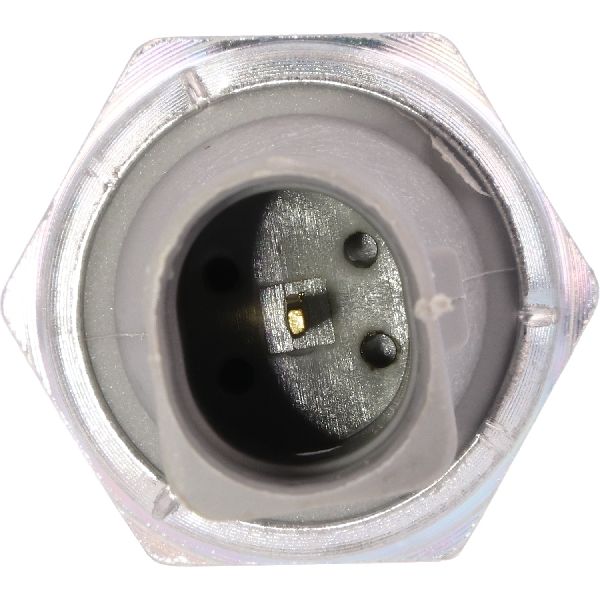
- Sensor Connector Pinout (Typical) — At the oil pressure switch connector on the oil filter housing.. The switches are simple two-pin connectors. One pin receives a signal from the ECU/Onboard Supply Control Module, and the other pin is the path to ground. The switch closes or opens this path to ground based on pressure. Testing requires checking for voltage on the signal wire and continuity to ground through the switch when pressure is applied.
Real Owner Repair Stories
- Ross-Tech Forums User (2015 Audi GTI (EA888 Gen 3, similar system)) — Intermittent "Low Oil Pressure" message (P164D) after the car was parked for a few hours, then would reappear 15-20 minutes into a drive.
❌ Tried (didn't work) Replaced both the low-pressure (brown) and high-pressure (blue) oil pressure switches.
✅ What actually fixed it The actual oil pressure was tested with a mechanical gauge and found to be low at idle (0.6 bar vs. spec of 0.8-1.6 bar). The root cause was a failing oil pump, which was replaced to solve the issue. - Mechanics Stack Exchange User (Audi with EA888 engine (specific model not stated)) — EPC light and engine rev-limited to 4000 RPM, with fault code P164B (High Pressure Switch Malfunction).
❌ Tried (didn't work) Replaced both oil pressure switches.
✅ What actually fixed it A mechanical gauge confirmed that oil pressure was just shy of the spec needed to trigger the high-pressure switch at 4000 RPM. The cause was a worn oil pump with plastic internal components that had degraded. Replacing the oil pump with a Pierburg OEM-equivalent unit restored correct pressure and resolved the code.
OEM Part Supersession History
06H919081 / 06H919081A→04E919081A— Part number consolidation and potential minor design updates by VAG.
Heads up: The parts are generally interchangeable, but it is always best to use the latest revision (04E919081A) when replacing the brown, low-pressure switch.06K919081→06K919081A / 06K919081D— Standard part evolution and revision by the manufacturer.
Heads up: These are for the high-pressure (blue/grey) switch and are generally cross-compatible for this application. Always verify fitment with VIN, but 06K919081A is a common correct replacement.
Model Year Variations Within This Range
- 2013-2017: The Audi Q5 received a facelift for the 2013 model year (often called the 8R.5 generation). While the 2.0T engine was updated (moving from 211hp to 225hp in some markets), the dual-stage oil pressure switch system and the common failure mode for P0520 remained the same. The diagnostic procedure is identical for pre and post-facelift models within this range.
Diagnostic Flowchart
Other Known Issues on This Vehicle
Issues unrelated to this code that are worth knowing about as an owner of this generation:
- Excessive Oil Consumption 🔴 High — Very common, especially on 2009-2014 models. Often becomes apparent between 50,000-80,000 miles. Caused by faulty piston ring design. (Ref: Subject of a class-action lawsuit (Gonzalez v. Volkswagen) and related TSBs (e.g., TSB 2027731) which led to warranty extensions and a multi-stage repair process, culminating in piston replacement for affected vehicles.)
- Timing Chain Tensioner Failure 🔴 High — Common on earlier EA888 Gen 2 engines (pre-~2013). The original tensioner design can fail without warning, allowing the timing chain to jump, causing catastrophic engine damage. An updated tensioner was later introduced. (Ref: Subject of a class-action lawsuit and multiple TSBs. Owners can visually inspect the tensioner's extension through a small plug in the lower timing cover to assess its condition.)
- PCV Valve Failure 🟠 Medium — Common across all years. The diaphragm inside the PCV (Positive Crankcase Ventilation) valve tears, causing a large vacuum leak. Symptoms include a loud whistling or howling noise from the engine bay, rough idle, and increased oil consumption. (Ref: No recall, but it's a widely recognized failure. The fix is to replace the PCV valve assembly. Upgraded repair kits are available.)
- Water Pump / Thermostat Housing Failure 🟠 Medium — Common failure item, often occurring after 60,000 miles. The original part is made of plastic and is prone to cracking or seal degradation, causing significant coolant leaks. The unit is buried under the intake manifold. (Ref: No recall, but a very common repair. Many owners opt to replace the failed plastic unit with an aftermarket aluminum housing for improved durability.)
Used vs. New Parts: Buying Guide for This Vehicle
When a used part is the smart pick: For this specific repair, using a used part is strongly discouraged. The oil pressure switches are high-failure, low-cost electronic components. The risk of a used switch failing shortly after installation is very high, and the cost savings are minimal compared to the labor involved.
What to inspect on the donor part:
- Not applicable, as used parts are not recommended for this repair.
OEM-only on this vehicle (don't cheap out):
- While not strictly 'OEM-only', using a Genuine Audi part or a reputable OEM supplier (Bosch, HELLA, Febi) is critical. Cheap, unbranded sensors from online marketplaces have a very high failure rate and should be avoided.
Aftermarket brands forum-validated for this vehicle:
- Bosch
- HELLA
- Febi Bilstein
- Pierburg (for oil pump if needed)
Brands owners have reported issues with on this vehicle:
- Unbranded or 'white-box' sensors from marketplaces like eBay or AliExpress.
Real Owner Stories
Aggregated from forums and TSBs cited above. Mileages and costs reflect what owners reported in those sources.
2014 Audi Q5 2.0T
Symptoms: Intermittent oil pressure warning appearing specifically at idle.
What fixed it: Diagnostic process involving a mechanical pressure test to verify engine health, followed by sensor inspection.
Source hint: AudiWorld: Oil pressure warning 2.0t
2014 Audi Q5 2.0TDI
Symptoms: "Oil Pressure Too Low" message appearing intermittently, especially when the engine is hot.
What fixed it: Investigation of the oil pressure circuit and sensor functionality on the shared chassis platform.
Source hint: Ross-Tech Forums: 2014 AUDI Q5 2.0TDI 177PS Oil Pressure Too Low
Audi Q5 2.0T EA888
Symptoms: P0520 code accompanied by an EPC light on the dashboard.
What fixed it: Replacement of the oil pressure switches.
Source hint: Audizine: P0520 and EPC light
Related OBD-II Codes
Frequently Asked Questions
My 2014 Q5 is showing an intermittent 'Oil Pressure Too Low' message at idle when the engine is hot. Is this common?
Which oil pressure switch is usually responsible for the P0520 code on the Audi Q5 2.0T?
Should I replace both oil pressure sensors at the same time?
Can I check my oil level with a dipstick to see if that's causing the P0520 code?
Is there a TSB or class-action lawsuit related to oil issues on my 2012 Q5?
How do I know if my oil pressure switch has failed internally without a gauge?
Helpful Videos
We Have This Part in Stock

The information in this article is provided for general reference and educational purposes only. Vehicle specifications, procedures, and part compatibility can vary by production date, trim level, and region. Always consult your vehicle's factory service manual and verify part numbers before purchasing or performing repairs. Safety-critical components such as airbags, seat belts, and braking systems should be installed by a qualified professional.
- Audi Q5:
- 🧭 Diagnostic Flowchart
- 🎬 Helpful Videos
- 🛍️ Shop This Part
- What's Unique About the 2009-2017 Audi Q5
- Symptoms You May Notice
- Most Likely Causes
- Rare But Worth Checking
- Diagnosis Steps
- Parts You'll Likely Need
- Technical Service Bulletins (TSBs) & Recalls
- Platform-Specific Known Issues
- Mechanic-Grade Diagnostic Values
- Hidden / Shadow Codes Worth Checking
- Wiring & Ground Locations
- Real Owner Repair Stories
- OEM Part Supersession History
- Model Year Variations Within This Range
- Other Known Issues on This Vehicle
- Used vs. New Parts: Buying Guide for This Vehicle
- Real Owner Stories
- 2014 Audi Q5 2.0T
- 2014 Audi Q5 2.0TDI
- Audi Q5 2.0T EA888
- Related OBD-II Codes
- Frequently Asked Questions
- 🎟️ Get 5% Off