

P0520 on 2013-2014 Dodge Grand Caravan: Oil Pressure Sensor Circuit Causes and Fixes
On a 2013-2014 Dodge Grand Caravan, the P0520 code almost always indicates a faulty engine oil pressure sensor. A Chrysler Technical Service Bulletin (TSB) exists for this exact issue, recommending replacement with a revised part (Mopar P/N 05149062AB). The sensor is located deep in the engine valley, making replacement a moderately difficult DIY job that many owners tackle to avoid high shop labor costs.
- P0520 on a 2013-2014 Grand Caravan is most likely a bad oil pressure sensor, a fact supported by a manufacturer TSB.
- Always check the oil level first, but don't be surprised if it's normal.
- The repair is labor-intensive due to the sensor's location under the intake manifolds.
- While accessing the sensor, it is wise to inspect the oil filter housing for cracks or leaks, as it's another common failure point.
- Use the revised Mopar sensor and new intake gaskets to ensure a lasting repair.
What's Unique About the 2013-2014 Dodge GRAND CARAVAN

The 3.6L Pentastar V6 engine used in the 2013-2014 Grand Caravan is known for issues with its oil pressure sensor. Chrysler acknowledged this by issuing Technical Service Bulletin #18-034-14 REV. A, which specifically addresses the P0520 code by calling for the replacement of the original sensor with a revised part. The sensor's location, deep in the engine valley underneath the intake manifolds, makes the repair more labor-intensive than on many other vehicles, though a 'shortcut' method without removing the intake is popular among DIYers.
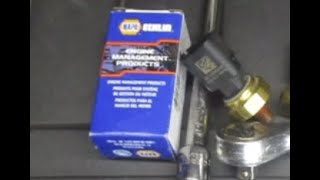
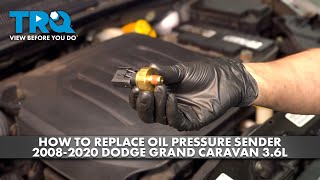
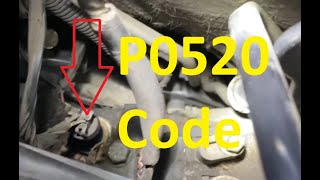
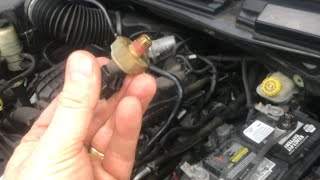
🎬 Watch: This video shows the shortcut method for sensor replacement.Diagnostic Flowchart

Tap your situation to follow the diagnostic path that matches what you're seeing on this vehicle.
Symptoms You May Notice
- Check Engine Light is on
- Oil pressure warning light may be illuminated
- Oil pressure gauge (if equipped) may show an incorrect reading (zero or maxed out at 96-99 PSI)
- In some cases, the vehicle may enter a limited power "limp mode"
- Erratic readings on the digital oil pressure display in the vehicle information center
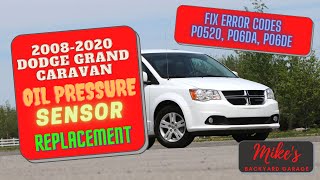
- Replacing the oil pump. The P0520 code specifically points to a circuit fault, not a mechanical pressure problem. 🎬 Watch: A breakdown of P0520 causes and circuit fixes. Always diagnose the sensor and wiring before suspecting a major mechanical component like the oil pump.
Most Likely Causes

- Faulty Engine Oil Pressure Sensor 🔴 High Probability A known, widespread issue acknowledged by Chrysler TSB #18-034-14 REV. A, which recommends replacing the original sensor with an updated part (P/N 05149062AB) due to a high failure rate. The sensor is also known to leak oil into its own electrical connector, causing faulty readings.
How to confirm: After confirming proper oil level, test the sensor's circuit. If the wiring is intact, the sensor is the prime suspect. A scan tool may show an erratic or fixed voltage from the sensor. Given the high failure rate and low part cost, many owners opt to replace it preventatively.
Typical fix: Replace the engine oil pressure sensor with the revised OEM Mopar part. Given the labor involved, using a quality part is highly recommended to avoid a repeat failure.
Est. part cost: $30-$60 - Damaged Wiring or Connector 🟡 Medium Probability The sensor is located in a high-heat area in the engine valley, which can make wiring brittle over time. Oil leaks from the sensor or the nearby oil filter housing can also contaminate and damage the connector and harness. Some owners report the P0520 code returning even after replacing the sensor and housing, indicating a persistent wiring short.
How to confirm: Visually inspect the sensor's wiring harness and connector for signs of oil saturation, corrosion, or physical damage. Perform a continuity test on the signal, ground, and voltage reference wires between the PCM and the sensor connector.
Typical fix: Repair the damaged section of the wiring harness or replace the connector pigtail. Ensure the area is clean of oil before reconnecting.
Est. part cost: $15-$30 - Leaking Oil Filter Housing / Cooler Assembly 🟡 Medium Probability → Shop Engine Oil Cooler The plastic oil filter housing assembly, which the oil pressure sensor screws into, is a very common failure point on the 3.6L Pentastar engine. It can crack and leak oil, which then pools in the valley and can saturate the oil pressure sensor's connector. A separate TSB exists for a leaking O-ring between the housing and the block (P/N 68191356AA).
How to confirm: When accessing the oil pressure sensor, inspect the oil filter housing and the engine valley for signs of pooled oil or active leaks. It is often difficult to distinguish a sensor leak from a housing leak without cleaning the area thoroughly.
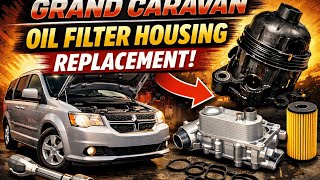
Typical fix: Replace the entire oil filter housing and cooler assembly. This is often done at the same time as the sensor replacement due to the overlapping labor. Many shops recommend this as a best practice. 🎬 See how to replace the entire oil filter housing assembly.
Est. part cost: $150-$250 - Low Engine Oil Level or Incorrect Oil ⚪ Low Probability
How to confirm: Check the engine oil dipstick. Review service records to ensure the correct viscosity oil (e.g., 5W-20) is being used as specified by the manufacturer.
Typical fix: Top off or change the engine oil and filter with the correct type and amount.
Est. part cost: $40-$80
Rare But Worth Checking
- Faulty Powertrain Control Module (PCM): → Shop Engine Control Module (ECM) This is extremely rare. The PCM should only be considered after all other possibilities, including the sensor, wiring, and actual oil pressure, have been thoroughly ruled out.
Diagnosis Steps
- Verify the engine oil level and condition. Ensure it is full and not overdue for a change.
- Connect an OBD-II scanner to check for P0520 and any other related codes. Note if codes like P0522 or P06DD are also present.
- Visually inspect the area in the engine valley below the intake manifold. This is difficult without some disassembly, but a flashlight and mirror may reveal pooled oil that could indicate a leaking sensor or oil filter housing.
- Inspect the oil pressure sensor's electrical connector for oil contamination, corrosion, or loose pins. The connector has a red sliding lock tab that must be disengaged before pressing the release tab.
- Using a scan tool with live data, monitor the oil pressure sensor voltage with the ignition on and engine off. It should read a specific voltage. Start the engine and observe the pressure reading; if it immediately jumps to a high, fixed number (like 96 PSI) and doesn't change with RPM, the sensor is very likely faulty.
- If wiring is suspected, perform a continuity test on the harness between the PCM and the sensor connector.
- For absolute certainty, you can test the actual engine oil pressure using a mechanical gauge connected to the sensor port. If the pressure is within spec, the problem is confirmed to be electrical.
Parts You'll Likely Need
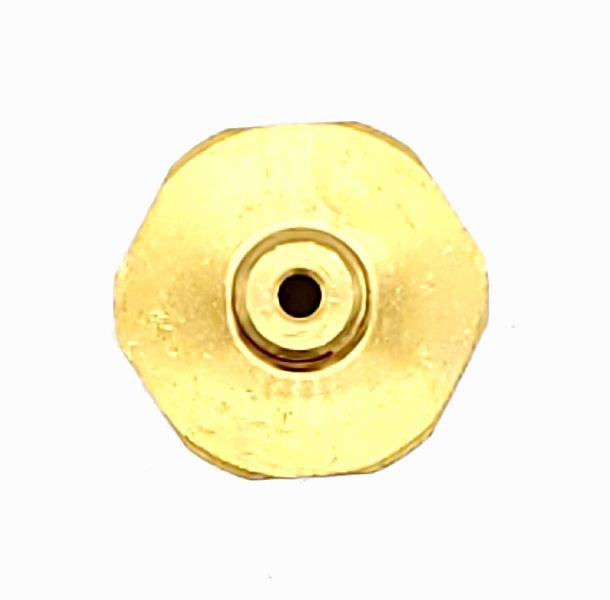
- Engine Oil Pressure Sensor (Switch)
(OEM #05149062AB (replaces 5149062AA, 68060337AA))— This is the most common failure part for a P0520 code on this vehicle, as documented by Chrysler's own service bulletin.
Trusted brands: Mopar, Standard Motor Products (SMP), Delphi
OEM price range: $50-$75
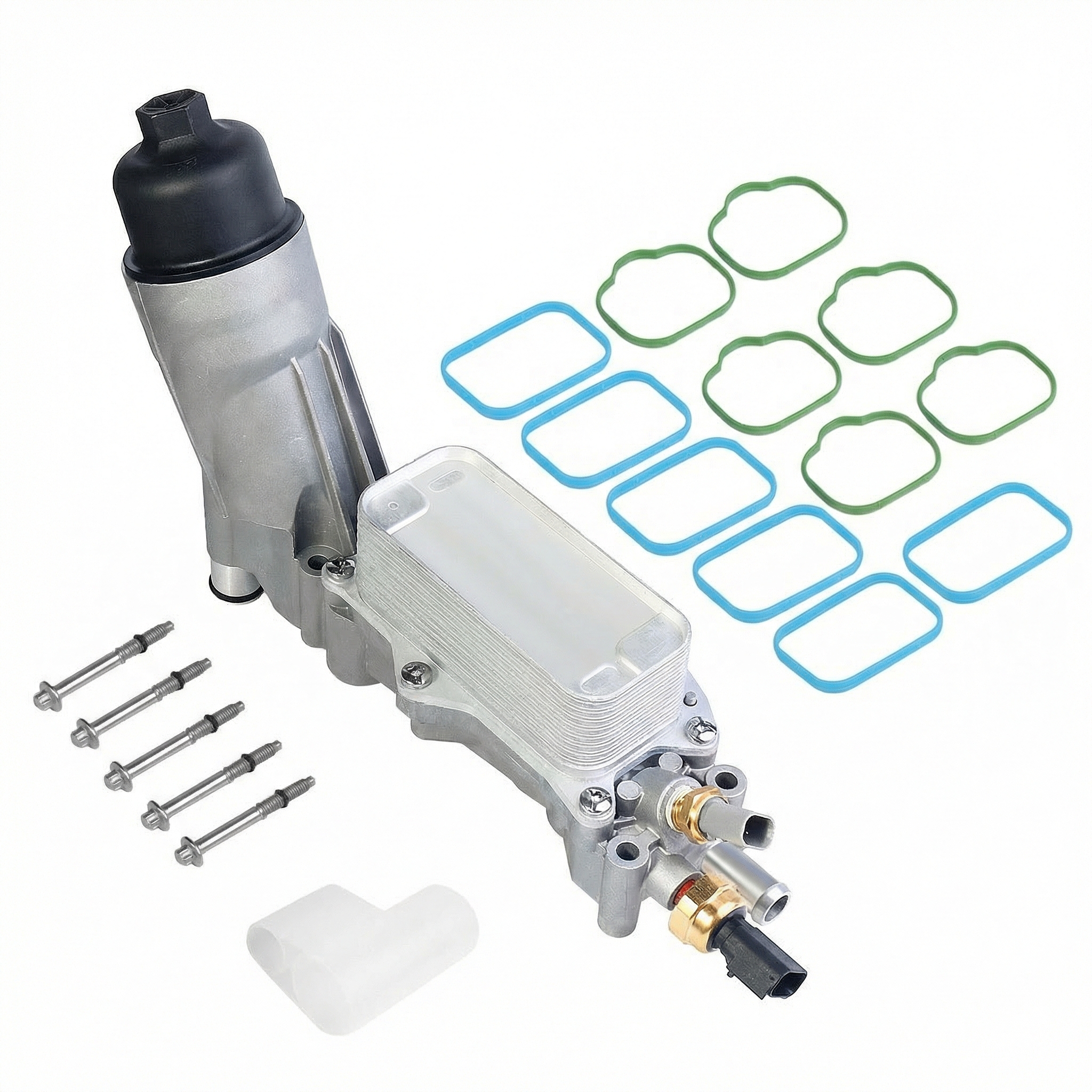
Aftermarket price range: $30-$50 - Oil Filter Housing / Oil Cooler Assembly
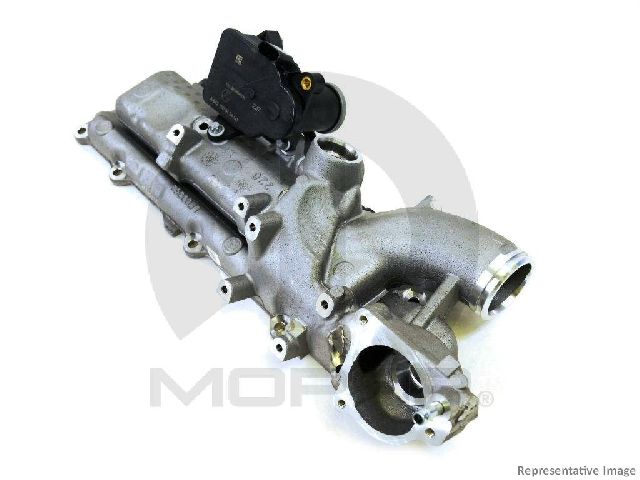
(OEM #68105583AF (or later revision))— This assembly frequently cracks and leaks oil into the engine valley, which can cause the P0520 code by damaging the sensor or its connector. It is often replaced as a preventative measure or if any leaks are found during the sensor replacement. New housings typically come with a new oil pressure sensor pre-installed.
Trusted brands: Mopar, Dorman (including an aluminum aftermarket version)
OEM price range: $200-$250
Aftermarket price range: $120-$180 - Upper and Lower Intake Manifold Gaskets — These must be replaced whenever the intake manifolds are removed to access the oil pressure sensor to ensure a proper seal and prevent vacuum leaks. This is not required if using the 'shortcut' method.
Trusted brands: Mopar, Fel-Pro, Mahle
OEM price range: $40-$60
Aftermarket price range: $20-$40 - Oil Pressure Sensor Socket — A special deep, thin-walled 1-1/16" (or 27mm) socket is required to remove and install the sensor, especially when using the 'shortcut' method where space is extremely limited. Some original sensors have rounded hex flats while replacements have sharper corners, potentially requiring different socket styles.
Trusted brands: Lisle (P/N 13250), OEMTOOLS
OEM price range: N/A
Aftermarket price range: $10-$20
Related Codes That Often Appear With This One
- P0521 — Relates to Engine Oil Pressure Sensor/Switch Performance, indicating the sensor reading is out of its expected range.
- P0522 — Indicates the Engine Oil Pressure Sensor/Switch Circuit is reading low voltage. Often appears with P0520.
- P0523 — Indicates the Engine Oil Pressure Sensor/Switch Circuit is reading high voltage.
- P06DD — Relates to the dual-stage oil pump's control circuit being 'Stuck Off'. Diagnostic procedures for P06DD often instruct the technician to diagnose P0520 first, as a faulty pressure sensor can cause the P06DD code to set.
Technical Service Bulletins (TSBs) & Recalls
- 18-034-14 REV. A: Addresses a Malfunction Indicator Lamp (MIL) for code P0520 by replacing the oil pressure sensor with a revised part.
- 9003694: Relates to diagnosing code P06DD, which can be caused by the same oil pressure sensor fault.
- SB-18-034-14: The original version of the TSB for the P0520 code.
Platform-Specific Known Issues
- A Technical Service Bulletin (TSB #18-034-14 REV. A) was issued for the 2013-2014 Grand Caravan (among other Chrysler models with the 3.6L engine) to address the P0520 code by replacing the original oil pressure sensor with a revised part.
- The sensor is located on the oil filter housing, deep in the engine valley between the cylinder heads, requiring the removal of the upper and lower intake manifolds for access by the book.
- Many owners and mechanics have found a 'shortcut' to replace the sensor without fully removing the intake manifold by reaching down from the passenger side of the engine bay, past the battery. This is a very tight space to work in but saves considerable time and the cost of new intake gaskets.
- Replacement requires a special deep, thin-walled socket, confirmed to be 1-1/16 inch or its metric equivalent, 27mm. Standard or impact sockets may be too thick to fit in the tight confines.
Mechanic-Grade Diagnostic Values
- Engine Oil Pressure Sensor Voltage (Ignition On, Engine Off) — expected: Approximately 4.5 Volts. Failure: Voltage significantly different from 4.5V, or 0V.
- Engine Oil Pressure Sensor Voltage (Jumpered Signal to Ground) — expected: Less than 0.5 Volts. Failure: Voltage does not drop below 0.5V, indicating a problem in the signal or ground circuit, not the sensor.
- 5-Volt Supply Circuit Resistance — expected: Below 5.0 Ohms. Failure: Resistance above 5.0 Ohms, indicating excessive resistance in the supply wire from the PCM.
Wiring & Ground Locations
- Oil Pressure Sensor Connector — On the oil filter housing in the engine valley, below the lower intake manifold.. This is the primary point of failure. The connector itself can become contaminated with oil from a leaking sensor or housing, causing a poor connection. It has a red sliding lock tab that must be pulled back before the release tab can be depressed.
- PCM Connector C2, Pin 20 — At the Powertrain Control Module (PCM).. This is the specific pin for the (G6) Engine Oil Pressure Signal circuit. The wire is typically Violet/Gray. Testing for continuity and shorts should be done from this pin to the sensor connector.
- PCM Connector C2, Pin 85 — At the Powertrain Control Module (PCM).. This is the pin for the (K855) 5 Volt Supply circuit to the sensor. The wire is typically Violet/Yellow. A resistance check should be performed on this wire if voltage issues are detected.
- Sensor Ground Circuit (K900) — Shared ground circuit returning to the PCM.. The sensor requires a solid ground to function. This wire can be tested for continuity back to the PCM. A poor ground can cause erratic readings.
Real Owner Repair Stories
- DoItYourself.com Community Forums user 'Ttreesloth' (2012 Dodge Grand Caravan) — Check Engine Light with code P0520. Oil pressure gauge on the dash would go straight to 96 PSI on a cold start, then fluctuate between 67-96 PSI as the engine warmed up.
❌ Tried (didn't work) The owner initially wondered if using an engine oil additive (Engine Restorer) might have caused the issue, but this was not the root cause.
✅ What actually fixed it Replacing the oil pressure sensor, despite the difficulty of access for large hands. After replacement, the check engine light went out and the oil pressure readings returned to a normal range (high 20s to low 60s PSI).
OEM Part Supersession History
5149062AA, 68060337AA→05149062AB— The original sensors had a high failure rate, leading to the P0520 code. The revised part is recommended by TSB 18-034-14 REV. A to resolve the issue.
Heads up: The original sensor often has a rounded hex body, while the updated Mopar part and many aftermarket replacements have a more defined, squared-off hex body. This can affect which style of 27mm / 1-1/16" socket fits best.
Helpful Videos
Used OEM Parts in Stock

New Aftermarket Parts Available


The information in this article is provided for general reference and educational purposes only. Vehicle specifications, procedures, and part compatibility can vary by production date, trim level, and region. Always consult your vehicle's factory service manual and verify part numbers before purchasing or performing repairs. Safety-critical components such as airbags, seat belts, and braking systems should be installed by a qualified professional.
- Dodge GRAND CARAVAN:
- 🧭 Diagnostic Flowchart
- 🎬 Helpful Videos
- 🛍️ Shop This Part
- What's Unique About the 2013-2014 Dodge GRAND CARAVAN
- Symptoms You May Notice
- Most Likely Causes
- Rare But Worth Checking
- Diagnosis Steps
- Parts You'll Likely Need
- Related Codes That Often Appear With This One
- Technical Service Bulletins (TSBs) & Recalls
- Platform-Specific Known Issues
- Mechanic-Grade Diagnostic Values
- Wiring & Ground Locations
- Real Owner Repair Stories
- OEM Part Supersession History
- 🎟️ Get 5% Off