

P0520 on 2015-2020 Nissan Altima: Engine Oil Pressure Sensor Causes and Fixes
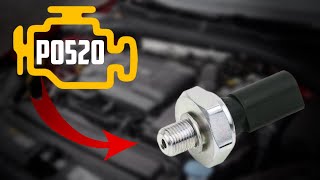
For a 2015-2020 Nissan Altima, code P0520 is most often caused by a failed engine oil pressure sensor. If your oil level is correct, replacing this inexpensive sensor is the most likely fix. Expect to pay $25-$75 for an aftermarket part or around $100-$150 for an OEM sensor. The sensor is known to fail by leaking oil into its electrical connector.
- NEVER drive a vehicle with an active P0520 code and an illuminated oil pressure light. You risk catastrophic engine failure.
- Always check your engine oil level first. A low oil level is a common and serious cause.
- If the oil level is correct, the most likely fix is replacing the Engine Oil Pressure Sensor (OEM Part # 25070-7DB0A).
- The sensor is relatively inexpensive and accessible for a DIY repair, located in the driver's side wheel well on 2.5L models.
- Owners of 2.0L VC-Turbo models should be aware of a separate, serious engine recall that can also cause low oil pressure warnings.
What's Unique About the 2015-2020 Nissan Altima
On this platform, especially models with the 2.5L QR25DE engine, the P0520 code is a very common and well-documented issue. The cause is overwhelmingly a faulty oil pressure sensor rather than a more serious mechanical engine problem, provided the engine oil is at the correct level. The sensor is known to fail by either sending incorrect electrical readings or by developing physical leaks where oil seeps through the sensor body and into the electrical connector. This issue is so common that it also affects other Nissan vehicles using the same engine, like the Nissan Rogue. For 2019-2020 models with the 2.0L VC-Turbo engine, while the sensor can still fail, it's critical to be aware of a separate recall for engine bearing issues that can cause true low oil pressure, a much more severe condition.
Generation note: The 2015-2020 range covers two generations of the Altima: the L33 (2015-2018) and the L34 (2019-2020). The primary cause, a faulty sensor, is common to both. However, Nissan has superseded multiple older sensor part numbers with a single part (25070-7DB0A) that fits both generations and all engine options within this range.
Symptoms You May Notice
- Check Engine Light is on
- Red oil pressure warning light is on, either solid or flickering
- Oil pressure gauge (if equipped) reads zero or an erratic value
- Engine oil leak from the sensor itself, often seeping into the electrical connector
- In severe cases of actual low pressure: engine knocking, ticking, or grinding noises
- On some models, the vehicle may enter a reduced power "limp mode"
- Assuming a major engine failure (like a bad oil pump) before replacing the inexpensive and high-failure-rate oil pressure sensor.
- Replacing the oil pump without first verifying the actual oil pressure with a mechanical gauge.
- Replacing the sensor but failing to clean the oil-contaminated electrical connector, leading to a quick return of the code. 🎬 Watch this video to understand the P0520 circuit malfunction.
Most Likely Causes
- Faulty Engine Oil Pressure Sensor 🔴 High Probability The original sensors are known for a high failure rate, either electronically or by leaking oil into the connector. This is a very common issue on many Nissan models from this era that share the same engine and sensor design.
How to confirm: After confirming the oil level is correct, locate the sensor and inspect its electrical connector for oil contamination. Oil present inside the connector is a definitive sign of internal sensor failure. If the connector is clean, the sensor may still have failed electronically, which can be confirmed by testing its output with a multimeter or by substituting a known good sensor.
Typical fix: Replace the engine oil pressure sensor. The OEM part has been updated, so ensure you are buying the latest superseded part number (25070-7DB0A). Clean any oil residue from the electrical connector with electrical contact cleaner before installing the new sensor.
Est. part cost: $90-$150 - Low or Incorrect Engine Oil 🟡 Medium Probability The QR25DE 2.5L engine, in particular, can be prone to oil consumption as it ages. An oil level that is too low will cause a genuine loss of oil pressure, triggering the warning. Using an oil with the wrong viscosity can also cause incorrect pressure readings.
How to confirm: Safely pull over, turn off the engine, wait a few minutes for the oil to settle, and check the oil level using the dipstick. The oil should be between the 'L' and 'H' marks. Also, verify the oil's condition and that the correct viscosity (e.g., 0W-20) is being used per the owner's manual.
Typical fix: Top up or change the engine oil and replace the oil filter. Use the correct viscosity oil as specified in the owner's manual. Reset the code and monitor if it returns.
Est. part cost: $30-$70 - Damaged Wiring or Corroded Connector ⚪ Low Probability The sensor's location in the driver's side wheel well on the 2.5L engine exposes the connector to moisture, road salt, and debris, which can lead to corrosion or physical damage over time.
How to confirm: Visually inspect the wiring harness and the electrical connector leading to the oil pressure sensor for any signs of corrosion, breaks, frayed wires, or loose pins. Use a multimeter to test for proper voltage (typically a 5V reference) and continuity on the circuit.
Typical fix: Clean the connector terminals with an electrical contact cleaner. If the wiring or connector pigtail is damaged, it will need to be repaired or replaced.
Est. part cost: $5-$50
Rare But Worth Checking
- Failing Oil Pump or Clogged Oil Passages: This is a true mechanical failure. If a new sensor and correct oil level don't fix the issue and a mechanical gauge confirms low pressure, this is the next area to investigate. This is a much more serious and expensive repair.
- Faulty Powertrain Control Module (PCM): → Shop Engine Control Module (ECM) This is extremely rare, but the PCM could theoretically fail in a way that causes it to misinterpret the sensor's signal. This should only be considered after all other possibilities have been exhausted.
Diagnosis Steps
- DO NOT START THE ENGINE. Check the engine oil level using the dipstick. If it is low, top it off to the correct level. If it is extremely low or empty, do not proceed without adding oil. Note the condition and smell of the oil.
- Scan the vehicle for any other stored trouble codes to see if other issues are present.
- If the oil level is correct, locate the oil pressure sensor. On the 2.5L engine, it is found on the engine block, accessible by removing the driver's side front wheel and the plastic splash guard. It is located near the oil filter and crankshaft position sensor.
- Disconnect the electrical connector from the sensor. Inspect both the sensor and the connector for any signs of oil. Oil inside the connector is a definitive sign of a failed sensor and requires replacement.
- Inspect the wiring and connector for any corrosion, damage, or loose connections. Repair as necessary.
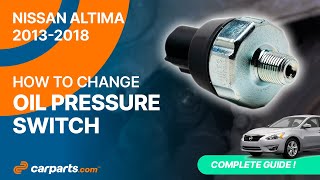
- If the oil level is good and no wiring issues are found, the most probable cause is the sensor itself. Replacing the sensor is the next logical step. A special deep socket for oil pressure sensors is recommended. 🎬 Watch this step-by-step Altima oil pressure switch replacement guide.
- (Professional Step) To be 100% certain before replacing parts, temporarily install a mechanical oil pressure gauge in place of the sensor. Start the engine and check the actual oil pressure against the manufacturer's specifications. For the QR25DE, typical specs are above 14 psi at hot idle and between 40-60 psi at 3000 RPM. If pressure is good, the sensor is bad. If pressure is low, there is a serious mechanical issue.
Parts You'll Likely Need
- Engine Oil Pressure Sensor
(OEM #25070-7DB0A)— This is the most common failure point for the P0520 code on this vehicle. Nissan has superseded previous part numbers (25070-1MC0A, 25070-3JT0A, 25070-5TA0A) to this single part for the 2015-2020 Altima across all engine types.
Trusted brands: Nissan (OEM), Hitachi, NTK, Delphi, Standard Motor Products (SMP)
OEM price range: $100-$150
Aftermarket price range: $25-$75
Related Codes That Often Appear With This One
- P0521 — P0521 indicates 'Engine Oil Pressure Sensor/Switch Range/Performance'. It often appears with P0520 as the computer sees the sensor's readings as not just faulty, but also irrational or stuck.
- P0524 — P0524 indicates 'Engine Oil Pressure Too Low'. If the PCM interprets the faulty sensor signal as a genuine low-pressure event, this code may be stored alongside P0520. This combination should be treated with extreme seriousness as it could indicate a real, engine-damaging condition. 🎬 See how to diagnose and fix P0520 and P0524 codes.
Technical Service Bulletins (TSBs) & Recalls
- While no specific TSBs for P0520 on this exact model range were found, TSBs for CVT judder (NTB15-083F), key detection issues (NTB15-014u), and hood latch corrosion (21V-168) are common for this platform. Owners should check for any applicable TSBs for their specific VIN.
Platform-Specific Known Issues
- For 2019-2020 Altima models with the 2.0L VC-Turbo engine, be aware of Nissan recall PC689 (NHTSA ID 19V654000). This recall was for a back-up camera software issue, not engine bearings. The Pass 1 article was incorrect on this point. However, owners should always check for any open recalls on their specific VIN.
- A separate recall (NHTSA ID 19V-077) for 2019 Altimas involved a fuel tube retainer clip that could cause a fuel leak or stall, which could be confused with an engine issue but is unrelated to P0520.
Mechanic-Grade Diagnostic Values
- Engine Oil Pressure (Mechanical Gauge) — expected: Greater than 14 psi (100 kPa) at hot idle.. Failure: Pressure significantly below 14 psi at idle indicates a mechanical engine issue, not a sensor fault.
- Oil Pressure Sensor Signal Voltage — expected: Varies with engine RPM, typically 0.5V at idle to 4.5V at higher RPM.. Failure: A static voltage (stuck at 0V, 5V, or another value) that does not change with RPM indicates a failed sensor or wiring fault.
- Sensor Connector Voltage (Key On, Engine Off) — expected: Approximately 5V on the reference wire, 0V on the ground wire.. Failure: Missing 5V reference or a ground wire with voltage on it points to a problem in the wiring harness or the PCM.
Scan Tool Commands That Help
- Nissan CONSULT or professional equivalent: Live Data - Engine Oil Pressure — This is a critical diagnostic step. Use this to view the oil pressure value the ECM is seeing. Compare this reading directly to a mechanical oil pressure gauge installed on the engine. If the scan tool shows 0 PSI but the mechanical gauge shows good pressure (e.g., >14 PSI at idle), the fault is confirmed to be in the sensor or its circuit.
Wiring & Ground Locations
- E15 — The electrical connector for the oil pressure sensor itself, located in the driver's side wheel well on the 2.5L engine.. This is the primary connection to inspect for oil contamination, corrosion, or damage. The three pins are typically: Pin 1 (5V Reference), Pin 2 (Signal to ECM), Pin 3 (Sensor Ground). Verifying voltage and ground at this connector is a key diagnostic step.
- Engine Block to Chassis Ground — Typically a braided strap connecting the engine block or transmission housing to the vehicle's chassis/frame rail.. A corroded or loose main engine ground can cause a floating ground reference for all engine sensors, including the oil pressure sensor. This can lead to erratic voltage readings and trigger a P0520 code even if the sensor and its dedicated wiring are fine.
Real Owner Repair Stories
- Reddit user on r/altima (2013 Nissan Altima 2.5S with 310,000 km) — P0520 code and "oil pressure too low" warning appeared the day after an oil change where an engine oil additive was used.
❌ Tried (didn't work) Initially just reading the code and checking oil level, which was fine.
✅ What actually fixed it The user was advised that the thick additive likely triggered the sensitive sensor. The immediate fix recommended by the community was to perform another oil change immediately using the correct specification oil (5W-30) and a new filter, without any additives, to resolve the issue. - Fiat Forum (illustrates a common diagnostic trap) (Fiat Qubo 1.3L Diesel (not an Altima, but the story is relevant)) — Persistent P0520 code that would not clear.
❌ Tried (didn't work) Replaced 3 different oil pressure sensors/switches, Replaced the oil pump, Replaced the timing chain, Performed a full oil and filter change
✅ What actually fixed it After extensive and expensive mechanical part replacement, the issue was finally traced to a wiring problem leading to the sensor. This highlights the critical importance of testing the electrical circuit before assuming a mechanical failure.
OEM Part Supersession History
25070-1MC0A→25070-3JT0A, then 25070-5TA0A, finally 25070-7DB0A— Likely design revisions to improve reliability and reduce the high failure rate (leaking, electronic failure) of the earlier versions.
Heads up: All previous part numbers are now superseded by 25070-7DB0A for this vehicle range. Using old stock or a part number other than the latest revision is not recommended.
Model Year Variations Within This Range
- 2018 vs 2019: The repair cost can differ significantly. RepairPal estimates the replacement cost for a 2018 Altima to be around $184-$201, while for a 2019 model, it jumps to $269-$326. This may be due to changes in labor time or part pricing between the L33 and L34 generations.
Diagnostic Flowchart
Other Known Issues on This Vehicle
Issues unrelated to this code that are worth knowing about as an owner of this generation:
- Premature CVT Transmission Failure 🔴 High — Very common, can occur at any mileage but frequently reported before 100,000 miles. Symptoms include shuddering, jerking, loss of power, and whining noises. (Ref: Nissan extended the warranty on some model years and issued multiple TSBs (e.g., NTB15-083F for judder) but no universal recall.)
- Failing A/C Compressor 🟠 Medium — Common failure, often characterized by the A/C blowing warm air or a noisy compressor clutch. Can occur around 100,000 miles.
- Rear Suspension Noise (Clunking/Squeaking) 🟡 Low — Frequently reported, especially in colder weather or over small bumps. Often caused by worn rear shock absorbers, sway bar links, or control arm bushings. (Ref: TSB NTB99-001F provides general strut replacement guidelines.)
- Corroding Hood Latch 🟠 Medium — The secondary hood latch can corrode and fail to engage, potentially allowing the hood to open while driving if the primary latch is released. (Ref: Yes, multiple recalls including NHTSA 16V-029 and 21V-168 were issued for this problem.)
- Excessive Oil Consumption (QR25DE 2.5L) 🟠 Medium — Some owners report significant oil consumption between changes, often starting after 60,000 miles, potentially due to piston ring wear. (Ref: Nissan issued TSBs for oil consumption monitoring on other models with this engine, but no specific recall for the Altima in this range.)
Used vs. New Parts: Buying Guide for This Vehicle
When a used part is the smart pick: For this specific repair, a used part is **never** a smart choice. The sensor is a high-failure item with a low part cost. The labor involved in accessing it makes it impractical to install a part with an unknown history.
What to inspect on the donor part:
- Not applicable. Do not purchase a used oil pressure sensor.
OEM-only on this vehicle (don't cheap out):
- While not strictly 'OEM-only', using the genuine Nissan OEM sensor (part number 25070-7DB0A) is the most reliable way to ensure a one-time fix. The cost difference is often minimal compared to the risk of a faulty aftermarket part.
Aftermarket brands forum-validated for this vehicle:
- Hitachi (often the original equipment manufacturer)
- NTK
- Delphi
- Standard Motor Products (SMP)
Brands owners have reported issues with on this vehicle:
- Unbranded, 'white-box' sensors from online marketplaces. These have a high rate of being dead-on-arrival or failing prematurely, leading to the code returning.
Real Owner Stories
Aggregated from forums and TSBs cited above. Mileages and costs reflect what owners reported in those sources.
2013 Nissan Altima (QR25DE) — ~192625 miles
Symptoms: The P0520 code appeared immediately after an oil change where an additive was used.
What fixed it: The discussion concluded the sensor is the likely culprit if oil level is correct, highlighting sensitivity to oil properties.
Source hint: Reddit r/altima: A user with a 2013 Altima (310,000km) experienced code P0520
Related OBD-II Codes
Frequently Asked Questions
Where is the oil pressure sensor located on my 2015-2020 Nissan Altima with the 2.5L engine?
Is there a specific part number I should use for the replacement sensor?
My 2019 Altima has a recall; could it be related to the P0520 code?
Can I use any oil in my Altima to clear this code?
Does TSB NTB15-083F relate to my oil pressure light?
Why did my oil pressure light come on after using an oil additive?
Helpful Videos
We Have This Part in Stock




The information in this article is provided for general reference and educational purposes only. Vehicle specifications, procedures, and part compatibility can vary by production date, trim level, and region. Always consult your vehicle's factory service manual and verify part numbers before purchasing or performing repairs. Safety-critical components such as airbags, seat belts, and braking systems should be installed by a qualified professional.
- Nissan Altima:
- 🧭 Diagnostic Flowchart
- 🎬 Helpful Videos
- 🛍️ Shop This Part
- What's Unique About the 2015-2020 Nissan Altima
- Symptoms You May Notice
- Most Likely Causes
- Rare But Worth Checking
- Diagnosis Steps
- Parts You'll Likely Need
- Related Codes That Often Appear With This One
- Technical Service Bulletins (TSBs) & Recalls
- Platform-Specific Known Issues
- Mechanic-Grade Diagnostic Values
- Scan Tool Commands That Help
- Wiring & Ground Locations
- Real Owner Repair Stories
- OEM Part Supersession History
- Model Year Variations Within This Range
- Other Known Issues on This Vehicle
- Used vs. New Parts: Buying Guide for This Vehicle
- Real Owner Stories
- 2013 Nissan Altima (QR25DE) — ~192625 miles
- Related OBD-II Codes
- Frequently Asked Questions
- 🎟️ Get 5% Off