

P0520 on 2014-2018 Subaru Forester: Engine Oil Pressure Switch Circuit Fixes
On a 2014-2018 Forester, P0520 is almost always caused by a faulty engine oil pressure switch, a known issue on these vehicles. It's a simple, low-cost fix; the part (OEM #25240AA060) is under $40, and it's a 30-minute DIY job for most. Do not overtighten the new switch.
- P0520 on your Forester is an electrical code, not a 'low oil' code. Don't panic, but don't ignore it.
- Always check your oil level first. It's simple, free, and critical on the FB25 engine which can consume oil.
- The oil pressure switch (OEM #25240AA060) is the most likely culprit, especially on 2015-2016 models. It's a cheap and easy part to replace.
- When replacing the switch, be extremely careful not to overtighten it. Hand-tighten then use a torque wrench to 12-18 ft-lbs. Cracking the engine block
What's Unique About the 2014-2018 Subaru Forester
The 2014-2018 Forester, particularly the 2015-2016 models, is known for premature failure of the original oil pressure switch. The issue was so common that Subaru issued Technical Service Bulletin 02-162-15R on September 11, 2015, acknowledging the problem. The bulletin states the original parts had poor internal contacts, and the fix was a new, improved part with more durable nickel-plating on those contacts. For this reason, a flickering oil light accompanied by code P0520 on a Forester with the correct oil level is almost always a faulty switch, not a dangerous loss of oil pressure.
Symptoms You May Notice
- Flickering or constantly illuminated red oil pressure warning light on the dashboard, especially at idle or during braking/turns.
- Check Engine Light is on.
- Visible oil leaking or seeping from the oil pressure switch itself, often mistaken for a valve cover gasket leak.
- Smell of burning oil as it drips onto hot engine or exhaust components.
- Replacing the oil pump. The P0520 code is an electrical circuit code, not a low-pressure code. Replacing the oil pump is an expensive and unnecessary repair for this specific code.
- Replacing the valve cover gasket. An externally leaking oil pressure switch can spray oil onto the side of the engine, perfectly mimicking a valve cover gasket leak. Always inspect the switch itself for seepage before performing a gasket replacement.
Most Likely Causes
- Faulty Engine Oil Pressure Switch 🔴 High Probability → Shop Engine Oil Pressure Switch The original factory part on 2015-2016 models had a high failure rate due to poor internal contacts, as documented in Subaru TSB 02-162-15R. The switch can fail internally (sending a bad signal) or leak externally from its body.
How to confirm: First, verify the engine oil level is correct. The definitive test is to connect a mechanical pressure gauge; per TSB 02-187-21, pressure should be checked at idle and 3000 RPM. However, due to the low cost and extremely high failure rate, many owners and shops replace the switch as the primary diagnostic step after confirming the oil level is full.
Typical fix: Replace the engine oil pressure switch with a new OEM or quality aftermarket part. A 24mm deep socket is required.
Est. part cost: $15-$40 - Damaged Wiring or Connector ⚪ Low Probability The sensor is located on the front of the engine, below the alternator, where it is exposed to heat, vibration, and oil saturation, which can degrade the single-wire connector or its insulation over time.
How to confirm: Visually inspect the single wire and its connector leading to the oil pressure switch for any signs of cracking, corrosion, oil saturation, or loose pins.
Typical fix: Repair the damaged section of wiring or replace the connector pigtail.
Est. part cost: $5-$25 - Low Engine Oil Level ⚪ Low Probability The FB25 engine in 2014-2015 models is known for potential excessive oil consumption. If the level drops low enough, the oil light may flicker, which could be accompanied by a P0520 code, though a P0524 is more common in this scenario.
How to confirm: Check the engine oil level using the dipstick. If it is below the minimum mark, this is the likely cause. This should always be the first check.
Typical fix: Top off the engine oil to the correct level using the manufacturer-specified 0W-20 synthetic oil and investigate the cause of oil loss.
Est. part cost: $10-$20
Rare But Worth Checking
- Incorrect Oil Viscosity or Clogged Oil Filter: → Shop Engine Oil Filter Adapter Using oil that is too thick (e.g., 5W-30 instead of 0W-20) or a very old, clogged, or poor-quality aftermarket oil filter can cause erratic pressure readings that may trigger a circuit code. This is unlikely but possible if the issue appears immediately after an oil change.
- Powertrain Control Module (PCM) Fault: → Shop Engine Control Module (ECM) This is extremely rare. The PCM itself could be failing, but all other more likely causes should be exhausted before considering this.
Diagnosis Steps
- Check the engine oil level and condition. Top up if necessary.
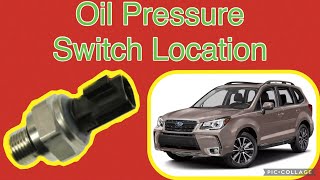
- Visually inspect the oil pressure switch and its connector for obvious oil leaks or damage. The switch is located on the front of the engine, below and slightly to the passenger side of the alternator. 🎬 Watch: Locate the oil pressure switch on a 2015 Forester
- If the oil level is correct, the most probable cause is a failed switch. Replace the oil pressure switch using a 24mm deep socket.
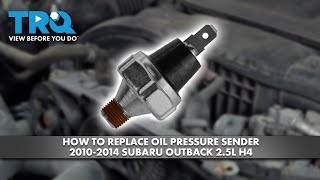
- CRITICAL: Be extremely careful not to overtighten the new switch. It has tapered threads. Thread it in by hand until snug, then tighten to the specified torque of 12-18 ft-lbs. Overtightening can crack the engine block. 🎬 See this step-by-step oil pressure switch replacement walkthrough
- Clear the trouble code with a scan tool and start the engine. Check if the code and oil light return.
- If the code persists, thoroughly inspect the wiring and connector for the oil pressure switch. Test for proper voltage and ground at the connector.
- As a final, definitive test, use a mechanical oil pressure gauge to verify the actual engine oil pressure. Per Subaru TSB 02-187-21, the pressure should be measured with the engine warm (176°F). If pressure is within spec, the problem is guaranteed to be electrical (switch, wiring, or PCM).
Parts You'll Likely Need
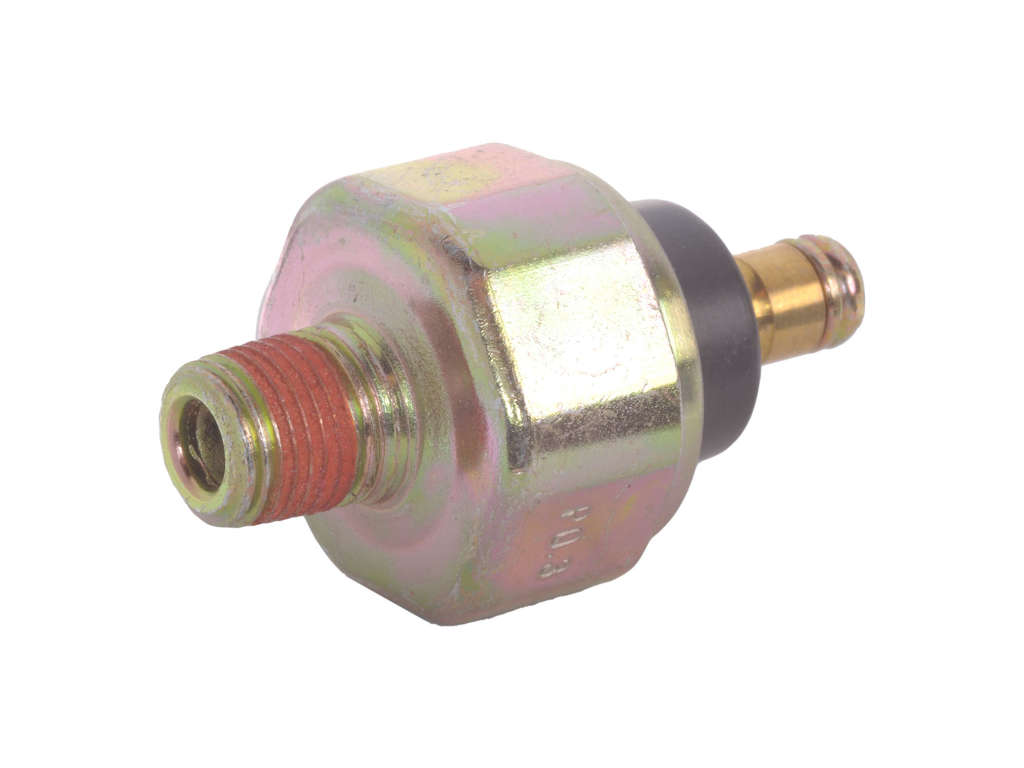
- Engine Oil Pressure Switch
(OEM #25240AA060)— This is the most common failure point for code P0520 on this vehicle, with a known history of premature failure addressed by TSB 02-162-15R.
Trusted brands: Subaru (Genuine OEM), Standard Motor Products (SMP), NTK/NGK, Denso
OEM price range: $25-$40
Aftermarket price range: $15-$25
Related Codes That Often Appear With This One
- P0524 — If the sensor fails in a way that it sends a signal indicating very low pressure, it can trigger P0524 (Engine Oil Pressure Too Low) alongside the P0520 circuit code. 🎬 Watch: Understanding the P0520 engine code and its causes
Technical Service Bulletins (TSBs) & Recalls
- 02-162-15R: Acknowledges premature failure of the original oil pressure switch on 2015-2016 models and introduces an updated part with more durable nickel-plated contacts.
- 02-187-21: Outlines the updated procedure for testing engine oil pressure, requiring checks at both idle and 3000 RPM.
Platform-Specific Known Issues
- Subaru issued Technical Service Bulletin (TSB) #02-162-15R on Sept 11, 2015, for 2015-2016 Foresters (and other models) due to faulty original oil pressure switches. The bulletin states: 'Nickel plating has been applied to the internal switch contacts to enhance their durability and reduce the possibility of poor contact'.
Mechanic-Grade Diagnostic Values
- Mechanical Engine Oil Pressure (Engine Warm at 80°C / 176°F) — expected: At Idle: > 9.8 PSI (68 kPa) At 3000 RPM: > 40.6 PSI (280 kPa). Failure: Pressure below these specifications indicates a mechanical engine issue (e.g., oil pump, clogged pickup), not a sensor circuit fault.
- Oil Pressure Switch Continuity Test (Switch Unplugged) — expected: Engine OFF: Continuity (near 0 ohms) between the switch's electrical pin and the engine block (ground). Engine RUNNING: No continuity (Open circuit / OL) between the pin and ground.. Failure: If the switch shows no continuity when the engine is off, or shows continuity when the engine is running (and mechanical pressure is confirmed good), the switch is faulty.
Wiring & Ground Locations
- Oil Pressure Switch Ground — The switch grounds directly through its threaded body into the engine block.. The P0520 is a circuit code. The switch is a simple on/off ground switch. A poor ground connection due to corrosion on the threads or block surface could theoretically cause an intermittent open circuit, triggering the code. Ensure the threads are clean upon installation.
- Main Engine Grounds — Key grounds are typically located on the intake manifold, bolted to the frame rails on either side of the engine bay, and from the transmission to the firewall.. While the switch grounds itself directly, a poor overall engine ground could create voltage potential differences that might affect the signal seen by the ECM. This is a very unlikely cause for a single P0520, but it's a critical check if other electrical gremlins are present.
Real Owner Repair Stories
- Aggregated from subaruforester.org and Reddit owner experiences (2015 Subaru Forester 2.5i, mileage often varies from 60,000 to 120,000 miles) — Flickering red oil pressure light on the dash, primarily at idle or after the engine is warm. Check engine light is also on with code P0520. Oil level on dipstick is full.
❌ Tried (didn't work) Topping off oil (level was already correct)., Clearing the code with a scan tool (code returned immediately or within one drive cycle).
✅ What actually fixed it Replacing the original oil pressure switch (OEM Part #25240AA060) with a new OEM part. The problem was resolved immediately after the 30-minute replacement and did not return.
OEM Part Supersession History
Unknown (part installed at factory on 2015-2016 models)→25240AA060— The original switches were prone to premature failure due to poor internal contacts. The updated part #25240AA060 features more durable nickel-plating on these contacts to resolve the issue.
Model Year Variations Within This Range
- 2015-2016: These model years were specifically called out in Subaru TSB 02-162-15R for having a high failure rate of the original-spec oil pressure switch. While the switch can fail on any year in the 2014-2018 range, it is a near-guaranteed failure on these two model years.
Diagnostic Flowchart
Other Known Issues on This Vehicle
Issues unrelated to this code that are worth knowing about as an owner of this generation:
- Excessive Oil Consumption 🔴 High — Most common on 2011-2015 models. Caused by faulty piston rings. Subaru faced a class-action lawsuit and issued a warranty extension to 8 years/100,000 miles for affected vehicles. (Ref: Warranty Extension Program / TSB 02-157-14R)
- Lineartronic CVT Transmission Failure/Shudder 🔴 High — Prevalent in 2014-2018 models, often appearing between 60,000-100,000 miles. Symptoms include shuddering, hesitation, and noise. Subaru extended the CVT warranty to 10 years/100,000 miles for many affected vehicles. (Ref: TSB 16-103-15R (addresses shudder))
- Premature Wheel Bearing Failure 🟠 Medium — Common for rear wheel bearings to fail between 50,000 and 100,000 miles, causing a humming or grinding noise that gets louder with speed. (Ref: TSB 05-70-19, TSB 03-96-25 (address updated parts))
- Lower Control Arm Bushing Failure 🟠 Medium — The front-forward bushing on the front lower control arm can degrade, causing a rattling noise and potential steering vibration. The issue is common enough that Subaru released an updated, more durable bushing. (Ref: TSB 05-63-18R)
Used vs. New Parts: Buying Guide for This Vehicle
When a used part is the smart pick: For this specific repair, a used part NEVER makes sense. The original part is a known high-failure item, and the cost of a new, updated OEM part is very low (typically under $40).
What to inspect on the donor part:
- Do not purchase a used oil pressure switch for this repair.
OEM-only on this vehicle (don't cheap out):
- Engine Oil Pressure Switch - While quality aftermarket brands exist, the OEM part is inexpensive and guarantees you receive the updated, more durable version specified in the TSB. Given the low cost, there is little reason to risk an aftermarket part.
Aftermarket brands forum-validated for this vehicle:
- Standard Motor Products (SMP)
- NTK/NGK
- Denso
Brands owners have reported issues with on this vehicle:
- Unbranded, 'white-box' parts from online marketplaces should be avoided as their internal calibration and durability are unknown.
Real Owner Stories
Aggregated from forums and TSBs cited above. Mileages and costs reflect what owners reported in those sources.
2012 Subaru Forester 2.5L H4
Symptoms: Owner was considering changing the oil pressure switch and sought advice on the DIY process, specifically concerned about the fragility of the mounting port.
What fixed it: The discussion emphasized using a 24mm deep socket and strictly adhering to torque limits to avoid cracking the oil pressure port/front timing cover.
Source hint: Reddit r/SubaruForester thread titled '2012 Forester 2.5 - change oil pressure switch?'
2015-2016 Subaru Forester FB25
Symptoms: Flickering or constantly illuminated red oil pressure warning light on the dashboard, especially at idle or during braking/turns; visible oil leaking from the switch body.
What fixed it: Replacement of the oil pressure switch with an updated version featuring nickel-plated internal contacts.
Source hint: Subaru TSB 02-162-15R
2014-2018 Subaru Forester 2.5L
Symptoms: Oil pressure light flashing red intermittently while the oil level remained fine.
What fixed it: Replacing the oil pressure sensor/switch.
Source hint: subaruforester.org forum discussion
Related OBD-II Codes
Frequently Asked Questions
Is there a Technical Service Bulletin for the oil pressure switch on my 2015 Forester?
My oil light is flickering at idle but my oil level is full; what is the most likely cause?
Can I use a standard socket to replace the oil pressure switch on my 2.5L H4 engine?
I heard overtightening the sensor can damage the engine. What is the correct torque spec?
Does the oil consumption issue on 2014-2015 Foresters cause P0520?
Is the oil pressure switch the same one used in the Subaru Outback?
Helpful Videos
We Have This Part in Stock


The information in this article is provided for general reference and educational purposes only. Vehicle specifications, procedures, and part compatibility can vary by production date, trim level, and region. Always consult your vehicle's factory service manual and verify part numbers before purchasing or performing repairs. Safety-critical components such as airbags, seat belts, and braking systems should be installed by a qualified professional.
- Subaru Forester:
- 🧭 Diagnostic Flowchart
- 🎬 Helpful Videos
- 🛍️ Shop This Part
- What's Unique About the 2014-2018 Subaru Forester
- Symptoms You May Notice
- Most Likely Causes
- Rare But Worth Checking
- Diagnosis Steps
- Parts You'll Likely Need
- Related Codes That Often Appear With This One
- Technical Service Bulletins (TSBs) & Recalls
- Platform-Specific Known Issues
- Mechanic-Grade Diagnostic Values
- Wiring & Ground Locations
- Real Owner Repair Stories
- OEM Part Supersession History
- Model Year Variations Within This Range
- Other Known Issues on This Vehicle
- Used vs. New Parts: Buying Guide for This Vehicle
- Real Owner Stories
- 2012 Subaru Forester 2.5L H4
- 2015-2016 Subaru Forester FB25
- 2014-2018 Subaru Forester 2.5L
- Related OBD-II Codes
- Frequently Asked Questions
- 🎟️ Get 5% Off