

P0520 on 2013-2019 Subaru Outback: Engine Oil Pressure Switch Circuit Causes and Fixes
On a 2013-2019 Subaru Outback, code P0520 is almost always a failed engine oil pressure switch. This part is known to fail electrically and develop an oil leak. The replacement OEM part (25240AA060) costs about $25-$40 and is a common, straightforward DIY fix. CRITICAL: Do not overtighten the new switch; its tapered threads can crack the engine block, turning a cheap fix into a catastrophic failure.
- P0520 on your Outback almost always points to a bad oil pressure switch, not a bad engine.
- Before buying parts, check your oil level and look for a visible oil leak at the switch itself; this is a tell-tale sign of failure.
- The switch location is different for 2013-2014 vs. 2015-2019 models, with the later years being much easier to access.
- When replacing the switch, be extremely careful not to overtighten it. The correct torque is critical to avoid cracking the engine block.
What's Unique About the 2013-2019 Subaru Outback
For the FB25B engine in this Outback, P0520 is an extremely common and well-documented issue. The original oil pressure switch is a known failure point, prone to both electrical failure and developing physical oil leaks through the switch's body. Subaru acknowledged this weakness by issuing a Technical Service Bulletin (TSB 02-162-15R) and releasing an updated switch with more durable, nickel-plated internal contacts to address poor contact and improper warning light illumination. This makes the issue a predictable and well-understood repair.
Generation note: This range covers the end of the 4th generation (2013-2014) and the entire 5th generation (2015-2019) Outback. The cause and fix are the same, but the location of the oil pressure switch is different. On 2013-2014 models, it is under the alternator, requiring more effort to access. On 2015-2019 models, it is below the oil filter housing, making it much easier to access.
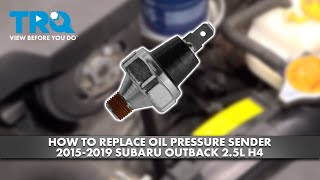
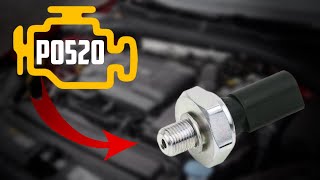
🎬 See this 2015-2019 Outback oil pressure switch replacement guideSymptoms You May Notice
- Check Engine Light is on
- Red oil pressure warning light is on or flickering, especially at idle, during turns, or when braking.
- Visible oil leak or residue on the front of the engine, often dripping from the switch onto other components.
- Oil inside the electrical connector for the switch.
- Replacing the engine computer (ECM/PCM) without exhausting other possibilities.
- Assuming the engine needs major internal repairs without first replacing the inexpensive oil pressure switch or verifying pressure with a mechanical gauge.
- Replacing the oil pump before confirming low pressure with a mechanical gauge.
Most Likely Causes
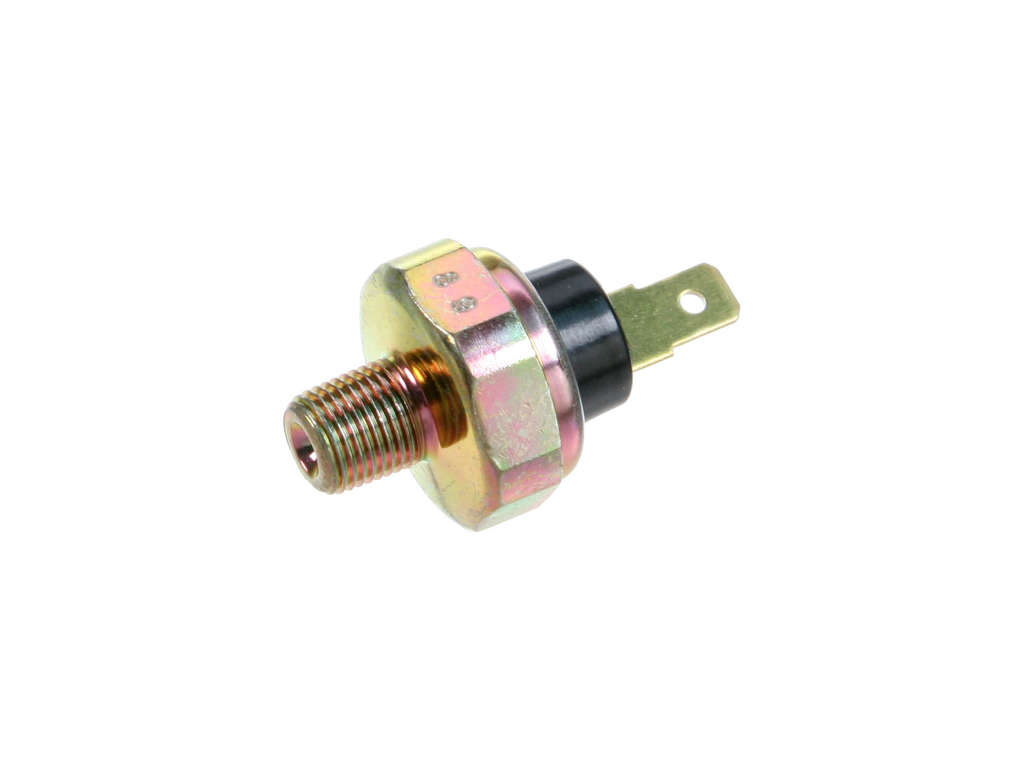
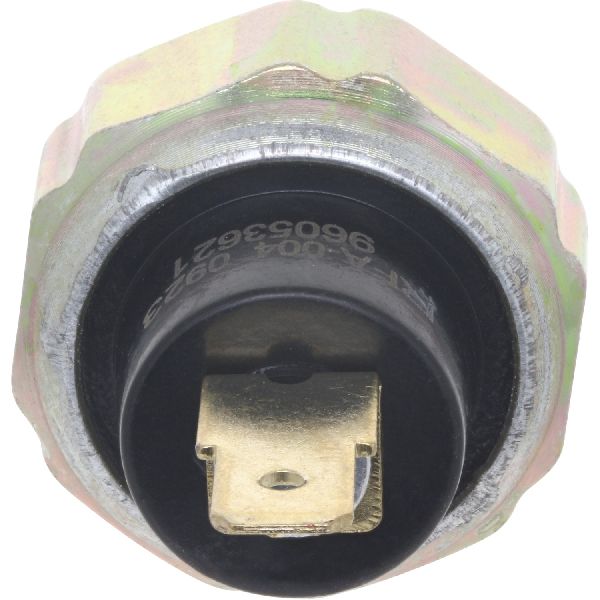
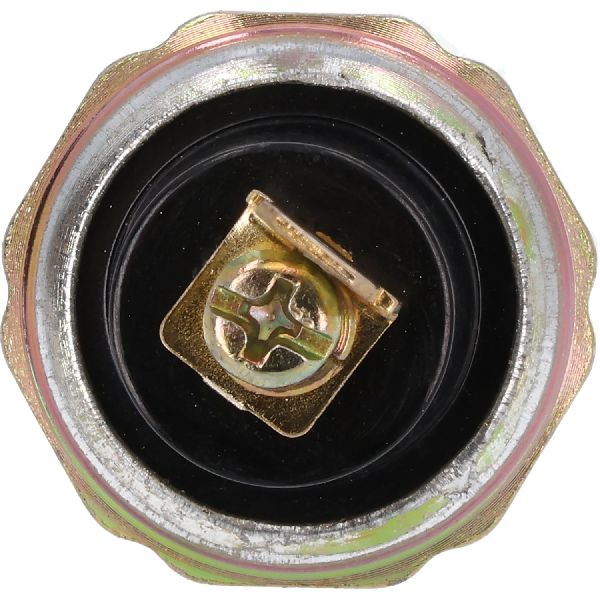
- Faulty Engine Oil Pressure Switch 🔴 High Probability → Shop Engine Oil Pressure Switch The original part is a known failure point. Subaru released TSB 02-162-15R for a redesigned switch with more durable, nickel-plated internal contacts to address this common issue. The switch fails in two ways: leaking oil externally through the sensor body, and failing internally causing erratic electrical signals.
How to confirm: Visually inspect the switch. If oil is leaking from the plastic body of the switch or is present inside the electrical connector, it has failed and must be replaced. If no leak is present, but the oil level is correct, the switch has likely failed internally. To be certain, test actual engine pressure with a mechanical gauge; if pressure is good (over 10 PSI at idle), the switch is bad.
Typical fix: Replace the engine oil pressure switch. Use a 24mm deep socket. CRITICAL WARNING: The switch has tapered threads. Overtighten it and you WILL crack the engine block. The specified torque is 13.3 lb-ft (18 Nm). Do not use excessive thread sealant, as it can insulate the switch and prevent a good ground connection.
Est. part cost: $25-$40 - Damaged Wiring or Connector 🟡 Medium Probability Oil leaking from the failing switch commonly soaks the single-wire connector, causing corrosion and poor contact. Heat and vibration from the engine can also make the wire brittle over time, leading to breaks near the connector.
How to confirm: Unplug the connector from the switch and inspect for oil saturation, green or white corrosion on the terminal, or damage to the wire's insulation. Wiggle the connector with the engine running; if the oil light flickers or the gauge reading jumps, the wiring is faulty.
Typical fix: Clean the terminal with electrical contact cleaner. If the connector or wire is damaged, it will need to be repaired or replaced with a new pigtail connector.
Est. part cost: $5-$25 - Incorrect Engine Oil Level or Type ⚪ Low Probability While P0520 is an electrical code, some early FB25 engines (esp. 2013-2014) are known for oil consumption due to piston ring issues, addressed in TSB 02-157-14R. An extremely low oil level can cause pressure fluctuations that the ECM might interpret as a circuit fault. Using the wrong oil viscosity or a low-quality oil filter can also affect pressure readings.
How to confirm: Park on a level surface and check the engine oil dipstick. The level should be between the two marks. Verify the correct oil (0W-20 synthetic) and a quality filter are being used.
Typical fix: Top off or change the engine oil to the correct level using the manufacturer-specified viscosity. If consumption is excessive (more than 1/3 quart in 1200 miles), an oil consumption test at a dealer may be warranted.
Est. part cost: $0-$70
Rare But Worth Checking
- Failing Oil Pump or Clogged Oil Passages: This is a worst-case scenario. If a new oil pressure switch doesn't resolve the code and the red oil light is on, you must verify actual oil pressure with a mechanical gauge to rule out a severe internal engine problem. Low pressure readings would point towards issues like a failing pump, clogged pickup tube, or worn engine bearings.
Diagnosis Steps
- Check the engine oil level and condition on the dipstick. Ensure it is full and not contaminated. This is the most critical first step.
- Visually inspect the oil pressure switch and its connector. The switch is located under the alternator on 2013-2014 models and below the oil filter on 2015-2019 models. Look for signs of an active oil leak from the body of the switch itself. If the switch or connector is wet with oil, the switch is bad and must be replaced.
- If no leak is visible, the switch has likely failed internally. Given the high failure rate and low cost, replacing the switch is the most logical next step for a DIY diagnosis.
- (Professional/Definitive) To definitively rule out a mechanical engine issue, connect a mechanical oil pressure gauge to the port where the switch is installed. Start the engine. At operating temperature, pressure should be >10 PSI at idle. If pressure is good, the problem is the switch or wiring.
- If mechanical pressure is good, replace the oil pressure switch (Part No. 25240AA060). Use a 24mm deep socket and torque the new switch to 13.3 lb-ft (18 Nm) and NO MORE to avoid cracking the block.
- Clean the electrical connector with contact cleaner before reconnecting.
- Clear the trouble code with a scan tool and perform a drive cycle to ensure the code does not return.
Parts You'll Likely Need
- Engine Oil Pressure Switch
(OEM #25240AA060)— This is the primary cause of code P0520 on this vehicle. The original part is prone to failure, and Subaru released an updated version under this part number to correct the issue, as detailed in TSB 02-162-15R.
Trusted brands: Subaru (Genuine OEM), NTK/NGK, Standard Motor Products (SMP)
OEM price range: $25-$40
Aftermarket price range: $15-$30
Related Codes That Often Appear With This One
- P0524 — A failing switch can send erratic signals that the ECM interprets as both a circuit fault (P0520) and a critically low pressure reading (P0524). This is especially critical to investigate, as it could indicate a true low-pressure state.
- P0011 / P0021 — These are camshaft timing codes. The AVCS (Active Valve Control System) is operated by oil pressure. If a true low-pressure condition exists, it can starve the camshaft phasers and trigger these codes. While less common, a faulty pressure reading could contribute to diagnostic confusion.
- P0521 — P0521 indicates 'Engine Oil Pressure Sensor/Switch Range/Performance'. It can appear alongside P0520 as the sensor's signal becomes erratic and deviates from the expected performance range before failing completely.
Technical Service Bulletins (TSBs) & Recalls
- 02-162-15R: Announces a redesigned oil pressure switch with nickel-plated internal contacts to improve durability and prevent false oil pressure warnings. This directly addresses the root cause of P0520 on these vehicles.
- 02-157-14R: Addresses excessive oil consumption on some 2.5L engines by revising the repair procedure from piston ring replacement to a complete short block assembly replacement for verified cases.
Platform-Specific Known Issues
- The location of the switch differs by model year. 2013-2014 models have the switch under the alternator, requiring its removal for access. 2015-2019 models have it in a much more accessible location below the oil filter housing.
- The FB25B engine in earlier models (approx. 2013-2014) can be prone to excessive oil consumption, which can lead to low oil levels if not monitored. This was the subject of a class-action lawsuit and TSB 02-157-14R.
- CRITICAL REPAIR NOTE: The oil pressure switch threads are tapered. Overtightening will crack the engine block or cylinder head, causing a catastrophic failure. Torque to 13.3 lb-ft (18 Nm) only.
Mechanic-Grade Diagnostic Values
- Oil Pressure Switch Continuity (Engine Off) — expected: Closed circuit (continuity, <1 ohm resistance) between the switch's electrical pin and the engine block/switch body.. Failure: Open circuit (no continuity) indicates an internally failed switch.
- Oil Pressure Switch State (Engine Running) — expected: Open circuit (no continuity) between the switch's electrical pin and the engine block/switch body once oil pressure builds.. Failure: Remaining a closed circuit (continuity) with the engine running points to a stuck switch.
- Mechanical Oil Pressure (Warm Engine) — expected: Greater than 14 PSI at 800 RPM and greater than 43 PSI at 5,000 RPM.. Failure: Pressure below these thresholds indicates a mechanical engine issue (e.g., oil pump, bearings), not a sensor circuit fault.
- Oil Pressure Warning Light Activation Pressure — expected: The switch is designed to activate the warning light at approximately 2.1 PSI.. Failure: This is a reference value; the P0520 circuit fault is an electrical check, but this indicates the threshold for the separate warning light function.
- Voltage at ECM Pin B134, Terminal 31 — expected: Approximately 0V with ignition ON, engine OFF. Should rise to battery voltage (or near it) when the engine is running and the switch opens.. Failure: Voltage that does not change state, or is stuck high or low, indicates a problem in the circuit or switch.
Wiring & Ground Locations
- Oil Pressure Switch Connector — A single-pin connector that plugs directly onto the oil pressure switch. On 2013-2014 models, it's under the alternator. On 2015-2019 models, it's below the oil filter housing.. This connector is the most common point of failure after the switch itself. It is frequently contaminated by oil leaking from the failed switch, leading to corrosion and poor contact, which triggers P0520.
- ECM Connector B134, Pin 31 — This is the specific pin on the Engine Control Module (ECM) that receives the signal from the oil pressure switch.. For advanced diagnostics, testing for voltage or continuity at this pin can determine if a wiring break exists between the switch and the ECM, definitively ruling out an ECM fault.
- Engine Block Ground — The oil pressure switch is a single-wire design that grounds through its threads into the engine block.. A good ground connection is essential for the switch to function. Excessive thread sealant or corrosion on the block threads can cause a poor ground, leading to an incorrect signal and a P0520 code. The main engine ground strap to the chassis must also be intact for all engine sensors to work correctly.
Real Owner Repair Stories
- subaruoutback.org forum user (2013 Subaru Outback 2.5i) — Flickering oil light at idle and P0520 code, especially after the engine was warm.
❌ Tried (didn't work) Replaced the oil pressure switch (part #25240AA060) twice with new OEM parts., Verified correct oil level and type (0W-20 Synthetic)., Confirmed good mechanical oil pressure with a gauge.
✅ What actually fixed it Found the single wire leading to the oil pressure switch connector was frayed and making intermittent contact right at the back of the connector boot. The insulation looked fine, but wiggling the wire caused the light to flicker. The final fix was replacing the connector with a new pigtail (part #82992SA000), which solved the problem permanently.
OEM Part Supersession History
25240KA040, 25240KA050→25240AA060— The original switches were prone to internal contact failure. The new part, announced in TSB 02-162-15R, features more durable nickel-plated internal contacts to prevent false oil pressure warnings.
Model Year Variations Within This Range
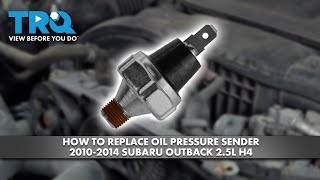
- 2013-2014: The oil pressure switch is located on the top of the engine block, underneath the alternator. Access requires removing the serpentine belt and the alternator, making the job more labor-intensive (approx. 1-1.5 hours).
- 2015-2019: The oil pressure switch was relocated to the front of the engine, below the oil filter housing. This makes access significantly easier, often taking less than 30 minutes to replace from below the vehicle.
Diagnostic Flowchart
Other Known Issues on This Vehicle
Issues unrelated to this code that are worth knowing about as an owner of this generation:
- Excessive Oil Consumption 🔴 High — Common on early FB25B engines, particularly 2013-2014 models. Often manifests before 100,000 miles. (Ref: TSB 02-157-14R; led to a class-action lawsuit and a warranty extension (8 years/100k miles) for affected vehicles.)
- CVT Transmission Failure / Shudder 🔴 High — Common across many models in this range. Issues like torque converter lock-up failure or general shudder can occur. (Ref: Subaru extended the CVT warranty to 10 years/100,000 miles for many vehicles, including the 2013-2015 Outback, due to widespread issues.)
- Infotainment Screen Delamination ('Ghost Touch') 🟠 Medium — Very common on 2018-2019 models with the Harman Kardon head unit. The screen layers separate, causing bubbles, peeling, and erratic touch inputs. (Ref: Subaru has issued warranty extensions and goodwill repairs for this issue, though not a formal recall.)
- Premature Rear Wheel Bearing Failure 🟠 Medium — Fairly common, especially on 2015+ models. Failure can occur as early as 30,000-70,000 miles. A humming or grinding noise from the rear of the vehicle is the primary symptom. (Ref: No specific TSB, but Subaru reportedly revised the rear hub design for the 2017 model year to improve durability.)
- Cracked Windshields 🟡 Low — Owners report windshields are prone to cracking from minor impacts or sometimes spontaneously. This is a common complaint across many modern Subarus.
Used vs. New Parts: Buying Guide for This Vehicle
When a used part is the smart pick: Never. A used oil pressure switch is a terrible idea for this repair. The part is a known high-failure item with a specific design flaw that was corrected in newer OEM parts. A used part is likely to have the same defect or have very little life remaining.
What to inspect on the donor part:
- Not applicable. Do not purchase this part used.
OEM-only on this vehicle (don't cheap out):
- Engine Oil Pressure Switch: While not strictly 'OEM-only', using the genuine Subaru part (25240AA060) is very strongly recommended. It is an inexpensive part and guarantees you are getting the updated design that fixes the original flaw.
Aftermarket brands forum-validated for this vehicle:
- NTK/NGK
- Standard Motor Products (SMP)
- Denso
Brands owners have reported issues with on this vehicle:
- Unnamed 'white box' or no-name brands from online marketplaces should be avoided, as they may not have the corrected internal design and are more likely to fail prematurely or leak.
Real Owner Stories
Aggregated from forums and TSBs cited above. Mileages and costs reflect what owners reported in those sources.
2013-2014 Subaru Outback 2.5L FB25B — ~95000 miles
Symptoms: Excessive oil consumption requiring more than 1/3 quart every 1200 miles.
What fixed it: A complete short block assembly replacement as per the revised repair procedure in TSB 02-157-14R.
Source hint: TSB 02-157-14R
2015-2019 Subaru Outback 2.5L
Symptoms: Visible oil leaks from the switch body and a P0520 code.
What fixed it: Replacement of the oil pressure switch with the redesigned nickel-plated contact version.
Source hint: Reddit (r/subaru, r/MechanicAdvice, r/subaruoutback)
2013-2019 Subaru Outback 2.5L
Symptoms: Flickering oil light and a P0520 trouble code.
What fixed it: Replacing the oil pressure switch, specifically using part number 25240AA060.
Source hint: subaruoutback.org
Related OBD-II Codes
Frequently Asked Questions
Does TSB 02-162-15R apply to my 2015 Subaru Outback with the P0520 code?
I see oil leaking from the front of my FB25B engine; could this be the P0520 cause?
Can I just tighten the oil pressure switch to stop a leak?
Is the location of the oil pressure switch the same on all 2013-2019 Outbacks?
Could my Outback's oil consumption issue be related to the P0520 code?
What specific part number should I use to fix the P0520 code on my Subaru?
Helpful Videos
We Have This Part in Stock


The information in this article is provided for general reference and educational purposes only. Vehicle specifications, procedures, and part compatibility can vary by production date, trim level, and region. Always consult your vehicle's factory service manual and verify part numbers before purchasing or performing repairs. Safety-critical components such as airbags, seat belts, and braking systems should be installed by a qualified professional.
- Subaru Outback:
- 🧭 Diagnostic Flowchart
- 🎬 Helpful Videos
- 🛍️ Shop This Part
- What's Unique About the 2013-2019 Subaru Outback
- Symptoms You May Notice
- Most Likely Causes
- Rare But Worth Checking
- Diagnosis Steps
- Parts You'll Likely Need
- Related Codes That Often Appear With This One
- Technical Service Bulletins (TSBs) & Recalls
- Platform-Specific Known Issues
- Mechanic-Grade Diagnostic Values
- Wiring & Ground Locations
- Real Owner Repair Stories
- OEM Part Supersession History
- Model Year Variations Within This Range
- Other Known Issues on This Vehicle
- Used vs. New Parts: Buying Guide for This Vehicle
- Real Owner Stories
- 2013-2014 Subaru Outback 2.5L FB25B — ~95000 miles
- 2015-2019 Subaru Outback 2.5L
- 2013-2019 Subaru Outback 2.5L
- Related OBD-II Codes
- Frequently Asked Questions
- 🎟️ Get 5% Off