

P0556 on 2017-2020 Volkswagen Passat: Brake Booster Pressure Sensor Causes and Fixes
On a 2017-2020 VW Passat, code P0556 almost always points to a faulty brake booster pressure sensor or a vacuum leak. Expect a hard brake pedal and an illuminated check engine light. Replacing the sensor (OEM Part No. 5Q0906207B) is the most common fix, costing around $70-$150 for the part. A cracked vacuum line is another frequent cause.
- P0556 indicates a serious problem with your power brake system; do not ignore it.
- The most common symptom is a hard brake pedal, making it difficult to stop the car.
- Before buying parts, perform a thorough visual inspection of the sensor's connector and all vacuum hoses for obvious issues.
- The most likely fix is replacing the brake booster pressure sensor, which is an affordable and accessible DIY repair for many.
- Check for other stored trouble codes, as VW TSBs show P0556 can appear as part of a larger set of issues.
What's Unique About the 2017-2020 Volkswagen PASSAT
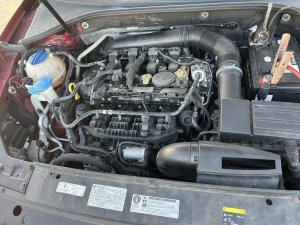
For the 2017-2020 Passat (NMS generation), which primarily uses the 2.0L TSI EA888 Gen 3 engine, the P0556 code is a well-documented issue. Volkswagen has issued several Technical Service Bulletins (TSBs) for the 2020 model year that mention P0556 in conjunction with various other engine and electrical complaints, indicating it can be a key symptom in a broader diagnostic picture. [VIN4APIN20210114, VIN4APIN20201120, VIN4APIN20201019] Unlike some generic interpretations, on modern VWs this code is tightly linked to the electronic monitoring of the vacuum system. The issue is common across the entire MQB platform, affecting models like the Golf, Tiguan, and Audi A3. The sensor is a 'smart' sensor that sends digital messages, not a simple analog voltage, which can make diagnosis with a multimeter alone misleading.
Diagnostic Flowchart
Tap your situation to follow the diagnostic path that matches what you're seeing on this vehicle.
Generation note: The 2017-2020 range covers the North American Market (NMS) Passat. While the 2020 model year received a major exterior and interior redesign, it is built on the same underlying platform as the 2017-2019 models. The powertrain components related to the P0556 code, such as the 2.0L TSI EA888 Gen 3 engine and associated brake booster system, are largely consistent across these years and with other VW/Audi models on the MQB platform.
Symptoms You May Notice
- Hard brake pedal requiring much more effort to press.
- Check Engine Light is on.
- Brake warning light may be illuminated on the dashboard.
- Increased stopping distances.
- Hissing sound coming from the brake booster area, especially when applying or releasing the brake pedal.
- Engine may stall or idle roughly when applying the brakes.
- Replacing the brake booster when the actual problem is a much cheaper vacuum leak or a faulty sensor.
- Replacing the sensor without first checking for simple issues like a loose connector or a cracked vacuum hose.
- Trusting live data alone. A sensor can show changing pressure values but still be faulty because its digital signal is corrupt, a fault only visible with an oscilloscope.
Most Likely Causes
- Faulty Brake Booster Pressure Sensor 🔴 High Probability → Shop Power Brake Booster This electronic 'smart' sensor is the most common failure point. It can fail internally, sending a corrupt digital signal to the ECM. This can happen even if live data appears to show correct pressure changes, making it tricky to diagnose without an oscilloscope.
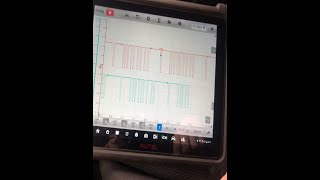
How to confirm: Check the sensor's 3-pin connector for 5V reference, ground, and signal. With an OBD-II scanner, watch live data for pressure changes as the brake is pressed. However, the definitive test is to use an oscilloscope on the signal wire to verify a clean, correct digital packet is being sent. 🎬 Watch: A professional diagnostic summary of the P0556 sensor signal. A malformed signal, such as incorrect spacing between digital pulses, confirms a bad sensor even if live data seems to respond correctly. If you don't have a scope, replacement is often the next logical step after ruling out leaks.
Typical fix: Replace the brake booster pressure sensor.
Est. part cost: $70-$150 - Vacuum Leak 🟡 Medium Probability The vacuum lines in VAG vehicles are often made of hard plastic that becomes brittle with age and heat cycles. They commonly crack at the barbed connection points or develop holes from rubbing against other components in the engine bay.
How to confirm: Visually inspect all vacuum lines connected to the brake booster. Pay close attention to the ends and any points of contact with other parts. A hissing sound is a dead giveaway. A smoke test is the most effective way to find a small leak. In a pinch, spraying soapy water on the lines with the engine running may reveal bubbles at the leak source.
Typical fix: Replace the entire vacuum hose assembly. On some models, the sensor is integrated into the vacuum pipe assembly, requiring the replacement of the entire unit.
Est. part cost: $20-$80 - Wiring or Connector Damage ⚪ Low Probability The wiring harness to the sensor is in the engine bay and can be damaged by heat, vibration, or improper servicing. The connector pins can also corrode.
How to confirm: Visually inspect the sensor's electrical connector and wiring for any signs of corrosion, breaks, or loose pins. Unplug and re-plug the connector to ensure it is seated correctly. Use a multimeter to check for continuity between the ECM and the sensor connector if a break is suspected.
Typical fix: Repair the damaged section of wiring or clean/replace the electrical connector.
Est. part cost: $5-$25
Rare But Worth Checking
- Blown Fuse: On some VW models, the auxiliary vacuum pump that assists the brake booster is protected by a fuse (e.g., a 15A fuse in position F26 on a Jetta). While not the most common cause for a P0556, it's a very simple and quick check to perform before replacing parts.
- Faulty Brake Booster: → Shop Power Brake Booster If the sensor, wiring, and vacuum supply are all confirmed to be good, the internal diaphragm of the brake booster itself may have failed, causing an internal leak.
- Engine Control Module (ECM) Fault: In very rare cases, the fault lies within the ECM's internal circuitry. This should only be considered after all other possibilities have been exhaustively ruled out. One owner reported an aftermarket part potentially damaging the module, requiring replacement of both.
Diagnosis Steps
- Read the fault codes with an OBD-II scanner to confirm P0556 is present.
- With the engine running, listen for any hissing sounds from the engine bay, particularly around the brake booster and its vacuum lines.
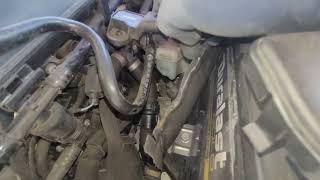
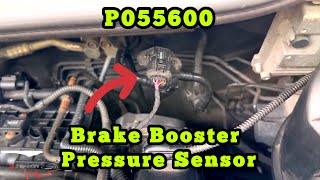
- Visually inspect the brake booster pressure sensor, which is located on the vacuum line near the brake booster. 🎬 Watch: How to locate and swap the pressure sensor yourself. Check for a secure connection and any visible damage.
- Thoroughly inspect all hard plastic vacuum hoses connected to the brake booster for cracks (especially at the ends) and signs of rubbing against other components.
- If a leak is suspected but not visible, perform a smoke test to pinpoint its location.
- Use a scanner to view live data from the brake booster pressure sensor. The pressure reading should decrease (show more vacuum) with the engine running and increase toward atmospheric pressure as you pump the brake pedal.
- For advanced diagnosis, use an oscilloscope to probe the sensor's signal wire. A good sensor will produce a clean, square digital waveform. A faulty sensor may produce a malformed or noisy signal, even if live data seems plausible.
- If the signal is bad and there are no leaks, replace the brake booster pressure sensor.
- If the signal is absent, test the sensor's connector for 5V reference and ground. If either is missing, trace the wiring back to the ECM to find the fault.
Parts You'll Likely Need
- Brake Booster Pressure Sensor
(OEM #5Q0906207B (replaces 5Q0906207A))— This sensor is the most frequent point of failure for the P0556 code. It directly measures the pressure that the code reports as being out of range.
Trusted brands: Genuine VW/Audi, Bosch, Hella, Vemo
OEM price range: $90-$150
Aftermarket price range: $40-$100
Related Codes That Often Appear With This One
- P2279 — This code for 'Intake Air System Leak' can be triggered by the exact same vacuum hose leak that causes P0556, as the brake booster vacuum system is connected to the engine's air intake.
- P2421 — This code for 'Evaporative Emission System Vent Valve Stuck Open' is mentioned alongside P0556 in a VW TSB, suggesting a potential shared vacuum or electrical issue. [VIN4APIN20210114]
- P030x (Misfire Codes) — A significant vacuum leak, which can trigger P0556, can also alter the air-fuel mixture enough to cause engine misfires.
- P11A1-P11B0 — These manufacturer-specific codes are listed with P0556 in VW TSBs, indicating they can appear together when diagnosing certain fuel or engine system faults. [VIN4APIN20201120, VIN4APIN20201019]
Technical Service Bulletins (TSBs) & Recalls
- Bulletin #VIN4APIN20210114: Notes customer complaints of MIL-on with P0556, P2421, or misfire codes on 2020 models.
- Bulletin #VIN4APIN20201120: Mentions customer states MIL-on with P0556 alongside a range of P11xx codes on 2020 models.
- Bulletin #VIN4APIN20201019: Also lists MIL-on with P0556 and P11xx codes as a customer complaint on 2020 models.
- TSB #V011618 / NHTSA 10130153: Issued for Jetta models to fix P0556 with a dealer-performed software reprogram, not a part replacement.
Platform-Specific Known Issues
- Volkswagen has issued TSBs for the 2020 Passat that list P0556 as a fault code found during diagnostics for other customer complaints, confirming its relevance on this platform. [VIN4APIN20210114, VIN4APIN20201120, VIN4APIN20201019]
- On related platforms like the 2016-2017 Jetta, VW issued a specific TSB (V011618 / NHTSA 10130153) to fix P0556 with an ECM software update, indicating this is a known problem that has sometimes been addressed without replacing parts.
- Some owners have reported the check engine light for P0556 appearing for the first time immediately following a hard braking or 'panic stop' event.
Mechanic-Grade Diagnostic Values
- Brake Booster Pressure Sensor Live Data (Scan Tool) — expected: With the key on, engine off, the pressure should be near atmospheric (approx. 14.4 PSI). With the engine running at idle, it should show significant vacuum (e.g., ~6 PSI).. Failure: The value does not change when the engine is started, or does not increase toward atmospheric pressure when the brake pedal is pumped with the engine off. However, the sensor can still be bad even if these values appear to change correctly.
- Brake Booster Pressure Sensor (G483) Signal Waveform (Oscilloscope) — expected: A digital 'smart' sensor that sends messages, not a simple analog voltage. A known-good sensor produces a specific digital pattern of pulses (e.g., a pattern of two, two, and five pulses after a large gap).. Failure: A faulty sensor may produce a different pattern (e.g., three, three, one, and two pulses) that the ECM interprets as a fault, even though live data pressure readings may appear normal.
- Sensor Connector Voltage — expected: A 3-pin connector with a 5V reference wire, a ground wire, and a signal wire.. Failure: Absence of 5V or a bad ground indicates a wiring issue upstream of the sensor.
Scan Tool Commands That Help
- VCDS (VAG-COM): ABS Brakes (03) -> Measuring Value Blocks (MVB) — To observe the live data from the 'Brake booster vacuum sensor' to see if the pressure readings change in response to engine vacuum and brake pedal application. This is a primary step before performing more advanced electrical checks.
Wiring & Ground Locations
- Engine Block to Body Ground Strap — Typically a braided metal strap connecting the engine block or transmission to the vehicle's chassis/frame rail in the engine compartment.. The brake booster pressure sensor, like many engine sensors, relies on a solid engine ground. A corroded or loose main ground strap can introduce electrical noise or voltage offsets, potentially causing the sensor to send readings outside the expected range and triggering a P0556.
- Ground Connection on Cylinder Head — A common ground point on VW/Audi engines is a stud on the cylinder head where multiple brown ground wires are secured with a nut.. If the sensor's ground circuit is routed to this point, a loose or corroded connection here could directly cause a circuit performance fault for the G483 sensor.
- Ground Connection near Battery / Left Side Member — On the MQB platform, there are several key grounding points on the driver's side frame rail (left side member) in the engine bay, near the battery.. These are primary chassis grounds. Any fault in these connections can cause widespread electrical issues, including sensor circuit faults like P0556.
Real Owner Repair Stories
- YouTube channel 'JaboTheMechanic' (2017 Volkswagen Jetta Wolfsburg) — Check Engine Light with codes P0556 and P2279 (Intake Air System Leak).
❌ Tried (didn't work) Initial diagnosis focused on the sensor itself.
✅ What actually fixed it A visual inspection revealed that the hard plastic vacuum line assembly had been rubbing against another component, creating a hole. Replacing the entire vacuum pipe assembly, which included a new sensor, resolved both fault codes. - YouTube channel 'The Keeney Garage' (2019 VW Jetta 1.4L) — Check Engine Light with P0556 would set every time the brake pedal was pressed.
❌ Tried (didn't work) Observing live data with a scan tool was misleading; the pressure values changed and seemed to respond correctly to brake application and vacuum changes.
✅ What actually fixed it Using an oscilloscope revealed the digital signal from the sensor was malformed. The pattern of pulses from the old sensor was incorrect compared to the new sensor's pattern. Replacing the faulty 'smart' sensor fixed the issue. - Reddit user aerialP (2019 Jetta) — Check Engine Light with P0556 appeared.
✅ What actually fixed it The user noted the code appeared a few days after a 'panic stop' or hard braking situation. The user cleared the code and it did not immediately return. This suggests the code can be triggered by an unusual, abrupt change in booster pressure that the ECM flags as a range/performance error.
"I Checked Everything" — The Actual Cause
- In a case on a Ford F-150 with P0556, a smoke test of the vacuum lines and check valve was clean. The actual cause was a bent flange on the brake booster itself where it sealed against the master cylinder, a result of a previous collision. This created a vacuum leak that was only apparent when the booster was smoke tested directly, not just the lines.
OEM Part Supersession History
5Q0906207A→5Q0906207B— Standard part revision, likely for improved reliability or manufacturing process changes.
Helpful Videos
We Have This Part in Stock

The information in this article is provided for general reference and educational purposes only. Vehicle specifications, procedures, and part compatibility can vary by production date, trim level, and region. Always consult your vehicle's factory service manual and verify part numbers before purchasing or performing repairs. Safety-critical components such as airbags, seat belts, and braking systems should be installed by a qualified professional.
- Volkswagen PASSAT:
- 🧭 Diagnostic Flowchart
- 🎬 Helpful Videos
- 🛍️ Shop This Part
- What's Unique About the 2017-2020 Volkswagen PASSAT
- Symptoms You May Notice
- Most Likely Causes
- Rare But Worth Checking
- Diagnosis Steps
- Parts You'll Likely Need
- Related Codes That Often Appear With This One
- Technical Service Bulletins (TSBs) & Recalls
- Platform-Specific Known Issues
- Mechanic-Grade Diagnostic Values
- Scan Tool Commands That Help
- Wiring & Ground Locations
- Real Owner Repair Stories
- "I Checked Everything" — The Actual Cause
- OEM Part Supersession History
- 🎟️ Get 5% Off