

P0562 on 2014-2019 Kia Soul: System Voltage Low Causes and Fixes
On a 2014-2019 Kia Soul, the P0562 code almost always points to a failing alternator or a weak battery. Start by testing both components, as they are the most common culprits. Also, inspect the main ground connections and battery terminals for corrosion or looseness, as poor connections are a known issue on these vehicles.
- P0562 on a 2014-2019 Kia Soul indicates a serious low voltage problem in the electrical system.
- Do not drive the vehicle, as it can stall without warning, creating a safety hazard.
- The most likely causes are a bad alternator or a weak battery. Always test both before replacing parts.
- Before replacing any parts, thoroughly inspect, clean, and tighten all battery connections, including the main ground wire to the chassis.
What's Unique About the 2014-2019 Kia Soul
For the second-generation Kia Soul, the electrical system is generally robust, but like many modern vehicles, it is sensitive to low voltage. While the primary causes are universal (alternator and battery), owners have specifically reported issues with main ground wire connections causing intermittent and hard-to-diagnose electrical problems. Before replacing expensive components, it's crucial to verify the integrity of the battery-to-chassis ground connection and the main power connections at the alternator and battery terminals.
Generation note: The 2014-2019 Kia Soul covers the second generation of the vehicle. The causes and fixes for P0562 are generally consistent across this entire generation and apply to both the 1.6L Gamma GDI and 2.0L Nu GDI engines.
Symptoms You May Notice
- Check Engine Light illuminated
- Battery or Charging System warning light on the dashboard
- Dimming or flickering headlights and interior lights
- Difficulty starting the engine, slow cranking, or a no-start condition
- Engine stalling, especially at idle or when coming to a stop
- Erratic behavior from electrical components like the radio, power windows, or dashboard gauges
- Power steering warning light may illuminate, with a noticeable increase in steering effort or complete loss of assist
- Automatic transmission may not shift properly
- Replacing the battery when the alternator is the actual cause of the problem, leading to the new battery also failing to charge.
- Replacing the alternator when the issue is simply a corroded or loose ground wire or a bad battery cable connection.
- Overlooking a blown main fuse for the charging system, which can mimic the symptoms of a failed alternator.
Most Likely Causes
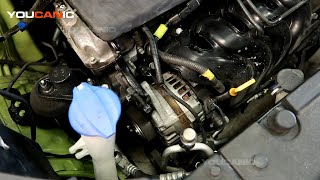
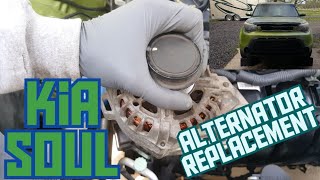
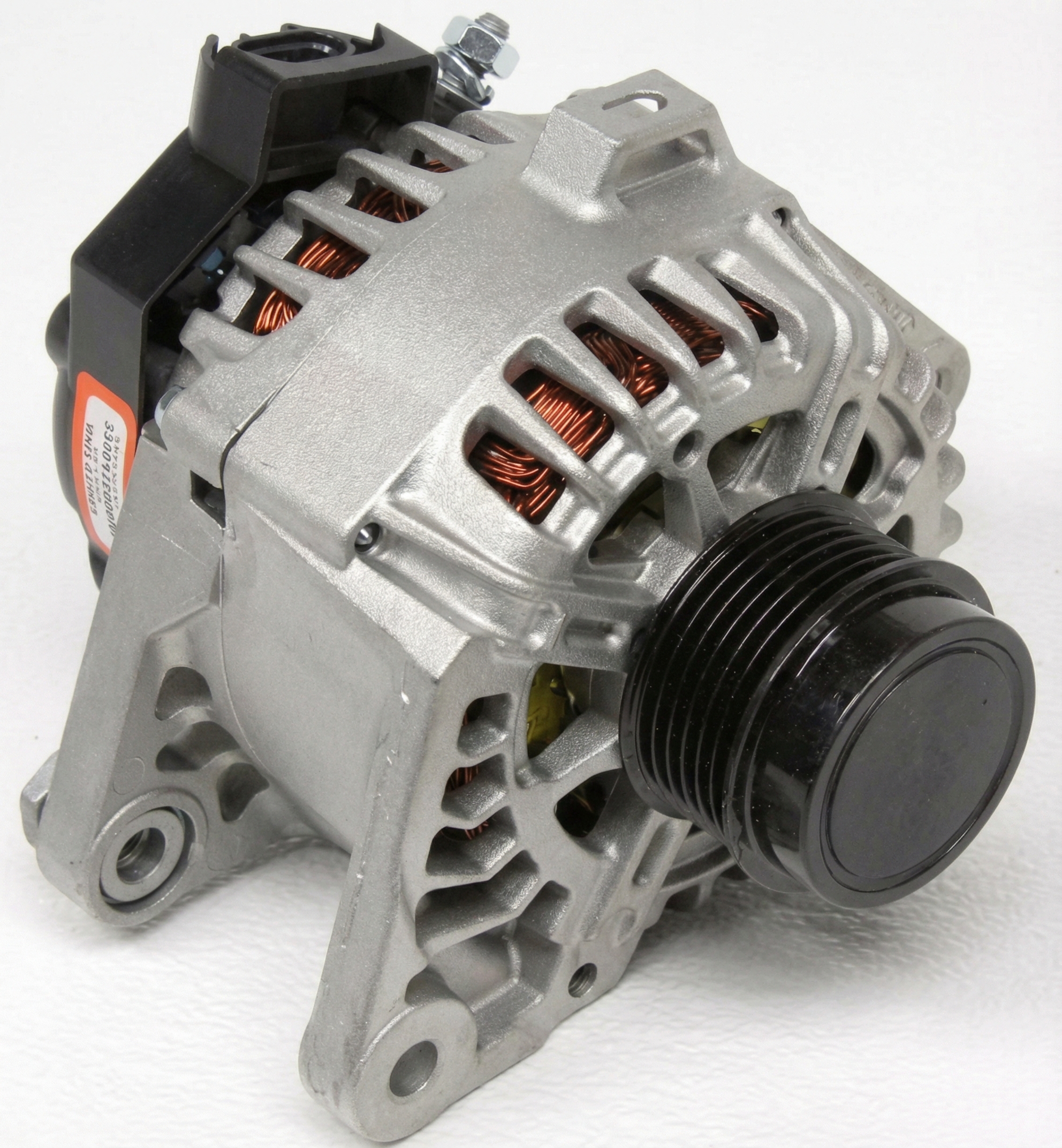
- Failing Alternator 🔴 High Probability → Shop Alternator The alternator is a common failure point in many modern vehicles due to high electrical loads. It is the most frequent cause of P0562 after the battery has been ruled out.
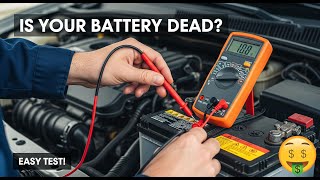
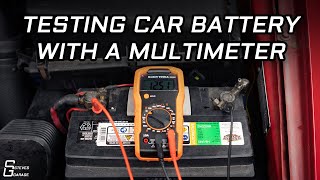
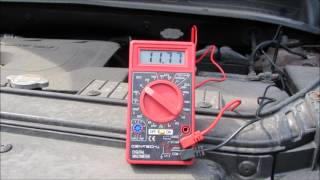
How to confirm: With the engine running, use a multimeter to test the voltage at the battery terminals. A healthy alternator should produce between 13.5 and 14.7 volts. 🎬 See how to test your battery and alternator with a multimeter If the voltage is below this range or at battery voltage (around 12.6V), the alternator is likely faulty. Most auto parts stores can also test the alternator for free, often while it's still on the vehicle.
Typical fix: Replace the alternator.
Est. part cost: $250-$500 - Weak or Old Battery 🔴 High Probability → Shop Vehicle Battery Car batteries have a finite lifespan, typically 3-5 years. An old battery that can no longer hold a proper charge or has a dead cell is a very common trigger for P0562.
How to confirm: Test the battery with a multimeter when the engine is off. A healthy battery should read at least 12.4-12.6 volts. A reading below 12.4V indicates it needs charging, and a reading below 12V often suggests a bad cell. Perform a load test to check its ability to hold a charge under load. Many auto parts stores offer free battery testing.
Typical fix: Replace the battery.
Est. part cost: $150-$250 - Corroded or Loose Battery Terminals/Cables 🟡 Medium Probability → Shop Vehicle Battery Corrosion or loose connections are a frequent and often overlooked cause of voltage drops and charging system issues. The connection can be loose at the battery post or where the ground cable attaches to the chassis.
How to confirm: Visually inspect the battery terminals for white or greenish corrosion. Wiggle the battery cables by hand to ensure they are tight and secure on the battery posts. A loose connection can prevent the alternator from properly charging the battery.
Typical fix: Disconnect the battery (negative first). Clean the battery terminals and cable ends with a wire brush and a solution of baking soda and water. Reconnect and ensure the clamps are securely tightened (positive first).
Est. part cost: $5-$15 for cleaning tools - Poor Ground Connection 🟡 Medium Probability Some Kia Soul owners have reported issues with the main ground strap from the battery to the chassis, which can become corroded or loose over time, creating high resistance in the charging circuit. This prevents the alternator's full output from reaching the battery.
How to confirm: Locate the main ground wire (negative battery cable) where it attaches to the vehicle's chassis (usually on the inner fender or frame rail near the battery). Inspect the connection for corrosion, paint, or looseness. You can also perform a voltage drop test on the ground side of the circuit with a multimeter; a drop of more than 0.2 volts indicates a problem.
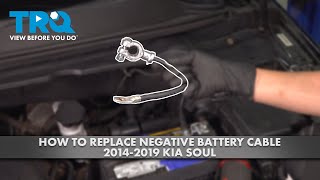
Typical fix: Remove the ground bolt, clean the cable terminal and the chassis contact point thoroughly with a wire brush or sandpaper to ensure a bare metal connection, and re-secure it tightly. Applying dielectric grease can help prevent future corrosion. 🎬 Watch how to replace the negative battery cable
Est. part cost: $0-$10
Rare But Worth Checking
- Damaged Alternator Wiring: → Shop Alternator The wiring harness to the alternator, particularly the main power cable and the smaller control wires, can become damaged, melted, or corroded, leading to a loss of charging voltage. This is less common than the alternator itself failing but should be checked before replacing the unit.
- Parasitic Battery Drain: → Shop Vehicle Battery A component or module that is not shutting off correctly when the car is parked can slowly drain the battery. This will cause a P0562 code upon startup when the PCM detects the very low initial voltage. Diagnosing this requires a multimeter set to measure amps and pulling fuses one by one to isolate the faulty circuit.
- Faulty Powertrain Control Module (PCM): In very rare cases, the PCM itself may have a fault in its voltage-sensing circuit, causing it to incorrectly report a low voltage condition. This should only be considered after all other possibilities have been exhaustively ruled out.
Diagnosis Steps
- Read the code with an OBD-II scanner to confirm P0562 is present. Note any other codes that may be stored.
- Visually inspect the battery terminals and cables for any signs of corrosion, swelling, or damage. Clean and tighten as necessary.
- With the engine off, measure the battery's state of charge using a multimeter. A reading below 12.4V suggests a weak or discharged battery. A fully charged battery should be around 12.6V.
- Have the battery professionally load-tested to confirm its health. This is a crucial step, as a battery can show good voltage but fail under load. Most auto parts stores do this for free.
- If the battery is good, start the engine and measure the voltage at the battery terminals again. The reading should be between 13.5V and 14.7V.
- If the voltage is low (below 13.2V) while the engine is running, the alternator is the primary suspect.
- If the voltage is high (above 15V), the voltage regulator (which is internal to the alternator) is likely faulty, requiring alternator replacement.
- Inspect the alternator drive belt to ensure it is tight and not slipping. A loose or worn belt can prevent the alternator from spinning at the correct speed.
- Check the main power and ground connections. Perform a voltage drop test on both the positive and negative sides of the charging circuit to identify any high resistance from bad cables or connections.
- If all connections and the battery are good, but the charging voltage is low, the alternator most likely needs to be replaced.
Parts You'll Likely Need
- Alternator
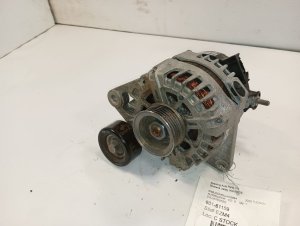
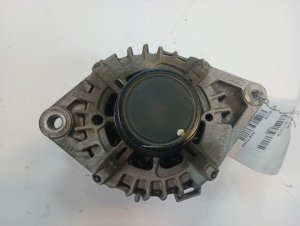
(OEM #37300-2E821 (for 2.0L Nu engine), 37300-2B760 (for 1.6L Gamma engine))— The alternator is responsible for charging the battery and powering the vehicle's electrical systems while the engine is running. A failure in this component is a primary cause of low system voltage.
Trusted brands: Mando (OEM supplier), Bosch, Denso, Valeo
OEM price range: $350-$560
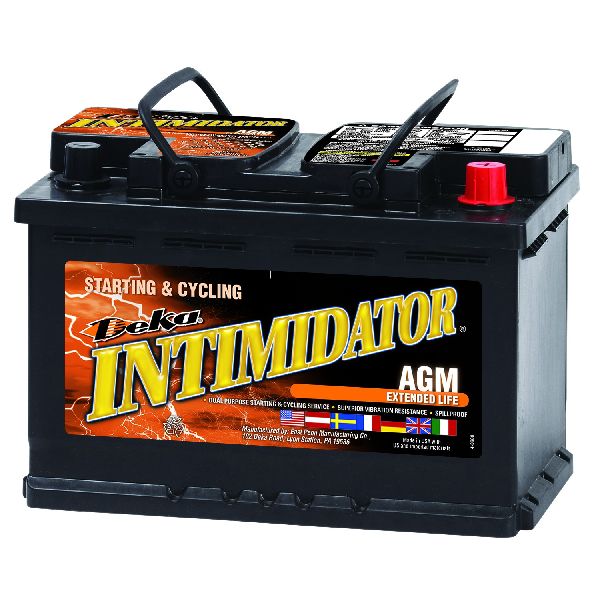
Aftermarket price range: $200-$350 - Battery
(OEM #37110-29102 (Group size may vary, check vehicle specifications))— A battery that is old or has a bad cell cannot hold a sufficient charge, leading directly to a low voltage condition.
Trusted brands: Exide, DieHard, Duralast, Optima
OEM price range: $200-$300
Aftermarket price range: $150-$250 - Negative Battery Cable/Ground Wire
(OEM #91860-B2210 (for 1.6L engine), 91860-B2250 (for 2.0L engine))— A corroded or broken ground wire creates high resistance, preventing the alternator from effectively charging the battery and causing a system-wide voltage drop.
Trusted brands: Kia (OEM)
OEM price range: $35-$70
Aftermarket price range: $20-$40
Related Codes That Often Appear With This One
- P2502 - Charging System Voltage
Diagnostic Flowchart
Other Known Issues on This Vehicle
Issues unrelated to this code that are worth knowing about as an owner of this generation:
- Engine Failure (1.6L GDI & 2.0L Nu) 🔴 High — Widespread issue, particularly noted between 70,000 and 105,000 miles. Numerous complaints and recalls exist. (Ref: Recall SC176 (for 1.6L GDI) addresses catalytic converter overheating that can lead to engine damage. Other recalls and lawsuits exist for various engine-related defects.)
- Excessive Oil Consumption 🔴 High — Common complaint across both 1.6L and 2.0L engines, can lead to premature engine wear and failure if not monitored closely. (Ref: TSB ENG222 provides a diagnostic procedure for excessive oil consumption, which Kia defines as more than 1 quart per 1,000 miles.)
- Steering Column Knock/Click 🟠 Medium — A very common issue caused by the failure of a small, inexpensive flexible steering coupler in the electronic power steering column. (Ref: Recalls (e.g., SC155) and warranty extensions were issued for some model years, but the problem is known to affect a wider range. The issue was prevalent enough on earlier models that a warranty extension was issued.)
- Catalytic Converter Failure 🟠 Medium — Related to engine issues, high exhaust gas temperatures can damage the catalytic converter, leading to performance problems and further engine damage. (Ref: Recall SC176 includes inspection and potential replacement of the catalytic converter.)
Real Owner Stories
Aggregated from forums and TSBs cited above. Mileages and costs reflect what owners reported in those sources.
2014 Kia Soul
Symptoms: Charging issues and low system voltage.
What fixed it: Cleaning and securing poor ground connections to the chassis.
Source hint: Reddit r/MechanicAdvice
Kia Soul (2014-2019 era)
Symptoms: Low charging voltage of 11.8V while the engine was running.
What fixed it: Replacing the alternator after confirming low charging voltage.
Source hint: kiasoulforums.com
Documented NHTSA Reports
Cross-Manufacturer Reference (Kia Forte)
Symptoms: An owner reported a diagnostic scan that retrieved multiple codes including P0562, P2191, and several chassis/steering codes (C1101, C1102, C1513, C1613).
Context: This report highlights how low system voltage can trigger a cascade of unrelated communication and sensor codes across different vehicle modules.
Source hint: NHTSA ODI #11702693
Related OBD-II Codes
Frequently Asked Questions
Is there a specific recall for the 2014-2019 Kia Soul that might cause electrical or engine issues related to P0562?
My 2014 Kia Soul is showing P0562 and the steering is very heavy. Are these related?
I've heard Kia Souls have ground wire issues. Could this be causing my P0562 code?
What voltage should I see on my Kia Soul while the engine is running to rule out the alternator?
Should I check anything else before replacing the alternator on my Soul?
Does the Kia Soul share this P0562 issue with other models?
Helpful Videos
Used OEM Parts in Stock
New Aftermarket Parts Available


The information in this article is provided for general reference and educational purposes only. Vehicle specifications, procedures, and part compatibility can vary by production date, trim level, and region. Always consult your vehicle's factory service manual and verify part numbers before purchasing or performing repairs. Safety-critical components such as airbags, seat belts, and braking systems should be installed by a qualified professional.
- Kia Soul:
- 🧭 Diagnostic Flowchart
- 🎬 Helpful Videos
- 🛍️ Shop This Part
- What's Unique About the 2014-2019 Kia Soul
- Symptoms You May Notice
- Most Likely Causes
- Rare But Worth Checking
- Diagnosis Steps
- Parts You'll Likely Need
- Related Codes That Often Appear With This One
- Other Known Issues on This Vehicle
- Real Owner Stories
- 2014 Kia Soul
- Kia Soul (2014-2019 era)
- Documented NHTSA Reports
- Cross-Manufacturer Reference (Kia Forte)
- Related OBD-II Codes
- Frequently Asked Questions
- 🎟️ Get 5% Off