

P0563 on 2015-2020 Honda Fit: System Voltage High Causes and Fixes
On a 2015-2020 Honda Fit, code P0563 almost always means the alternator is failing and overcharging the electrical system, with voltage spiking above 15V. This often triggers multiple other warning lights (power steering, VSA, etc.). The fix is to replace the alternator. Expect to pay $750-$1,800 at a shop or $150-$400 for a DIY replacement using an aftermarket part.
- P0563 on a Honda Fit means the charging system voltage is dangerously high, usually over 15 volts.
- The cause is almost always a failed internal voltage regulator, which requires replacing the entire alternator.
- Confirm the diagnosis with a multimeter at the battery terminals. If voltage is over 15V with the engine running, the alternator is bad.
- Do not drive the vehicle for an extended period, as the high voltage can damage the battery and other expensive electronics.
- A 'Christmas tree' of warning lights on the dash (power steering, VSA, etc.) is a very common symptom of the overcharging condition.
- DIY replacement is possible but challenging due to tight engine bay access; expect 1.5-2.5 hours of labor at a shop.
What's Unique About the 2015-2020 Honda Fit
The 2015-2020 Honda Fit (third generation, GK) uses a modern, computer-controlled charging system with an Electronic Load Detector (ELD). While these systems are designed for efficiency, the alternator's internal voltage regulator is the most common failure point that leads to a P0563 code. Unlike some other electrical issues, this problem is rarely caused by a complex software glitch and is most often a straightforward hardware failure of the alternator itself. Failures are commonly reported on owner forums between 60,000 and 100,000 miles.
Symptoms You May Notice
- Check Engine Light is on
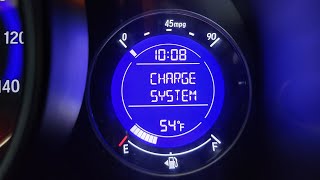
- Battery or charging system warning light is illuminated
- Multiple warning lights illuminating simultaneously on the dashboard, such as for power steering (EPS), Vehicle Stability Assist (VSA), and transmission.
- Headlights and interior lights may flicker or appear unusually bright
- Erratic behavior from electronic accessories (radio, navigation)
- Engine may stall while idling.
- Vehicle may enter a 'limp mode' with reduced power.
- Replacing the battery. A bad battery typically causes a low voltage condition (P0562), not a high voltage one. While an overcharging alternator can damage the battery, the battery itself is not the root cause of P0563.
Most Likely Causes
- Failing Alternator / Internal Voltage Regulator 🔴 High Probability → Shop Voltage Regulator The voltage regulator, which is responsible for capping the alternator's output, is built into the alternator. When it fails, it often defaults to a state that causes maximum, unregulated charging. The original OEM alternator is a Denso unit, and failures are a common topic in owner forums, sometimes occurring as early as 60,000 miles.
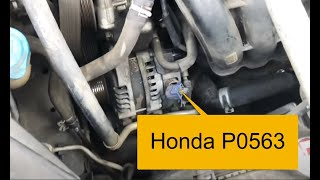
How to confirm: With the engine running, use a multimeter to test the voltage across the battery terminals. A reading that is consistently above 15.0 volts (and may spike to 16V, 17V, or higher) confirms an overcharging condition, pointing directly to a faulty alternator. 🎬 Watch: How to diagnose and fix a P0563 high voltage code.
Typical fix: Replace the entire alternator assembly. The internal voltage regulator is not typically sold as a separate component. Due to tight access in the engine bay, DIY replacement can be challenging but is possible for those with mechanical experience. 🎬 Watch this DIY guide for replacing the alternator yourself.
Est. part cost: $150-$400 for aftermarket, $560-$1600 for OEM. - Loose or Corroded Battery Terminals/Grounds ⚪ Low Probability → Shop Vehicle Battery Vibration and exposure to the elements can cause battery connections to loosen or corrode over time, leading to high resistance and erratic voltage readings. While this is a common check for any electrical issue, it is rarely the root cause for a persistent P0563.
How to confirm: Visually inspect the battery terminals, main power wire to the alternator, and the main chassis ground strap. Look for white or blue-green corrosion, and ensure all connections are clean and tight.
Typical fix: Clean the terminals and cable ends with a wire brush and ensure they are securely fastened. Apply a corrosion inhibitor to prevent future buildup.
Est. part cost: $5-$15
Rare But Worth Checking
- Faulty PGM-FI Main Relay: A diagnostic flowchart for Honda suggests checking the PGM-FI main relay if other tests do not point to the alternator. A failure in this relay can cause various power supply issues, though it's not a commonly reported fix for P0563.
- Damaged Wiring: A short in the wiring between the alternator and the PCM could theoretically cause this code. One owner on a forum noted their issue disappeared after the car dried out from a rainstorm, suggesting a moisture-related short in their specific case.
- Faulty Powertrain Control Module (PCM): → Shop Engine Control Module (ECM) This is extremely rare, but a failure of the PCM's internal voltage sensing circuit could cause it to incorrectly report high voltage. This should only be considered after all other possibilities have been exhausted.
Diagnosis Steps
- Read the trouble code with an OBD-II scanner and document any other codes present.
- Visually inspect the battery terminals and main ground connections for looseness or corrosion. Clean and tighten as necessary.
- With the engine off, measure the battery voltage with a multimeter. It should be approximately 12.6 volts.
- Start the engine. Measure the voltage at the battery terminals again. The normal charging voltage should be between 13.5 and 14.8 volts.
- If the voltage reads 15.0 volts or higher (often spiking towards 16V or 17V), the alternator is overcharging and has a failed internal voltage regulator.
- If the voltage is normal, the issue may be intermittent. Wiggle the wiring harness to the alternator and PCM to see if the voltage reading changes, which could indicate a loose connection or damaged wire.
- If all wiring and the alternator check out, the issue could be with the PGM-FI main relay or, in very rare cases, the PCM itself.
Parts You'll Likely Need
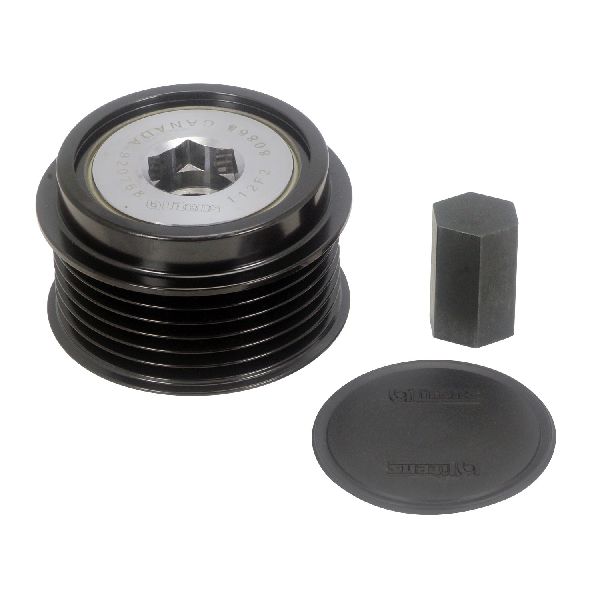
- Alternator
(OEM #31100-5R0-014 (supersedes 31100-5R0-004), 31100-5R0-024)— This is the most common cause of P0563, as the internal voltage regulator fails and causes the system to overcharge. Part number may vary by model year and transmission type; confirm with VIN.
Trusted brands: Denso (OEM supplier), Bosch, Duralast, Remy
OEM price range: $562 - $1603
Aftermarket price range: $150 - $400
Platform-Specific Known Issues
- Owner Experience: Multiple Warning Lights and Alternator Failure: → Shop Alternator On the FitFreak.net forums, a 2015 Fit owner with 80,000 miles reported a P0563 code accompanied by a 'Christmas tree' of dashboard lights, including power steering, VSA, and hill start assist. After confirming the charging voltage was over 16V, they replaced the alternator with a remanufactured Denso unit, which resolved all issues. This is a very typical failure scenario for this vehicle.
Mechanic-Grade Diagnostic Values
- Alternator 4-Pin Connector, Pin 1 (Black/Yellow Wire) - IG Terminal — expected: Battery voltage with ignition ON, engine off.. Failure: No voltage indicates a problem with the ignition power feed to the alternator's voltage regulator.
- Alternator 4-Pin Connector, Pin 4 (White/Green Wire) - C Terminal — expected: A variable voltage signal from the PCM, often between 7-8 volts when commanding a high charge rate.. Failure: Zero volts may indicate the PCM is commanding a low charge state (around 12.6V), while an absent or incorrect signal could point to a wiring or PCM issue.
- Alternator 4-Pin Connector, Pin 2 (White/Red Wire) - FR Terminal — expected: Voltage varies with alternator load (e.g., ~3.0V at idle, dropping with electrical load on).. Failure: No voltage or a static voltage that doesn't change with load suggests a fault in the alternator's field reporting circuit.
Scan Tool Commands That Help
- Honda HDS (or equivalent professional scanner): 12 Volt Battery Internal Resistance Reset — This procedure should be performed after replacing the vehicle's 12V battery. Failure to do so can cause the Auto Idle Stop feature to be inhibited. While not a direct fix for P0563, it's a critical related procedure if the battery was damaged by overcharging and subsequently replaced.
Wiring & Ground Locations
- G101 — Main engine ground, typically located on the engine block near the thermostat housing.. This is a primary ground for the PCM and other engine components. A poor connection at G101 can cause erratic sensor readings and incorrect charging system behavior. The voltage regulator inside the alternator requires a solid ground reference to function correctly.
- Alternator 4-Pin Connector — The main electrical plug on the alternator assembly.. This connector carries the critical signals for PCM control of the alternator. Pin 1 is ignition power, Pin 2 is the Field Regulator (FR) signal, Pin 3 is battery sense, and Pin 4 is the PCM control (C) signal. Testing voltages at these pins is essential for advanced diagnosis to rule out wiring or PCM faults before condemning the alternator.
- Battery Management Sensor (BMS) — A small black sensor module attached to the negative battery terminal clamp.. This sensor reports battery state-of-charge to the PCM, which uses the data to control the alternator output via the ELD system. While a failure here more often causes undercharging, erratic data could contribute to charging system faults. Disconnecting it forces the system into a continuous high-charge mode (around 14V+), which can be a diagnostic step.
Real Owner Repair Stories
- FitFreak.net forum user (2015 Honda Fit, mileage not specified) — Charging system light on, voltage reading 17.2V at the battery.
❌ Tried (didn't work) Initial diagnosis pointed towards the ELD (Electronic Load Detector), but this was ruled out.
✅ What actually fixed it The user replaced the alternator, which resolved the overcharging condition and the P0563 code. This confirms the common failure pattern of the internal voltage regulator.
OEM Part Supersession History
31100-5R0-004→31100-5R0-014— Standard part revision, likely for minor internal improvements or supplier change.
Heads up: Parts are generally interchangeable for the specified model years, but it is always critical to confirm fitment with the vehicle's VIN.
Diagnostic Flowchart
Other Known Issues on This Vehicle
Issues unrelated to this code that are worth knowing about as an owner of this generation:
- Premature Starter Motor Failure 🔴 High — Very common, especially on the 2015 model year. Failure often occurs between 45,000 and 70,000 miles. Symptom is typically a single click with no crank. (Ref: Honda issued TSB 16-002 for some other models with similar issues, but not officially for the Fit, though the problem is widespread.)
- VTC Actuator Rattle on Cold Start 🟠 Medium — Common across many Honda models with this engine family. A loud, brief rattle (~2 seconds) is heard on cold startup. While not immediately damaging, it can cause long-term timing chain wear. (Ref: Honda TSB 16-088 specifically addresses this issue for the 2015-2016 Fit.)
- Direct Injection Carbon Buildup 🟠 Medium — An inherent long-term issue for all gasoline direct injection (GDI) engines. Over time (typically 80,000+ miles), carbon deposits on intake valves can cause misfires, rough idle, and reduced performance.
- Faulty Push Button Start Switch 🟠 Medium — On models equipped with push-button start, the switch itself can fail, mimicking a dead battery or bad starter. The car will not attempt to start when the button is pressed. (Ref: Honda issued a warranty extension for this switch on some models (TSB 20-098).)
Used vs. New Parts: Buying Guide for This Vehicle
When a used part is the smart pick: A used OEM alternator from a low-mileage donor vehicle can be a cost-effective option, but it carries risk as the internal voltage regulator's remaining life is unknown. It is generally not recommended unless on a strict budget.
Donor-vehicle mileage cap: roughly under 50000 miles for the part to have meaningful remaining life.
What to inspect on the donor part:
- Check for a clean, corrosion-free housing.
- Ensure the pulley spins smoothly by hand with no grinding or roughness, which would indicate bad bearings.
- Verify the donor vehicle's mileage if possible.
- Purchase from a reputable salvage yard with a warranty/return policy.
OEM-only on this vehicle (don't cheap out):
- While not strictly OEM-only, modern Honda charging systems are sensitive. Using a new or remanufactured Denso (the OEM supplier) alternator is the safest choice to ensure compatibility with the ELD and PCM.
Aftermarket brands forum-validated for this vehicle:
- Denso (New or Remanufactured)
- Bosch
Brands owners have reported issues with on this vehicle:
- Cheap, unbranded alternators from online marketplaces like Amazon or eBay are frequently reported to be dead-on-arrival or fail prematurely.
- While some store brands like Duralast may work, forum experiences are mixed, and OEM/Denso is preferred for reliability.
Real Owner Stories
Aggregated from forums and TSBs cited above. Mileages and costs reflect what owners reported in those sources.
2015 Fit MT6 — 40000 miles
Symptoms: P0563 High System Voltage code, alarm went off overnight, Transmission Light and Power Steering warning lights blink on shifts. Car drives normal.
What fixed it: Let the car dry out after several rain events; the issue was suspected to be moisture-related wiring shorts.
Source hint: Unofficial Honda FIT Forums
2015 Fit — 80000 miles
Symptoms: P0563 code accompanied by a 'Christmas tree' of dashboard lights, including power steering, VSA, and hill start assist. Charging voltage was confirmed over 16V.
What fixed it: Replaced the alternator with a remanufactured Denso unit.
Source hint: fitfreak.net
2015 Fit
Symptoms: P0563 code and high repair quote from the dealership.
What fixed it: Alternator replacement.
Cost: $1700-$1700
Source hint: reddit.com/r/hondafit
Related OBD-II Codes
Frequently Asked Questions
My 2015 Honda Fit dashboard looks like a 'Christmas tree' with power steering (EPS) and VSA lights on. Is this related to P0563?
Is there a TSB for the VTC actuator rattle on my 2015-2016 Fit?
Can I just replace the voltage regulator on my Denso alternator to fix the overcharging?
My 2015 Fit won't start when I press the button, but the battery is fine. Could this be related to a known issue?
What is the normal charging voltage for a 2015-2020 Honda Fit?
Does the Honda HR-V share this P0563 overcharging issue?
Helpful Videos
We Have This Part in Stock
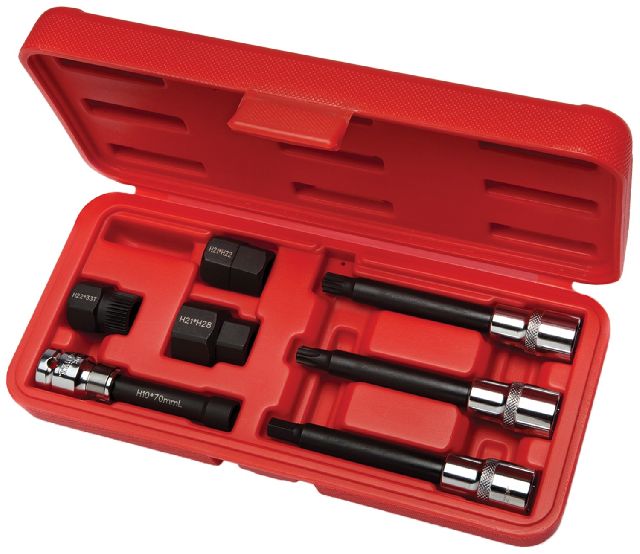

The information in this article is provided for general reference and educational purposes only. Vehicle specifications, procedures, and part compatibility can vary by production date, trim level, and region. Always consult your vehicle's factory service manual and verify part numbers before purchasing or performing repairs. Safety-critical components such as airbags, seat belts, and braking systems should be installed by a qualified professional.
- Honda Fit:
- 🧭 Diagnostic Flowchart
- 🎬 Helpful Videos
- 🛍️ Shop This Part
- What's Unique About the 2015-2020 Honda Fit
- Symptoms You May Notice
- Most Likely Causes
- Rare But Worth Checking
- Diagnosis Steps
- Parts You'll Likely Need
- Platform-Specific Known Issues
- Mechanic-Grade Diagnostic Values
- Scan Tool Commands That Help
- Wiring & Ground Locations
- Real Owner Repair Stories
- OEM Part Supersession History
- Other Known Issues on This Vehicle
- Used vs. New Parts: Buying Guide for This Vehicle
- Real Owner Stories
- 2015 Fit MT6 — 40000 miles
- 2015 Fit — 80000 miles
- 2015 Fit
- Related OBD-II Codes
- Frequently Asked Questions
- 🎟️ Get 5% Off