

P0601 on 2006-2010 Hummer H3: Internal Module Memory Error Causes and Fixes
P0601 on a Hummer H3 indicates a fatal internal memory error in a control module, most often the Powertrain Control Module (PCM) or Transmission Control Module (TCM). This is a critical failure requiring module replacement and programming by a professional, with costs typically ranging from $600 to over $1,200. Driving is unsafe as the engine can stall without warning.
- P0601 is a critical code on a Hummer H3, indicating a fatal internal failure of the PCM or TCM.
- Do not drive the vehicle. It is unsafe due to the high risk of the engine stalling at any time.
- The most common fix is to replace the faulty control module, which must be programmed to your vehicle by a professional.
- Before condemning an expensive module, always have the battery, alternator, and all main power/ground connections professionally tested.
- Diagnosis requires a scan tool that can identify which module (PCM or TCM) set the code to avoid replacing the wrong part, as advised by GM TSB #PIP4653E.
What's Unique About the 2006-2010 Hummer H3
On the Hummer H3 and its platform mates (Chevy Colorado/GMC Canyon), P0601 is considered a fatal module error. While on some vehicles this code can be triggered by simple voltage issues, on the H3 it almost invariably points to a hardware failure within the PCM or TCM. Forum discussions among H3 owners confirm that this code often precedes sudden engine stalling and typically ends with module replacement. The primary diagnostic challenge is determining *which* module has failed—the PCM or the TCM—as both can trigger this code. GM issued Technical Service Bulletin (TSB) #PIP4653E, which applies to many GM vehicles including the H3's relatives, stressing the importance of using a scan tool to identify the specific module that stored the code before attempting any repair.
Symptoms You May Notice
- Check Engine Light is on
- Engine stalls unexpectedly while driving, sometimes at highway speeds
- Vehicle will not start (engine may or may not crank)
- Vehicle enters 'limp mode' with reduced power
- Transmission is stuck in a single gear (often 2nd gear)
- Service Stability System or Traction Control warnings may appear on the dash
- ABS light may illuminate
- Communication codes like U1000 may be present
- Replacing the throttle body. While throttle body issues can cause 'Reduced Power' and 'Traction Failed' messages, they do not typically cause a P0601 code. Owners may replace the throttle body chasing the symptoms without addressing the root module failure.
- Replacing the BCM (Body Control Module). Some forum users have confused the PCM with the BCM, which can be damaged by water leaks from clogged sunroof drains. While a bad BCM causes many electrical gremlins, it does not set a P0601 code.
Most Likely Causes
- Failed Powertrain Control Module (PCM) 🔴 High Probability → Shop Engine Control Module (ECM) Internal component degradation over time due to heat and vibration is the most common reason for this failure. The PCM is located on the firewall in the engine bay, exposing it to these conditions.
How to confirm: After ruling out all other causes (power/ground issues), a professional uses a high-end scan tool to confirm the PCM is the source of the P0601 code. If attempts to re-flash the module fail, which is likely with a checksum error, it is condemned. Companies that sell remanufactured PCMs for the H3 explicitly state their product is the solution for P0601.
Typical fix: Replace the PCM. The new or remanufactured unit must be programmed to the vehicle's VIN and security system.
Est. part cost: $250-$800 - Failed Transmission Control Module (TCM) 🟡 Medium Probability → Shop Transmission Assembly Similar to the PCM, the TCM can suffer internal hardware failure. On the H3, the TCM is mounted next to the PCM and is also a known source for this code. GM TSB #PIP4653E specifically warns technicians that P0601 can be stored in the TCM.
How to confirm: A GM-specific scan tool is needed to determine if the P0601 code originated in the TCM. When the TCM sets this code, it may force the transmission into 2nd gear as a failsafe.
Typical fix: Replace the TCM and program the new module to the vehicle.
Est. part cost: $200-$600 - Low Voltage or Poor Power/Ground Connections ⚪ Low Probability While less likely to be the root cause for a persistent P0601, GM modules are sensitive to voltage. A weak battery, failing alternator, or corroded battery terminals/ground straps can cause voltage spikes or drops that could corrupt module memory, particularly during startup or shutdown. Forum members often suggest replacing the OEM battery terminals as a first step for any electrical issue.
How to confirm: Test the battery's state of charge and load capacity. A healthy, fully charged battery should read ~12.6V. With the engine running, check alternator output (typically 13.5-14.5 volts). Inspect and clean all battery terminals and major chassis/engine ground connections, specifically G102, G103, and G104 on the engine block.
Typical fix: Replace the weak battery, faulty alternator, or clean/replace corroded terminals and ground straps.
Est. part cost: $20-$600
Rare But Worth Checking
- Failed Aftermarket Tune/Flash:
Diagnosis Steps
- Verify the P0601 code is present using an OBD-II scanner.
- CRITICAL: Check and document battery voltage. A healthy, fully charged battery should read ~12.6V. With the engine running, alternator output should be stable between 13.5V and 14.5V.
- Thoroughly inspect all battery terminals, cables, and main engine/chassis ground straps for corrosion, security, and damage. Specifically locate and clean engine block grounds G102, G103, and G104.
- Using a professional scan tool capable of communicating with all vehicle modules (e.g., GM Tech 2), determine which module (PCM or TCM) has set the P0601 code. This is the most important diagnostic step.
- Inspect the wiring harness and connectors at the identified faulty module for any signs of damage, corrosion, or loose pins. Perform a voltage drop test on the PCM power and ground pins (e.g., C1-20 for battery power, C1-19 for ignition power, and C1-29 for ground) to ensure the module has a stable power supply.
- If all wiring, power, and grounds are confirmed to be good, the module that set the code is faulty.
- Attempting to re-flash the module's software may be attempted by a professional, but it is very unlikely to fix a hardware-related checksum error.
- Replace the faulty module (PCM or TCM).
- Program the new module to the vehicle using a specialized tool with access to GM's Service Programming System (SPS). This step is mandatory for the vehicle to start and run.
- Perform a CASE (Crank Angle Sensor Error) relearn procedure using a scan tool after PCM replacement.
Parts You'll Likely Need
- Powertrain Control Module (PCM)
(OEM #12597521 (2006 3.5L), 12604439 (2006), 12607096 (2008 3.7L), 19210067 (2007 3.7L Refurbished))— This is the most common cause of a P0601 code, indicating a fatal internal hardware failure.
Trusted brands: ACDelco, Flagship One, PCM of North Carolina
OEM price range: $400-$800
Aftermarket price range: $250-$500 - Transmission Control Module (TCM)
(OEM #24235754 (T42 for 2008-2010), 24243921 (2006-2010), 24235767 (2010))— The second most likely cause, as the TCM can also set this code for an internal memory failure.
Trusted brands: ACDelco
OEM price range: $300-$600
Aftermarket price range: $200-$400
Related Codes That Often Appear With This One
- U1000 (Class 2 Data Link Malfunction)
- C0240 (PCM Traction Control Not Allowed)
Technical Service Bulletins (TSBs) & Recalls
- GM TSB #PIP4653E: While not listing the H3 directly, this bulletin is critical for understanding the issue on related GM platforms. It covers DTCs P0601, P0603, P0604, P062F, or P1621 being stored in the Transmission Control Module (TCM). It explicitly instructs technicians to verify which module set the code before reprogramming or replacement, as the ECM or FPCM can also set similar codes.
- GM TSB #05-06-04-060A: This informational bulletin notes that P0601 is one of several codes that can be shared across modules and reinforces the need for careful diagnosis, starting with ensuring the vehicle's battery and charging system are operating correctly before proceeding.
Platform-Specific Known Issues
- Real World Owner Experience: Sudden Stall on Highway: A user on HummerForums.com with a 2006 H3 reported the vehicle completely shutting down without notice while driving at 70 mph. After pulling over, the truck restarted but the issue became frequent. A scan revealed code P0601 along with 'Reduced Power Traction Failed' messages on the dash, confirming the dangerous stalling symptom.
- Real World Owner Experience: Alpha Model Failure: An owner of a Hummer H3 Alpha on Hummer4x4Offroad.com reported their truck shutting down at 45 mph. A scan showed code P0601 and a history of over 1,900 fails in 6,000 starts, indicating a long-standing, pre-existing problem with the module.
- Repair Story: YouTube PCM Replacement: A YouTube video from 'Tim's Auto' shows the process of replacing the PCM on a 2007 H3 to fix a P0601 code causing limp mode and power reduction. The owner purchased a pre-programmed PCM from Flagship One (FS1inc.com) and successfully resolved the issue by swapping the module.
Mechanic-Grade Diagnostic Values
- PCM Power Supply at Connector C1, Pin 20 (Orange wire) — expected: Should match battery voltage (~12.6V KOEO, ~13.5-14.5V engine running). Failure: Voltage drop of more than 0.5V compared to battery positive post indicates a power supply issue.
- PCM Ignition 1 Voltage at Connector C1, Pin 19 (Pink wire) — expected: Should match battery voltage when key is in ON or RUN position. Failure: Low or no voltage indicates an issue with the ignition switch or related wiring.
- PCM Ground at Connector C1, Pin 29 (Black wire) — expected: Less than 0.1V (100mV) when tested against battery negative post (voltage drop test). Failure: Voltage reading higher than 0.1V indicates a poor ground connection, which can cause module malfunction.
Hidden / Shadow Codes Worth Checking
- U1000: Class 2 Data Link Malfunction. This is not a shadow code but a standard communication DTC that often appears with P0601, indicating the faulty module is disrupting the entire vehicle network. (see via Standard OBD-II scanner or professional scan tool.)
Scan Tool Commands That Help
- GM Tech 2 / GDS2: Module Identification — This is the first and most critical step to determine if the P0601 code is being set by the PCM or the TCM, as this dictates the entire repair path.
- GM Tech 2 / GDS2 with SPS subscription: Replace and Reprogram — This function is mandatory after installing a new or used PCM/TCM. It flashes the module with the correct VIN and GM-approved software calibration.
- GM Tech 2 / GDS2: CASE Relearn (Crankshaft Position System Variation Learning) — This procedure must be performed after replacing the PCM to synchronize the new module with the crankshaft position sensor, preventing misfire codes and ensuring accurate engine timing.
Wiring & Ground Locations
- G102 — On the lower left side of the engine block, rearward of G103.. This is a primary engine ground. A poor connection here can cause unstable voltage to the PCM/TCM, potentially leading to memory errors or false codes.
- G103 — On the lower left side of the engine block, forward of G102.. Another primary engine ground. Verifying this ground is clean and tight is a crucial step before condemning an expensive control module.
- G104 — On the left side of the engine block, in front of the starter motor.. This ground point is critical for the starter and also serves the engine block. Voltage fluctuations during cranking due to a bad ground here can corrupt modules.
- PCM Connectors C1, C2, C3 — On the firewall in the engine compartment, attached to the PCM.. These are the direct interfaces to the module. Checking for pin corrosion, damage, or performing voltage/ground tests must be done at these connectors.
Real Owner Repair Stories
- HummerForums.com user 'H3Bubba' (2006 Hummer H3) — P0601 with 'Reduced Power Traction Failed' messages, stalling.
❌ Tried (didn't work) Replacing the original battery terminals with high-quality aftermarket ones., Installing a brand new battery.
✅ What actually fixed it The user confirmed that power-related fixes did not work, and the next required step, as confirmed by forum consensus, was to replace the Powertrain Control Module (PCM). - Hummer4x4Offroad.com user 'h3_dad' (2007 Hummer H3 I5) — Radio turning off and on, scan tool losing communication with OBD port, multiple 'U' (communication) codes.
❌ Tried (didn't work) Installing a used PCM with an aftermarket tune.
✅ What actually fixed it The problems were resolved by reinstalling the original, stock PCM. This confirmed the aftermarket tune or the used module itself was causing network instability, even though it didn't set a P0601.
OEM Part Supersession History
12607096 (2007 3.7L PCM)→12636660— Part update/revision by GM.Multiple (e.g., 12597521, 12604439 for 2006)→Remanufactured units programmed to VIN.— Many original part numbers for the 2006 model year are now serviced by remanufacturers who consolidate multiple hardware versions into a single product line.
Heads up: The physical part number is less important than ensuring the replacement is programmed with the correct VIN and software for the 3.5L engine.
Model Year Variations Within This Range
- 2006 only: The 2006 H3 used the 3.5L L52 I5 engine. This requires a specific PCM and software calibration different from later years.
- 2007-2010: The 2007 model introduced the 3.7L LLR I5 engine. The 5.3L LH8 V8 was introduced as an option in 2008. Each engine requires a unique PCM part number and software.
- 2008-2010: These model years are specified as using the 'T42' Transmission Control Module. This suggests earlier models (2006-2007) may use a different TCM, which is a critical distinction if the TCM is the suspected cause of the P0601.
Diagnostic Flowchart
Used vs. New Parts: Buying Guide for This Vehicle
When a used part is the smart pick: A used PCM or TCM from a salvage yard is a viable, cost-saving option ONLY if you send it to a reputable programming service before installation. It is not a plug-and-play part.
Donor-vehicle mileage cap: roughly under 150000 miles for the part to have meaningful remaining life.
What to inspect on the donor part:
- Match the OEM Service Number on the module case if possible.
- Inspect for zero corrosion on the connector pins.
- Ensure the case is not physically damaged, dented, or showing signs of being pried open.
- Source from a vehicle in a dry climate if possible to minimize moisture exposure risk.
OEM-only on this vehicle (don't cheap out):
- While the hardware can be remanufactured or used, the SOFTWARE flashed onto the module should always be the latest GM-approved calibration for your VIN. Do not use a module with a tune from a different vehicle.
Aftermarket brands forum-validated for this vehicle:
- Flagship One (FS1inc.com)
- PCM of North Carolina (PCMofNC.com)
Brands owners have reported issues with on this vehicle:
- Unprogrammed 'blank' modules from general auto parts stores or online marketplaces that require dealer tools to flash. The cost of dealer programming often negates the savings.
Real Owner Stories
Aggregated from forums and TSBs cited above. Mileages and costs reflect what owners reported in those sources.
Hummer H3 Alpha
Symptoms: Truck shutting down at 45 mph. A scan showed code P0601 and a history of over 1,900 fails in 6,000 starts, indicating a long-standing problem.
What fixed it: The problem was identified as an internal PCM fault that required replacement and flashing of the module.
Source hint: Hummer4x4Offroad.com: Thread 'Error Code P 0601'
2007 H3
Symptoms: Vehicle was in limp mode with power reduction, accompanied by a P0601 code.
What fixed it: The owner purchased a pre-programmed PCM from Flagship One (FS1inc.com) and resolved the issue by swapping the module.
Source hint: Repair Story: YouTube PCM Replacement
2006 H3
Symptoms: The vehicle completely shut down without notice while driving at 70 mph. After pulling over, it restarted but the issue became frequent, displaying 'Reduced Power Traction Failed' messages.
What fixed it: The forum discussion for this incident recommended checking battery terminals first before condemning the PCM, though the user's final repair was not documented.
Source hint: HummerForums.com: Thread '2006 H3 - P0601 Reduced Power Traction Failed'
Related OBD-II Codes
Frequently Asked Questions
My H3 is showing P0601, but could it be the Transmission Control Module (TCM) instead of the main engine computer (PCM)?
My transmission is stuck in 2nd gear and I have a P0601 code. Are these related?
If I buy a new PCM to fix the P0601 code, can I just install it myself?
I've heard checking ground wires is important on the H3. Are there specific ones to check for P0601?
Can a bad battery or alternator cause a P0601 code on my Hummer H3?
My H3 suddenly stalled on the highway and now shows a P0601 code and 'Reduced Power' messages. Is this a known issue?
Used OEM Parts in Stock
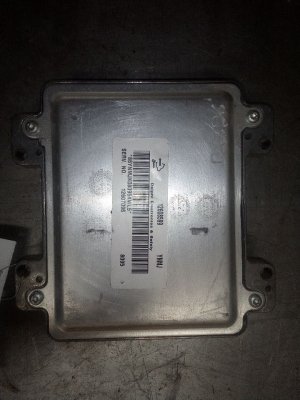
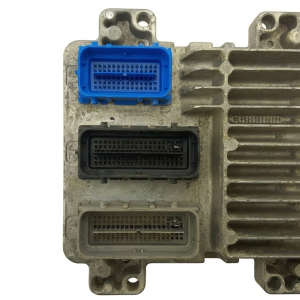
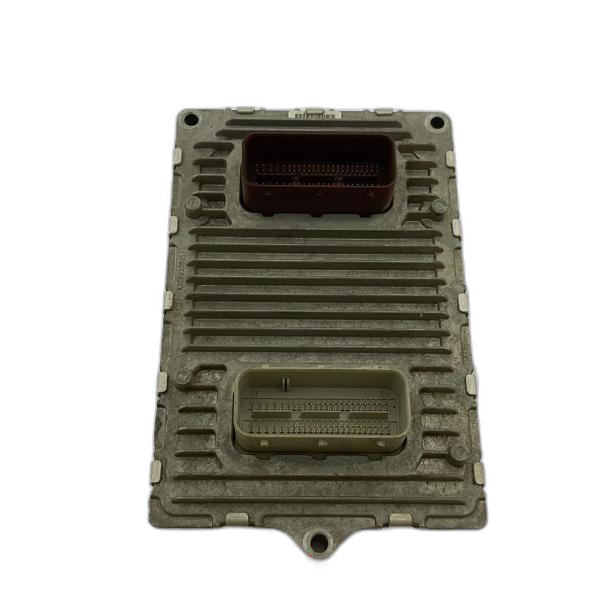
New Aftermarket Parts Available

The information in this article is provided for general reference and educational purposes only. Vehicle specifications, procedures, and part compatibility can vary by production date, trim level, and region. Always consult your vehicle's factory service manual and verify part numbers before purchasing or performing repairs. Safety-critical components such as airbags, seat belts, and braking systems should be installed by a qualified professional.
- Hummer H3:
- 🧭 Diagnostic Flowchart
- 🛍️ Shop This Part
- What's Unique About the 2006-2010 Hummer H3
- Symptoms You May Notice
- Most Likely Causes
- Rare But Worth Checking
- Diagnosis Steps
- Parts You'll Likely Need
- Related Codes That Often Appear With This One
- Technical Service Bulletins (TSBs) & Recalls
- Platform-Specific Known Issues
- Mechanic-Grade Diagnostic Values
- Hidden / Shadow Codes Worth Checking
- Scan Tool Commands That Help
- Wiring & Ground Locations
- Real Owner Repair Stories
- OEM Part Supersession History
- Model Year Variations Within This Range
- Used vs. New Parts: Buying Guide for This Vehicle
- Real Owner Stories
- Hummer H3 Alpha
- 2007 H3
- 2006 H3
- Related OBD-II Codes
- Frequently Asked Questions
- 🎟️ Get 5% Off