

P0602 on 2010-2019 Hyundai Sonata: Control Module Programming Error Causes and Fixes
P0602 on a Hyundai Sonata almost always indicates a fatal error within the Engine Control Module (ECM). The most common fix is replacing the ECM and having it professionally programmed, which is not a DIY job and can cost between $800 and $1,500. An attempt to re-flash the software should be performed first, but often fails, confirming hardware failure.
- P0602 is a critical code indicating the Engine Control Module (ECM) has failed internally.
- Do not drive the vehicle, as it can stall at any time without warning.
- The fix is not a DIY job. The ECM must be replaced and professionally programmed by a dealer or qualified repair shop.
- Before condemning the ECM, always have a professional verify the battery, charging system, and the ECM's power and ground connections are stable.
- This code is especially plausible on Sonata models that have undergone numerous factory software updates, as an interruption during programming can cause this failure.
What's Unique About the 2010-2019 Hyundai Sonata
The 2010-2019 Sonata spans three generations (NF, YF, LF) that have been subject to numerous recalls and service campaigns involving ECM software updates. For example, many YF and LF generation Sonatas with GDI engines received updates for the Knock Sensor Detection System (KSDS) under Campaign 953 to prevent catastrophic engine failure. While these updates are meant to be preventative, any interruption during the reprogramming process (like a drop in battery voltage or tool disconnection) can corrupt the ECM's software and trigger a P0602 code. The sheer volume of vehicles requiring these critical updates increases the probability of programming-related failures occurring in the field.
Generation note: This range covers the end of the 5th generation (NF, 2010), the entire 6th generation (YF, 2011-2014), and the 7th generation (LF, 2015-2019). While P0602 is a universal code for ECM failure, the YF and LF generations were subject to more frequent and critical ECM software updates related to engine reliability (Theta II GDI engine issues), potentially making them more susceptible to programming-related failures if updates are interrupted.
Symptoms You May Notice
- Check Engine Light is on
- Engine stalls unexpectedly or misfires
- Engine cranks but will not start
- Vehicle enters 'limp mode' with severely reduced power and RPM limit (approx. 1800-2000 RPM)
- Harsh or erratic automatic transmission shifting
- Noticeable decrease in fuel economy
- Complete loss of communication with the scan tool in some cases
- Replacing other sensors like the crankshaft or camshaft position sensors. While a bad ECM can cause symptoms related to other sensors, the P0602 code is a direct pointer to the module itself.
- Assuming it's a simple wiring issue to an external component. P0602 specifically indicates an internal programming/memory fault, not a typical circuit fault to a sensor.
- Ignoring the P0602 and focusing on other codes. A failing ECM can generate a cascade of other codes; P0602 should be prioritized as the primary fault.
Most Likely Causes
- Internal ECM/PCM Failure 🔴 High Probability The ECM's internal memory chips (EEPROM) or processor can fail due to age, heat cycles, or manufacturing defects, making it impossible for the module to read its own software. This is the most common cause for P0602 on an otherwise healthy vehicle.
How to confirm: After ruling out all other possibilities (power/ground issues), a professional diagnosis with an advanced scan tool that fails to communicate or re-flash the ECM confirms internal failure. A memory integrity test that shows a checksum failure also condemns the module. 🎬 Watch: How to fix a P0602 control module programming error
Typical fix: Replace the Engine Control Module (ECM) and have it professionally programmed to the vehicle's VIN and immobilizer system.
Est. part cost: $600-$1200 - Unstable Power Supply 🟡 Medium Probability A weak battery, failing alternator, or corroded ground straps can cause voltage fluctuations. This can corrupt the ECM's memory, especially during a software update or even during a key-on/key-off cycle. Before condemning the ECM, the battery and charging system must be thoroughly tested.
How to confirm: Load test the battery and check the alternator's output voltage (should be stable, typically 13.5-14.8V). Perform a voltage drop test on the ECM's main power and ground wires to check for corrosion or loose connections. A reading above 50mV on the ground side indicates a problem that must be fixed.
Typical fix: Replace the failing battery or alternator. Clean or replace corroded battery terminals and chassis ground straps.
Est. part cost: $150-$500 - Interrupted or Failed Software Update ⚪ Low Probability Given the number of ECM software updates for Sonatas (e.g., KSDS update), an interruption during the re-flashing process at a dealership or shop (e.g., due to tool disconnection, power loss, or unstable Wi-Fi for the diagnostic tablet) can leave the software corrupted.
How to confirm: This is typically known immediately after a failed programming attempt. A scan tool will show a programming failure or a blank/mismatched VIN in the module's data. The code appears right after the failed attempt.
Typical fix: Attempt to re-flash the ECM with the correct OEM software using a stable power supply. If the module is 'bricked' and won't accept a new program, it must be replaced.
Est. part cost: $0 (if re-flash works) - $1200 (if ECM replacement is needed)
Diagnosis Steps
- Scan for all diagnostic trouble codes. Prioritize P0602 and any other internal module faults (P0601, etc.) over sensor or circuit codes.
- Check and load test the battery. Ensure it is fully charged, healthy, and has clean, tight terminals. A weak battery is a common cause of module corruption.
- Inspect the charging system. With the engine running, verify the alternator is providing stable voltage (typically 13.5-14.8V).
- Visually inspect the ECM connectors and wiring harness for any signs of physical damage, corrosion, or moisture. Check for any aftermarket performance chips or programmers and remove them.
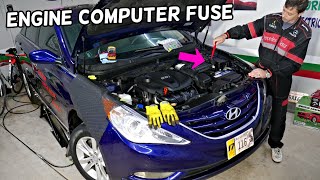
- Perform a voltage drop test on the ECM's power and ground circuits to ensure it's receiving clean, stable power. 🎬 See this guide to finding and checking your ECU fuses Check main chassis and engine block ground straps for corrosion and tightness.
- Using a dealer-level tool (Hyundai GDS) or J2534 pass-thru device, attempt to re-flash the ECM with the latest manufacturer software. A stable power supply (battery maintainer) is mandatory during this process.
- If the re-flash fails, cannot be initiated, or the code returns immediately, the ECM is faulty and must be replaced.
- If replacing, the new ECM must be programmed with the vehicle's VIN, and the immobilizer system must be synchronized ('key teaching').
Parts You'll Likely Need
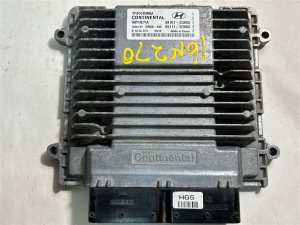
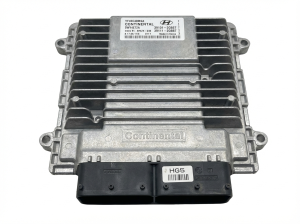
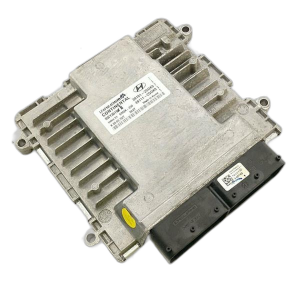
- Engine Control Module (ECM)
(OEM #Varies significantly by year, engine, and transmission. Examples: 39110-2Gxxx (YF Sonata), 39111-2Gxxx (LF Sonata). Must be sourced by VIN.)— This code indicates an unrecoverable internal error in the ECM. Replacement is the only reliable fix if a re-flash is unsuccessful.
Trusted brands: Hyundai (OEM), Flagship One (Remanufactured/Programmed), Cardone (Remanufactured)
OEM price range: $800-$1200
Aftermarket price range: $400-$700 (Remanufactured, requires programming)
Related Codes That Often Appear With This One
- P0601, P0603, P0604, P0605 — These are all internal control module memory or processor error codes. Seeing them together strongly confirms the ECM/PCM has failed internally.
- U0100 — This code means 'Lost Communication With ECM/PCM'. It often appears with P0602 because the internal failure of the ECM prevents it from communicating with other modules on the vehicle's CAN bus network.
- P0630 — This code for 'VIN Not Programmed or Mismatched - ECM/PCM' will appear if a replacement ECM is installed but not correctly programmed with the vehicle's VIN.
Technical Service Bulletins (TSBs) & Recalls
- 20-01-006H / Campaign 953: ECM update for the Knock Sensor Detection System (KSDS) on many Sonata models. This TSB details the process of updating the ECM software to monitor for engine vibrations that precede bearing failure, putting the car in limp mode and setting code P1326 if detected.
- 15-01-048 / Recall Campaign 132: Engine inspection and potential ECM interaction for 2011-2012 Sonatas. This recall addressed manufacturing debris in the engine that could cause bearing failure and stalling.
Platform-Specific Known Issues
- The YF (2011-2014) and LF (2015-2019) Sonata models with GDI engines were subject to a major recall (Campaign 132) and a product improvement campaign (Campaign 953) that involved ECM software updates to detect engine bearing wear. An error during one of these critical updates could lead to a P0602 code.
- A user on a Hyundai forum with a 2013 Sonata experienced engine seizure related to the Theta II engine recall. The process for getting a warranty replacement involved a dealer inspection and review of maintenance records. This highlights the complex interplay between mechanical failures and the ECM software designed to monitor them.
Mechanic-Grade Diagnostic Values
- ECM/PCM Ground Pin Voltage Drop — expected: Maximum 50 mV (0.050 V) between the ground pin at the ECM connector and the negative battery terminal.. Failure: A reading significantly higher than 50 mV indicates high resistance in the ground circuit, which can starve the module and cause internal errors.
- ECM/PCM Constant Power Pin Voltage — expected: Should measure battery voltage (Approx. 12.6V with engine off).. Failure: Low or no voltage indicates a blown fuse, faulty main relay, or a break in the power supply wire, not necessarily a bad ECM.
- CAN Bus Resistance (at DLC) — expected: Approximately 60 Ω with the battery disconnected.. Failure: A reading of 120 Ω suggests a break in the CAN circuit or a missing terminating resistor (one of the modules is offline). A reading near 0 Ω indicates a short between the CAN High and CAN Low wires.
Scan Tool Commands That Help
- Hyundai GDS (Global Diagnostic System): ECU Upgrade (Manual Mode) — This is a recovery function used when a standard automatic software update fails. The procedure requires disconnecting the ECM connectors for 15 minutes to reset its contents before attempting the manual re-flash. This is a last-ditch effort to save a 'bricked' module before replacing it.
- J2534 Pass-Thru Device: ECU Reprogramming — Used with a manufacturer subscription to flash the latest OEM software to the ECM. This is the standard procedure for software updates and the first step in trying to resolve a P0602 code. A stable power supply (13.5V+) is mandatory during this process to prevent bricking the module.
Wiring & Ground Locations
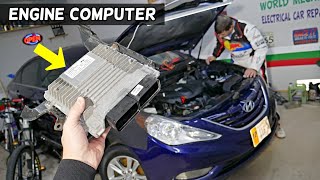
- YF Sonata (2011-2014) ECM Location — Located in the engine bay, on the driver's side (LH), under the hood, typically near the battery.. This location exposes the module and its connectors to under-hood heat and potential moisture, making connector and wiring integrity crucial.
- LF Sonata (2015-2019) ECM Location — Located behind the battery in the engine compartment.. Its proximity to the battery means the harness can be disturbed or damaged during battery service. A weak or failing battery in this location can also subject the ECM to voltage fluctuations.
- YF Sonata (2011-2014) 2.4L ECM Power/Ground Pins — At the ECM's 'Connector B': Constant battery power is on pins 58 and 75. Main grounds are on pins 1, 2, and 4.. These are the exact pins to test for voltage and perform voltage drop tests on when diagnosing a P0602. A failure at these specific pins must be corrected before condemning the ECM.
- LF Sonata (2015-2019) Main Grounds — A critical ground is from the negative battery cable to the chassis on the driver's side inner fender/shock tower. Another is the main engine-to-chassis ground strap.. These main ground points are frequently cited on forums as a source of intermittent electrical problems. Corrosion or looseness here can cause module communication errors, including those that might lead to a P0602.
Real Owner Repair Stories
- Reddit r/MechanicAdvice user C137_Rick_Sanchez (2007 Ford Taurus (Note: While not a Sonata, the story is about a common remanufacturer and is highly relevant to the repair process)) — Intermittent no-start / no-crank, with the scan tool intermittently failing to communicate with the PCM at key-on.
❌ Tried (didn't work) Extensive voltage drop testing on power and ground circuits, which all checked out good., Replacing the PCM with a remanufactured Cardone unit from O'Reilly Auto Parts., Replacing the first bad remanufactured unit with a second one from the same source, which also failed with the same symptoms.
✅ What actually fixed it Ordering a third remanufactured PCM, this time from NAPA. Although it was also a Cardone unit (in a NAPA box), this specific unit worked correctly and resolved the intermittent no-communication issue. This highlights significant quality control variability in remanufactured parts.
When the Usual Fixes Don't Work
- While P0602 almost always points to a faulty ECM, the repair is not always as simple as a one-for-one swap. As seen in forum discussions, the market for remanufactured ECMs has significant quality control issues. It is not uncommon for technicians to install one or even two bad 'reman' units out of the box that present with intermittent no-communication or other faults. This can lead to a misdiagnosis of a wiring problem when, in fact, the replacement part itself is defective. This reinforces the need for thorough power and ground testing before and after part replacement.
OEM Part Supersession History
39111-2G671→39111-2G672, then 39111-2G673, then 39111-2G674— Represents running changes and software/hardware updates for the ECM on the YF Sonata (2.4L AT).
Heads up: While later part numbers often supersede earlier ones, it is critical to match the part number or a verified interchange number to the vehicle's VIN and specific emissions (Federal vs. Canada) and transmission type to ensure compatibility.39111-2G690→39111-2G691, then ...692, etc.— Represents running changes for the ECM on the YF Sonata with the 2.0L Turbo engine.
Heads up: An ECM for a 2.0T will not work on a 2.4L and vice-versa. Programming is specific to the engine, transmission, and options.
Model Year Variations Within This Range
- 2011-2014 (YF Generation): The ECM is located under the hood on the driver's side. Specific power and ground pins have been identified (e.g., Connector B, pins 58/75 for power, 1/2/4 for ground on 2.4L). These models were heavily involved in the initial Theta II engine software updates.
- 2015-2019 (LF Generation): The ECM is located behind the battery. This makes checking the main chassis ground on the driver's side fender and the engine-to-chassis strap even more critical, as these are known weak points on this generation that can cause widespread electrical issues.
Diagnostic Flowchart
Other Known Issues on This Vehicle
Issues unrelated to this code that are worth knowing about as an owner of this generation:
- Theta II GDI Engine Failure 🔴 High — Widespread in 2011-2014 models, but affects up to 2019. Caused by manufacturing debris leading to connecting rod bearing failure. Often results in engine seizure. (Ref: Recall 132, Campaign 953, and multiple class-action lawsuits.)
- Excessive Oil Consumption 🟠 Medium — Common across GDI engines due to carbon buildup on piston rings. Owners report needing to add oil between changes. Hyundai considers 1 quart per 1,000 miles acceptable after a cleaning procedure. (Ref: TSB 23-EM-008H, TSB 21-EM-003H provide diagnostic and cleaning procedures.)
- Flexible Steering Coupler Failure 🟠 Medium — Extremely common on YF (2011-2014) Sonatas. The rubber coupler disintegrates, causing a distinct clicking or clunking noise in the steering column when turning. It is a cheap part but requires significant labor to replace. (Ref: Warranty Extension TXX7 (10 years/100,000 miles).)
- Peeling Paint 🟡 Low — Affects many Sonatas, particularly white-colored ones. The paint, especially on the roof and hood, can begin to delaminate and peel off in large sheets. This is a cosmetic issue.
- Connecting Rod Bearing Wear (Knocking) 🔴 High — A precursor to full engine failure. A metallic, rhythmic knocking sound that increases with engine RPM indicates the bearings are failing. This was the primary target of the KSDS software update. (Ref: Recall 132, TSB 17-01-046-1.)
Used vs. New Parts: Buying Guide for This Vehicle
When a used part is the smart pick: A used OEM ECM from a reputable salvage yard (from a vehicle with no flood or electrical fire damage) can be a cost-effective option ONLY if you use a specialized mail-in service to clone the data from your original ECM to the donor unit. This avoids the need for dealer programming but requires your original module to be at least partially readable.
Donor-vehicle mileage cap: roughly under 100000 miles for the part to have meaningful remaining life.
What to inspect on the donor part:
- Verify the donor vehicle was not a flood or fire victim.
- Inspect all connector pins on the used ECM for any signs of corrosion, moisture, or physical damage.
- Ensure the part number on the donor ECM is an exact match or a confirmed superseded number for your original.
- Purchase from a seller that offers a warranty, even if it's only 30-90 days.
OEM-only on this vehicle (don't cheap out):
- Engine Control Module (ECM/PCM). While remanufactured units are available, a new OEM part from Hyundai is the most reliable, albeit most expensive, option. The critical factor is the programming, which must be done correctly for any replacement to function.
Aftermarket brands forum-validated for this vehicle:
- Flagship One (FS1): Frequently mentioned as a source for pre-programmed ECMs that are VIN-matched. While many customers report success and good service, some negative reviews exist regarding delays or issues, so they are a prominent but not flawless option.
Brands owners have reported issues with on this vehicle:
- Cardone (A1 Cardone): This is one of the largest remanufacturers, and their parts are sold by many major auto parts stores. However, forums contain numerous reports from technicians and DIYers who have received multiple defective Cardone ECMs in a row, citing intermittent communication failures or other faults right out of the box. While a good Cardone unit will work, the potential for receiving a bad one is a noted risk.
Real Owner Stories
Aggregated from forums and TSBs cited above. Mileages and costs reflect what owners reported in those sources.
2013 Hyundai Sonata Theta II
Symptoms: The owner experienced an engine seizure related to the Theta II engine issues. The process for resolution involved a dealer inspection and a review of maintenance records to qualify for warranty replacement.
What fixed it: Warranty replacement following a dealer inspection and maintenance record review.
Source hint: Hyundai-Forums.com cited in vehicle_specific_issues
2012 Hyundai Sonata
Symptoms: Owner was aware of ECM update recalls related to engine performance issues and the vehicle entering limp mode.
What fixed it: ECM update recalls (such as 20-01-006H) related to the Knock Sensor Detection System.
Source hint: Reddit r/Hyundai
Related OBD-II Codes
Frequently Asked Questions
Does Campaign 953 apply to my Sonata if I'm seeing engine performance issues?
Can a failed software update for the Theta II engine recall cause code P0602?
Is the P0602 code covered under the same warranty extension as the flexible steering coupler?
How much does it cost to fix P0602 on a 2011-2019 Sonata if the ECM is 'bricked'?
Could my Sonata's stalling and P0602 be related to the manufacturing debris recall?
Will a weak battery cause a P0602 code on my 2015 Sonata?
Helpful Videos
We Have This Part in Stock

The information in this article is provided for general reference and educational purposes only. Vehicle specifications, procedures, and part compatibility can vary by production date, trim level, and region. Always consult your vehicle's factory service manual and verify part numbers before purchasing or performing repairs. Safety-critical components such as airbags, seat belts, and braking systems should be installed by a qualified professional.
- Hyundai Sonata:
- 🧭 Diagnostic Flowchart
- 🎬 Helpful Videos
- 🛍️ Shop This Part
- What's Unique About the 2010-2019 Hyundai Sonata
- Symptoms You May Notice
- Most Likely Causes
- Diagnosis Steps
- Parts You'll Likely Need
- Related Codes That Often Appear With This One
- Technical Service Bulletins (TSBs) & Recalls
- Platform-Specific Known Issues
- Mechanic-Grade Diagnostic Values
- Scan Tool Commands That Help
- Wiring & Ground Locations
- Real Owner Repair Stories
- When the Usual Fixes Don't Work
- OEM Part Supersession History
- Model Year Variations Within This Range
- Other Known Issues on This Vehicle
- Used vs. New Parts: Buying Guide for This Vehicle
- Real Owner Stories
- 2013 Hyundai Sonata Theta II
- 2012 Hyundai Sonata
- Related OBD-II Codes
- Frequently Asked Questions
- 🎟️ Get 5% Off