

P0602 on 2010-2015 Hyundai Tucson: Control Module Programming Error Causes and Fixes
P0602 on a 2010-2015 Tucson almost always indicates a fatal internal hardware failure of the Engine Control Module (ECM). This is not a simple software glitch but a hardware fault within the module's memory. The only reliable fix is to replace the ECM and have it professionally programmed, a repair that can cost between $1,500 and $2,300 at a dealership.
- P0602 on a 2010-2015 Tucson means the engine's main computer (ECM) has failed and needs to be replaced.
- This is a critical safety issue; do not drive the vehicle as it can shut off without warning.
- Before replacing the ECM, have a professional verify the battery, charging system, and all power and ground connections to the module.
- The replacement ECM must be programmed by a dealer or specialist with Hyundai-specific tools. A used ECM can be an option, but it also requires professional programming or cloning.
What's Unique About the 2010-2015 Hyundai Tucson
For the second-generation (LM) Hyundai Tucson, the P0602 code is a very direct and reliable indicator of ECM failure. Unlike on some other vehicles where this code might be triggered by a simple software update or a temporary communication loss, on this Tucson it almost always signifies a permanent hardware fault inside the module. There are no common wiring or sensor issues on this platform that are known to falsely trigger P0602; the diagnosis is typically very straightforward, leading directly to the expensive ECM replacement.
Symptoms You May Notice
- Check Engine Light is on
- Engine stalls intermittently or will not start at all
- Vehicle enters 'limp mode' with reduced power and RPM limited to around 1800-2000 RPM 🎬 Watch: Diagnosing a Tucson with no-start and limp mode issues.
- Rough idling or misfiring
- Poor acceleration and reduced engine performance
- Harsh or erratic automatic transmission shifting
- Replacing other sensors like crankshaft or camshaft sensors. While a failing ECM can cause other codes to appear, P0602 is the primary fault and points directly to the computer itself.
- Assuming it's a simple wiring issue to an external component. The P0602 code specifically denotes an internal programming/memory fault, not a circuit fault to a sensor.
- Ignoring the P0602 and focusing on other codes. A failing ECM can generate a cascade of other codes; P0602 should be prioritized as the root cause.
Most Likely Causes
- Internal Engine Control Module (ECM) Failure 🔴 High Probability → Shop Engine Control Module (ECM) This code specifically indicates an internal self-test failure of the ECM hardware, often related to the EEPROM memory chip failing or becoming corrupted. It is a definitive hardware failure, not just a software issue.
How to confirm: After verifying the ECM has stable power (12.6V+) and clean ground connections, a professional scan tool is used to attempt communication. If communication is intermittent or if a re-flash of the software fails to complete or fails to resolve the code, the ECM is condemned.
Typical fix: Replace the Engine Control Module and have it programmed by a Hyundai dealer or a qualified independent shop with the proper J2534 or GDS equipment.
Est. part cost: $1200-$2200
Rare But Worth Checking
- Unstable Voltage or Poor Grounds: While ECM failure is the most likely cause, it's crucial to rule out simpler issues first. A weak battery, failing alternator, or corroded ECM power/ground wires can cause voltage drops that might corrupt the ECM's memory or mimic a failure. Always test the battery and charging system (should be 13.5-14.5V when running) and inspect the main ECM ground strap before replacing the expensive module.
- Failed Software Update: If a dealership software update (like TSB 21-01-023H-4 for the knock sensor) was recently performed and interrupted, it could corrupt the ECM's programming and trigger a P0602 code. The TSB itself warns that if battery voltage is below 12V, an update failure can occur. In this specific case, attempting to re-flash the software again in Manual Mode might be a solution.
Diagnosis Steps
- Scan for all diagnostic trouble codes. Prioritize P0602 if it is present, as it can cause other codes to set.
- Check Battery and Charging System: Fully charge and load-test the battery. Ensure the alternator is providing stable voltage (typically 13.5-14.5V when running). Unstable voltage, especially during programming attempts, is a known cause of module corruption.
- Inspect ECM Power and Ground Connections: Locate the ECM (typically in the engine bay behind the battery). Disconnect the battery. Unplug the ECM connectors and inspect for any corrosion, moisture, or bent pins. Clean and secure all ground straps from the wiring harness to the chassis.
- Verify Power and Ground at the ECM Connector: Using a multimeter and the vehicle's wiring diagram, confirm that the ECM is receiving correct battery voltage and has a solid ground connection on the appropriate pins. A weak ground or intermittent power can mimic internal failure.
- Attempt ECM Software Update: If power and grounds are good, the next step for a professional is to attempt to re-flash the ECM with the latest factory software using a J2534 pass-thru device or dealership GDS scan tool. This can resolve corruption issues and will also confirm if the module is capable of being programmed. If the update fails, it's a strong indicator of hardware failure.
- Replace ECM: If the re-flash fails, or if the code returns immediately after a successful re-flash, the ECM has an internal hardware fault and must be replaced. The new module will require programming to the vehicle's VIN and immobilizer system.
Parts You'll Likely Need
- Engine Control Module (ECM)
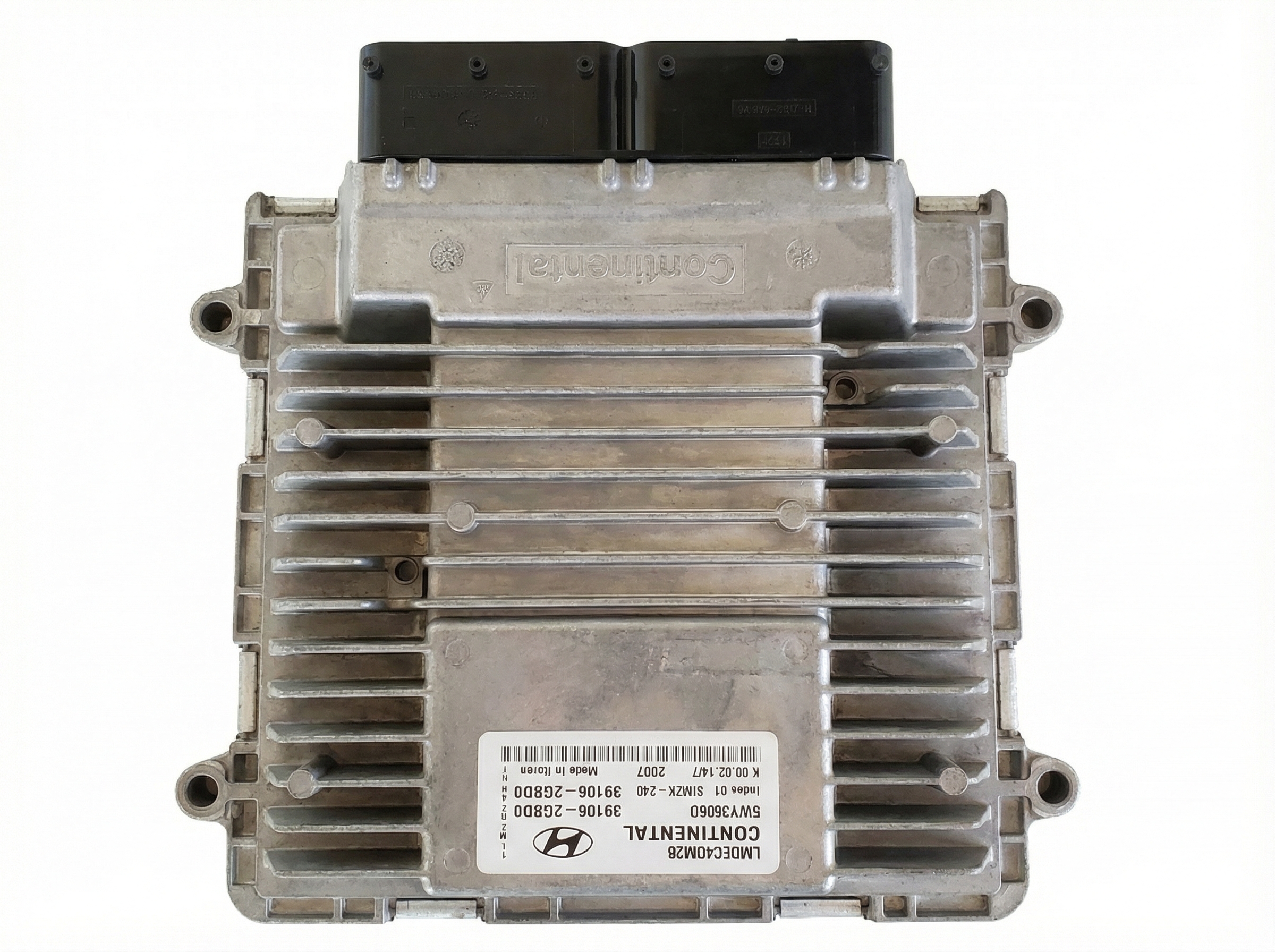
(OEM #39106-2GBD0, 39106-2GBD1, 39106-2GBD2)— This is the root cause of the P0602 code in the vast majority of cases for this vehicle. The internal memory fails, requiring complete replacement of the unit. Part number 39106-2GBD0 is specified for the 2.4L engine in the 2014-2015 Tucson and is interchangeable with 39106-2GBD1 and 39106-2GBD2.
Trusted brands: Hyundai (Genuine OEM)
OEM price range: $1472 - $2180
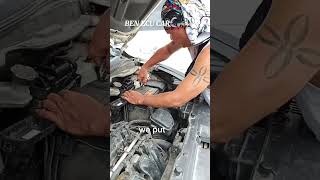
Aftermarket price range: $400-$800 (Used/Remanufactured, requires programming) 🎬 Watch: How cloning works when using a used Hyundai ECU.
Related Codes That Often Appear With This One
- P1326 — A relevant TSB (21-01-023H-4, Campaign 966) for this Tucson involves an ECM update to detect engine bearing noise, which sets code P1326. A failure during this critical update could potentially lead to P0602.
- U0100 — This code indicates a loss of communication with the ECM. It can appear alongside P0602 as the module begins to fail internally, causing it to stop communicating on the vehicle's CAN network.
Technical Service Bulletins (TSBs) & Recalls
- 21-01-023H-4 (Campaign 966): Describes an ECM software update to enhance knock sensor detection logic. While not a fix for P0602, it's a relevant software modification for the original ECM. The TSB explicitly warns that low battery voltage can cause the update to fail, which is a potential pathway to a P0602 code.
Platform-Specific Known Issues
- Service Campaign 966 (TSB 21-01-023H-4) was issued for 2010-2015 Tucsons to update the ECM software for knock sensor detection. It is important to ensure this update has been performed, but an interruption during the update (e.g., due to low battery voltage) could potentially cause this P0602 code.
Mechanic-Grade Diagnostic Values
- ECM Power Supply Pins (after main relay) — expected: Battery Voltage (approx. 12.6V with key on, engine off). Failure: Voltage below 12V or no voltage indicates a wiring, fuse, or relay issue before the ECM.
- ECM Power Ground Pins to Chassis Ground — expected: Max 50mV. Failure: A reading higher than 50mV indicates a poor ground connection, which can cause intermittent issues or module damage.
- Charging System Voltage (at battery terminals) — expected: 13.5V - 14.5V with engine running. Failure: Voltage below 13.5V or above 14.8V indicates a failing alternator or voltage regulator, which can damage the ECM.
Scan Tool Commands That Help
- Hyundai GDS (Global Diagnostic System): ECU Upgrade (Auto Mode) — This is the first step to attempt to fix a P0602. The GDS will read the ECM's ROM ID and check if a factory software update is available. If the process completes successfully but the code returns, it confirms hardware failure. If the process fails, it also points to hardware failure.
- Hyundai GDS (Global Diagnostic System): ECU Upgrade (Manual Mode) — This is a recovery procedure used if an ECU update was interrupted (e.g., due to low battery voltage) and caused the P0602 code. The technician manually selects the correct ROM ID to force a re-flash.
- Hyundai GDS (Global Diagnostic System): VIN Writing — This is a mandatory step after installing a new or used ECM. The vehicle's unique VIN must be programmed into the module. Failure to do so will prevent the vehicle from starting and may set other codes like P0630.
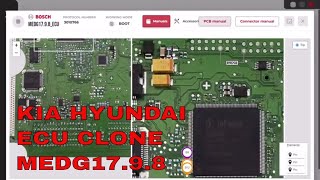
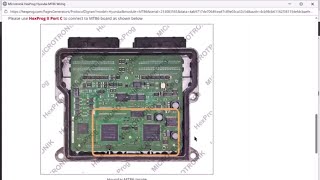
- Specialized Bench Programming Tools (e.g., Flex, Hex-Probe): ECU Cloning (Boot Mode) — Used by third-party specialists as an alternative to dealer programming. This process involves reading the full data (Internal Flash, EEPROM) from the original faulty ECM and writing it to a compatible used donor ECM. This makes the donor ECM a plug-and-play replacement, as it contains all the original VIN and immobilizer data.
Wiring & Ground Locations
- ECM Location — In the engine bay, on the driver's side, typically located behind or next to the battery and under-hood fuse box.. Physical access is required to inspect connectors for corrosion and to perform power/ground voltage tests at the ECM harness.
- ECM Power Ground Pins — On the main ECM harness connectors. Specific pin numbers vary by year and connector, but common examples include pins 3 and 4. A wiring diagram for the specific vehicle is required for accurate testing.. Verifying a solid ground (less than 50mV) at these pins is a critical first step. A poor ground can cause voltage irregularities that mimic internal ECM failure or lead to permanent damage.
- Main Chassis Ground Points — Bolts on the vehicle's frame, strut towers, or near the fuse box mount in the engine bay. The primary ground strap from the battery negative terminal connects directly to the chassis.. The ECM relies on a clean chassis ground. Corrosion or looseness at these main grounding points can introduce electrical noise and voltage drops throughout the vehicle, potentially affecting the ECM.
OEM Part Supersession History
39106-2GBD0→39106-2GBD1, then 39106-2GBD2— Standard revision updates for minor hardware or firmware changes.
Heads up: For the 2.4L AT FWD models with conventional key ignition, parts 39106-2GBD0, 39106-2GBD1, and 39106-2GBD2 are generally interchangeable, but programming is always required. It is critical to match the original part number first and confirm interchangeability with the parts supplier.39106-2G800 (for earlier 2010-2013 models)→39106-2G801, 39106-2G802, etc.— Revision updates.
Heads up: ECMs for 2010-2013 models (e.g., 39106-2G8xx) are NOT compatible with 2014-2015 models (39106-2GBDx). Compatibility is also dependent on emissions (Federal vs. California) and ignition type (conventional key vs. push-button start).
Model Year Variations Within This Range
- 2010-2013 vs 2014-2015: The OEM part numbers for the ECM are different between the early and late years of this generation. For example, 2010-2013 models may use a 39106-2G8xx series ECM, while 2014-2015 models use a 39106-2GBDx series. The modules are not cross-compatible.
Diagnostic Flowchart
Other Known Issues on This Vehicle
Issues unrelated to this code that are worth knowing about as an owner of this generation:
- Theta II Engine Failure (Rod Bearing Failure) 🔴 High — Widespread across 2.0L and 2.4L Theta II engines. Caused by metallic debris left from manufacturing, leading to blocked oil passages and bearing failure. Can lead to engine seizure. (Ref: NHTSA Recall 15V-568, numerous class-action lawsuits. Hyundai initiated Campaign 966 (TSB 21-01-023H-4) to add a Knock Sensor Detection System (KSDS) to give an early warning (P1326 code) of impending failure.)
- Excessive Oil Consumption 🟠 Medium — Common issue with the Theta II GDI engines, often related to carbon buildup and piston ring issues. Can lead to oil starvation and contribute to premature engine wear if not monitored closely. (Ref: Subject of TSBs and class-action lawsuits. Dealers may perform an oil consumption test.)
- Worn Steering Coupler 🟡 Low — Extremely common. The flexible rubber coupler in the Motor Driven Power Steering (MDPS) column disintegrates over time, causing a clicking or 'thud' noise when turning the wheel. Usually occurs after 50,000 miles. (Ref: Hyundai extended the warranty for this part to 10 years/100,000 miles via campaign TXX7 (TSB 17-ST-002). The part itself is inexpensive, but labor can be a few hours.)
- Carbon Buildup on Intake Valves 🟠 Medium — Inherent to Gasoline Direct Injection (GDI) engines like the Theta II. Fuel is injected directly into the cylinder, so it doesn't wash over and clean the intake valves. Over time, buildup can cause rough idle, misfires, and reduced performance. (Ref: No specific recall, but TSB 13-FL-002 provides a procedure for cleaning the throttle body, which can be related. Regular induction cleaning services are recommended.)
- Oil Pan Gasket Leak 🟠 Medium — A recall was issued for some 2011-2013 Tucsons for an oil leak from the seal between the oil pan and engine block. If left unrepaired, it could lead to engine damage from oil loss. (Ref: Hyundai Safety Recall for 2011-2013 models.)
Used vs. New Parts: Buying Guide for This Vehicle
When a used part is the smart pick: A used ECM is a viable, cost-effective option ONLY if you have a confirmed plan for programming. This is not a DIY-friendly part. You must either have access to a Hyundai dealership, a high-level independent shop with a J2534 pass-thru and active Hyundai subscription, or a mail-in ECM cloning service.
Donor-vehicle mileage cap: roughly under 120000 miles for the part to have meaningful remaining life.
What to inspect on the donor part:
- Match the OEM part number EXACTLY. Even one digit off can mean incompatibility.
- Ensure the donor vehicle had the same engine (2.4L), transmission (AT), and ignition type (conventional key).
- Source from a reputable auto recycler that guarantees the part is functional and provides a warranty.
- Inspect the used module's connectors for any signs of corrosion, bent pins, or water damage.
OEM-only on this vehicle (don't cheap out):
- Engine Control Module (ECM) - While used OEM is an option, no reliable aftermarket 'new' ECMs exist for this specific application. The choice is between new OEM, used OEM, or a remanufactured OEM unit.
Aftermarket brands forum-validated for this vehicle:
- For the physical part, only Hyundai Genuine OEM is available. For services, companies like ECU Team Corp and Karman Auto specialize in cloning and programming these specific Hyundai ECMs.
Brands owners have reported issues with on this vehicle:
- Avoid any generic 'plug-and-play' ECMs advertised without requiring a VIN. For this vehicle, programming is always mandatory. Companies that do not require you to send in your original ECM for cloning or that don't program the new unit to your VIN are not providing a legitimate solution.
Real Owner Stories
Aggregated from forums and TSBs cited above. Mileages and costs reflect what owners reported in those sources.
2010-2015 Hyundai Tucson
Symptoms: The vehicle entered 'limp mode' where power was significantly reduced and the RPM was limited to a range of 1800-2000 RPM.
What fixed it: The ECM was replaced and programmed by a technician using J2534 or GDS equipment after a software re-flash failed to resolve the internal hardware fault.
Source hint: vehicle_specific_issues
2010-2015 Kia Sportage (SL) 2.4L
Symptoms: Experienced symptoms identical to the Tucson, including potential stalling and a Check Engine Light, diagnosed as a fatal internal ECM failure.
What fixed it: Replacement and programming of the Engine Control Module.
Source hint: platform_mates
Related OBD-II Codes
Frequently Asked Questions
Does Service Campaign 966 (TSB 21-01-023H-4) fix the P0602 code on my 2010-2015 Hyundai Tucson?
Can I use a generic 'plug-and-play' ECM from an online vendor to fix this?
Is there a specific part I should check before replacing the expensive ECM?
Will a used ECM from a Kia Sportage work in my Tucson?
What equipment is needed to attempt a software re-flash to clear P0602?
Why is the replacement ECM for my Tucson so expensive?
Helpful Videos
Used OEM Parts in Stock
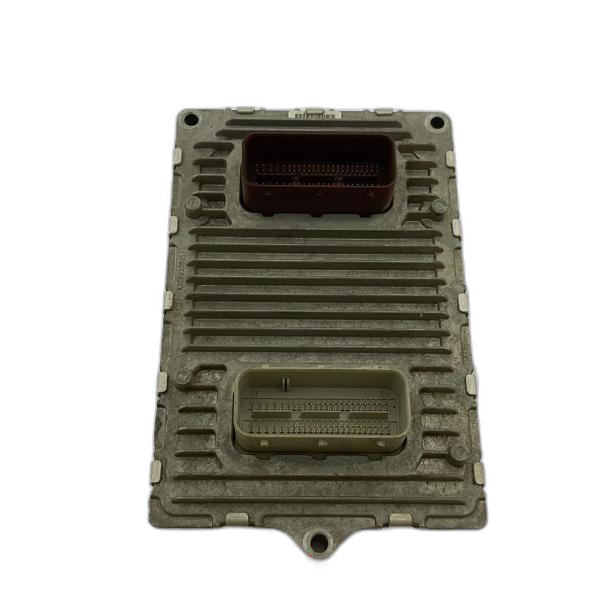
New Aftermarket Parts Available

The information in this article is provided for general reference and educational purposes only. Vehicle specifications, procedures, and part compatibility can vary by production date, trim level, and region. Always consult your vehicle's factory service manual and verify part numbers before purchasing or performing repairs. Safety-critical components such as airbags, seat belts, and braking systems should be installed by a qualified professional.
- Hyundai Tucson:
- 🧭 Diagnostic Flowchart
- 🎬 Helpful Videos
- 🛍️ Shop This Part
- What's Unique About the 2010-2015 Hyundai Tucson
- Symptoms You May Notice
- Most Likely Causes
- Rare But Worth Checking
- Diagnosis Steps
- Parts You'll Likely Need
- Related Codes That Often Appear With This One
- Technical Service Bulletins (TSBs) & Recalls
- Platform-Specific Known Issues
- Mechanic-Grade Diagnostic Values
- Scan Tool Commands That Help
- Wiring & Ground Locations
- OEM Part Supersession History
- Model Year Variations Within This Range
- Other Known Issues on This Vehicle
- Used vs. New Parts: Buying Guide for This Vehicle
- Real Owner Stories
- 2010-2015 Hyundai Tucson
- 2010-2015 Kia Sportage (SL) 2.4L
- Related OBD-II Codes
- Frequently Asked Questions
- 🎟️ Get 5% Off