

P0603 on 2015-2021 Nissan Versa: ECM Memory Fault Causes and Fixes
On a 2015-2021 Nissan Versa, code P0603 almost always points to a weak or failing battery, or a recent battery disconnection. This code indicates the Engine Control Module (ECM) lost its 'Keep Alive Memory' due to a power interruption. Before suspecting the expensive ECM, fully test the battery and check all its connections, as this resolves the issue in the vast majority of cases.
- P0603 on a Nissan Versa is most likely a battery problem, not an ECM problem.
- Always test the battery and clean the terminals before considering any other repairs.
- The code will always appear if the battery is disconnected. Clear the code and see if it returns before starting diagnosis.
- Follow the diagnostic advice in Nissan's TSBs, which prioritize checking the power supply first.
What's Unique About the 2015-2021 Nissan VERSA
🎬 Watch: A quick breakdown of what the P0603 code meansNissan is well aware of this issue across a vast number of its models, including the Versa. The company has released multiple Technical Service Bulletins (TSBs), like NTB16-018D, that guide technicians to check for simple power supply issues before attempting complex diagnostics. The TSBs explicitly state that P0603 is often the result of low battery voltage, a discharged battery, or battery terminal disconnections, indicating the system is highly sensitive to power fluctuations. This is a known characteristic and not necessarily a sign of a major component failure.
Diagnostic Flowchart
Tap your situation to follow the diagnostic path that matches what you're seeing on this vehicle.
Generation note: This year range covers two generations of the Nissan Versa: the end of the second generation (N17, 2015-2019) and the start of the third generation (N18, 2020-2021). The primary causes and diagnostic procedures for P0603 are consistent across both generations. This is confirmed by Nissan TSB NTB16-018D, which applies to the N17 Versa and many other Nissan models from this era, all pointing to the same battery-related sensitivity.
Symptoms You May Notice
- Check Engine Light is on
- Rough or unstable idle
- Engine may hesitate or stumble
- Reduced fuel economy
- Erratic automatic transmission shifting
- Difficulty starting the engine or slow cranking
- Inability to pass a smog/emissions test due to readiness monitors being reset
- Replacing the Engine Control Module (ECM) without first thoroughly testing the battery and checking all power and ground connections. This is an expensive and often unnecessary repair for this specific code, a fact heavily emphasized by Nissan's own service bulletins.
Most Likely Causes
- Weak or Failing Battery 🔴 High Probability → Shop Vehicle Battery Nissan TSBs NTB16-018D and NTB21-027 directly name low battery voltage as a primary cause. The ECM is sensitive to voltage drops that occur with an aging battery, especially during engine cranking after the car has sat for a while.
How to confirm: Test the battery voltage with a multimeter. It should be above 12.4V with the engine off and a stable 13.8-14.8V when running. Most auto parts stores can perform a free load test to check the battery's health, which is a more definitive test.
Typical fix: Replace the 12V battery. The common battery group size for the Nissan Versa in this year range is 51R.
Est. part cost: $120-$250 - Recent Battery Disconnection or Jump-Start 🔴 High Probability → Shop Vehicle Battery Any interruption of power to the ECM, such as disconnecting the battery for service, a jump-start, or using a battery disconnect switch, will cause it to lose its Keep Alive Memory and set this code. This is expected behavior.
How to confirm: If the code appeared immediately after the battery was disconnected or the vehicle was jump-started, this is the likely cause.
Typical fix: Clear the code with an OBD-II scanner. Drive the vehicle for several drive cycles to allow the ECM to relearn its adaptive settings and for readiness monitors to complete. The code should not return if the power supply is now stable.
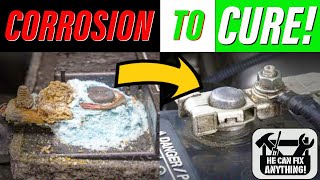
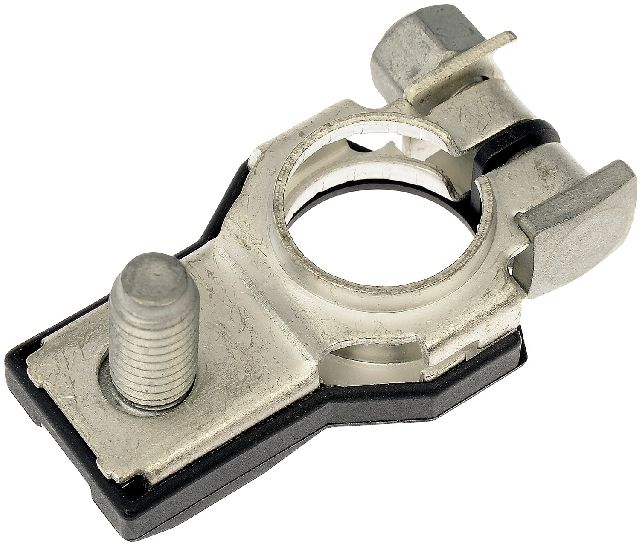
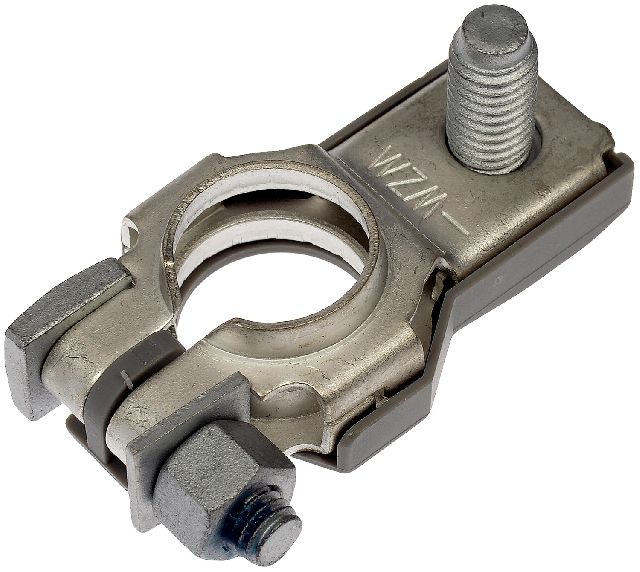
Est. part cost: $0 - Loose or Corroded Battery Terminals 🟡 Medium Probability → Shop Vehicle Battery Corrosion or loose connections create high resistance, preventing the battery from providing stable voltage to the ECM, even if the battery itself is good. This momentary power loss is enough to trigger the code.
How to confirm: Visually inspect the battery posts and cable clamps for white or greenish corrosion. 🎬 See how to clean corroded battery terminals like a pro Attempt to twist the clamps by hand; they should not move at all.
Typical fix: Disconnect the terminals (negative first), clean them and the battery posts with a wire brush and baking soda solution, and reconnect them securely (positive first). Apply a dielectric grease or anti-corrosion spray.
Est. part cost: $5-$15 for a cleaning tool and protectant spray. - Faulty Charging System (Alternator) ⚪ Low Probability An alternator that is failing may produce inconsistent voltage (either too low or too high), causing the ECM to flag a memory error as it cannot maintain a stable power supply.
How to confirm: With the engine running, check the battery voltage. It should be stable at approximately 13.8-14.8 volts. If it's below 13V, above 15V, or fluctuating wildly, the alternator or voltage regulator is likely faulty.
Typical fix: Replace the alternator.
Est. part cost: $200-$450
Rare But Worth Checking
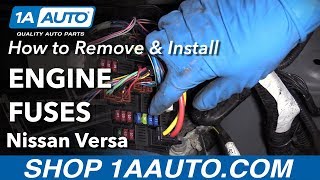
- Blown Fuse or Faulty ECM Power Relay: The ECM has a dedicated fuse for its memory circuit that provides constant power. The ECM relay, located in the IPDM (Intelligent Power Distribution Module) in the engine bay, supplies main power. While not common, a blown fuse or a failing relay will cut power and trigger P0603. Check the fuse box in the engine bay and inside the cabin for fuses labeled 'ECM' or 'BCM'.
- Faulty Engine Control Module (ECM): → Shop Engine Control Module (ECM) This is the least likely cause. Only consider replacing the ECM after all other possibilities—battery, connections, fuses, and wiring—have been thoroughly ruled out. TSB NTB21-027 mentions this code in conjunction with P062F (EEPROM error), which more strongly suggests an internal ECM fault, but still advises checking the battery first.
- Aftermarket Performance Tuners: Aftermarket engine performance programmers that modify the ECM's software can sometimes trigger a P0603 code if they interfere with the KAM self-test process. If you have such a device installed, returning the vehicle to the stock tune may resolve the issue.
Diagnosis Steps
- Check for recent battery service. If the battery was recently disconnected, replaced, or jump-started, clear the code with a scanner. The code is expected in this scenario and may not return.
- Inspect battery terminals and ground connections. Ensure battery terminals are clean and tight. Check the main ground strap from the battery to the chassis and from the chassis to the engine block for corrosion or looseness.
- Test the battery thoroughly. Use a multimeter to check static voltage (should be >12.4V engine off) and charging voltage (~14V engine running). Crucially, have a load test performed to confirm the battery can hold a charge under load.
- Follow Nissan's TSB procedure. Per TSB NTB16-018D, after ensuring battery voltage is above 11V, erase the DTC. Then, cycle the ignition ON for 1 second, then OFF for 10 seconds. Repeat this cycle 10 times. Check if P0603 returns as a '1st trip DTC'. If it does not, the issue was likely a transient low-voltage event and the process is complete.
- Check Fuses. Inspect fuses related to the ECM and BCM in both the interior and engine bay fuse panels (IPDM).
- Inspect wiring. Look for any damage to the battery cables or the main wiring harness leading to the ECM. Check for signs of water intrusion near the ECM. A poor ground connection, sometimes in less obvious places like under the dashboard, can be the root cause.
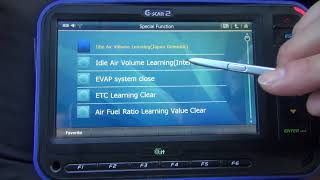
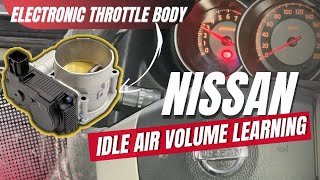
- Perform Idle Air Volume Relearn. After a power loss, Nissan vehicles often require an 'Idle Air Volume Learning' procedure to restore a smooth idle. This can sometimes be done manually with a series of timed key turns and pedal presses, or with a capable scan tool. An unstable idle after fixing the P0603 cause is a strong indicator this is needed.
- Consider professional diagnosis. If the battery, connections, and fuses are all good but the code persists after the TSB procedure, the issue may be a more complex wiring problem or a rare internal ECM fault, which may require a professional technician with advanced diagnostic tools like a Nissan CONSULT.
Parts You'll Likely Need
- 12V Automotive Battery
(OEM #999M1-NBH5A (example for Group H5, check specific vehicle))— A weak or failing battery is the most frequent cause of a P0603 code on this vehicle, as confirmed by multiple Nissan TSBs.
Trusted brands: Interstate, DieHard, Duralast, Bosch
OEM price range: $180-$280
Aftermarket price range: $120-$250
Related Codes That Often Appear With This One
- P062F — As cited in Nissan TSB NTB21-027, this code for an internal EEPROM error can appear with P0603. While it can indicate a more serious internal ECM failure, the TSB still directs the technician to test the battery as the first step, as low voltage can trigger both codes.
Technical Service Bulletins (TSBs) & Recalls
- NTB21-027: MIL ON WITH DTC P062F AND/OR P0603 STORED
- NTB16-018D: MIL ON WITH P0603 STORED FOR ECM BACK UP CIRCUIT
- NTB16-018c: MIL ON WITH P0603 STORED FOR ECM BACK UP CIRCUIT
- NTB16018: IF YOU CONFIRM The MIL is "ON" with DTC P0603 (ECM BACK UP/CIRCUIT).
Platform-Specific Known Issues
- Nissan has issued multiple Technical Service Bulletins regarding P0603. TSB #NTB16-018D explicitly states that the code is often the result of low battery voltage or battery terminal disconnections and provides a specific key-cycling procedure to verify if the fault is persistent or was a one-time event.
- TSB #NTB21-027 links P0603 with another code, P062F (EEPROM), but still identifies low battery voltage (e.g., after sitting for an extended period) as the primary trigger and advises testing the battery before any other act
Mechanic-Grade Diagnostic Values
- Battery Voltage (Key On, Engine Off) — expected: 11.0 volts or more. Failure: Below 11.0 volts. This condition must be resolved before further P0603 diagnosis.
- Battery Voltage (At Idle for Idle Relearn) — expected: More than 12.9V. Failure: Below 12.9V. The Idle Air Volume Learn procedure will be cancelled.
- Engine Coolant Temperature (for Idle Relearn) — expected: 70 - 100°C (158 - 212°F). Failure: Outside this range. The Idle Air Volume Learn procedure will not complete successfully.
- Target Idle Speed (Post-Relearn) — expected: 650 ± 50 rpm (in Park or Neutral). Failure: Idle speed is unstable or outside this range after the relearn procedure.
Scan Tool Commands That Help
- Nissan CONSULT or capable aftermarket scanner (e.g., Launch X431): Idle Air Volume Learn — After replacing the ECM, cleaning the throttle body, or after the ECM has lost power (setting a P0603), if the idle is unstable. This command relearns the base idle air volume.
- Manual Procedure (No Scan Tool): IPDM E/R Self-Test — To verify the IPDM is correctly powering key components like the fuel pump, fans, and ECM relay. With ignition ON (engine off), press the driver's door jamb switch 10 times within 20 seconds, then cycle ignition. The test will begin, cycling various components.
Wiring & Ground Locations
- ECM (Engine Control Module) — Typically located in the cabin, behind the LH (driver's side) kick panel.. This is the module that stores the Keep Alive Memory and sets the code. Its power and ground connections are critical.
- IPDM E/R (Intelligent Power Distribution Module Engine Room) — In the engine compartment, next to the battery.. This module houses the main ECM power relay and fuses that supply power to the ECM. A fault here can directly cause a P0603.
- ECM Power and Ground Pins (at ECM Connector) — On a 2018 Versa, Pin 155 is ECM Power Supply (Green wire) and Pins 157, 159, 162 are ECM Grounds (Black wires).. These specific pins can be used for advanced diagnostics, such as checking for voltage, back-probing for voltage drops, or performing continuity tests on the ground circuits.
- Interior Body Ground — Various locations under the dashboard and behind kick panels.. A loose ground under the dash, often disturbed during other repairs, can cause an intermittent power loss to the ECM, triggering P0603 even when all engine bay connections seem fine.
Real Owner Repair Stories
- YouTube channel 'rustbucketvalleygarage' (Nissan Versa (year not specified)) — Check Engine Light with code P0603 after the car sat for a while.
❌ Tried (didn't work) The owner had installed an aftermarket battery disconnect switch to prevent a suspected parasitic drain.
✅ What actually fixed it The extended battery disconnection caused the ECM's backup power to discharge, setting the code. The fix was to remove the disconnect switch, ensure the battery was permanently connected, and clear the code. The car then ran perfectly and readiness monitors were reset after a drive cycle. - YouTube channel 'Car Hospital' (Nissan Pathfinder (different model, but identical P0603 principle)) — Persistent P0603 Check Engine Light and reduced engine power.
❌ Tried (didn't work) Resetting the fault code (it would return immediately), Checking all fuses in the IPDM and interior fuse box, Checking main engine bay ground points
✅ What actually fixed it The technician found a body ground wire under the steering column that had not been reconnected properly after a previous dashboard repair. Securing this loose ground wire permanently resolved the P0603 code.
"I Checked Everything" — The Actual Cause
- In a case involving a persistent P0603, the battery, alternator, fuses, and all visible engine bay grounds were checked and found to be in perfect condition. The actual cause was a single, overlooked body ground wire under the dashboard that was not properly secured after a previous repair, causing an intermittent power supply to the ECM.
Model Year Variations Within This Range
- 2015-2019 (N17 Gen) vs 2020-2021 (N18 Gen): While the root cause of P0603 (voltage sensitivity) is consistent, the control modules themselves are different. The 2020+ Versa uses a more complex, computer-controlled IPDM that communicates via the CAN bus. Additionally, TSB NTB21-027, which applies to newer models, links P0603 with P062F, suggesting a different diagnostic focus or failure pattern compared to the older TSB NTB16-018D for the N17 generation.
Helpful Videos





We Have This Part in Stock

The information in this article is provided for general reference and educational purposes only. Vehicle specifications, procedures, and part compatibility can vary by production date, trim level, and region. Always consult your vehicle's factory service manual and verify part numbers before purchasing or performing repairs. Safety-critical components such as airbags, seat belts, and braking systems should be installed by a qualified professional.
- Nissan VERSA:
- 🧭 Diagnostic Flowchart
- 🎬 Helpful Videos
- 🛍️ Shop This Part
- What's Unique About the 2015-2021 Nissan VERSA
- Symptoms You May Notice
- Most Likely Causes
- Rare But Worth Checking
- Diagnosis Steps
- Parts You'll Likely Need
- Related Codes That Often Appear With This One
- Technical Service Bulletins (TSBs) & Recalls
- Platform-Specific Known Issues
- Mechanic-Grade Diagnostic Values
- Scan Tool Commands That Help
- Wiring & Ground Locations
- Real Owner Repair Stories
- "I Checked Everything" — The Actual Cause
- Model Year Variations Within This Range
- 🎟️ Get 5% Off