

P0603 on 2003-2009 Volkswagen Golf: Keep Alive Memory (KAM) Error Causes and Fixes
On a 2003-2009 VW Golf, code P0603 almost always points to a weak battery, a recent battery disconnection, or corroded terminals. Before suspecting the expensive Engine Control Module (ECM), test the battery and charging system. A new battery costs around $150-$250.
- P0603 on a VW Golf is almost always a simple electrical issue, not a failed computer.
- Always start your diagnosis by checking the battery's health, its connections, and the charging system.
- If you recently disconnected the battery, the code is normal. Clear it and drive the car.
- Do not replace the Engine Control Module (ECM) unless all other possibilities have been exhausted.
What's Unique About the 2003-2009 Volkswagen Golf
For the Mk4 and Mk5 VW Golf, the P0603 code is overwhelmingly an electrical power supply issue rather than a true ECM failure. These vehicles are sensitive to low voltage, and an aging battery is the most frequent trigger. It's very common to see this code appear immediately after disconnecting the battery for service or after a jump-start. While the code indicates an internal module error, the root cause is almost always external to the module itself. On these platforms, key ground strap locations to check are under the battery tray to the chassis and from the negative battery terminal to the transmission housing.
Generation note: This range covers two generations: the Mk4 Golf (up to 2006, with some 'City Golf' models sold later) and the Mk5 Golf (called the Rabbit in North America, 2003-2009). The causes for P0603 are virtually identical for both generations as they both rely on a stable 12V power supply to maintain ECM memory. However, the Mk5 has a more complex electrical system with a CAN Gateway that may require battery coding after replacement. The diagnostic process is otherwise the same for both.
Symptoms You May Notice
- Check Engine Light is on.
- Engine is hard to start or cranks slowly.
- Rough or unstable idle.
- Hesitation or stumbling when accelerating.
- Reduced fuel economy.
- Other warning lights, like for the traction control (ESC) or ABS, may appear temporarily after a power loss.
- Engine may stall intermittently.
- Replacing the ECM. This is an expensive and rarely necessary fix. The problem is almost always the power supply to the ECM, not the ECM itself.
Most Likely Causes
- Weak or Failing Battery 🔴 High Probability → Shop Vehicle Battery The ECM requires a stable voltage to maintain its Keep Alive Memory. If the battery voltage drops significantly (e.g., below 9.6V during cranking) or while sitting, the memory is wiped, triggering P0603. These models are known to be sensitive to low voltage conditions.
How to confirm: Use a multimeter to test the battery. A healthy, fully charged battery should read about 12.6V with the engine off. With the engine running, it should be between 13.7V and 14.7V. A reading below 12.4V with the engine off indicates a discharged or failing battery. Perform a load test for a definitive diagnosis.
Typical fix: Replace the vehicle's battery. On Mk5 models, the new battery may need to be coded to the CAN Gateway.
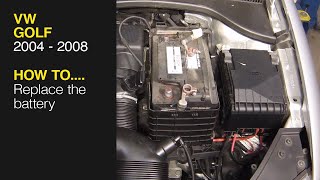
Est. part cost: $150-$250 - Recent Battery Disconnection or Jump-Start 🔴 High Probability → Shop Vehicle Battery Intentionally disconnecting the battery for service is a guaranteed way to trigger this code, as it cuts the constant power required by the KAM. It's a normal, expected consequence and not indicative of a fault. 🎬 Watch: A quick overview of P0603 causes and common fixes.
How to confirm: Ask the vehicle owner if the battery was recently replaced, disconnected, or if the vehicle was jump-started. If so, this is the cause.
Typical fix: Clear the code with an OBD-II scanner. The code should not return if the battery and charging system are healthy. The car may need to be driven for a short period to relearn adaptive settings.
Est. part cost: $0 - Loose or Corroded Battery Terminals/Grounds 🟡 Medium Probability → Shop Vehicle Battery Corrosion or a loose connection at the battery posts, chassis ground, or engine ground strap can create enough of a voltage drop to interrupt power to the ECM. Key ground points on the Mk4/Mk5 are under the battery tray and on the transmission case.
How to confirm: Visually inspect the battery terminals for white or greenish corrosion. Wiggle the terminal clamps by hand to ensure they are tight. Follow the negative battery cable to its connection points on the chassis and engine/transmission, checking for tightness and corrosion.
Typical fix: Clean the battery posts and terminals with a wire brush and corrosion-protectant spray. Disassemble, clean, and tighten all main ground connections. Replace terminals or cables if corrosion is severe.
Est. part cost: $5-$50 - Failing Alternator ⚪ Low Probability → Shop Alternator A failing alternator that isn't properly recharging the battery will lead to a gradual drop in system voltage, eventually causing the battery to become too weak to maintain the KAM. The alternator's voltage regulator can also fail, causing voltage spikes or drops.
How to confirm: With the engine running, check the voltage at the battery terminals. A reading below 13.2V or one that is fluctuating wildly suggests the alternator is not charging correctly. Most auto parts stores can test your alternator for free.
Typical fix: Replace the alternator. On some models, only the voltage regulator or clutched pulley may need replacement.
Est. part cost: $200-$450
Rare But Worth Checking
- Aftermarket Engine Tuning: If the vehicle has an aftermarket 'chip tune' or has been flashed with non-OEM software (e.g., from APR), it can sometimes cause memory checksum errors that trigger a P0603 code. This is a known issue on tuned VWs. If the code appeared after a tune, this is a likely cause and may not indicate a mechanical fault.
- Faulty Engine Control Module (ECM): → Shop Engine Control Module (ECM) This is the least likely cause. The ECM is a robust component. Only consider replacing the ECM after every other possibility—battery, cables, grounds, and alternator—has been definitively ruled out. Water intrusion into the cabin, often from blocked plenum drains under the windshield, can damage modules located under the carpet or dash.
Diagnosis Steps
- Check if the battery was recently disconnected or replaced. If yes, clear the code and see if it returns after a few drive cycles. If it doesn't, the issue is resolved.
- Visually inspect the battery terminals and ground connections. Clean and tighten them as needed. Pay special attention to the ground strap under the battery tray and the one to the transmission.
- With the engine off, use a multimeter to check the battery voltage. It should be ~12.6V. If it's below 12.4V, the battery is discharged and may be failing.
- Start the engine and measure the voltage at the battery again. It should be stable and between 13.7V and 14.7V. If it's lower or fluctuating, the alternator may be faulty.
- Perform a battery load test. This is the most definitive way to confirm a weak battery. Most auto parts stores offer this service for free.
- If using a VW-specific scan tool (like VCDS), check the freeze frame data for the fault. Note the 'Voltage terminal 30' value. A reading below 12.4V strongly points to a power supply issue.
- Inspect the wiring harness to the ECM for any visible damage, chafing, or signs of water intrusion.
- If all external factors are ruled out, the ECM itself could be the issue, but this is extremely rare.
Parts You'll Likely Need
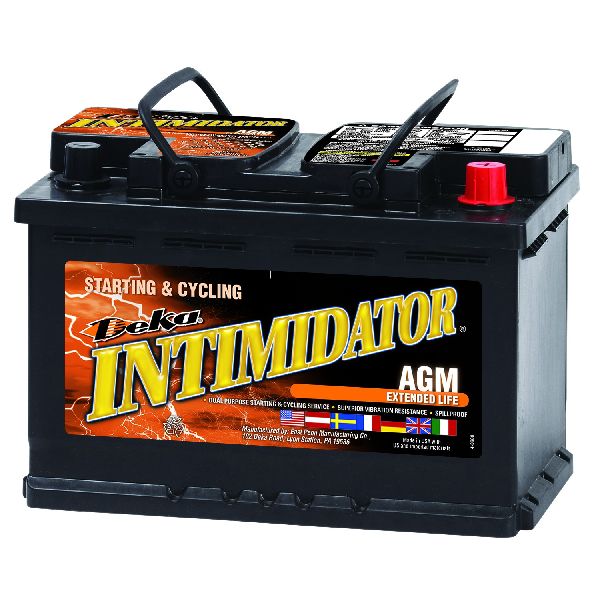
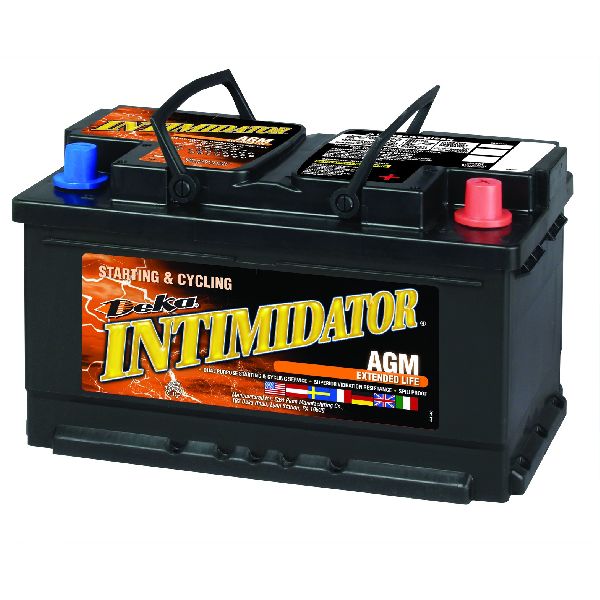
- Car Battery — This is the most common cause. An old battery that can no longer hold a proper charge will cause a voltage drop that erases the ECM's keep-alive memory.
Trusted brands: Varta, Bosch, Interstate, DieHard
OEM price range: $200-$300
Aftermarket price range: $150-$250 - Battery Terminals — Corroded or loose terminals interrupt the power supply to the vehicle's electronics, including the ECM's memory.
Trusted brands: Standard Motor Products, Dorman, VW Genuine Parts
OEM price range: $15-$40
Aftermarket price range: $5-$20
Platform-Specific Known Issues
- Forum Experience: P0603 after Battery Replacement: → Shop Vehicle Battery Multiple owners on forums like vwvortex.com and golfmkv.com report that P0603 is a very common and expected code after changing the battery. The standard procedure is to clear the code and drive the car, after which it does not return, confirming no underlying issue exists.
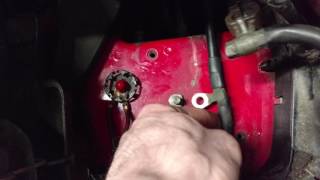
- Real Story: Corroded Ground Strap: → Shop Engine Ground Strap A user on a VW forum traced their persistent P0603 to a corroded ground strap located under the battery tray. 🎬 See how to find and clean the grounds under the battery. Despite the battery and alternator testing good, this high-resistance connection caused an intermittent voltage drop sufficient to reset the KAM. Cleaning the contact point and replacing the strap resolved the issue permanently.
Mechanic-Grade Diagnostic Values
- Parasitic Current Draw — expected: Under 50mA (0.05A) after all modules enter sleep mode (approx. 15-30 minutes).. Failure: A sustained reading above 50mA indicates a component is not shutting down correctly and is draining the battery, which can lead to the voltage drop that causes P0603.
- Voltage Terminal 30 in Freeze Frame Data (VCDS) — expected: Should be stable and above 12.4V when the fault was logged.. Failure: A low voltage reading (e.g., below 12.0V, especially if it drops to 9-10V) in the freeze frame data for the P0603 code is a strong indicator that the direct, un-switched battery power to the module was lost.
Scan Tool Commands That Help
- VCDS (VAG-COM): 19-CAN Gateway > Long Adaptation (0A) > Channel 004 — This is used on Mk5 Golf models (and newer) to code a new battery to the vehicle. The car's Battery Management System (BMS) needs to know the new battery's capacity, technology (AGM/EFB), vendor, and serial number to adjust its charging strategy. Failing to code a new battery can lead to under/overcharging, premature battery failure, and persistent electrical faults like P0603.
- VCDS (VAG-COM): Read Measuring Value Blocks (MVB) in various modules — When diagnosing electrical faults, checking the voltage reported by different control modules (e.g., in Address 01: Engine, Address 09: Cent. Elect., Address 19: CAN Gateway) can reveal discrepancies. For example, if the Engine module reports a low Terminal 30 voltage while the battery itself tests fine, it points to a wiring or connection issue specific to that module's power supply.
Wiring & Ground Locations
- Mk4 Golf - Main Engine/Chassis Grounds — 1. Under the battery tray (multiple connections on a single stud). 2. From the negative battery terminal to a bolt on the transmission housing. 3. On the cylinder head (for ignition coils).. These are the primary ground paths for the ECM and other critical engine electronics. Corrosion or looseness at the point under the battery tray is a very common cause of intermittent electrical issues on the Mk4 platform.
- Mk5 Golf - Main Engine/Chassis Grounds — 1. Ground strap from battery to body, near the left strut tower ('Ground strap, battery to body'). 2. Main engine/transmission ground ('Transmission/engine ground connection'). 3. In the plenum chamber (under the windshield cowl), on both the left and right sides.. The plenum chamber grounds are particularly important as this area is prone to collecting water if the drains are blocked, leading to corrosion. A bad ground here can directly affect the ECM, which is often located nearby.
- Mk4/Mk5 - Interior Ground Points — At the bottom of the A-pillars (left and right) and behind the center of the instrument panel.. While less likely to cause P0603 than engine bay grounds, poor interior grounds can cause a host of strange electrical issues. If other seemingly unrelated electrical faults are present, these points are worth checking.
Real Owner Repair Stories
- Ross-Tech Forums (2004 VW Golf Mk5) — Multiple intermittent electrical faults, including ESP sensor errors, HVAC flap motor failures, and recurring Lambda sensor codes. Red battery light and alternator fault appeared on the dash.
❌ Tried (didn't work) Replacing both Lambda sensors, measuring battery voltage (which seemed fine initially).
✅ What actually fixed it The owner discovered the main 200A fuse (SA1) in the engine bay fuse box was broken at its base and making a poor connection. The bolt had likely been over-tightened in the past. Temporarily soldering it resolved the alternator fault, and replacing the fuse was the final fix for the unstable power supply causing the cascade of issues.
Model Year Variations Within This Range
- 2003-2006 (Mk4): The electrical system is simpler. Battery replacement does not require any special coding procedures. The primary focus for P0603 is on the physical integrity of the battery, terminals, and the main ground points under the battery tray and on the transmission.
- 2004-2009 (Mk5 / Rabbit): Features a more complex CAN Gateway (Module 19) that includes a Battery Management System (BMS). When replacing the battery, it is highly recommended to code the new battery's specifications (capacity, vendor, serial number) using a tool like VCDS. Failure to do so can result in improper charging and shorten the new battery's life, potentially causing the P0603 code to return.
Diagnostic Flowchart
Other Known Issues on This Vehicle
Issues unrelated to this code that are worth knowing about as an owner of this generation:
- HPFP Cam Follower Failure (2.0T FSI Engine) 🔴 High — Common on Mk5 GTI models. Recommended inspection/replacement every 20,000-40,000 miles to prevent catastrophic damage to the camshaft and fuel pump. (Ref: A warranty extension (10-year/120k miles) was issued in some regions for this issue, but has likely expired for most vehicles.)
- DSG Mechatronic Unit Failure (DSG Transmission) 🔴 High — Affects Mk5 models with the DSG automatic transmission. Can cause jerky shifting, loss of gears, and transmission failure. Regular fluid changes every 40,000 miles are critical.
- Window Regulator Failure (Mk4) 🟠 Medium — Extremely common on the Mk4 Golf. The plastic clips holding the window glass break, causing the window to fall into the door.
- Vacuum Pump Oil Leak (2.5L Engine) 🟠 Medium — A very common leak on the Mk5 Rabbit/Golf with the 2.5L 5-cylinder engine. The pump's seal fails, dripping oil onto the top of the transmission, often misdiagnosed as a rear main seal leak. (Ref: VW does not sell the seal separately, but aftermarket kits are available.)
- Automatic Transmission Failure (Mk4 01M) 🔴 High → Shop Transmission Assembly — The 4-speed 01M automatic transmission in Mk4 models is notoriously unreliable, prone to valve body issues, solenoid failures, and complete failure at relatively low mileage.
- Timing Chain Tensioner Failure (1.4 TSI Engine) 🔴 High — Affects some Mk5 models with the 'Twincharger' 1.4 TSI engine. A failing tensioner can cause the chain to jump, leading to severe engine damage.
Used vs. New Parts: Buying Guide for This Vehicle
When a used part is the smart pick: A used alternator from a reputable salvage yard can be a cost-effective option, provided it comes from a lower-mileage vehicle and can be tested. A used ECM is also a possibility, but only if you are prepared for the complexities of immobilizer adaptation.
Donor-vehicle mileage cap: roughly under 80000 miles for the part to have meaningful remaining life.
What to inspect on the donor part:
- For an alternator, check for smooth, noise-free rotation of the pulley and minimal corrosion on the housing and electrical connections.
- For an ECM, ensure the part number matches EXACTLY. Inspect the connectors for any bent or corroded pins and the case for any signs of water damage or being pried open.
OEM-only on this vehicle (don't cheap out):
- Battery: Never buy a used battery. The age and history are unknown, and it's the most likely cause of the original problem.
- Ground Straps/Cables: These are inexpensive new, and buying used risks getting a part that is already corroded or has high internal resistance.
Aftermarket brands forum-validated for this vehicle:
- Battery: Varta (often the OEM supplier), Bosch, Interstate.
- Alternator: Bosch (OEM), Valeo (OEM), Denso.
Brands owners have reported issues with on this vehicle:
- Avoid 'white-box' or no-name electrical components like alternators or ECMs from online marketplaces. While cheap, their reliability is highly questionable and can cause more issues.
Real Owner Stories
Aggregated from forums and TSBs cited above. Mileages and costs reflect what owners reported in those sources.
Volkswagen Golf Mk4/Mk5
Symptoms: The owner found a P0603 code stored in the system. The battery and alternator both tested as 'good' during initial diagnostics.
What fixed it: The owner traced the issue to a corroded ground strap located under the battery tray. Cleaning the contact point and replacing the strap resolved the intermittent voltage drop and the code.
Source hint: Real Story: Corroded Ground Strap in vehicle_specific_issues
Volkswagen Golf Mk5 (Rabbit)
Symptoms: After a battery change, the P0603 code appeared along with ABS and ESP warning lights.
What fixed it: The owner cleared the code and took the car for a short drive. The adaptive settings relearned and the lights cleared without further repair.
Source hint: GolfMKV / GolfMK6 Forums in forum_citations
Related OBD-II Codes
Frequently Asked Questions
I just replaced the battery in my Mk5 Golf and now P0603 is showing. Is my ECM failing?
Do I need to do anything special when installing a new battery in my Mk5 Golf to prevent electrical issues?
My Golf has a P0603 and the ABS and Traction Control (ESC) lights also came on. Are these related?
Where should I check for bad grounds on my Mk4/Mk5 Golf that might cause P0603?
Could my 2.0T FSI engine's cam follower issue be related to the P0603 code?
Helpful Videos

We Have This Part in Stock



The information in this article is provided for general reference and educational purposes only. Vehicle specifications, procedures, and part compatibility can vary by production date, trim level, and region. Always consult your vehicle's factory service manual and verify part numbers before purchasing or performing repairs. Safety-critical components such as airbags, seat belts, and braking systems should be installed by a qualified professional.
- Volkswagen Golf:
- 🧭 Diagnostic Flowchart
- 🎬 Helpful Videos
- 🛍️ Shop This Part
- What's Unique About the 2003-2009 Volkswagen Golf
- Symptoms You May Notice
- Most Likely Causes
- Rare But Worth Checking
- Diagnosis Steps
- Parts You'll Likely Need
- Platform-Specific Known Issues
- Mechanic-Grade Diagnostic Values
- Scan Tool Commands That Help
- Wiring & Ground Locations
- Real Owner Repair Stories
- Model Year Variations Within This Range
- Other Known Issues on This Vehicle
- Used vs. New Parts: Buying Guide for This Vehicle
- Real Owner Stories
- Volkswagen Golf Mk4/Mk5
- Volkswagen Golf Mk5 (Rabbit)
- Related OBD-II Codes
- Frequently Asked Questions
- 🎟️ Get 5% Off