

P0603 on 2005-2011 Volkswagen Passat: Keep Alive Memory (KAM) Error Causes and Fixes
On a 2005-2011 VW Passat, code P0603 almost always points to a power supply problem. Before suspecting the expensive Engine Control Module (ECM), check for a weak battery, corroded terminals, or a failing alternator. A simple battery test is the most likely fix. This code is frequently set after disconnecting the battery or after a jump-start.
- P0603 is a power supply issue, not an ECM failure, in 9 out of 10 cases.
- Always start your diagnosis with the simplest and most likely causes: the battery and its connections.
- A multimeter is the most important tool for diagnosing this code; check battery voltage with the engine off and on.
- On a Passat B6, be sure to check for water in the plenum chamber near the ECM, as this is a known weak point.
- Do not replace the ECM unless you have professionally verified that it is faulty after ruling out all other possibilities.
What's Unique About the 2005-2011 Volkswagen Passat
For the Passat B6 (2005-2011), this code is not indicative of a unique design flaw but is almost always a symptom of a basic electrical issue. Unlike some manufacturer-specific codes, P0603 on this Passat follows the universal definition. The most critical vehicle-specific issue to be aware of is the potential for clogged plenum drains under the windshield cowl, which can lead to water damaging the ECM and other control modules, causing various electrical faults, including this one. Owners report that simply clearing the code after 🎬 Watch: How to prevent water ingress and ECU damage a battery replacement or jump start often resolves the issue, as the interruption of power is the trigger.
Generation note: The 2005-2011 year range primarily covers the Passat B6 generation (2005.5-2010). The advice is consistent across this generation. There are no significant differences in causes or fixes for this code within this model range.
Symptoms You May Notice
- Check Engine Light is on
- Rough or unstable idle.
- Hesitation during acceleration.
- Reduced fuel economy.
- Hard starting or stalling.
- Erratic or harsh transmission shifting.
- Other warning lights, like ABS or traction control, may illuminate.
- Electronic Parking Brake (EPB) errors or Auto Hold not working.
- Replacing the ECM first. The ECM is rarely the actual problem. The issue is almost always the power being supplied to it. Replacing the ECM without diagnosing the electrical system will not fix the code and is a very expensive mistake.
Most Likely Causes
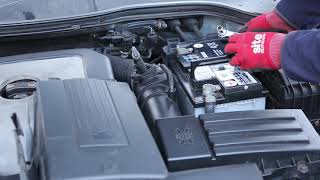
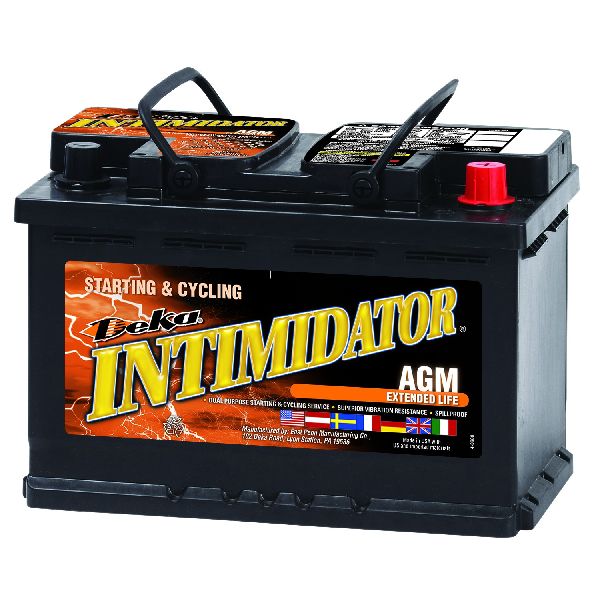
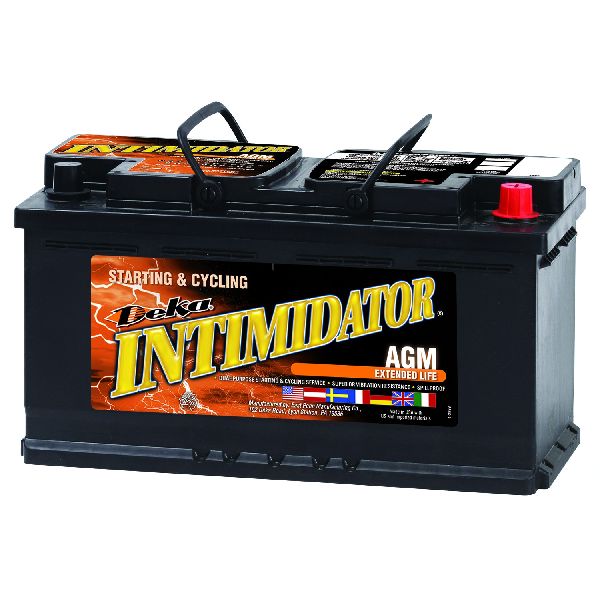
- Weak or Failing Battery 🔴 High Probability → Shop Vehicle Battery Batteries have a finite lifespan, and low voltage during engine cranking is a primary trigger for this code. If the battery's voltage drops too low, the ECM's keep-alive memory is erased. This code is also commonly seen after the battery has been disconnected for service or replaced.
How to confirm: Use a multimeter to test the battery. A healthy battery should read about 12.6 volts with the engine off and 13.7 to 14.7 volts with the engine running. Most auto parts stores offer free battery testing. If the code appeared immediately after a battery change, it is likely just a residual code from the power interruption.
Typical fix: Replace the vehicle's battery if it fails a load test. If the battery is new or healthy, clear the code with a scanner and see if it returns.
Est. part cost: $150-$250 - Loose or Corroded Battery Terminals 🟡 Medium Probability → Shop Vehicle Battery Battery terminals can develop corrosion over time, which interrupts the stable power supply required by the ECM. This can cause intermittent voltage drops that trigger the P0603 code.
How to confirm: Visually inspect the battery terminals for white, blue, or green crusty buildup. Check if the cable clamps are tight and cannot be moved by hand.
Typical fix: Disconnect the battery (negative terminal first). Clean the terminals and cable clamps with a wire brush and a solution of baking soda and water. Apply dielectric grease to prevent future corrosion. Reconnect securely (positive terminal first).
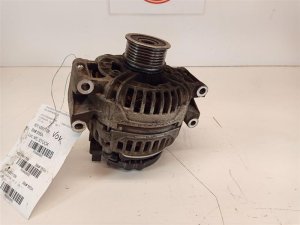
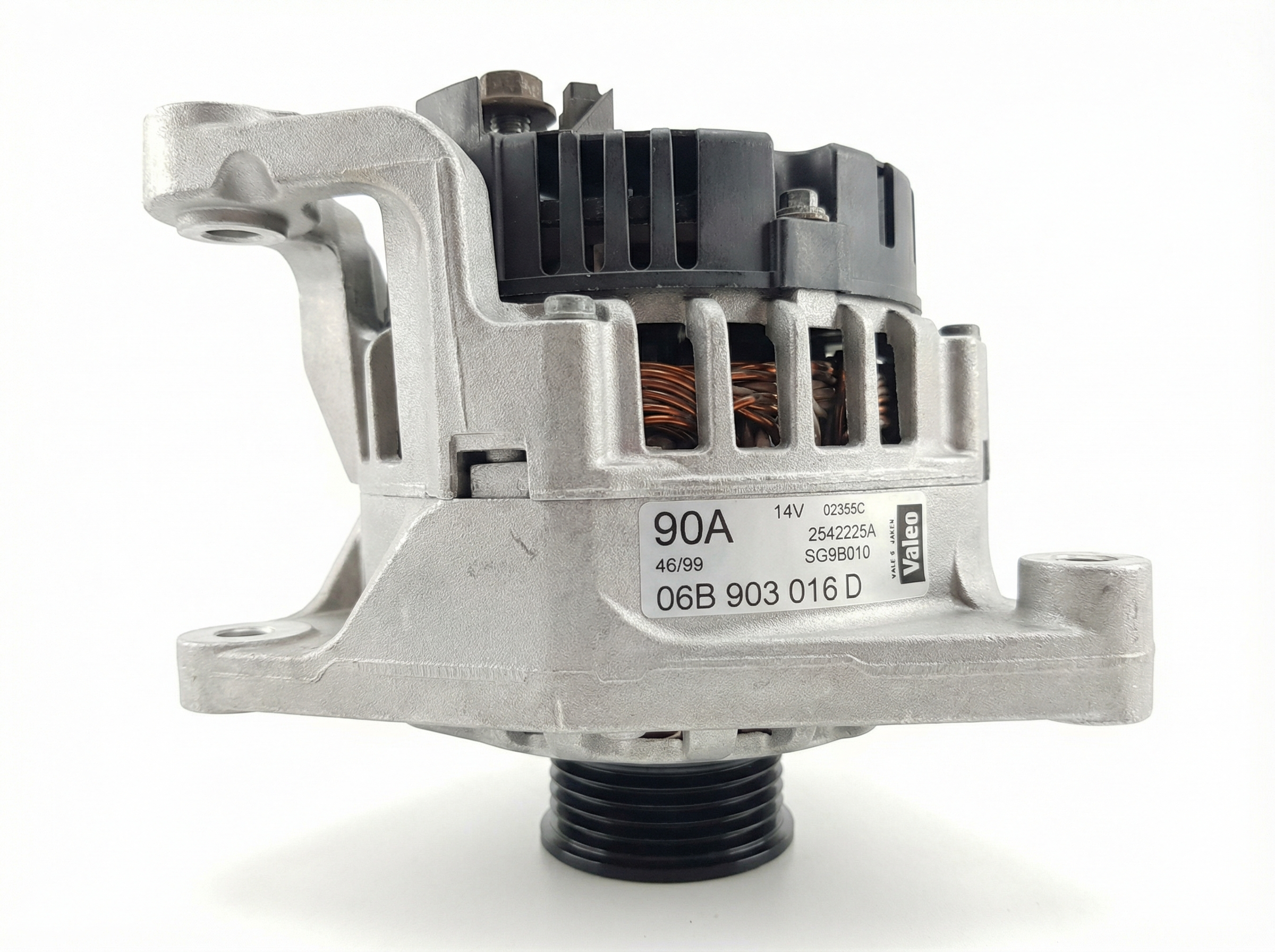
Est. part cost: $1-$10 - Failing Alternator 🟡 Medium Probability → Shop Alternator The alternator recharges the battery and powers the electrical system while the engine runs. If it fails, it can produce irregular voltage or fail to charge the battery, causing the ECM to lose its memory due to low system voltage.
How to confirm: With the engine running, a multimeter should show a voltage of 13.7-14.7V at the battery. If the voltage is low (under 13V) or erratic, the alternator is likely faulty.
Typical fix: Replace the alternator.
Est. part cost: $250-$500
Rare But Worth Checking
- Faulty ECM Power Supply Relay or Fuse: A simple relay or fuse can fail, cutting power to the ECM. Always check these inexpensive components before suspecting the ECM itself. Check the fuse box in the engine bay and on the driver's side of the dashboard.
- Corroded ECM Ground Wires: Poor ground connections can cause a host of electrical issues. On the Passat B6, check the main ground points on the chassis, near the battery, and on the engine block for corrosion or looseness. A document from Scribd shows specific ground point locations for the B6 Passat, including on the cylinder head (point 15) and firewall (points 645, 646).
- Water Damage to ECM: The Passat B6 is known for clogged plenum drains under the cowl, which can cause rainwater to flood the electronics box and damage the ECM. If you find moisture, condensation, or signs of corrosion in this area, it is a very likely cause. This can also damage the Comfort Control Module, leading to other electrical issues.
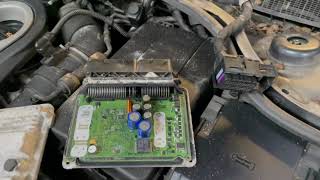
- Faulty Engine Control Module (ECM): → Shop Engine Control Module (ECM) This is the least likely cause. The ECM is a robust component. It should only be considered after all other power, ground, and wiring issues have been completely ruled out by thorough testing. A faulty ECM is often misdiagnosed when the real issue is a simple power supply problem.
Diagnosis Steps
- Read the codes: Use an OBD-II scanner to confirm P0603 is present and note any other codes. If you recently disconnected the battery, clear the code and see if it returns after a drive cycle.
- Inspect Battery Terminals: Check for and clean any corrosion. Ensure cable clamps are tight.
- Test the Battery: With the engine off, check for ~12.6V. Start the engine and check for 13.7-14.7V. If the voltage is low, charge and re-test the battery. If it fails to hold a charge, replace it.
- Test the Alternator: If the running voltage is below 13.7V, the alternator is likely failing and needs replacement.
- Check Fuses and Relays: Inspect the fuses and the main power relay for the ECM. These are located in the fuse box in the engine bay and the one on the side of the dashboard.
- Inspect for Water Ingress: On a Passat B6, this is a critical step. Remove the plastic cowl cover under the windshield wipers. Inspect the plenum chamber (especially under the battery and brake servo) for standing water, leaves, or debris. Check the ECM and its connectors for any signs of moisture or corrosion.
- Inspect ECM Wiring and Grounds: Check the ECM connectors for corrosion or damage. Trace and inspect the main power and ground wires for the ECM. Key ground points are on the firewall, cylinder head, and chassis near the battery.
- Consider the ECM: If all the above steps check out, the ECM itself may be faulty. This requires professional diagnosis to confirm.
Parts You'll Likely Need
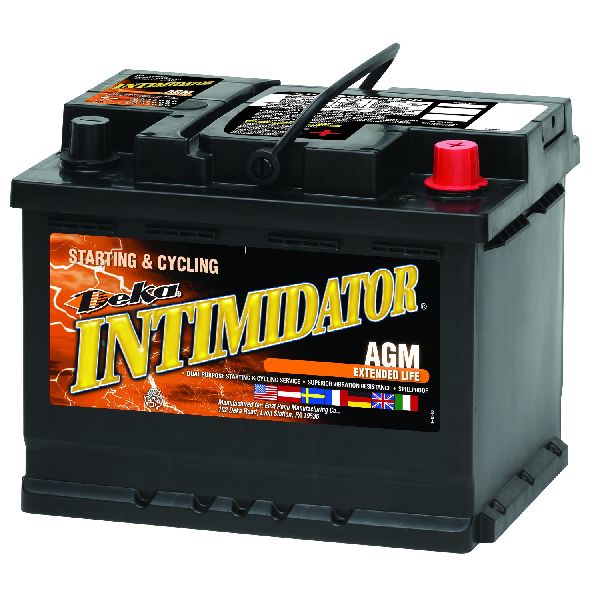
- Car Battery
(OEM #000915105DL (example, verify by VIN))— A weak or failing battery is the most common cause of a P0603 code due to voltage drops during startup.
Trusted brands: Varta, Bosch, Interstate
OEM price range: $200-$300
Aftermarket price range: $150-$250 - Alternator
(OEM #06F903023F (Bosch), 06F903023C (Valeo) (examples, verify by VIN))— A failing alternator provides unstable voltage, which can cause the ECM to lose its keep-alive memory.
Trusted brands: Bosch, Valeo, Denso
OEM price range: $400-$600
Aftermarket price range: $250-$500
Technical Service Bulletins (TSBs) & Recalls
- While no specific TSB for P0603 was found, VW TSB 01-05-02 for a related code (P1603) on the same platform points to low voltage conditions as a primary cause, reinforcing the 'check battery first' methodology.
Platform-Specific Known Issues
- The Passat B6 platform (2005.5-2010) is notorious for clogged plenum drains below the windshield. Leaves and debris block two rubber drain grommets, one under the battery and one under the brake servo. This allows rainwater to accumulate, flooding the plenum chamber. This water can then enter the cabin through the pollen filter housing or wiring grommets, and more critically, can submerge and corrode the ECM, its wiring, and the Comfort Control Module located under the passenger's carpet. Regular cleaning of these drains is essential preventative maintenance.
Mechanic-Grade Diagnostic Values
- ECM Constant Power Supply Voltage — expected: 12.6V (or battery voltage) at all times. Failure: Voltage below 12V or absent
- ECM Switched Power Supply Voltage — expected: 12V+ with Key On, Engine Off (KOEO). Failure: Voltage below 12V or absent
- ECM Ground Connection Integrity — expected: Less than 0.1 Ohms resistance between ECM ground pins and chassis ground. Failure: Resistance greater than 0.2 Ohms, indicating a poor ground
- Parasitic Draw — expected: Less than 50 milliamperes (0.05A) after all modules have gone to sleep (approx. 30-60 minutes). Failure: A draw consistently over 50-100mA will drain the battery over time, causing low voltage and triggering P0603.
Hidden / Shadow Codes Worth Checking
- 16987: This is the VAG-specific equivalent code for P0603, meaning "Internal Control Module: Non-Volatile Memory Error". Seeing this code in a VCDS scan confirms the generic P0603. (see via VCDS (VAG-COM) or other advanced VW/Audi diagnostic tools.)
Scan Tool Commands That Help
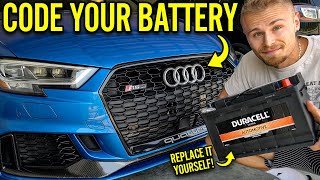
- VCDS (VAG-COM): 19-CAN Gateway -> Adaptation or Long Adaptation -> Channel 04 (Battery) — This is critical after replacing the battery. The B6 Passat uses a Battery Management System that needs to be told the new battery's specs (Part Number, Vendor, Serial Number) to adjust its charging strategy. Failing to do this can lead to improper charging, shorten the new battery's life, and cause persistent power-related codes like P0603.
- VCDS (VAG-COM): Fault Code Screen -> Freeze Frame Data — When P0603 is present, checking the freeze frame data can provide a snapshot of the vehicle's state (e.g., mileage, fault frequency) when the error was first logged. However, be aware that some modules may report bogus data if they lose power unexpectedly.
- VCDS (VAG-COM) or OBDeleven: Reset Window Pinch Protection — After disconnecting and reconnecting the battery to fix a P0603, the one-touch auto up/down window function will be lost. This is not a fault but a required reset. To fix, roll each window all the way down, then all the way up, holding the switch for an extra second in each direction.
Wiring & Ground Locations
- ECM Power Supply Relay (J271) — Located in the main electronics box (E-box) in the engine compartment, on the driver's side under the plenum cover.. This relay provides the main switched power to the Engine Control Module. A faulty or corroded relay will cut power to the ECM, directly causing a P0603 by erasing the Keep Alive Memory.
- Ground Point 15 — On the cylinder head.. This is a primary engine ground point. Corrosion or looseness here can cause unstable voltage references for sensors and the ECM itself, leading to various electrical faults including P0603.
- Ground Points 645 & 646 — Located on the bulkhead (firewall).. These are key chassis ground points. As the ECM is mounted nearby, the integrity of these grounds is crucial for stable ECM operation.
- Ground Strap, Battery to Body — Connects the battery's negative terminal to the vehicle chassis, often near the strut tower.. This is the main ground return path for the entire vehicle's electrical system. Corrosion or a break in this strap will cause widespread, severe electrical problems, including P0603.
- ECM Connectors (T94/T60) — On the ECM itself, located in the electronics box in the engine bay plenum chamber.. Constant power for the KAM is supplied via specific pins (e.g., Pin 87, Pin 92 on T94). Water ingress from clogged plenum drains frequently corrodes these pins, interrupting the power needed to keep memory alive.
Model Year Variations Within This Range
- 2008-2010: Later model year B6 Passats (post-2008) are generally considered more reliable, with incremental improvements to electrical components and build quality that may reduce the likelihood of some faults. For example, the 2.0 FSI engine was replaced by the 1.8 TSI in 2008, changing some engine management components, though the root causes of P0603 (power supply) remain consistent.
- 2005-2010: The B6 platform was available with a wide range of engines, from a 1.6L petrol to a 3.6L VR6, and multiple TDI diesel options. While the P0603 code's meaning is the same across all, the specific ECM part number, power supply relay (J271 for petrol, J317 for diesel), and fuse locations can vary. Always verify components against the specific engine type.
Diagnostic Flowchart
Other Known Issues on This Vehicle
Issues unrelated to this code that are worth knowing about as an owner of this generation:
- 2.0T FSI Cam Follower Failure 🔴 High — Very common on FSI engines (BPY code, ~2005.5-2008.5). The follower wears down, causing damage to the high-pressure fuel pump (HPFP) and camshaft. Recommended inspection every 20,000-30,000 miles. (Ref: VW issued a TSB and extended the warranty for this issue on affected vehicles.)
- Electronic Parking Brake (EPB) Failure 🟠 Medium — Widespread issue. Can be caused by faulty caliper motors, a bad EPB switch in the cabin, or wiring issues. Often starts intermittently, especially in cold weather, before failing completely. (Ref: No official recall in the US, but it was a well-known problem. VW redesigned the motor in 2008 to be more reliable.)
- Excessive Oil Consumption (2.0T Engines) 🟠 Medium — Common on both FSI and later TSI engines. Can be caused by worn piston rings, valve seals, or a failed PCV system. VW's official stance is that consumption up to 1 quart per 1,200 miles is 'normal'.
- Clogged Plenum Drains & Water Ingress 🔴 High — Extremely common on the B6 platform. Leaves and debris block drains under the cowl, leading to water flooding the plenum, which can destroy the ECM, Comfort Control Module, and cause widespread electrical havoc.
- Steering Column Lock Module Failure 🔴 High — Common on early B6 models (approx. >100k miles). The car may fail to start and display an 'Engine Fault - Garage' message. Initially required a full steering column replacement, but VW later released a cheaper replacement control module.
- Intake Manifold Flap Motor/Sensor Failure 🟡 Low — Common on 2.0T FSI engines. The runner flap motor or position sensor fails, causing a check engine light (often code P2015) and potential performance loss. (Ref: An extended warranty was offered for this component on many vehicles.)
Used vs. New Parts: Buying Guide for This Vehicle
When a used part is the smart pick: A used alternator from a documented low-mileage donor vehicle can be a cost-effective repair. A used ECM is also a viable option if the original is confirmed faulty, but it absolutely requires professional installation for VIN and component protection coding.
Donor-vehicle mileage cap: roughly under 80000 miles for the part to have meaningful remaining life.
What to inspect on the donor part:
- For an alternator, check for a smooth-spinning pulley with no bearing noise or roughness. Ensure the housing is free of heavy corrosion or oil saturation.
- For an ECM, match the part number exactly. Inspect the connectors for any bent pins, corrosion, or signs of water damage. Avoid any units from vehicles with flood or fire damage.
OEM-only on this vehicle (don't cheap out):
- ECM Power Supply Relay (J271/J317): These are inexpensive but critical components. Using a genuine OEM or OE-supplier relay (e.g., Bosch, Hella) is highly recommended to ensure reliability and correct function.
- Battery: While not strictly OEM-only, using a battery that meets VW's specifications for type (AGM vs EFB), size, and capacity is crucial. The Battery Management System is calibrated for these specs.
Aftermarket brands forum-validated for this vehicle:
- Alternators: Bosch (often the OEM supplier), Valeo (often the OEM supplier), and Denso are highly regarded for reliability.
- Batteries: Varta (often the OEM supplier), Bosch, Interstate.
Brands owners have reported issues with on this vehicle:
- Alternators: Some mechanics report higher failure rates with store-brand remanufactured units or no-name online brands. Brands like DB Electrical have been noted in general studies as having higher failure rates.
Real Owner Stories
Aggregated from forums and TSBs cited above. Mileages and costs reflect what owners reported in those sources.
2006-2010 Passat B6
Symptoms: Electronic Parking Brake (EPB) and Auto Hold features stopped working correctly after the battery died.
What fixed it: Addressing the power interruption/battery failure that caused the system to lose its settings.
Source hint: Ross-Tech forums thread titled 'Passat B6 - EBP acting up after battery died'
2005-2010 Passat B6
Symptoms: Wet carpets, alarm issues, and various electrical faults caused by water entering the cabin through the pollen filter housing or wiring grommets.
What fixed it: Cleaning the blocked plenum drains (rubber grommets) located under the battery and brake servo to prevent water from submerging the ECM and other electronics.
Source hint: UKPassats forum guide titled 'Plenum drains blocked - a helpfull guide.'
2005-2008 Audi A4 (B7) 2.0T
Symptoms: P0603 appearing specifically in the transmission control unit (multitronic VL300 gearbox).
What fixed it: Diagnosis of the electrical system vulnerabilities shared with the PQ46 platform architecture.
Source hint: MHH Auto forum thread 'Audi a4 b7 multitronic VL300 temnic gearbox error P0603'
Related OBD-II Codes
Frequently Asked Questions
I just replaced the battery in my 2007 Passat and now P0603 is showing. Is my ECM bad?
My Passat B6 has wet carpets and an Electronic Parking Brake error; could this be related to P0603?
Does VW TSB 01-05-02 apply to the P0603 code on my Passat?
Can a bad alternator cause P0603 on a 2010 Passat?
Where should I check for water buildup that might cause ECM codes on my B6 Passat?
Will a weak battery affect my Electronic Parking Brake (EPB) and Auto Hold?
Helpful Videos

Used OEM Parts in Stock
New Aftermarket Parts Available



The information in this article is provided for general reference and educational purposes only. Vehicle specifications, procedures, and part compatibility can vary by production date, trim level, and region. Always consult your vehicle's factory service manual and verify part numbers before purchasing or performing repairs. Safety-critical components such as airbags, seat belts, and braking systems should be installed by a qualified professional.
- Volkswagen Passat:
- 🧭 Diagnostic Flowchart
- 🎬 Helpful Videos
- 🛍️ Shop This Part
- What's Unique About the 2005-2011 Volkswagen Passat
- Symptoms You May Notice
- Most Likely Causes
- Rare But Worth Checking
- Diagnosis Steps
- Parts You'll Likely Need
- Technical Service Bulletins (TSBs) & Recalls
- Platform-Specific Known Issues
- Mechanic-Grade Diagnostic Values
- Hidden / Shadow Codes Worth Checking
- Scan Tool Commands That Help
- Wiring & Ground Locations
- Model Year Variations Within This Range
- Other Known Issues on This Vehicle
- Used vs. New Parts: Buying Guide for This Vehicle
- Real Owner Stories
- 2006-2010 Passat B6
- 2005-2010 Passat B6
- 2005-2008 Audi A4 (B7) 2.0T
- Related OBD-II Codes
- Frequently Asked Questions
- 🎟️ Get 5% Off