

P0604 on 2009-2016 Audi A4: Internal RAM Error Causes and Fixes
This code indicates an internal memory error in the Engine Control Module (ECM), specifically the Bosch MED17 ECU. The most common fix is replacing the ECM, as repair is often not possible. Before replacement, thoroughly check the battery, alternator, and all power/ground connections to the ECM, as low or unstable voltage is a known trigger for this fault on this sensitive platform.
- P0604 is a critical code indicating a memory failure within your Audi's main engine computer (ECM).
- Do not continue to drive the vehicle, as it can stall or fail to start at any time.
- Before condemning the expensive ECM, thoroughly test the battery, alternator, and all power/ground connections.
- Replacing the ECM is a job for a professional, as it requires special tools to program the new unit to your car.
- In some rare cases, a software re-flash at a dealership can fix the problem without replacing the ECM.
What's Unique About the 2009-2016 Audi A4
For the B8 generation Audi A4 (2009-2016) using the Bosch MED17 series ECM, the P0604 code is a serious fault that often points directly to a failing Engine Control Module (ECM). While external factors like low voltage are always a possibility, this platform's complex electronics are highly sensitive to voltage fluctuations, which can corrupt the RAM and trigger the code, or lead to premature module failure. Owners report that once this code appears and basic electrical checks are passed, ECM replacement is the typical final resolution. In some cases, the code may appear without a Check Engine Light or any noticeable symptoms, only to be found during a routine scan.
Generation note: The 2009-2016 model years cover the B8 generation of the Audi A4. This includes the pre-facelift (2009-2012) and the facelifted B8.5 models (2013-2016). The diagnostic approach for P0604 is consistent across this entire generation as they share the 2.0T TFSI engine and Bosch engine management systems.
Symptoms You May Notice
- Check Engine Light is on
- Vehicle may not start or may be hard to start
- Engine may stall unexpectedly while driving, sometimes only when cruise control is active
- Rough idle or engine hesitation
- Transmission shifting issues or harsh shifting
- Activation of the Anti-lock Brake System (ABS) or Traction Control (ESP) light
- Reduced engine power or vehicle entering 'limp mode'
- No noticeable symptoms in some rare cases, with the code only found via a scan
- Replacing sensors or other components when the root cause is the ECM itself. Because a P0604 code can cause other codes to appear, it's crucial to address the P0604 first as it often indicates the primary failure.
- Immediately condemning the ECM without first thoroughly testing the battery, charging system, and all related power and ground connections. Many forum users have reported resolving P0604 with just a new battery.
Most Likely Causes
- Failing Engine Control Module (ECM) 🔴 High Probability → Shop Engine Control Module (ECM) The Bosch MED17 ECM used in this platform can fail internally due to heat cycles, vibration, or internal component degradation, leading to RAM corruption. Water ingress into the plenum chamber where the ECU is housed is also a known cause of failure if the drains become clogged. This is the most likely cause if battery and wiring are confirmed to be in perfect condition.
How to confirm: After ruling out all other possibilities (power, ground, software), the ECM is diagnosed as faulty. A professional may use advanced tools to perform a RAM integrity test. If clearing the code results in its immediate return, it's a hard fault pointing to the module.
Typical fix: Replace the Engine Control Module. The new module must be programmed to the specific vehicle's VIN and immobilizer system. Some specialists can repair or clone the original ECU, which can be a more cost-effective option.
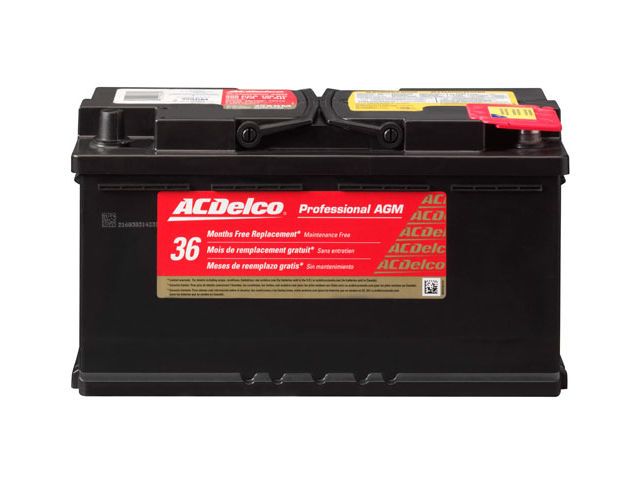
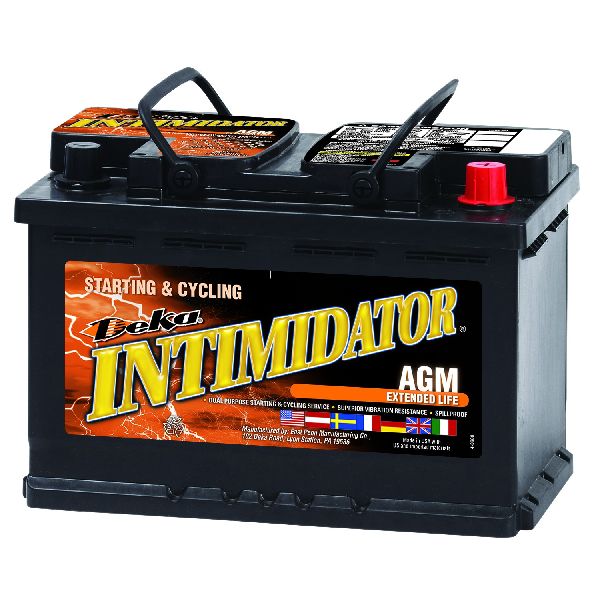
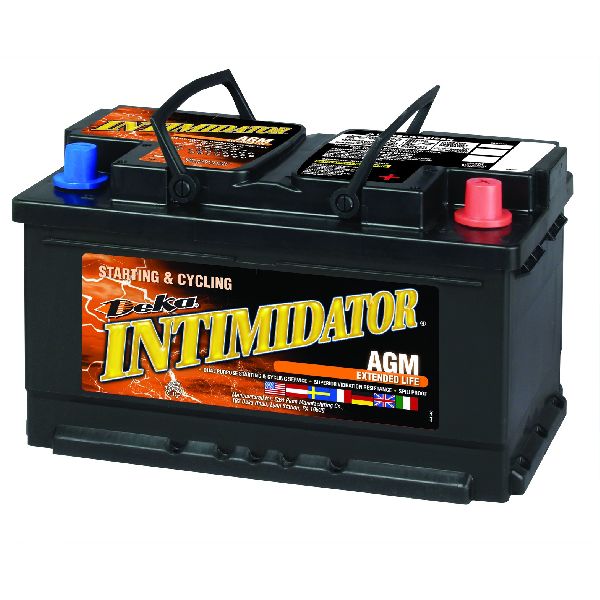
Est. part cost: $800-$2000 - Low or Unstable Battery Voltage 🟡 Medium Probability → Shop Vehicle Battery Modern Audis are packed with electronics and are extremely sensitive to battery voltage. A weak, failing, or improperly coded battery can cause numerous, seemingly unrelated electronic glitches, including triggering a P0604 code.
How to confirm: Test the battery voltage with a multimeter. It should be above 12.4V (ideally 12.6V) with the engine off and between 13.5V and 14.5V when running to confirm alternator output. Perform a load test on the battery, as a battery can show good voltage but fail under load.
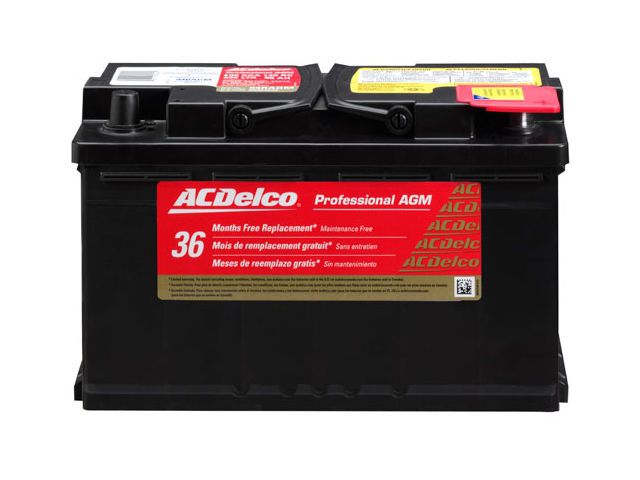
Typical fix: Clean battery terminals and cable ends. If the battery fails a load test, replace it with a new one of the correct type (AGM or EFB) and ensure it is properly 'coded' to the vehicle's battery management system using a tool like VCDS.
Est. part cost: $200-$400 - Poor Power or Ground Connections to ECM ⚪ Low Probability Corrosion can develop on main ground straps and power connections over time, especially in regions with harsh winters. Key ground points for the B8 platform are located in the plenum chamber near the battery/ECU box and on the chassis rails. An intermittent connection can cause voltage drops that upset the ECM.
How to confirm: Perform a voltage drop test on the ECM's power and ground circuits. Visually inspect the main ground strap from the battery to the chassis and the engine-to-chassis ground. The primary ECM ground point on a B8 A4 is typically located in the plenum chamber (under the plastic cowl cover) near the ECU box. Resistance on ground circuits should be below 0.1 Ω.
Typical fix: Clean or repair the corroded or loose connections. This involves removing the connection, cleaning all contact surfaces to bare metal, applying a dielectric grease, and re-securing it tightly.
Est. part cost: $0-$50
Rare But Worth Checking
- Corrupted ECM Software: A failed software update, aftermarket tuning, or a random glitch can corrupt the data stored in the ECM. A dealership or qualified shop can attempt to re-flash the module with the latest factory software, which may resolve the issue without replacing the hardware. This should be attempted before condemning the ECM.
- Failing Alternator: → Shop Alternator An alternator with a faulty voltage regulator can produce voltage spikes or drops, which can damage or disrupt the ECM's internal memory. This should be checked during the battery system test by monitoring voltage while the engine is running.
Diagnosis Steps
- Scan for all stored Diagnostic Trouble Codes (DTCs). Note any other codes, but prioritize P0604 as the root cause.
- Attempt to clear the code. If it returns immediately, this indicates a 'hard fault' and points more strongly toward a hardware (ECM) failure.
- Thoroughly test the battery. Check static voltage (should be >12.4V), and perform a load test. A weak battery is a common culprit.
- With the engine running, test the alternator output at the battery terminals. Voltage should be stable, between 13.5V and 14.5V.
- Inspect battery terminals and the main chassis/engine ground points for corrosion and tightness. On the B8 A4, a key ground point is in the plenum chamber near the battery. Clean as necessary.
- Perform a voltage drop test on the ECM's main power and ground pins to ensure it's receiving stable voltage. Refer to a wiring diagram for the correct pins.
- Visually inspect the ECM and its wiring harness for any signs of physical damage, corrosion, or water intrusion. The ECM is located in a box in the engine bay's plenum area, which can sometimes be susceptible to water if the drains are clogged.
- If all electrical inputs are confirmed good, the next step is to check for available software updates for the ECM. A dealership or specialist shop with Audi-specific tools (ODIS) can perform a re-flash.
- If a re-flash does not solve the problem, or if the code persists after all other checks, the ECM is almost certainly faulty and requires replacement or repair by a specialist service.
Parts You'll Likely Need
- Engine Control Module (ECM)
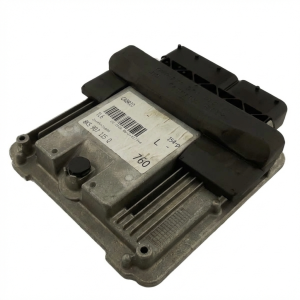
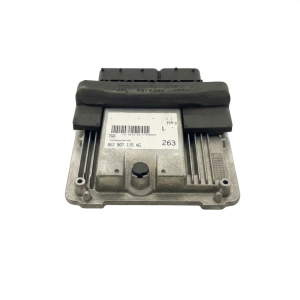
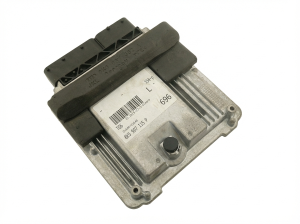
(OEM #8K2907115x, 8K5907115x (Note: 'x' varies. Part number is highly specific to year, transmission, and software. Must be matched exactly.))— This code indicates a fatal internal error in the ECM itself in a majority of cases after electrical issues are ruled out.
Trusted brands: Bosch (OEM), Genuine Audi
OEM price range: $1200-$2000
Aftermarket price range: $800-$1500 (Remanufactured/Cloned) - Car Battery — A weak or failing battery is a common cause of electrical faults and can trigger this code. It should always be ruled out first.
Trusted brands: Varta, Bosch, Interstate
OEM price range: $250-$400
Aftermarket price range: $200-$300
Related Codes That Often Appear With This One
- P0603 — This code relates to a Keep Alive Memory (KAM) error, which is closely related to the RAM function and often points to power supply issues.
- P0605 — This code indicates an error with the Read Only Memory (ROM), another type of internal module memory. Seeing P0604 and P0605 together strongly suggests a failed ECM.
- P03xx — Misfire codes (e.g., P0300, P0301) may appear as a symptom because the failing ECM cannot properly control ignition timing or fuel injection.
- Various Communication Codes (U-codes) — A failing ECM can disrupt communication on the CAN bus network, leading to a variety of communication-related fault codes with other modules in the vehicle.
Platform-Specific Known Issues
- On AudiWorld, a user with a 2002 A6 (different generation but similar issue) reported P0604 would only cause the engine to stall when using cruise control. The consensus was that the only fix per the Bentley manual was ECU replacement.
- Another AudiWorld thread discusses a user with a Q5 getting a P0604 code via a JB4 tuner without any CEL or drivability issues, highlighting that the code can sometimes be triggered by aftermarket electronics without causing immediate symptoms.
Mechanic-Grade Diagnostic Values
- Battery Static Voltage (Engine Off) — expected: >12.4V (12.6V+ is healthy). Failure: Voltage below 12.4V indicates a discharged or failing battery that can trigger module errors.
- Alternator Output Voltage (Engine Running at Idle) — expected: 13.5V - 14.5V. Failure: Voltage below 13.5V or above 14.5V indicates a faulty alternator or voltage regulator, which can cause voltage instability and damage the ECM.
- ECM Power and Ground Circuit Voltage Drop — expected: < 0.1V. Failure: A voltage drop greater than 0.1V on a power or ground wire indicates excessive resistance from corrosion or a poor connection, starving the ECM of stable voltage.
Scan Tool Commands That Help
- VCDS (VAG-COM): Advanced Measuring Values — To monitor specific data points like ECU voltage supply, engine speed, and other sensor inputs simultaneously to look for anomalies that might correlate with the P0604 fault. This is more flexible than the standard Measuring Blocks.
- ODIS (Offboard Diagnostic Information System): Software Flash / Update — To attempt a re-flash of the ECM with the latest factory software. This should be used after confirming power/grounds are good, as it can fix software corruption that may cause a P0604 code before condemning the hardware.
- ODIS (Offboard Diagnostic Information System): Component Protection / Immobilizer Adaptation — This is required after installing a new or used ECM. The function adapts the replacement module to the vehicle's immobilizer system and removes component protection, allowing the car to start.
Wiring & Ground Locations
- Main ECM Ground — In the plenum chamber (the area under the windshield cowl), on a ground stud near the ECU box.. This is the primary ground connection for the Engine Control Module. Corrosion or looseness at this point can cause intermittent voltage drops, leading to internal memory errors like P0604.
- G11 / G12 — Ground connection points located at the rear of the engine compartment.. These are major engine-related ground points. While not directly for the ECU casing, they ensure the entire engine block and its sensors have a solid ground reference, which is critical for stable ECU operation.
- Plenum Chamber Drains — Rubber grommets located at the bottom of the plenum chamber, under the battery and brake booster.. These are not electrical points, but their failure is critical. When these drains clog with leaves and debris, the plenum chamber fills with water, submerging the ECU box and causing water ingress that destroys the module and triggers codes like P0604.
- ECM Connector (T94) — The large multi-pin connector that plugs directly into the Engine Control Module in the plenum box.. This is where all power, ground, and signal wires connect to the ECM. A voltage drop test must be performed at the specific power and ground pins of this connector to confirm the module itself is receiving correct voltage.
Real Owner Repair Stories
- AudiWorld Forums (2002 Audi A6 2.7T) — Engine stalls and enters limp mode with ABS/traction control/check engine lights on. Code P0604 is stored.
❌ Tried (didn't work) The user noted the issue only occurred when using cruise control without their foot on the accelerator.
✅ What actually fixed it The consensus from other users and reference to the Bentley repair manual was that the only prescribed fix for a P0604 code is the replacement of the Engine Control Unit (ECU). - Reddit r/MechanicAdvice (Unknown Truck (story is applicable)) — Persistent P0604 code that would not clear, vehicle always started but failed inspection.
❌ Tried (didn't work) Replaced ECM with a dealer remanufactured unit and had it flashed., Removed an aftermarket CANBUS-connected radio., Tested every fuse and relay., Checked all grounds and installed a missing hood ground strap.
✅ What actually fixed it The story was unresolved, but serves as a cautionary tale that even after replacing the ECM and checking all common causes, the code can persist, indicating a deep, hard-to-find wiring issue or a problem with another module on the CAN bus.
OEM Part Supersession History
8K2907115A / 8K2907115D→8K2907115P— Part revision and software updates for the MED17.1 ECU used in early B8 models.
Heads up: While many part numbers can be made to work via cloning, it is critical to match the replacement ECU's part number exactly or use a confirmed superseded number to ensure hardware compatibility (e.g., transmission type, specific sensor support). Using an incompatible ECU can lead to non-functional features or a no-start condition even after programming.
Model Year Variations Within This Range
- 2009-2013 (B8 Pre-facelift): Primarily used the 2.0T TFSI engine with the 'CAEB' engine code. These ECUs may have earlier software versions and part numbers.
- 2014-2016 (B8.5 Facelift): Introduced updated 2.0T TFSI engines, including the 'CPMA' and 'CPMB' flex-fuel variants and the 'CAED' petrol variant. These engines may have different ECU hardware or software calibrations compared to the earlier CAEB engines, making correct part number matching even more critical.
Diagnostic Flowchart
Other Known Issues on This Vehicle
Issues unrelated to this code that are worth knowing about as an owner of this generation:
- Excessive Oil Consumption 🔴 High — Very common on 2009-2012 models with the CAEB engine code. Caused by faulty piston ring design. Less common on 2013+ facelift models but still possible. (Ref: A class-action lawsuit resulted in warranty extensions and repair programs for affected vehicles. TSB 2027732/10 addresses the oil consumption test and repair stages.)
- Timing Chain Tensioner Failure 🔴 High — A critical issue on pre-facelift (before ~2013) 2.0T engines. The original tensioner can fail without warning, causing the chain to jump teeth, leading to catastrophic engine damage. A rattling noise on cold starts is a key warning sign. (Ref: No official recall, but an updated tensioner part was released. It is a critical preventative maintenance item for owners of earlier B8 models.)
- Water Pump & Thermostat Failure 🟠 Medium — The OEM water pump has a plastic housing that is prone to cracking and leaking over time, often between 60,000 and 80,000 miles. (Ref: No recall, but it's a very common repair. Many owners opt for an aftermarket replacement with a metal housing to prevent future failures.)
- PCV Valve Failure 🟠 Medium — The crankcase ventilation valve (PCV) diaphragm can tear, leading to high oil consumption, a whistling noise from the engine, and a rough idle. This is a common failure item. (Ref: Part of the oil consumption TSB involves replacing the PCV with an updated version designed to reduce crankcase pressure.)
- Carbon Buildup on Intake Valves 🟠 Medium — As a direct-injection engine, fuel does not wash over the intake valves. This leads to carbon deposits accumulating over 50,000-80,000 miles, causing misfires, rough idle, and reduced performance. (Ref: No TSB. Requires periodic manual cleaning (e.g., walnut blasting) as part of long-term maintenance.)
Used vs. New Parts: Buying Guide for This Vehicle
When a used part is the smart pick: A used ECM is a very sensible and cost-effective option for this repair, BUT ONLY if you use a cloning service. A dealership cannot program a used ECU to a new car. A specialist service physically transfers all data (VIN, immobilizer, coding, software) from your old ECU to the donor ECU, making it completely plug-and-play.
Donor-vehicle mileage cap: roughly under 150000 miles for the part to have meaningful remaining life.
What to inspect on the donor part:
- Match the Bosch and Audi part numbers EXACTLY, or verify the supersession chain.
- Ensure the donor ECU comes from a vehicle with the same engine and transmission type.
- Visually inspect the donor unit's connectors for any bent pins, corrosion, or signs of water damage.
- Purchase from a reputable salvage yard that guarantees the part is functional.
OEM-only on this vehicle (don't cheap out):
- Engine Control Module (ECM) - While a used OEM part is viable via cloning, avoid no-name aftermarket ECUs. Stick with genuine Bosch/Audi parts, whether new, remanufactured, or used.
Aftermarket brands forum-validated for this vehicle:
- For ECU repair/cloning services: Vinniebuilt, DUDMD Tuning, Bimmerscan, and other mail-in services with positive reviews are common choices.
Brands owners have reported issues with on this vehicle:
- Generic, unbranded 'new' ECUs from online marketplaces. These often have software issues, are not truly new, and cannot be properly programmed.
Real Owner Stories
Aggregated from forums and TSBs cited above. Mileages and costs reflect what owners reported in those sources.
2002 Audi A6 (Related Platform)
Symptoms: The engine would stall unexpectedly, but specifically only when the cruise control was active.
What fixed it: Replacement of the ECU, as it was determined to be the only fix per the Bentley manual for this internal RAM error.
Source hint: AudiWorld Forums - P0604 Internal Control Module Random Access Memory (RAM) Error (2015-08-06)
Audi Q5 2.0T TFSI
Symptoms: The P0604 code was found during a scan via a JB4 tuner; however, there was no Check Engine Light (CEL) or noticeable drivability symptoms.
What fixed it: No repair performed as the code appeared to be triggered by aftermarket electronics without affecting vehicle operation.
Source hint: AudiWorld Forums - Codes P01412 and P0604 - what are they? (2019-04-27)
Audi (VAG Platform)
Symptoms: The engine would shut down completely due to physical vibrations while driving.
What fixed it: The issue was identified as a definitive internal ECU hardware fault (RAM error).
Source hint: AudiSRS.com - 16988 - Internal Control Module: RAM Error P0604 (2013-03-24)
Related OBD-II Codes
Frequently Asked Questions
Where is the Engine Control Module (ECM) located on my B8 Audi A4, and can water damage it?
Can I just swap in a used ECU from another 2.0T TFSI to fix the P0604 RAM error?
Does my 2009-2016 Audi A4 require special battery handling to prevent electronic codes like P0604?
Is there a specific ground point I should check on my A4 for this internal control module error?
Could my aftermarket tuner be causing the P0604 code on my Audi?
Is the P0604 code related to the oil consumption TSB 2027732/10 for the 2.0T engine?
Helpful Videos
Used OEM Parts in Stock
New Aftermarket Parts Available


The information in this article is provided for general reference and educational purposes only. Vehicle specifications, procedures, and part compatibility can vary by production date, trim level, and region. Always consult your vehicle's factory service manual and verify part numbers before purchasing or performing repairs. Safety-critical components such as airbags, seat belts, and braking systems should be installed by a qualified professional.
- Audi A4:
- 🧭 Diagnostic Flowchart
- 🎬 Helpful Videos
- 🛍️ Shop This Part
- What's Unique About the 2009-2016 Audi A4
- Symptoms You May Notice
- Most Likely Causes
- Rare But Worth Checking
- Diagnosis Steps
- Parts You'll Likely Need
- Related Codes That Often Appear With This One
- Platform-Specific Known Issues
- Mechanic-Grade Diagnostic Values
- Scan Tool Commands That Help
- Wiring & Ground Locations
- Real Owner Repair Stories
- OEM Part Supersession History
- Model Year Variations Within This Range
- Other Known Issues on This Vehicle
- Used vs. New Parts: Buying Guide for This Vehicle
- Real Owner Stories
- 2002 Audi A6 (Related Platform)
- Audi Q5 2.0T TFSI
- Audi (VAG Platform)
- Related OBD-II Codes
- Frequently Asked Questions
- 🎟️ Get 5% Off