

P0605 on 2011-2016 Kia Sportage: Internal Computer Failure Causes and Fixes
P0605 on a 2011-2016 Kia Sportage indicates a critical internal error in the Engine Control Module (ECM). Before replacing the expensive ECM, thoroughly check the battery, alternator, and all power and ground connections, as electrical issues are a common cause. A dealer software update could also be a potential fix, as this has been the solution for other Kia models with the same code.
- P0605 is a critical code indicating a failure in the engine's main computer; do not continue to drive the vehicle.
- Before assuming the expensive ECM is bad, you MUST thoroughly test the battery, alternator, and all power/ground wires.
- Ask a Kia dealer if any software updates (reflashes) are available for your VIN, as this is a known fix on other Kia/Hyundai models for this exact code.
- The 2011-2013 models with Theta II engines are subject to a major engine failure recall (SC147) which is a separate, but more common, critical issue for this platform.
What's Unique About the 2011-2016 Kia Sportage
For the 2011-2016 Kia Sportage (SL generation), a P0605 code is a serious but infrequent issue. While there are no widespread, documented TSBs for this specific model and code, Kia has issued software updates (reflashes) to fix P0605 on other models like the Seltos and Soul (TSB SA463). This establishes a strong precedent that a software glitch could be the cause. Before condemning the computer, it's crucial to inquire with a Kia dealer about any available software updates for your vehicle's VIN. Otherwise, the cause is typically an unstable electrical supply or a failed ECM.
Symptoms You May Notice
- Check Engine Light is on
- Engine may not start or may be hard to start
- Engine may stall unexpectedly while driving or at idle
- Noticeable decrease in engine performance and fuel economy
- Transmission may not shift properly or may enter limp mode
- ABS or Traction Control lights may also illuminate
- Vehicle may enter a forced limited power ('limp') mode
- Replacing the ECM without first thoroughly testing the battery, alternator, and all ground connections. An unstable power supply is a very common cause for this code and should always be ruled out first.
Most Likely Causes
- Poor Battery Voltage or Failing Alternator 🔴 High Probability → Shop Alternator All modern ECUs, including the one in the Sportage, are sensitive to voltage. An unstable power supply from a weak battery or a faulty alternator can cause the ECM to fail its internal self-test, triggering a false P0605 code.
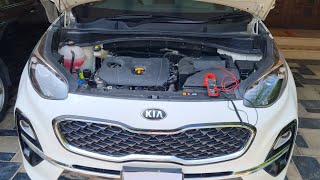
How to confirm: Test the battery with a multimeter; 🎬 Watch: How to test your Sportage battery it should read ~12.6V with the engine off. With the engine running, test the alternator output at the battery terminals; it should be between 13.5V and 14.5V. Any auto parts store can also perform a load test on your battery and charging system for free.
Typical fix: Replace the battery and/or alternator if they fail testing.
Est. part cost: $100-$400 - Faulty ECM Power or Ground Circuits 🟡 Medium Probability Corrosion on terminals, loose connections, or damaged wiring can interrupt the stable power supply the ECM needs to function correctly. The main engine-to-chassis ground strap is a common point of failure.
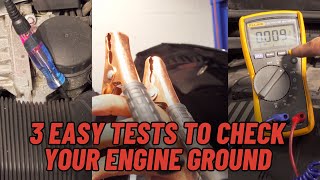
How to confirm: Visually inspect the battery terminals, main engine ground straps (one typically runs from the battery negative to the chassis, another from the engine block to the frame), 🎬 See how to test your engine block ground and the wiring harness going to the ECM for any signs of corrosion, damage, or looseness. Use a multimeter to check for voltage drops and continuity on the ECM's power and ground pins, referencing a factory service manual for the correct pinout.
Typical fix: Clean terminals with a wire brush, tighten loose connections, or repair/replace damaged sections of the wiring harness.
Est. part cost: $5-$150 - Internal ECM Failure 🟡 Medium Probability If all power and ground inputs are verified to be good, the ECM itself has likely suffered an internal hardware failure. This can be due to age, heat cycles, voltage spikes, or a manufacturing defect.
How to confirm: This is a process of elimination. If the battery, alternator, and all related wiring are confirmed to be in perfect working order, and the code persists after a reset, the ECM is the faulty component. A professional scan tool may also be able to perform a module self-test or confirm a checksum error.
Typical fix: The ECM must be replaced and programmed to the vehicle's VIN and security system. This typically requires a dealership or a specialized repair shop. Remanufactured units are a cost-effective option.
Est. part cost: $600-$1200
Rare But Worth Checking
- Outdated or Corrupted ECM Software: While not confirmed with a TSB for this specific Sportage, Kia has fixed P0605 on other models (Seltos, Soul, and the related Sonata) with a simple software update. It's a low-cost inquiry at a dealership that could prevent an expensive and unnecessary ECM replacement. A failed previous update attempt can also corrupt the ROM.
Diagnosis Steps
- Check for additional codes. Note any other codes stored in the system, especially communication (U-series) or limp-mode codes like P2105.
- Inspect and Test the Battery and Charging System: Ensure the battery is fully charged and healthy. Test the alternator output to confirm it's between 13.5-14.5 volts with the engine running.
- Inspect ECM Power and Ground Connections: Visually inspect all battery cables, ground straps from the battery-to-chassis and engine-to-frame, and the ECM wiring harness for corrosion, damage, or loose connections. Clean and tighten as necessary.
- Verify Power and Ground at the ECM: Using a wiring diagram, use a multimeter to confirm the ECM is receiving proper voltage and has a solid ground connection at its connector pins.
- Inquire about Software Updates: Contact a Kia dealership with your VIN and ask if there are any available ECM software updates (reflashes or 'logic improvements') that address code P0605. This is a known fix for other Kia/Hyundai models.
- Replace the ECM: If all previous steps have been exhausted and the code returns, the ECM is faulty and must be replaced. The new module will need to be programmed to your vehicle by a professional.
Parts You'll Likely Need
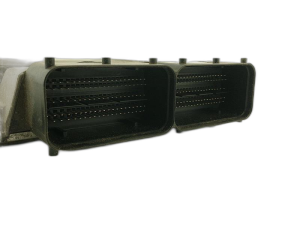
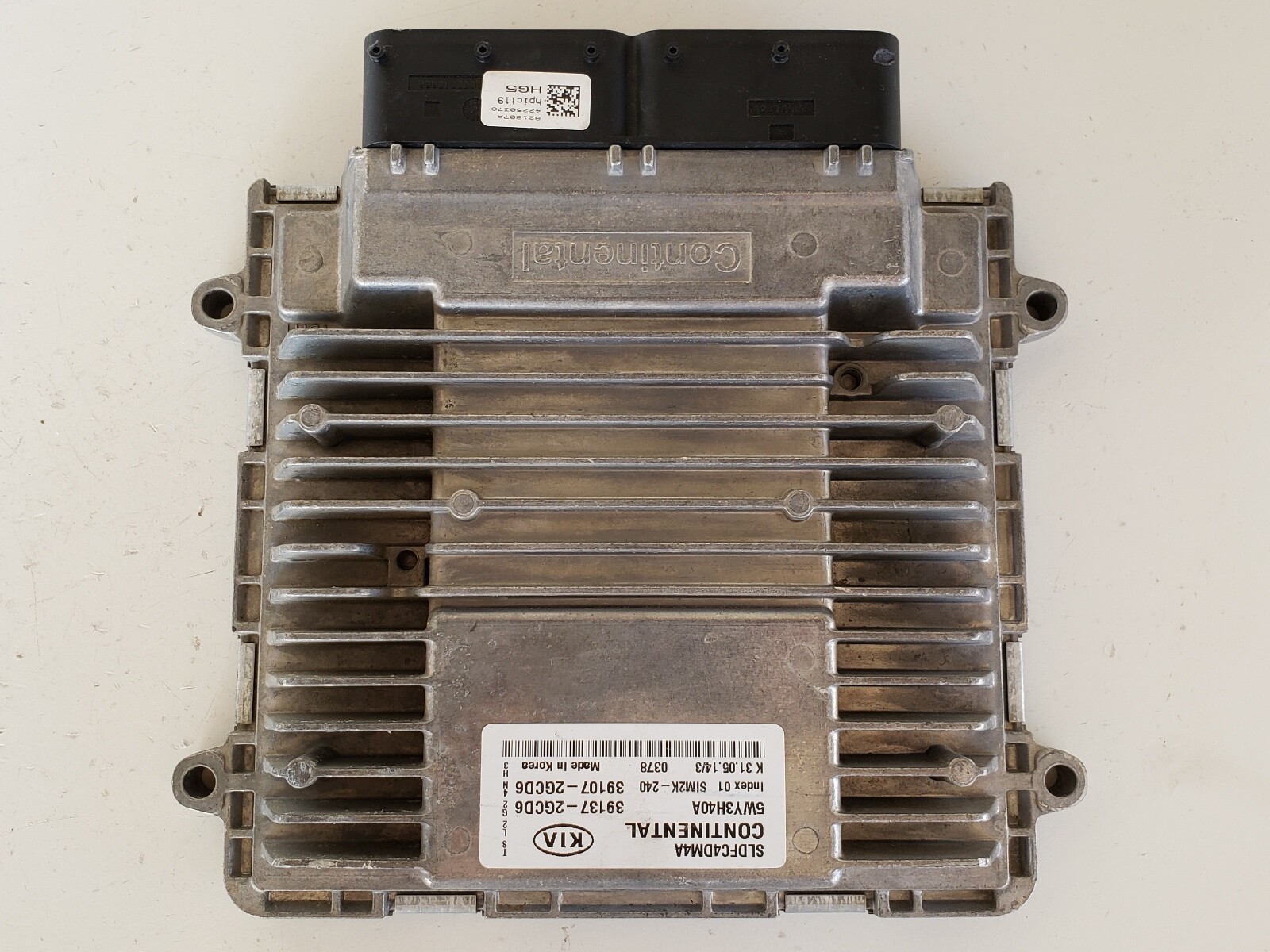
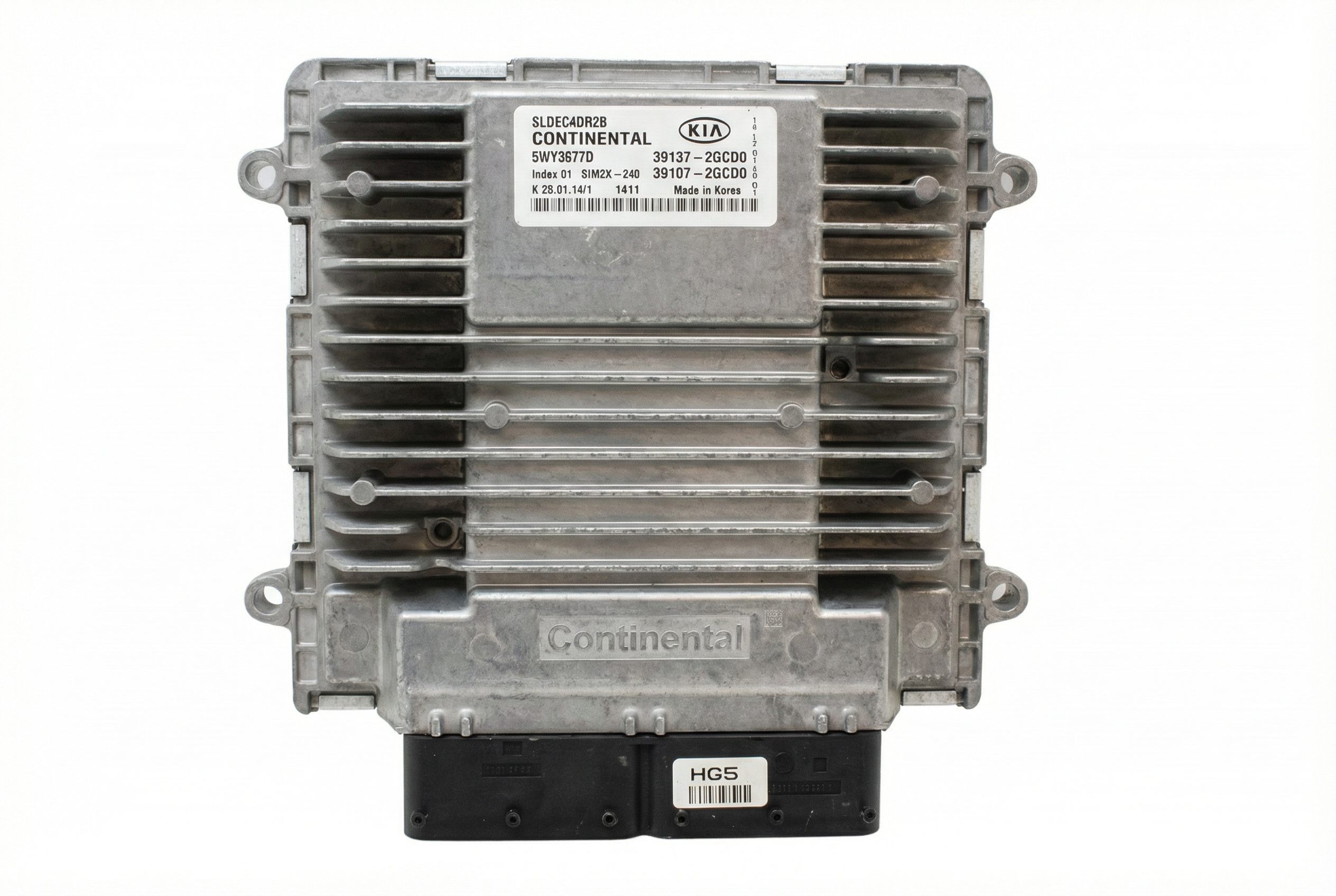
- Engine Control Module (ECM)
(OEM #Varies by year/engine/drivetrain. Examples: 39137-2G710 (2011-13 2.4L), 39137-2GCD3 (2014-16). Always verify with VIN.)— If all electrical inputs are good and no software update is available, the module itself has failed internally, which is the ultimate definition of the P0605 code.
Trusted brands: Kia (OEM), Flagship One (Remanufactured), Auto Computer Performance (Remanufactured)
OEM price range: $800-$1400
Aftermarket price range: $300-$600 (Remanufactured) - Battery — A weak or failing battery is a common cause of low or unstable voltage, which can trigger false computer module errors.
Trusted brands: Bosch, ACDelco, Interstate
OEM price range: $150-$250
Aftermarket price range: $100-$200
Related Codes That Often Appear With This One
- P0604 — This code indicates an Internal Control Module Random Access Memory (RAM) Error, another type of internal computer fault that can occur alongside a ROM error.
- P0606 — This code indicates a more general ECM/PCM Processor Fault, pointing to a severe internal issue within the main computer.
- U-series codes (e.g., U0100) — These codes indicate a loss of communication with the ECM. If the ECM is failing internally, it may stop communicating with other modules on the vehicle's network.
- P2105 — Stands for 'Throttle Actuator Control System - Forced Engine Shutdown'. This code is often triggered as a direct result of the ECM detecting a critical internal fault like P0605 and entering a limp-home safety mode. This has been observed on the platform-mate Hyundai Tucson.
Technical Service Bulletins (TSBs) & Recalls
- SA463 (related models): Service action for 2020-2021 Soul and Seltos to fix P0605 with an ECM software update, establishing a precedent for this repair path.
- SC147 (related issue): Major safety recall for 2011-2013 Sportage models to inspect for and prevent catastrophic engine failure due to manufacturing debris. Involves an engine noise test and potential engine replacement.
- ENG219 (related issue): TSB providing procedures for diagnosing excessive oil consumption on various Kia engines, including the Theta II.
- TSB 16-01-004-2 (platform mate): Service Campaign TZ3 for the Hyundai Sonata 2.4L, which provides a procedure to update ECM software to fix DTC P0605.
Platform-Specific Known Issues
- While a direct P0605 repair story for the 2011-2016 Sportage is not readily available in forums, a thread on 'kia-forums.com' discusses a 2012 Sportage with a no-start condition that was eventually traced to a bad ground connection after extensive diagnosis. This aligns with the primary diagnostic step of checking all grounds before condemning the ECM for a code like P0605.
Mechanic-Grade Diagnostic Values
- Battery Voltage (Engine Off) — expected: ~12.6V. Failure: Below 12.4V indicates a weak battery that can cause spurious electronic faults.
- Charging System Voltage (Engine Running) — expected: 13.5V - 14.7V. Failure: Voltage outside this range points to a fault with the alternator or voltage regulator.
- ECM Ground Circuit Resistance — expected: ≤ 1.0 Ω. Failure: High resistance (anything over 1 ohm) indicates a poor ground connection, which can cause unpredictable module behavior.
- ECM Power Pin Voltage (Key On) — expected: Steady 12.0V - 14.8V. Failure: Fluctuations, spikes, or voltage below 12.0V indicates a problem with the power supply wiring or relays.
Scan Tool Commands That Help
- Kia KDS/GDS: ECU Upgrade — This is the primary function used to perform a software reflash. It can be run in 'Auto Mode' to apply the latest software version, which may fix a P0605 code if it's a known software bug.
- Kia KDS/GDS: VIN Writing — This function is mandatory after installing a new or used ECM. It programs the vehicle's VIN into the module, which is required for the engine to start and communicate with other modules.
- Kia KDS/GDS: Immobilizer Key Teaching — After replacing and programming the VIN into a new ECM, the immobilizer system must be taught the existing keys. The ECM starts in a 'virgin' state and this procedure syncs it with the vehicle's anti-theft system.
- Professional Scan Tool (e.g., iCarsoft CR MAX): Module Self-Test / Checksum Read — To confirm an internal ECM fault after external wiring and power supplies have been verified. The tool commands the ECM to run its internal checksum verification; a failure confirms the P0605 diagnosis.
Wiring & Ground Locations
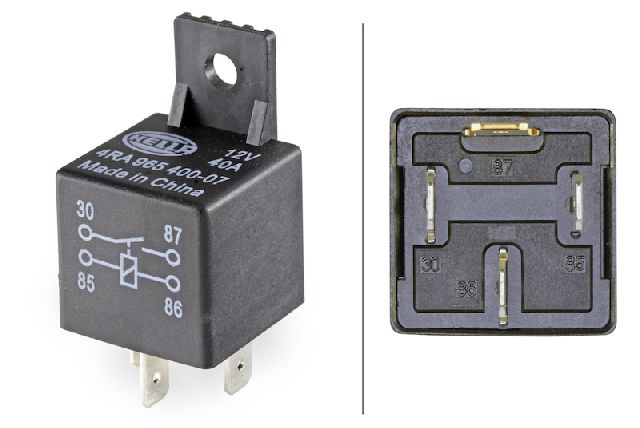
- Engine Compartment Fuse Box — Located in the engine bay, this box contains main fuses and relays, including those that supply power to the ECM.. A blown ECM or fuel pump relay fuse in this box will cut power to the control module, potentially causing a P0605 or a no-start condition.
- Instrument Panel Fuse Box — Located inside the cabin, typically on the driver's side dash or behind the glove box.. Contains fuses for various control modules that communicate with the ECM. A fault here could cause related communication errors.
- Main Engine Ground Strap — A braided metal strap typically running from the engine block (often near the alternator or cylinder head) to the chassis/frame.. This is the primary ground path for the engine and its components, including the ECM. A corroded or loose connection here is a common cause of widespread, difficult-to-diagnose electrical issues, including module errors.
- ECM Ground Pins — Multiple pins on the ECM's main electrical connector are dedicated ground circuits. A wiring diagram is required for exact pin numbers.. Even if the main engine ground is good, a break or corrosion in the specific wires leading to the ECM's ground pins will cause the module to malfunction and can trigger a P0605.
Real Owner Repair Stories
- Go-Parts Forum Summary (2010-2015 Hyundai Tucson 2.4L (Platform mate)) — Check Engine Light with P0605 as the only stored code.
❌ Tried (didn't work) Not specified, but the direct diagnosis pointed to internal failure.
✅ What actually fixed it The Engine Control Module was replaced with a remanufactured unit, which then required programming to the vehicle. - YouTube - JL's Auto Solution (2012 Kia Sportage) — Intermittent stalling. Check engine light and immobilizer light would flash when it stalled.
❌ Tried (didn't work) Initial diagnosis focused on external components.
✅ What actually fixed it The issue was traced to a faulty low-side driver within the original PCM that controlled the main relay. Replacing the PCM with a new unit and programming it (VIN writing and key teaching) resolved the stalling problem.
OEM Part Supersession History
39137-2G710→39107-2G710, 39107-3G710— Standard part updates and revisions by the manufacturer.
Heads up: Part numbers are extremely specific to year, engine, transmission, and emissions (Federal vs. California). The part number must be matched exactly from the original unit or verified with a VIN at a Kia dealership to ensure compatibility. Using an incorrect part number, even if it fits physically, will result in a no-start condition.
Model Year Variations Within This Range
- 2014-2016: The 2014 model year marked a significant facelift. The base 2.4L engine was updated with Gasoline Direct Injection (GDI), increasing horsepower from 176 to 182. This engine change also means the ECM is different from the 2011-2013 models. Additionally, features like UVO eServices infotainment and optional HID headlights were introduced, adding complexity to the vehicle's electrical network.
- 2011-2013: These earlier models use a non-GDI version of the 2.4L Theta II engine and have a simpler electronics package compared to the post-facelift models. The ECM part numbers are specific to this period (e.g., 39137-2G710).
Diagnostic Flowchart
Other Known Issues on This Vehicle
Issues unrelated to this code that are worth knowing about as an owner of this generation:
- Catastrophic Engine Failure (Theta II) 🔴 High — Widespread across 2011-2013 models with 2.0L Turbo and 2.4L GDI engines. Can occur at any mileage. Caused by metallic debris from manufacturing restricting oil flow to connecting rod bearings. (Ref: Recall SC147 was issued to inspect and, if necessary, replace the engine long block. The warranty was also extended significantly.)
- Excessive Oil Consumption 🟠 Medium — Common on Theta II engines. Can lead to oil sludge, abnormal wear, and eventually contribute to engine damage if not monitored closely. (Ref: TSB ENG219 addresses this issue across multiple Kia models and provides guidelines for consumption testing.)
- Carbon Buildup on Intake Valves 🟡 Low — A common characteristic of Gasoline Direct Injection (GDI) engines like the Theta II. Over time, it can cause rough idle and reduced performance. Not a critical failure but requires periodic cleaning.
- Knock Sensor Detection System (KSDS) Update 🔴 High — Related to the engine failure issue, Kia implemented a software update (part of recall SC147 and detailed in TSB PI1803) to install a system that listens for the signs of impending bearing failure and puts the car into limp mode to prevent a high-speed stall. (Ref: Recall SC147 / TSB PI1803)
Used vs. New Parts: Buying Guide for This Vehicle
When a used part is the smart pick: A used ECM from a reputable salvage yard is a very common and cost-effective solution for a P0605 failure, often costing hundreds less than a new or even remanufactured unit. Since the failure is electronic, a used part from a vehicle that was not in a flood or major front-end collision is a viable option.
Donor-vehicle mileage cap: roughly under 120000 miles for the part to have meaningful remaining life.
What to inspect on the donor part:
- Verify the part number on the used ECM EXACTLY matches the one on your original module.
- Inspect the connectors for any bent, corroded, or pushed-out pins.
- Check the case for any signs of physical damage, pry marks, or water intrusion.
- Ask the seller for the VIN of the donor vehicle to help with potential programming questions.
- Ensure the seller has a good return policy in case the unit is also faulty.
OEM-only on this vehicle (don't cheap out):
- Engine Control Module (ECM): While used OEM is good, avoid no-name, new aftermarket ECMs. Stick to original Kia parts (new, used, or remanufactured by a reputable company) as they require precise VIN and immobilizer programming that generic units often cannot handle correctly.
Aftermarket brands forum-validated for this vehicle:
- Flagship One (Remanufactured)
- Auto Computer Performance (Remanufactured)
- Cardone (Remanufactured)
Brands owners have reported issues with on this vehicle:
- Unbranded, new 'plug-and-play' modules sold on sites like eBay or Amazon should be avoided. They often lack the correct software or ability to be programmed to the vehicle's immobilizer system, resulting in a no-start condition.
Real Owner Stories
Aggregated from forums and TSBs cited above. Mileages and costs reflect what owners reported in those sources.
2014 Kia Sportage
Symptoms: The car has been randomly losing power on the highway. The check engine light comes on, she immediately loses power and has to pull over. After turning the car off and on again, the light goes away and it drives normally.
What fixed it: The OBDII code is P0605; the context suggests a potential ECM internal failure or software logic issue requiring a reset or replacement.
Source hint: Reddit r/kia
2012 Kia Sportage
Symptoms: A no-start condition that required extensive diagnosis.
What fixed it: The issue was eventually traced to a bad ground connection rather than a faulty control module.
Source hint: kia-forums.com
Related OBD-II Codes
Frequently Asked Questions
Is there a software update for the 2011-2016 Kia Sportage to fix the P0605 code?
Could my Sportage's stalling and P0605 code be related to the major engine recall?
My 2012 Sportage won't start and has electrical codes; should I replace the ECM immediately?
What are the voltage requirements for the Sportage ECM to pass its self-test?
Will I need to program a new ECM if I replace it myself?
Helpful Videos
Used OEM Parts in Stock

New Aftermarket Parts Available


The information in this article is provided for general reference and educational purposes only. Vehicle specifications, procedures, and part compatibility can vary by production date, trim level, and region. Always consult your vehicle's factory service manual and verify part numbers before purchasing or performing repairs. Safety-critical components such as airbags, seat belts, and braking systems should be installed by a qualified professional.
- Kia Sportage:
- 🧭 Diagnostic Flowchart
- 🎬 Helpful Videos
- 🛍️ Shop This Part
- What's Unique About the 2011-2016 Kia Sportage
- Symptoms You May Notice
- Most Likely Causes
- Rare But Worth Checking
- Diagnosis Steps
- Parts You'll Likely Need
- Related Codes That Often Appear With This One
- Technical Service Bulletins (TSBs) & Recalls
- Platform-Specific Known Issues
- Mechanic-Grade Diagnostic Values
- Scan Tool Commands That Help
- Wiring & Ground Locations
- Real Owner Repair Stories
- OEM Part Supersession History
- Model Year Variations Within This Range
- Other Known Issues on This Vehicle
- Used vs. New Parts: Buying Guide for This Vehicle
- Real Owner Stories
- 2014 Kia Sportage
- 2012 Kia Sportage
- Related OBD-II Codes
- Frequently Asked Questions
- 🎟️ Get 5% Off