

P0605 on 2009-2013 Nissan Altima: ECM Error or Simple Switch Fix?
On a 2009-2013 Nissan Altima, code P0605 often points to a misadjusted or faulty cruise control (ASCD) brake switch, not a failed engine computer (ECM). Before replacing the expensive ECM, check the brake switch adjustment as per Nissan's Technical Service Bulletin NTB13039, a fix that many owners have confirmed in online forums.
- For a P0605 code on a 2009-2013 Altima, do not immediately assume the ECM has failed.
- The most probable cause is a misadjusted or faulty ASCD (cruise control) brake switch, as per Nissan TSB NTB13039.
- Always start your diagnosis by inspecting and adjusting the ASCD brake switch at the top of the brake pedal.
- Only consider ECM replacement after you have definitively ruled out the brake switch, wiring, and power/ground issues.
- Replacing the ECM requires professional programming to match it to your vehicle's keys and options.
What's Unique About the 2009-2013 Nissan ALTIMA
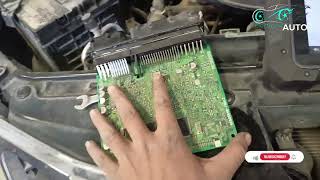
For most vehicles, a P0605 code is a serious indicator of a failed engine computer. However, on 2009 and newer Nissans, including the Altima, there is a well-documented, non-intuitive cause. A technical service bulletin (NTB13039 / EL13-008) reveals that an improperly adjusted or faulty ASCD (cruise control) brake switch can incorrectly trigger the P0605 code. The ECM performs a self-check and sees a signal from the brake switch that contradicts other sensor data (e.g., seeing a brake signal when the vehicle is accelerating), logging this illogical state as an internal fault. This makes checking the brake switch the critical first step, potentially saving you from a very expensive 🎬 Watch: Understanding the P0605 code and why it triggers and unnecessary ECM replacement.
Diagnostic Flowchart
Tap your situation to follow the diagnostic path that matches what you're seeing on this vehicle.
Generation note: The 2009-2013 year range covers the end of the fourth generation (2007-2012) and the first year of the fifth generation (2013) Altima. The key issue related to the ASCD brake switch and TSB NTB13039 applies to all Nissans from 2009 onward, covering both generations in this range.
Symptoms You May Notice
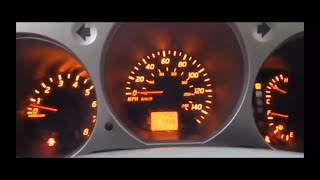
- Check Engine Light is on
- Cruise control does not set or work
- "CRUISE" indicator may stay on while the "SET" indicator flashes
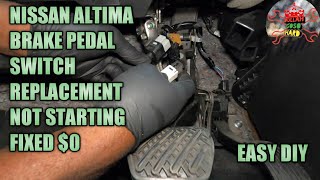
- Vehicle may not start with push-button ignition, or requires excessive brake pedal force to start 🎬 See how to fix a no-start issue for free
- Engine may stall, hesitate, or not start
- Transmission may not shift properly
- Illuminated ABS or Traction Control light
- Replacing the ECM without first checking the ASCD brake switch adjustment and operation as per TSB NTB13039.
Most Likely Causes
- Improperly Adjusted or Faulty ASCD Brake Switch 🔴 High Probability → Shop Combination Switch Nissan issued Technical Service Bulletin NTB13039 specifically identifying this as a cause for P0605 on all 2009+ models. The ECM misinterprets the switch signal as an internal fault. Numerous owner forums corroborate this as the most common fix.
How to confirm: Inspect the ASCD brake switch (often the lower switch with a brown connector) located at the top of the brake pedal. Check for proper clearance and electrical operation. A professional scan tool like CONSULT-II can monitor the "BRAKE SW 1" status in real-time. The switch should have its plunger slightly depressed when the pedal is at rest.
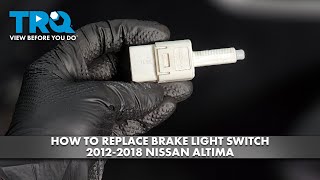
Typical fix: Adjust the switch's position by loosening its lock nuts and threading it in or out to ensure correct clearance. If the switch is faulty, it must be replaced. The typical OEM part number is 25320-JN00A. 🎬 Watch: How to replace the brake and cruise control switches
Est. part cost: $25-$60 - Poor ECM Power or Ground Connections 🟡 Medium Probability Over time, engine bay heat and vibrations can lead to corrosion or loose connections at the ECM harness or chassis ground points, causing voltage irregularities that trigger internal self-test failures.
How to confirm: Visually inspect the ECM connectors for corrosion, bent pins, or damage. Use a multimeter to verify a steady 12V+ power supply and a solid ground connection (near 0 ohms) at the appropriate ECM pins with the ignition on. Check main ground straps from the battery to the chassis and from the chassis to the engine block. For 2013 models, the ECM ground is at point E9 on the lower left side of the engine compartment.
Typical fix: Clean the connectors with an electrical contact cleaner. Repair any damaged wires or tighten loose ground bolts. Some owners have had success adding a redundant ground wire directly to the ECM case.
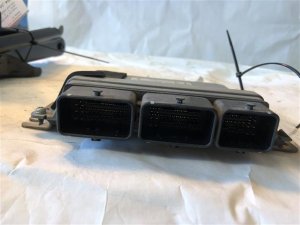
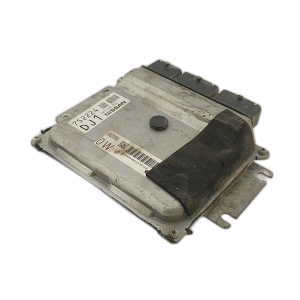
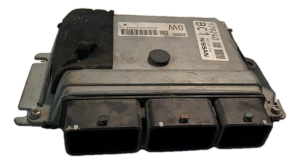
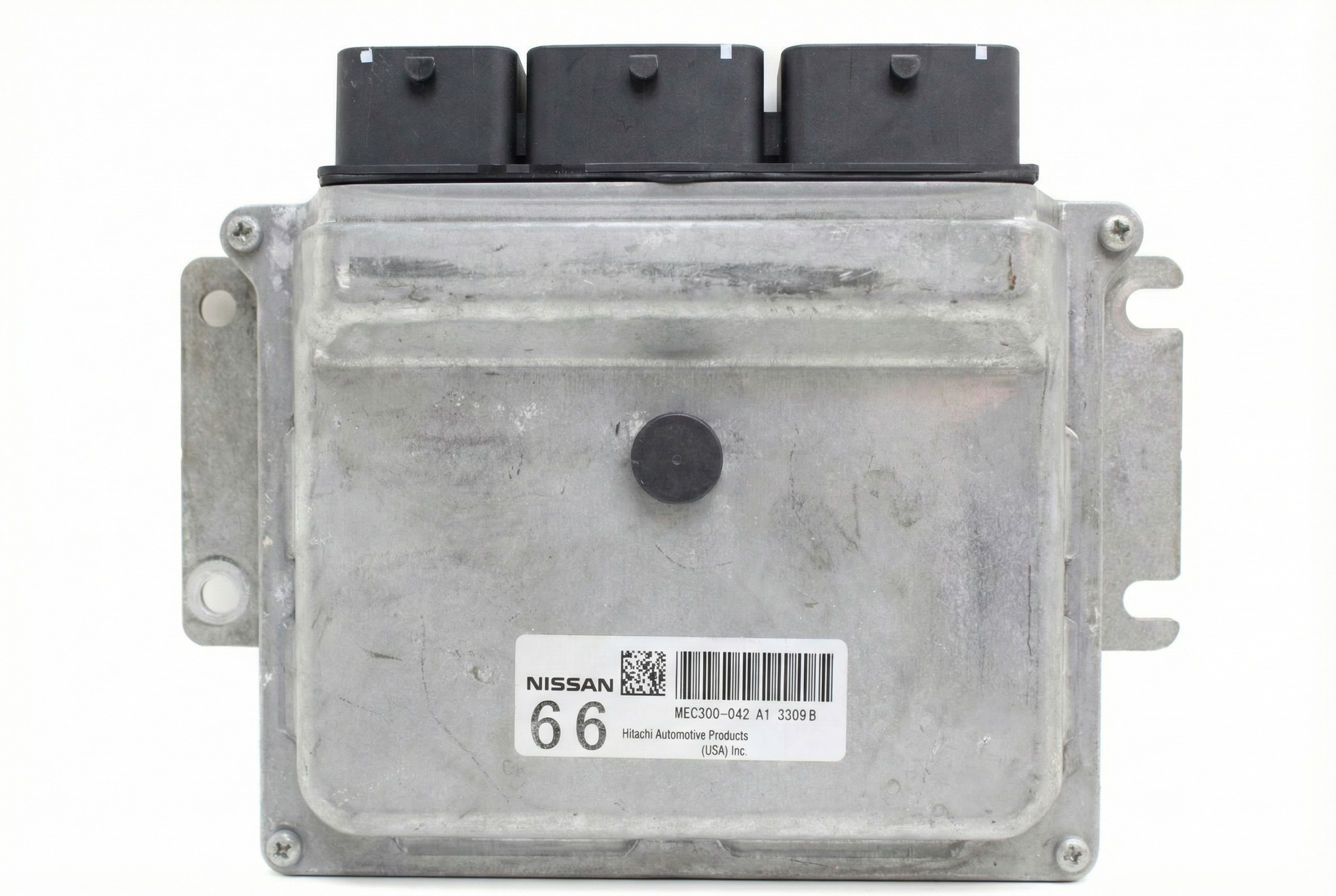
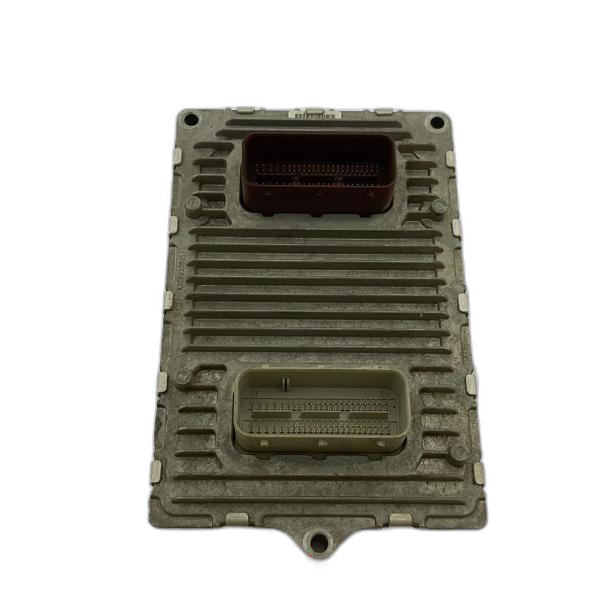
Est. part cost: $5-$20 - Failing Engine Control Module (ECM) ⚪ Low Probability → Shop Engine Control Module (ECM) While it's the textbook definition of the code, on this specific vehicle it's often not the root cause due to the TSB. However, internal component failure from age, heat, or voltage spikes can still occur, sometimes in conjunction with other codes like P0222.
How to confirm: This is a diagnosis of exclusion. If the ASCD brake switch, wiring, power, and grounds are all confirmed to be good, the ECM itself is the likely culprit.
Typical fix: Replace the ECM. The replacement unit must be programmed with the vehicle's specific VIN and key information using specialized tools like Nissan CONSULT.
Est. part cost: $200-$800 (Remanufactured)
Rare But Worth Checking
- Low Battery Voltage or Failing Alternator: → Shop Alternator A weak battery or faulty charging system can cause voltage drops or spikes during startup that may lead to various module errors, including P0605. It's a simple and important check before diving into more complex diagnostics.
Diagnosis Steps
- Scan the vehicle for all stored trouble codes. Note if P0605 is the only code or if others are present.
- CRITICAL: Immediately investigate Nissan TSB NTB13039 / EL13-008. Locate the ASCD brake switch (typically the lower switch with a brown connector) on the bracket above the brake pedal.
- Check the adjustment of the ASCD brake switch. Ensure the plunger is slightly depressed when the brake pedal is not being touched. Adjust by loosening the lock nuts and turning the switch body.
- Test the electrical function of the ASCD switch. Use a multimeter or a scan tool (like CONSULT-II in 'DATA MONITOR' mode for 'BRAKE SW 1') to confirm it sends the correct on/off signal when the brake pedal is pressed and released.
- If the switch adjustment and function are correct, proceed to inspect the ECM wiring harness. Check for any signs of corrosion, damage, or loose pins at the connectors.
- Verify the ECM has a stable power supply (12.6V+ key off, 14V+ running) and a clean, tight ground connection (near 0 ohms resistance). For 2013 models, check ground point E9 in the engine compartment.
- Test the battery and charging system to rule out low voltage as a cause.
- If all the above steps do not resolve the issue, the ECM is likely faulty and requires replacement and programming.
Parts You'll Likely Need
- ASCD Brake Switch / Cruise Control Switch
(OEM #25320-JN00A)— This is the most likely cause of P0605 on a 2009-2013 Altima, as identified by Nissan's own service bulletin (NTB13039).
Trusted brands: Nissan OE, Hitachi, Standard Motor Products
OEM price range: $40-$70
Aftermarket price range: $25-$50 - Engine Control Module (ECM) — This is the fix if all other possibilities, especially the ASCD brake switch, have been ruled out. It is the component that has logged the internal error.
Trusted brands: Nissan OE, Hitachi, Flagship One (Remanufactured), Dorman (Remanufactured)
OEM price range: $600-$900
Aftermarket price range: $200-$500 (Remanufactured)
Related Codes That Often Appear With This One
- P0222 — In some cases, internal ECM faults can also affect the throttle position sensor circuits, leading to codes like P0222 (Throttle/Pedal Position Sensor/Switch 'B' Circuit Low).
- P0504 — This code for 'Brake Switch A/B Correlation' indicates a mismatch between the two brake switch circuits. While not always present with P0605, it points directly to the same area of concern: the brake pedal switches and their adjustment.
Technical Service Bulletins (TSBs) & Recalls
- NTB13039 / EL13-008: "CRUISE CONTROL WILL NOT SET AND DTC P0605 IS STORED". This bulletin is the primary source for the most common, non-obvious fix for this code on this vehicle.
Platform-Specific Known Issues
- Nissan Technical Service Bulletin NTB13039 explicitly states that an improperly adjusted ASCD brake switch can cause DTC P0605 to be stored. It advises checking this switch before replacing the ECM.
- Owners with push-button start models often report an intermittent no-start condition related to this issue, where the car doesn't detect the brake pedal is depressed unless it's pushed very hard. This points directly to a worn or misadjusted brake pedal switch.
Mechanic-Grade Diagnostic Values
- Battery Voltage (Key Off) — expected: 12.6 Volts or higher. Failure: Below 12.4V indicates a weak or discharged battery which can cause module errors.
- Charging System Voltage (Engine Running) — expected: 13.5 - 14.8 Volts. Failure: Voltage below 13.5V or above 14.8V indicates a faulty alternator or regulator, which can cause voltage spikes or drops.
- ECM Ground Circuit Resistance — expected: Less than 1.0 Ohm (ideally near 0). Failure: Higher resistance indicates a poor ground connection, which can cause floating voltages and module errors.
- ASCD Brake Switch Continuity — expected: Switch should show continuity (closed circuit) when the brake pedal is at rest (plunger depressed) and no continuity (open circuit) when the brake pedal is pressed (plunger released).. Failure: Switch does not change state or has high resistance when closed.
- Continuity between ECM and ASCD Switch — expected: Continuity should exist between ECM terminal 108 and ASCD brake switch terminal 2.. Failure: No continuity indicates an open circuit in the wiring harness.
Scan Tool Commands That Help
- Nissan CONSULT-II / CONSULT-III: DATA MONITOR > BRAKE SW 1 — To live-monitor the ON/OFF status of the ASCD brake switch as seen by the ECM. This is the fastest way to confirm if the switch is sending the correct signal when the brake pedal is pressed and released.
- Nissan CONSULT-III plus: Reprogramming / Blank Programming — This function is required after replacing the ECM. It downloads the correct vehicle-specific software and VIN to the new (blank) module. Failure to do this will result in a no-start condition or persistent codes.
- Nissan CONSULT-III plus: Work Support — After programming a new control module (like a CVT TCM, and potentially the ECM), additional 'Work Support' steps may be required to calibrate or initialize the new part with other vehicle systems.
Wiring & Ground Locations
- E9 — Lower left side of the engine compartment (for 2013 model).. This is a primary ground point for the ECM on the 5th generation Altima. A corroded or loose connection here can directly cause insufficient power and trigger internal self-test failures like P0605.
- E15 — Lower left side of the engine compartment (for 2013 model).. This is another key engine compartment ground point. While E9 is the direct ECM ground, poor connections at any major chassis ground can affect overall system voltage stability.
- ECM Pin 108 — At the main ECM harness connector.. This is the specific terminal on the ECM that receives the signal from the ASCD brake switch. Testing for continuity from this pin to the switch connector is a definitive way to check the integrity of that specific wire.
- ASCD Brake Switch vs. Stop Lamp Switch — Both switches are located on a bracket above the brake pedal arm.. There are two switches. The ASCD (cruise control) switch is typically the lower one with a brown connector, while the stop lamp switch is the upper one with a white connector. The TSB for P0605 specifically concerns the ASCD switch.
Real Owner Repair Stories
- NICO Club Forums (2012 Nissan Altima) — Check Engine Light with code P0605, cruise control would not set.
❌ Tried (didn't work) Clearing the code (it returned immediately).
✅ What actually fixed it Adjusting the ASCD (cruise control) brake switch. The owner loosened the two nuts, turned the switch until it was correctly positioned against the pedal arm, and retightened the nuts. The code was cleared and did not return. - dontbuynissan.wordpress.com user complaint (2009 Nissan Altima) — Service Engine Soon light, multiple codes including P0605, P0183, P2128, P1229, P0122.
❌ Tried (didn't work) Initial diagnosis was unclear due to multiple codes.
✅ What actually fixed it The dealership replaced the ECM and repaired a fuel pump wire in the main harness. This is a documented case where the ECM itself was indeed faulty, contrary to the more common brake switch issue. - YouTube video by Mad Scientist BBQ (similar Nissan platform) (2011 Nissan Juke (uses similar brake switch setup)) — Intermittent push-button start failure; car would not detect the brake pedal being depressed and would not issue a start sequence.
❌ Tried (didn't work) Pressing the brake pedal harder sometimes worked temporarily.
✅ What actually fixed it Replacing the worn-out brake light switch (part #25320-JN00A). The mechanical wear on the switch plunger prevented it from reliably sending the 'brake depressed' signal to the control unit.
When the Usual Fixes Don't Work
- While the ASCD brake switch is the most common and well-documented cause of P0605 on these Altimas, it is not the only cause. There are confirmed owner reports where the code was only resolved after replacing a faulty ECM and repairing associated wiring. In one case from 2009, a P0605 was accompanied by several other codes, and the final fix was a new ECM and a repair to a fuel pump wire in the main harness. This underscores the importance of not skipping a full electrical diagnosis (power, grounds, and wiring integrity) even when a common TSB-related fix exists.
OEM Part Supersession History
25320-JN00A→25320-JN00A (current)— This part number appears to be stable for the ASCD Brake Switch / Cruise Control Switch across many Nissan models for this era.
Heads up: Standard Motor Products (SMP) is often cited as a reliable aftermarket alternative if an OEM part is unavailable.
Model Year Variations Within This Range
- 2013: The 2013 model year, being the first of the 5th generation (L33), has documented wiring diagrams showing specific ECM ground locations in the engine compartment, such as E9 and E15. While the 4th generation (2009-2012) has similar grounding principles, these specific designators are confirmed for the 2013 model.
Helpful Videos
We Have This Part in Stock

The information in this article is provided for general reference and educational purposes only. Vehicle specifications, procedures, and part compatibility can vary by production date, trim level, and region. Always consult your vehicle's factory service manual and verify part numbers before purchasing or performing repairs. Safety-critical components such as airbags, seat belts, and braking systems should be installed by a qualified professional.
- Nissan ALTIMA:
- 🧭 Diagnostic Flowchart
- 🎬 Helpful Videos
- 🛍️ Shop This Part
- What's Unique About the 2009-2013 Nissan ALTIMA
- Symptoms You May Notice
- Most Likely Causes
- Rare But Worth Checking
- Diagnosis Steps
- Parts You'll Likely Need
- Related Codes That Often Appear With This One
- Technical Service Bulletins (TSBs) & Recalls
- Platform-Specific Known Issues
- Mechanic-Grade Diagnostic Values
- Scan Tool Commands That Help
- Wiring & Ground Locations
- Real Owner Repair Stories
- When the Usual Fixes Don't Work
- OEM Part Supersession History
- Model Year Variations Within This Range
- 🎟️ Get 5% Off