

P0606 on 2008-2016 Audi A4: ECM/PCM Processor Fault Causes and Fixes
P0606 on a 2008-2016 Audi A4 indicates a critical internal fault in the Engine Control Module (ECM). While this often means the ECM needs replacement—a costly repair requiring professional programming—the cause can sometimes be a weak battery, bad grounds, or a software glitch. Always diagnose these simpler issues before replacing the ECM.
- P0606 is a critical fault indicating a problem with the brain of your car's engine, the ECM.
- DO NOT drive the vehicle. It can stall at any time, creating a major safety risk.
- Before spending thousands on a new ECM, ALWAYS have a professional thoroughly test the battery, alternator, and all related power/ground connections.
- Check the plenum area under the windshield for water and debris, as this is a known cause of ECM failure on Audis.
What's Unique About the 2008-2016 Audi A4
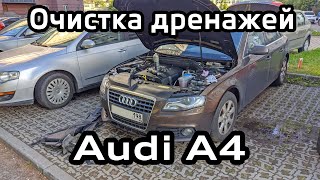
On the B8 generation Audi A4, the P0606 code is a serious issue that often does point to a failed Engine Control Module (ECM). However, these vehicles are also sensitive to low voltage conditions. A weak battery or failing alternator can sometimes trigger a false P0606 code before the ECM is correctly condemned. Additionally, like other Audis of this era, the ECM can be susceptible to damage if the plenum drains under the windshield 🎬 Watch: How to find and clean these drains to prevent damage. become clogged, allowing water to enter the electronics box, a failure mode well-documented on the similar A6 platform.
Generation note: The 2008-2016 year range covers the Audi A4 B8 generation (approx. 2008-2012) and its facelift, the B8.5 (approx. 2013-2016). The causes, symptoms, and diagnostic principles for code P0606 are consistent across both iterations of this platform.
Symptoms You May Notice
- Engine will not start or is very difficult to start 🎬 See these diagnostic tips if your car won't start.
- Engine stalls unexpectedly while driving or at idle
- Vehicle enters a reduced-power "limp mode"
- Check Engine Light is illuminated
- Other warning lights, such as ABS or EPC (Electronic Power Control), may also be on
- Erratic automatic transmission shifting
- Noticeable decrease in fuel economy
- Replacing the ECM without first testing the battery and charging system. A weak battery is a very common trigger for a false P0606.
- Replacing the ECM without checking for available software updates that might resolve the issue.
Most Likely Causes
- Internal Engine Control Module (ECM) Failure 🔴 High Probability → Shop Engine Control Module (ECM) The ECM is a complex computer that can fail due to age, heat cycles, or internal component degradation. Water intrusion from clogged plenum drains under the windshield is a known failure mode for VAG electronics, flooding the module. 🎬 Watch: See what internal water damage looks like inside an ECM.
How to confirm: This is a diagnosis of exclusion. If all other possible causes (power, ground, software) have been thoroughly tested and ruled out, the ECM itself is faulty.
Typical fix: Replace the Engine Control Module. The new unit must be programmed to the vehicle by a dealer or qualified independent shop with ODIS access to handle Component Protection.
Est. part cost: $800-$2200 - Low Battery Voltage or Charging System Fault 🟡 Medium Probability → Shop Vehicle Battery Modern control modules are highly sensitive to voltage. A weak or failing battery can provide insufficient voltage during startup or high load, causing the ECM's self-test to fail and incorrectly report an internal processor fault. One owner on AudiWorld noted a weak battery while diagnosing a P0606.
How to confirm: Perform a comprehensive starting and charging system test. Load test the battery and verify the alternator's output is stable and within the 13.5-14.5V range.
Typical fix: Replace the weak battery and/or faulty alternator. Ensure the new battery is correctly coded to the vehicle using a diagnostic tool, which is a required step on this platform.
Est. part cost: $200-$700 - Poor ECM Power or Ground Connections 🟡 Medium Probability
How to confirm: Visually inspect the main ECM power and ground wires for corrosion, looseness, or damage. Perform a voltage drop test on the power and ground circuits to ensure there is no excessive resistance between the battery, chassis, and ECM connector.
Typical fix: Clean, tighten, or repair the corroded or damaged wiring and terminals. This can include cleaning the main chassis ground points under the hood.
Est. part cost: $0-$100 - ECM Software Anomaly ⚪ Low Probability
How to confirm: A dealership or specialist shop with an authentic ODIS (Offboard Diagnostic Information System) can check if a software update or reflash is available for the ECM. Some processor faults are due to software bugs, as documented in TSBs for other manufacturers.
Typical fix: Reprogram (reflash) the ECM with the latest factory software. This must be done by a professional.
Est. part cost: $150-$300 (Labor)
Diagnosis Steps
- Read all fault codes from all vehicle modules using a VAG-compatible scan tool like VCDS or ODIS.
- Crucial First Step: Fully charge and load test the vehicle's battery. Verify the alternator is charging correctly (typically 13.5-14.5 volts). A weak power supply is a common cause of this code.
- Inspect the ECM's main power and ground connections. Check for any signs of corrosion, damage, or looseness. Perform a voltage drop test on these circuits to confirm the ECM is receiving clean power.
- Inspect the ECM housing and the plenum chamber (area under the windshield wipers) for any signs of water intrusion, debris, or corrosion. Ensure the plenum drains are clear. This is a known failure point on similar Audi platforms.
- Contact an Audi dealer or specialist to determine if there are any available software updates (reflashes) for the ECM that address a P0606 fault. While no specific TSB for the B8 A4 is widely known, software fixes for this code exist for other vehicles.
- If the battery, charging system, wiring, and software have all been confirmed to be in good working order, the Engine Control Module is almost certainly defective and requires replacement.
Parts You'll Likely Need
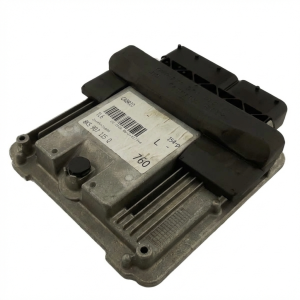
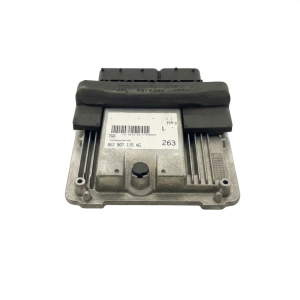
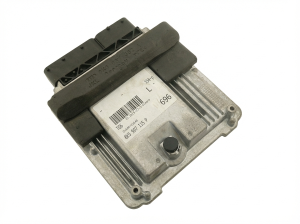
- Engine Control Module (ECM)
(OEM #Varies by VIN. Example for 2.0L CAEB is 8K5907115N or 8K5907115D. Always confirm with VIN.)— This code indicates an internal processor failure, and if all external factors are ruled out, the module itself has failed and is the only fix.
Trusted brands: Bosch (OEM supplier), Genuine Audi
OEM price range: $1200-$2200
Aftermarket price range: $800-$1500 (Remanufactured)
Related Codes That Often Appear With This One
- P060C — Stands for 'Internal Control Module Main Processor Performance,' which is a very similar fault pointing directly to an ECM internal error.
- U0100 — Stands for 'Lost Communication With ECM/PCM.' If the ECM is failing, it may stop communicating with other modules on the vehicle's network, triggering this code.
Technical Service Bulletins (TSBs) & Recalls
- GM TSB 20-NA-121: While not for Audi, it shows industry precedent for a software anomaly causing a P0606 code, supporting the diagnostic step of checking for a reflash.
- VW TSB 01 13 32: A bulletin for the VW Routan addressing P0606 with a software update, further corroborating the possibility of a software-based fix.
Mechanic-Grade Diagnostic Values
- ECM 5-Volt Reference (MED17.1) — expected: Approx. 5.0 Volts. Failure: Significantly lower or no voltage.
- Charging System Voltage — expected: 13.5 - 14.5 Volts at idle. Failure: Voltage below 13.5V or fluctuating wildly indicates a potential alternator or battery issue that can trigger a false P0606.
- Engine-to-Chassis Ground Voltage Drop — expected: Less than 0.15 Volts. Failure: A reading higher than 0.15V indicates excessive resistance in the main engine ground strap, a common failure point.
Hidden / Shadow Codes Worth Checking
- 16990 / 001542: This is the VAG-specific fault code for 'Internal Control Module: Processor Fault' that corresponds to the generic P0606. (see via A VAG-compatible scan tool such as VCDS by Ross-Tech or ODIS.)
Scan Tool Commands That Help
- VCDS (VAG-COM): Advanced Measuring Blocks (Engine - 01) — To monitor the ECM's reported voltage in real-time. Select 'Control Module Voltage' from the list to verify the ECM is seeing stable power (should be near battery voltage) while the engine is running.
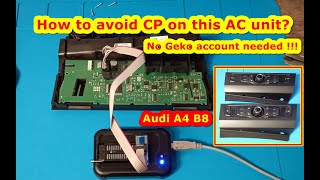
- ODIS (Official Dealer Software): Component Protection Removal — This function is mandatory after installing a new or used replacement ECM. It requires an online connection to Audi's servers (GEKO account) to authorize and adapt the module to the vehicle's immobilizer system.
Wiring & Ground Locations
- Engine Control Module (ECM) — Located in the plenum chamber (the area under the windshield wipers) inside a sealed black electronics box, typically on the driver's side of the vehicle.. This is the component that has failed. Its location makes it vulnerable to water damage if the plenum drains get clogged.
- ECM Power Relay (J271) — Often labeled as relay '645', located in the same electronics box, underneath the ECM itself.. A faulty relay can cause intermittent or no power to the ECM, mimicking an internal ECM failure.
- G11 - Plenum Chamber Ground — A ground stud located in the plenum chamber, to the right of the battery.. This is a primary ground point for components in the plenum, including potentially the ECM. Corrosion here due to moisture can cause voltage issues.
- Primary Chassis Grounds — Key grounds include G104 (transmission-to-chassis), G105 (engine block-to-firewall), and G106/G107 in the left/right engine bay.. Degradation of any of these main grounds can cause unstable voltage across the entire electrical system, confusing sensitive modules like the ECM.
- Plenum Drains — Rubber grommets located in the corners of the plenum chamber, with one often hidden under the battery tray.. These drains clog with leaves and debris, causing rainwater to fill the plenum chamber and flood the ECM electronics box, a primary cause of P0606.
Model Year Variations Within This Range
- 2008-2016: While the B8 (2008-2012) and B8.5 (2013-2016) platforms are very similar, the specific Bosch ECM hardware may vary (e.g., MED17.1, MED17.5, etc.). It is critical to match the replacement ECM part number exactly to the original. However, the diagnostic process and the requirement for Component Protection removal after replacement are consistent across all years.
Diagnostic Flowchart
Other Known Issues on This Vehicle
Issues unrelated to this code that are worth knowing about as an owner of this generation:
- 2.0T TFSI Excessive Oil Consumption 🔴 High — Very common on 2009-2011 models. Caused by faulty piston rings and/or a crankcase pressure regulating valve (PCV). Can consume over 1 quart per 1,000 miles. (Ref: TSB 17 13 42 (formerly 101103) was issued, and a class-action lawsuit followed. The fix involves an oil consumption test, then potential replacement of the PCV, crank seal, and ultimately pistons and rings.)
- 2.0T Timing Chain Tensioner Failure 🔴 High — A critical issue where the timing chain tensioner can fail without warning, allowing the chain to jump teeth and cause catastrophic engine damage. Affects a wide range of model years within the B8 generation. (Ref: No recall, but multiple class-action lawsuits led to a settlement extending the warranty for this specific component to 10 years/100,000 miles for affected vehicles.)
- Intake Valve Carbon Buildup 🟠 Medium — Inevitable on all direct-injection engines like the 2.0T. Symptoms like misfiring, rough idle, and reduced power typically appear between 60,000-80,000 miles. (Ref: No TSB, as this is considered a maintenance item. The fix is a manual or walnut-shell media blasting cleaning of the intake ports and valves.)
- Plastic Water Pump Failure 🟠 Medium — The OEM water pump has a plastic housing that can crack or the gasket can fail, causing coolant leaks. Failure can occur at various mileages, some as early as 25,000 miles. (Ref: No recall. Symptoms include coolant smell, visible leaks (pink/green fluid), and engine overheating warnings. Aftermarket all-aluminum units are a popular upgrade.)
- Front Control Arm Bushing Wear 🟡 Low — The rubber bushings in the multi-link front suspension, especially the upper control arms, wear out, typically around 70,000-100,000 miles. (Ref: No TSB. This is a common wear-and-tear item. Symptoms include clunking/rattling noises over bumps, vague steering, and uneven tire wear.)
Used vs. New Parts: Buying Guide for This Vehicle
When a used part is the smart pick: A used ECM is a viable and cost-effective option ONLY if you use a specialized cloning service. A used ECM cannot be simply installed in the vehicle due to an anti-theft system called 'Component Protection'.
Donor-vehicle mileage cap: roughly under 120000 miles for the part to have meaningful remaining life.
What to inspect on the donor part:
- The part number on the donor ECM MUST exactly match the part number on your original ECM.
- Ensure the donor ECM comes from a vehicle that was not involved in a flood or fire.
- Verify with the seller that the donor module was able to communicate with a scan tool before removal; a non-communicating module may not be cloneable.
OEM-only on this vehicle (don't cheap out):
- While the physical ECM can be a used part, the programming to remove Component Protection must be done with official Audi tools (ODIS online) or bypassed via a professional cloning service. There is no aftermarket workaround for this security feature.
Aftermarket brands forum-validated for this vehicle:
- Bosch (OEM Supplier)
- Professional ECU Cloning Services (e.g., Bimmerscan, various eBay vendors)
Brands owners have reported issues with on this vehicle:
- Avoid any seller offering a 'plug-and-play' used ECM without requiring you to send in your original module for data transfer. For this platform, it will not work due to Component Protection. Swapping only the EEPROM chip is also not a valid solution for MED17 ECUs as immobilizer data is stored elsewhere in the processor.
Real Owner Stories
Aggregated from forums and TSBs cited above. Mileages and costs reflect what owners reported in those sources.
2013 Audi A4
Symptoms: Owner was quoted for an ECM replacement due to internal faults.
What fixed it: ECM replacement (noted as a high-cost dealer repair).
Cost: $2700-$2700
Source hint: AudiWorld Forums - 'Possible to Replace ECU/ECM' (2017)
Audi A4 (B6 platform principles)
Symptoms: Random P0606 codes and the vehicle entering limp mode after performing MAF wiring work.
What fixed it: Replaced a weak battery as a primary diagnostic step.
Source hint: AudiWorld Forums - 'p0606 ECM/PCM Processor' (2024)
Audi A4
Symptoms: An owner reported researching the P0606 diagnostic code and finding numerous complaints and class action lawsuits regarding the issue.
What fixed it: The owner contacted the manufacturer regarding potential recalls and technical service bulletins for the P0606 fault.
Source hint: NHTSA ODI #10913848
Related OBD-II Codes
Frequently Asked Questions
I have a 2013 Audi A4 and the dealer quoted me a massive amount for an ECM replacement. Is this typical?
Can water intrusion cause the P0606 code on my Audi A4?
Do I need special software to program a new ECM for my 2008-2016 A4?
Could a weak battery be the reason my Audi is throwing a P0606 code?
Is there a specific Audi TSB for P0606 software updates for the B8 platform?
Does my A4 require battery coding if I replace it to fix voltage-related ECM codes?
Helpful Videos




We Have This Part in Stock

The information in this article is provided for general reference and educational purposes only. Vehicle specifications, procedures, and part compatibility can vary by production date, trim level, and region. Always consult your vehicle's factory service manual and verify part numbers before purchasing or performing repairs. Safety-critical components such as airbags, seat belts, and braking systems should be installed by a qualified professional.
- Audi A4:
- 🧭 Diagnostic Flowchart
- 🎬 Helpful Videos
- 🛍️ Shop This Part
- What's Unique About the 2008-2016 Audi A4
- Symptoms You May Notice
- Most Likely Causes
- Diagnosis Steps
- Parts You'll Likely Need
- Related Codes That Often Appear With This One
- Technical Service Bulletins (TSBs) & Recalls
- Mechanic-Grade Diagnostic Values
- Hidden / Shadow Codes Worth Checking
- Scan Tool Commands That Help
- Wiring & Ground Locations
- Model Year Variations Within This Range
- Other Known Issues on This Vehicle
- Used vs. New Parts: Buying Guide for This Vehicle
- Real Owner Stories
- 2013 Audi A4
- Audi A4 (B6 platform principles)
- Audi A4
- Related OBD-II Codes
- Frequently Asked Questions
- 🎟️ Get 5% Off