

P0606 on 2008-2017 Buick Enclave: ECM Processor Fault Causes and Fixes
This code indicates a critical Engine Control Module (ECM) processor fault. However, on the Buick Enclave and its platform mates, the issue is often a software glitch, a weak battery, or a simple electrical problem like a corroded ground (specifically the G110 ground on the engine block). Always diagnose software and electricals before replacing the expensive ECM.
- Do not immediately replace the Engine Control Module (ECM). P0606 on this vehicle is frequently caused by a software glitch that a dealer must update.
- Before any expensive repairs, fully test the battery and charging system, and clean all major power and ground connections.
- This is not a DIY repair. Replacing the ECM requires professional programming to your vehicle's VIN.
- Do not drive the vehicle. The risk of the engine stalling in traffic is high and poses a serious safety risk.
What's Unique About the 2008-2017 Buick Enclave
For GM vehicles on the Lambda platform (Enclave, Traverse, Acadia, Outlook), a P0606 code does not automatically mean the computer is fried. General Motors has issued technical service bulletins for this platform stating this code can be triggered by software anomalies requiring a reflash, not replacement. Furthermore, external issues like low battery voltage, a contaminated throttle body, or corroded ground connections—especially the G110 ground point on the engine block—are known to cause 'Reduced Power' and 'Service StabiliTrak' warnings that frequently accompany a P0606 on these vehicles.
Symptoms You May Notice
- Check Engine Light is on
- Vehicle enters 'Reduced Engine Power' or 'Limp Mode'
- Message on dash: 'Service StabiliTrak'
- Message on dash: 'Service Traction Control'
- Engine may stall unexpectedly, especially at idle
- Engine cranks but will not start
- No-crank, no-start condition
- Erratic or hard automatic transmission shifting
- Noticeable decrease in fuel economy
- Inability to communicate with the ECM using a scan tool
- Replacing the Engine Control Module (ECM) without first verifying that the battery, charging system, ground connections (especially G110), and ECM software are all in perfect condition.
- Replacing the throttle body or gas pedal assembly in response to 'Reduced Power' mode without first checking for software updates or cleaning the existing throttle body.
Most Likely Causes
- ECM Software Anomaly 🔴 High Probability GM has acknowledged that software glitches can falsely trigger a P0606 code on various models, and reprogramming the module is the official fix.
How to confirm: A GM dealership or a qualified independent shop with access to GM's Techline Connect system can check for and apply available ECM software updates. This is a common first step for any professional diagnosis.
Typical fix: Reprogramming (reflashing) the Engine Control Module with the latest software version. This is a dealer/shop-level fix and costs for this service are often reported by owners to be in the $100-$200 range.
Est. part cost: $0 - Poor Power or Ground Supply 🔴 High Probability Voltage fluctuations from a weak battery, failing alternator, or corroded ground straps are misinterpreted by the ECM as an internal fault. The G110 ground point, a multi-wire block on the passenger side of the engine, is a notoriously common failure point on the Lambda platform.
How to confirm: Test the battery's health and the alternator's output (should be 13.5-14.5V when running). Inspect battery terminals and main engine/chassis ground straps. Specifically, locate and inspect the G110 ground on the engine block for looseness and corrosion.
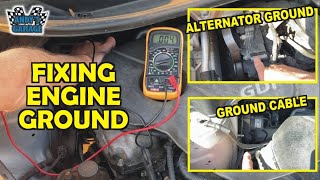
Typical fix: Clean or replace battery terminals. The most common effective repair is unbolting the G110 ground, cleaning all contact surfaces (eyelets, bolt, and engine block) with a wire brush until shiny, and re-securing it tightly. 🎬 Watch: How to find and clean engine ground connections properly. In other cases, replacing a faulty battery or alternator is necessary.
Est. part cost: $5-$400 - Failed Engine Control Module (ECM) 🟡 Medium Probability → Shop Engine Control Module (ECM) This is the default meaning of the code. Heat cycles, vibration, and age can cause the internal processor of the ECM to fail. However, it is frequently misdiagnosed.
How to confirm: This is confirmed only after ruling out all other possibilities, including software, power, grounds, and wiring. Many owners report being quoted for an ECM replacement when the actual issue was a bad ground.
Typical fix: Replace the ECM and program the new unit to the vehicle's VIN. This requires a professional. 🎬 Watch: How to properly swap the PCM on this platform. Dealer replacement can cost over $1200, while using a remanufactured part from a specialty service can be closer to $500-$800.
Est. part cost: $300-$830
Rare But Worth Checking
- Damaged Wiring Harness: A TSB for related GM platforms (21-NA-149) warns that the engine harness can chafe against brackets, causing shorts that mimic a failed ECM. Inspect the harness near the ECM and where it routes around the engine and under the fuse block.
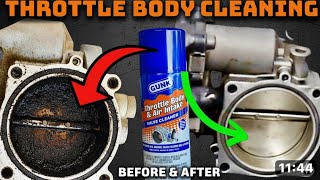
- Dirty or Failing Throttle Body: On the 3.6L V6, a contaminated throttle body is a known cause of 'Reduced Power' and 'Service StabiliTrak' warnings (per TSB PI0746E). While not a direct cause of P0606, the symptoms are identical, and many owners report that cleaning the throttle body resolves the drivability issues. 🎬 See this guide on cleaning the throttle body the right way.
- Faulty Camshaft Position Sensor Circuit: → Shop Engine Camshaft Position Sensor GM TSB #17-NA-132 warns that an open circuit in a camshaft position sensor can cause a P0606 to set during cranking before the specific cam sensor code has a chance to log. This is a known misdiagnosis trap, leading to unnecessary ECM replacement.
Diagnosis Steps
- Perform a full vehicle scan to check for any other stored DTCs, especially communication (U-series) and voltage (P05xx) codes.
- Check the battery and charging system. The battery must pass a load test, not just a voltage check. Ensure the alternator provides stable voltage (13.5-14.5V) under load.
- Thoroughly inspect the battery terminals and cables for corrosion, which can hide under the insulation.
- Inspect Critical Ground G110: Before suspecting the ECM, locate the G110 ground block on the passenger side of the engine, near the transmission dipstick. It's a black plastic block with multiple wires bolted to the engine. Unbolt it, and thoroughly clean the eyelets, the bolt, and the mounting surface on the engine block with a wire brush until shiny. This is a very common and often overlooked fix reported in owner forums.
- Contact a GM dealer or qualified shop to check for any available ECM software updates or relevant Technical Service Bulletins (TSBs). If an update is available, have the ECM reprogrammed.
- Inspect the throttle body for carbon buildup. If dirty, clean it thoroughly with a dedicated throttle body cleaner.
- If the issue persists, carefully inspect the wiring harness leading to the ECM for any signs of chafing, melting, or rodent damage, paying attention to where it routes near brackets.
- If all wiring, power, grounds, and software are confirmed to be good, the ECM itself likely has an internal fault and requires replacement.
Parts You'll Likely Need
- Engine Control Module (ECM)
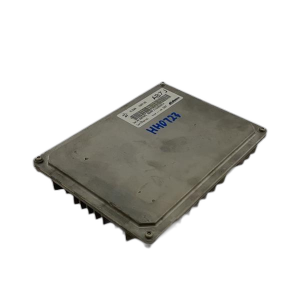
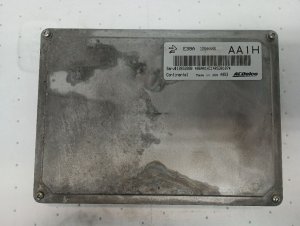
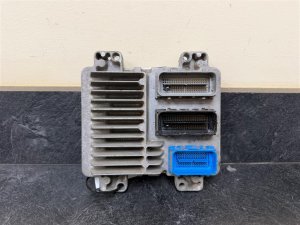
(OEM #12617230, 12636355, 12643248, 12653998)— This is the part that has failed if all other diagnostic steps (software, wiring, grounds) do not resolve the issue. Part numbers vary by model year and specific vehicle options; always verify with VIN. For example, 12617230 is common on 2008 LY7 models, while 12636355 is common on 2009-2011 LLT models, and 12653998 is for later models.
Trusted brands: ACDelco (OEM), Cardone (Remanufactured), Standard Motor Products
OEM price range: $500-$830
Aftermarket price range: $300-$550 - Engine Ground Strap
(OEM #N/A)— While cleaning the existing grounds is usually sufficient, if a ground strap is heavily corroded or broken, it will need to be replaced. This is a low-cost part.
Trusted brands: ACDelco, Dorman
OEM price range: $15-$40
Aftermarket price range: $10-$25
Related Codes That Often Appear With This One
- P0601, P0602, P0603, P0604 — These are all internal control module memory or processor error codes, often grouped with P0606 in diagnostic procedures.
- U0100 — This indicates a loss of communication with the ECM. If the ECM is failing or has lost power/ground (like the G110 ground), it can stop communicating with other modules on the vehicle's network.
- P0562, P0563 — System Voltage Low (P0562) or High (P0563) codes strongly suggest the P0606 is being triggered by a battery or alternator problem, not an actual ECM failure.
Technical Service Bulletins (TSBs) & Recalls
- TSB #17-NA-132: Warns that an open in the camshaft position sensor circuit can falsely set a P0606 code during cranking. A critical bulletin to prevent misdiagnosis.
- TSB PI0746E (Related Platform): Discusses throttle body contamination causing 'Reduced Power' and 'Service StabiliTrak' messages, which are commonly associated with P0606.
- TSB 21-NA-149 (Related Platform): Details how engine harness chafing can cause shorts and a wide range of DTCs, including P0606, mimicking a failed ECM.
- GM Software Update TSBs (e.g., #08-06-04-037D): Multiple bulletins exist for various GM models instructing technicians to reprogram the ECM for various drivability issues, which can include false P0606 codes.
- TSB Bulletin #05-06-04-060A: This informational bulletin provides guidance to technicians on control module DTCs, including P0606, which can be shared across multiple modules.
Platform-Specific Known Issues
- A GM service bulletin exists that directly addresses P0606 being caused by a software anomaly, instructing technicians to reprogram the ECM instead of replacing it.
- The 3.6L V6 is known for throttle body contamination which can trigger 'Reduced Power' mode, a symptom often seen with P0606.
- The G110 ground point on the engine block is a well-documented failure point across the entire GM Lambda platform, causing a host of electrical issues that can manifest as code P0606.
Mechanic-Grade Diagnostic Values
- Battery Voltage (Key Off, Static) — expected: 12.4V - 12.6V. Failure: Below 12.4V indicates a discharged or failing battery which can cause spurious module faults.
- Charging System Voltage (Engine Running) — expected: 13.5V - 14.5V. Failure: Voltage below 13.5V or above 14.5V, or fluctuating wildly, points to a faulty alternator or voltage regulator.
- ECM Ground Circuit Voltage Drop — expected: < 0.1 Volts (100 mV). Failure: A reading higher than 0.1V between an ECM ground pin and the negative battery terminal indicates high resistance in the ground circuit, a common cause of P0606.
- ECM Power Pin Voltage (Key On) — expected: Battery Positive Voltage (B+). Failure: Voltage significantly lower than battery voltage points to a wiring problem (high resistance) between the fuse block and the ECM.
- 5-Volt Reference Circuit at a Sensor — expected: ~5.0 Volts. Failure: A reading of 0V or significantly less can indicate a shorted sensor or wiring, which can sometimes overload the ECM and trigger a P0606.
Scan Tool Commands That Help
- GDS2 / Tech2: SPS (Service Programming System) — Used to check for and apply software updates to the ECM. This should be a primary diagnostic step, as a reflash is a common GM-recommended fix for a false P0606.
- GDS2 / Tech2: Clear All DTCs — After addressing a potential cause like a low battery or a bad ground, a full module clear is necessary. Some TSBs note that simply disconnecting the battery may not clear a P0606 set in certain modules like the EBCM.
- GDS2: Module Replacement/Setup — This function is required after installing a new ECM. It programs the vehicle's VIN and security information into the blank module, allowing it to communicate with other vehicle systems.
Wiring & Ground Locations
- G110 — Right (passenger) front of the engine, mounted to the cylinder head. Often described as being near the transmission dipstick tube.. This is a major ground point for multiple engine components and is a widely documented failure point on the Lambda platform. Corrosion or looseness here directly causes voltage instability for the ECM, triggering a false P0606.
- G103 — Left (driver) side of the engine compartment, on the inner fender panel or cowl, sometimes above the brake booster.. This is a key ground for the BCM, instrument panel, and DLC. A fault here can cause communication issues that may be misinterpreted or accompanied by a P0606.
- G105 — Rear of the engine compartment, on the left middle of the instrument panel bulkhead (firewall).. Another chassis ground point that ensures the electrical system is stable. All major grounds in the engine bay should be inspected.
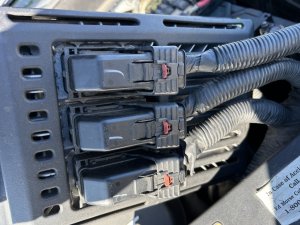
- ECM Connector X1 — This is one of the main connectors on the Engine Control Module. On some GM models, connectors are color-coded; X1 may have a blue Terminal Position Assurance lock.. This connector contains the primary power and ground pins for the ECM. Pin 19 (PK wire) and Pin 20 (RD/WH wire) are often the Ignition 1 Voltage and Battery Positive Voltage feeds, respectively. These are the pins to test for correct voltage.
Real Owner Repair Stories
- enclaveforum.net user (2008-2012 Buick Enclave (Lambda Platform)) — Check Engine Light, 'Service Stabilitrak', 'Service Traction Control', 'Engine Power is Reduced' messages, and P0606 code.
❌ Tried (didn't work) Replacing the gas pedal assembly, Replacing the throttle body, Initial diagnostics pointing towards ECM replacement
✅ What actually fixed it Locating the G110 ground on the passenger side of the engine block, unbolting it, cleaning all wire eyelets and the mounting surface with a wire brush until shiny, and re-securing the bolt tightly. The problem was a corroded ground connection, not a failed ECM.
Model Year Variations Within This Range
- 2008: The 2008 model year used the port-injected 3.6L LY7 engine. This engine has a different compression ratio (10.2:1) and internal components compared to the later LLT.
- 2009-2017: These models use the direct-injection 3.6L LLT V6 (later transitioning to the similar LFX). The LLT has a higher compression ratio (11.3:1) and introduces high-pressure fuel system components. The ECMs are also different; early models often used a Bosch ECM, while later models (around 2012+) transitioned to a Delphi-made ECM (like the E39A), which are not interchangeable.
- 2013+: The primary diagnostic tool for these later models shifted from the Tech2/Tech2Win platform to the modern GDS2 (Global Diagnostic System 2) software.
Diagnostic Flowchart
Real Owner Stories
Aggregated from forums and TSBs cited above. Mileages and costs reflect what owners reported in those sources.
2010 Buick Enclave CXL
Symptoms: Traction Control/Stabilitrak/Reduced Engine Power Warning on Cluster. Was getting codes: P0121, P2176, P2119, P1638, P2176.
What fixed it: Replaced the electronic throttle body and performed a full relearn.
Source hint: Reddit r/MechanicAdvice
2008 Buick Enclave
Symptoms: P0606 ECM/PCM Processor Fault Code triggered, and the dealer misdiagnosed it as a failed ECM requiring replacement.
What fixed it: Cleaned the G110 ground point on the engine block.
Source hint: enclaveforum.net - Thread: '2008 P0606 ECM/PCM Processor Fault Code'
GMC Acadia (Platform Mate)
Symptoms: Reduced Power mode activated along with 'Stabilitrak/Traction Control Off' messages and a P0606 code.
What fixed it: Replaced the battery, cleaned the battery terminals, and addressed the main engine ground strap (G110).
Source hint: acadiaforum.net - Thread: 'Reduced Power, Stabilitrak/Traction Control Off, P0606'
Related OBD-II Codes
Frequently Asked Questions
Does TSB #17-NA-132 apply to my Buick Enclave for code P0606?
Why is my Enclave displaying 'Service StabiliTrak' and 'Reduced Engine Power' along with a P0606 code?
Where is the G110 ground point located on the 3.6L engine?
Can a weak battery cause a P0606 code on the 2008-2017 Enclave?
Is there a software update to fix the P0606 code on my Enclave?
Could engine harness chafing cause a P0606 on my vehicle?
Helpful Videos
We Have This Part in Stock

The information in this article is provided for general reference and educational purposes only. Vehicle specifications, procedures, and part compatibility can vary by production date, trim level, and region. Always consult your vehicle's factory service manual and verify part numbers before purchasing or performing repairs. Safety-critical components such as airbags, seat belts, and braking systems should be installed by a qualified professional.
- Buick Enclave:
- 🧭 Diagnostic Flowchart
- 🎬 Helpful Videos
- 🛍️ Shop This Part
- What's Unique About the 2008-2017 Buick Enclave
- Symptoms You May Notice
- Most Likely Causes
- Rare But Worth Checking
- Diagnosis Steps
- Parts You'll Likely Need
- Related Codes That Often Appear With This One
- Technical Service Bulletins (TSBs) & Recalls
- Platform-Specific Known Issues
- Mechanic-Grade Diagnostic Values
- Scan Tool Commands That Help
- Wiring & Ground Locations
- Real Owner Repair Stories
- Model Year Variations Within This Range
- Real Owner Stories
- 2010 Buick Enclave CXL
- 2008 Buick Enclave
- GMC Acadia (Platform Mate)
- Related OBD-II Codes
- Frequently Asked Questions
- 🎟️ Get 5% Off