

P0606 on 2007-2014 Cadillac Escalade ESV: ECM/PCM Processor Fault Guide
P0606 on a 2007-2014 Escalade ESV almost always means the main engine computer (ECM/PCM) has failed. Before replacing it, thoroughly inspect all power and ground wires to the module, especially the main grounds on the engine block and frame, as poor connections are a common issue on this platform. A replacement ECM must be professionally programmed.
- P0606 is a critical fault indicating the Engine Control Module (ECM) has failed its internal self-test.
- Before replacing the expensive ECM, you MUST thoroughly inspect, clean, and tighten all major power and ground connections, as this is a very common point of failure on GMT900 trucks.
- A replacement ECM is not 'plug-and-play'; it requires professional programming to your vehicle's VIN and security system.
- Check if your vehicle is still covered under the 8-year/80,000-mile Federal Emissions Warranty, as it may cover the ECM replacement cost.
What's Unique About the 2007-2014 Cadillac ESCALADE ESV
The 2007-2014 Escalade ESV belongs to the GMT900 platform, which uses a sophisticated E38 or E67 ECM. These trucks are known for robust V8 engines but are highly susceptible to electrical issues as they age, particularly poor ground connections. A bad ground on the engine block, frame, or firewall can cause voltage fluctuations that mimic an internal ECM failure, triggering a false P0606. A GM Technical Service Bulletin (TSB #05-06-04-060A) acknowledges that processor fault codes like P0606 are a known issue across many GM control modules and require careful diagnosis before replacing parts. Another TSB, #08-07-30-021H, specifically addresses loss of communication from corroded harnesses on these trucks, which can present similar symptoms.
Diagnostic Flowchart
Tap your situation to follow the diagnostic path that matches what you're seeing on this vehicle.
Symptoms You May Notice
- Check Engine Light is on
- "Reduced Engine Power" message on the dashboard, often with complete loss of throttle response
- Engine may not start or is difficult to start, may crank but not fire
- Vehicle stalls unexpectedly while driving or at idle
- Erratic or harsh automatic transmission shifting
- Cooling fans running constantly, even with the engine off
- Unexplained decrease in fuel economy
- ABS or Traction Control lights may also illuminate
- Erratic gauge behavior or flashing dash lights
- Replacing sensors (like throttle body, O2 sensors, or MAF sensor) because of other codes that appear alongside P0606. The P0606 indicates the computer itself is faulty, 🎬 See this guide on how to diagnose ECM processor errors. which can cause it to misinterpret good sensor data and set false secondary codes.
- Immediately replacing the ECM without first thoroughly checking and cleaning all major ground connections on the engine and chassis. A bad ground is a very common cause of P0606-like symptoms on these trucks.
Most Likely Causes
- Faulty Engine Control Module (ECM/PCM) 🔴 High Probability → Shop Engine Control Module (ECM) The E38 and E67 ECMs used in GMT900 trucks are known to fail from thermal stress and vibration over time. Internal solder joints on the processor can crack, causing intermittent connections, especially when the engine is cold.
How to confirm: This is a process of elimination. After verifying all power, ground, and communication circuits to the ECM are intact and functioning correctly, the module itself is condemned. A professional may use advanced diagnostics to confirm the internal fault.
Typical fix: Replace the ECM and program the new unit to the vehicle. Services exist that sell pre-programmed or 'cloned' ECMs.
Est. part cost: $430-$750 - Poor ECM/PCM Power or Ground Circuits 🟡 Medium Probability GMT900 trucks are notorious for developing corrosion on key ground points. The main PCM ground is a small wire on the back of the passenger-side cylinder head that is prone to breaking. Other critical grounds are located on the frame under the driver's door and on the radiator core support.
How to confirm: Use a multimeter to perform a voltage drop test on the ECM's main power and ground wires. Visually inspect and physically check the ground points on the back of the cylinder heads (G103, G104), the frame rail, and the firewall for corrosion or looseness. A bad battery or failing alternator can also cause unstable voltage and trigger this code.
Typical fix: Remove, clean, and secure the corroded ground connections. Apply dielectric grease to prevent future corrosion. Repair any broken ground wires.
Est. part cost: $5-$50 - Corroded or Damaged Wiring/Connectors ⚪ Low Probability The large engine bay and exposure to elements can lead to degradation of the wiring harness or the connectors at the ECM over time. Pins can become corroded, bent, or back out of the connector.
How to confirm: Visually inspect the wiring harness leading to the ECM for any signs of chafing, melting, or physical damage. Disconnect the battery, then unplug the ECM connectors (X1 and X2) and check for green or white corrosion, bent pins, or pins that are not fully seated.
Typical fix: Repair the damaged section of the harness or clean/replace the affected connector pins using a specific terminal tool.
Est. part cost: $20-$100
Rare But Worth Checking
- Software Glitch or Failed Re-flash: As mentioned in TSB #05-06-04-060A, some control module issues can be software-related. It's worth checking with a dealer if a re-flash or software update is available before replacing the hardware. A P0606 can also appear after a custom tune or if a battery is disconnected and reconnected improperly, not allowing the ECM's self-shutoff procedure to complete.
- Federal Emissions Warranty Coverage: The ECM/PCM is a major emissions component and may be covered under the Federal Emissions Warranty for 8 years or 80,000 miles, whichever comes first. It is worth calling a dealership with your VIN to check for coverage before paying for a repair.
Diagnosis Steps
- Scan the vehicle for all stored Diagnostic Trouble Codes (DTCs). Note any other codes present besides P0606.
- Check Battery and Charging System: Ensure the battery is fully charged (above 12.4V) and have it load tested. With the engine running, use a multimeter to check alternator output at the battery terminals (typically 13.5V-14.5V).
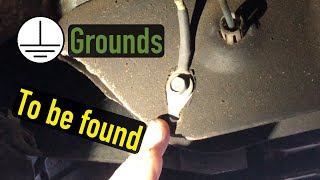
- Inspect Main Grounds: Disconnect the battery. Locate, disassemble, clean, and re-secure the critical ground points. Key locations on GMT900s include: 🎬 Watch: Where to find and identify all V8 wiring grounds. G103 (front of passenger-side cylinder head), G104 (rear of driver-side cylinder head), G100/G101 (radiator core support), and frame grounds.
- Inspect ECM Connectors: With the battery still disconnected, unplug the ECM connectors. Visually inspect for any signs of damage, corrosion (green/white powder), or loose pins. Clean with electrical contact cleaner if necessary.
- Check for TSBs and Software Updates: Contact a GM dealer with your VIN to see if any software updates or relevant TSBs (like 05-06-04-060A or 08-07-30-021H) apply to your vehicle.
- Verify Power and Ground at the ECM: Using a wiring diagram for your specific vehicle, use a multimeter to confirm the ECM is receiving proper battery voltage on pin X1-20 and ignition voltage on pin X1-19, and has a solid ground connection on all specified low-reference pins.
- Condemn the ECM: If all wiring, power, and grounds are confirmed to be good, and no software update is available, the ECM is almost certainly faulty and needs to be replaced and programmed.
Parts You'll Likely Need
- Engine Control Module (ECM/PCM)
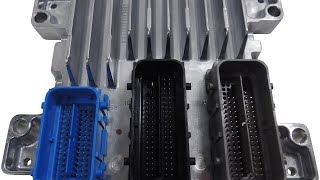
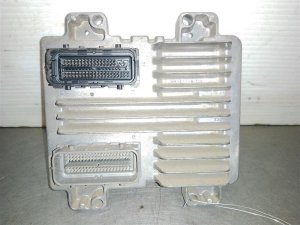
(OEM #Varies by year/VIN. Common ACDelco part numbers include 12633238, 12612384, 12609098. The specific ECM is a GM E38 or E67 type.)— This code indicates an internal failure of the module itself. In most cases, after ruling out external factors like wiring, the module must be replaced.
Trusted brands: ACDelco (OEM), Cardone (Remanufactured), FS1 (Flagship One)
OEM price range: $500-$750
Aftermarket price range: $430-$600
Related Codes That Often Appear With This One
- P0601, P0602, P0603, P0604 — These are all internal control module memory or processor error codes. Their presence alongside P0606 strongly indicates a failed ECM.
- U-series codes (e.g., U0100) — These are communication codes. A failing ECM can disrupt communication on the vehicle's network (CAN bus), causing other modules to report a loss of communication with the ECM.
- P0300 (Random Misfire) — A failing ECM can lose control of spark or fuel injector timing, leading to misfires that may seem random across cylinders.
Technical Service Bulletins (TSBs) & Recalls
- 05-06-04-060A: Communicates information to technicians on control module Diagnostic Trouble Code(s) (DTC)(s) including P0606, which can be shared in multiple modules. It advises technicians to understand which module set the code before replacing it.
Platform-Specific Known Issues
- Intermittent No-Start Due to Cold Solder Joints: Owners of GMT900 trucks report a common failure pattern where the vehicle cranks but won't start when the engine is cold. After waiting 10-15 minutes, it may start and run perfectly. This is often attributed to cracked solder joints on the ECM's main processor that lose contact when cold and expand to make contact as the engine bay heats up.
- Critical Engine Ground Wire Failure: A well-documented issue on these trucks is the failure of the main PCM ground wire, which is a small black wire with a white stripe attached to the rear of the passenger-side cylinder head. This wire is difficult to see and can break at the ring terminal due to vibration, causing a host of bizarre electrical issues, including a P0606 code and reduced power mode.
Mechanic-Grade Diagnostic Values
- Battery Voltage (Key Off, Engine Off) — expected: ~12.6 Volts. Failure: Voltage below 12.4V indicates a discharged or weak battery that can cause spurious codes during cranking.
- Charging System Voltage (Engine Running at Idle) — expected: 13.5 - 14.5 Volts. Failure: Voltage below 13.5V or above 14.5V, or fluctuating wildly, indicates a faulty alternator or voltage regulator which can cause unstable power to the ECM.
- ECM Battery Power at Connector — expected: 12V+ (Battery Voltage). Failure: Significantly lower voltage or no voltage indicates a wiring or fuse block issue.
- ECM Ignition Power at Connector — expected: 12V+ (With Key in ON position). Failure: No voltage indicates a problem with the ignition switch signal or related fuse.
Scan Tool Commands That Help
- GM GDS2/Tech2 with MDI/MDI2: Service Programming System (SPS) — This function is required after installing a new or refurbished ECM. It downloads the correct software and VIN to the module, without which the engine will not start due to the vehicle anti-theft system (VATS).
- Professional Scan Tool: Security System Relearn (Key Relearn) — After programming a new ECM, a security relearn procedure is often necessary to synchronize the new module with the vehicle's existing keys and BCM.
- Professional Scan Tool: Crankshaft Position Variation Relearn — This may be required after ECM replacement to calibrate the new module to the specific crankshaft position sensor signal to ensure accurate misfire detection. Failure to do so may set a P0315 code.
Wiring & Ground Locations
- G103 — On the front of the passenger-side cylinder head.. This is a primary engine ground and is frequently cited as a point of failure due to corrosion or breakage, directly impacting ECM stability.
- G104 — On the rear of the driver-side cylinder head.. Another critical engine-to-chassis ground point that ensures a stable reference for the ECM and other engine sensors.
- G100 / G101 — On the lower left (G100) and lower right (G101) of the radiator core support.. These are major chassis ground points for the forward lighting and engine accessory harnesses. Poor connections here can introduce electrical noise and voltage drops.
- ECM Connector X1, Pin 20 — The black 73-way connector at the ECM. Pin 20 is a Red/White wire.. This is a main battery positive voltage feed to the ECM. A voltage drop test here can confirm if the ECM is receiving full battery power.
- ECM Connector X1, Pin 19 — The black 73-way connector at the ECM. Pin 19 is a Pink wire.. This is the Ignition 1 Voltage feed, which tells the ECM the key is on. Loss of this signal will prevent startup.
Real Owner Repair Stories
- Tahoe Yukon Forum (2007 GMC Yukon XL 2500 (GMT900 Platform)) — Intermittent crank-no-start (would click but not turn over), then would eventually start with "Reduced Engine Power" message and P0606 code.
❌ Tried (didn't work) The owner was about to replace parts before seeking advice.
✅ What actually fixed it The community consensus was that the symptoms were classic for a low voltage condition during cranking, which can trigger a false P0606. The primary advice was to load test the battery and thoroughly clean all main battery and engine ground connections before condemning the ECM. One user noted to check for corrosion that wicks up inside the cable insulation, not just at the terminals.
OEM Part Supersession History
Varies by year (e.g., 12612384, 12609098)→12633238— Standard part consolidation and updates over the production run.
Heads up: While a newer ECM may be physically compatible, it MUST be programmed with the vehicle's specific VIN and calibration file using GM's SPS. An ECM from a 2010+ L94 engine will not work in a 2007-2009 L92/L9H without correct programming for the lack of AFM, and vice-versa.
Model Year Variations Within This Range
- 2007-2008: These models used the 6.2L L92 V8 engine, which did NOT have Active Fuel Management (AFM) or Flex Fuel capability.
- 2009: This model year used the 6.2L L9H V8 engine, which added Flex Fuel capability but still did NOT have Active Fuel Management (AFM).
- 2010-2014: These models used the 6.2L L94 V8 engine, which included both Flex Fuel capability and Active Fuel Management (AFM). The addition of AFM introduces more complexity with special lifters and control solenoids that are managed by the ECM.
Helpful Videos

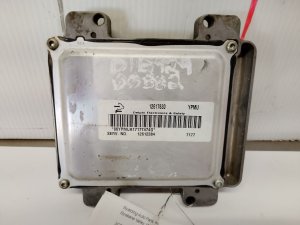
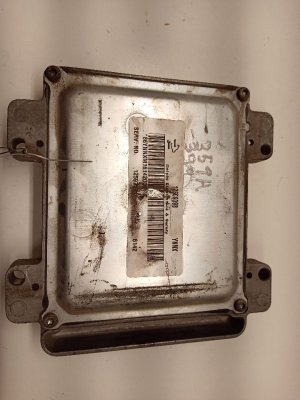
Used OEM Parts in Stock

New Aftermarket Parts Available



The information in this article is provided for general reference and educational purposes only. Vehicle specifications, procedures, and part compatibility can vary by production date, trim level, and region. Always consult your vehicle's factory service manual and verify part numbers before purchasing or performing repairs. Safety-critical components such as airbags, seat belts, and braking systems should be installed by a qualified professional.
- Cadillac ESCALADE ESV:
- 🧭 Diagnostic Flowchart
- 🎬 Helpful Videos
- 🛍️ Shop This Part
- What's Unique About the 2007-2014 Cadillac ESCALADE ESV
- Symptoms You May Notice
- Most Likely Causes
- Rare But Worth Checking
- Diagnosis Steps
- Parts You'll Likely Need
- Related Codes That Often Appear With This One
- Technical Service Bulletins (TSBs) & Recalls
- Platform-Specific Known Issues
- Mechanic-Grade Diagnostic Values
- Scan Tool Commands That Help
- Wiring & Ground Locations
- Real Owner Repair Stories
- OEM Part Supersession History
- Model Year Variations Within This Range
- 🎟️ Get 5% Off