

P0606 on 2015-2022 Cadillac Escalade ESV: Control Module Fault Causes & Fixes
P0606 on a Cadillac Escalade ESV indicates an internal processor fault in a control module, most commonly the ECM, TCM, or BCM. Before replacing any expensive modules, check for the most likely causes: a weak battery, bad ground connections, or the need for a software update, which are all documented issues for this platform.
- P0606 is a serious code indicating a processor fault in a key vehicle computer (ECM, TCM, BCM, etc.).
- DO NOT immediately replace the control module. The most common causes on the Escalade are a weak battery, bad grounds, or faulty cables.
- Always start diagnosis by testing the battery and charging system, and cleaning all main power and ground connections.
- Check for available software updates for the module that stored the code, as a reflash is a common and documented fix.
- This repair is best left to professionals due to the need for advanced diagnostic tools and module programming.
What's Unique About the 2015-2022 Cadillac ESCALADE ESV
On this generation of Escalade and its platform mates (Tahoe, Yukon), the P0606 code is frequently a symptom of other problems rather than a definitive module failure. GM has issued several bulletins acknowledging that issues like low battery voltage, poor ground connections, or software glitches can falsely trigger a P0606 code in various modules. This is different from many other vehicles where P0606 often directly condemns the ECU. For the Escalade, a thorough diagnosis of the electrical system and software status is critical before considering a costly module replacement.
Diagnostic Flowchart
Tap your situation to follow the diagnostic path that matches what you're seeing on this vehicle.
Generation note: This issue affects both the fourth generation (2015-2020 K2XX platform) and fifth generation (2021-2022 T1XX platform) Escalade ESV. TSBs have been issued that cover models in both generations, indicating shared vulnerabilities. For example, TSB #150730002A addresses TCM software on 2015 models, while TSB #PIT6347B addresses BSCM issues on 2022-2025 models. The 2021+ models use GM's new 'Global B' Vehicle Intelligence Platform (VIP), a more complex electrical architecture with higher processing power and different diagnostic protocols than the earlier 'Global A' system.
Symptoms You May Notice
- Check Engine Light (MIL) illuminated
- "Service StabiliTrak" or "Service Brake System" messages
- Harsh or firm transmission shifting
- Engine RPM flare between shifts
- Engine may stall, run rough, or fail to start
- Vehicle enters "Reduced Engine Power" mode
- Erratic electrical behavior, like flickering lights or radio issues
- Sudden loss of power steering
- Replacing the ECM immediately without checking battery, grounds, or for available TSBs. TSBs 24-NA-050 and N202307600 specifically warn against this.
- Replacing the transmission or transmission components for harsh shifting when the root cause is a TCM software issue that can be fixed with a reflash as per TSB 150730002A.
Most Likely Causes
- Low Battery Voltage or Poor Connections 🔴 High Probability → Shop Vehicle Battery These vehicles have a high electrical demand, and modules are sensitive to voltage drops, especially in cold weather. TSBs #PIT6347B and #24-NA-050 specifically link P0606 to low battery charge. Forum users frequently report that a weak battery, corroded terminals, or a bad negative battery cable is the true culprit.
How to confirm: Test the battery voltage with a multimeter; it should be above 12.4V at rest (12.6V is ideal). With the engine running, check alternator output (typically 13.5V-14.5V). Perform a voltage drop test on the main power and ground cables to check for hidden resistance, as corrosion can hide under the cable sheathing. Inspect main ground points at the firewall, cylinder head, and frame.
Typical fix: Charge or replace the battery. 🎬 Watch: How to replace the battery on this platform Clean all battery terminals and cable ends thoroughly. Inspect and tighten the main ground connections to the frame and engine block. In many cases, the OEM negative battery cable itself fails internally and requires replacement with a part like GM #84634109.
Est. part cost: $150-$350 for a high-quality AGM battery; $50-$100 for a new OEM negative battery cable. - Control Module Software Anomaly 🟡 Medium Probability GM has released multiple software updates to fix conditions that cause P0606. TSB #150730002A calls for reprogramming the TCM, TSB #N202307600 calls for reprogramming the ECM, and TSB #PIT5946C addresses the BCM. This shows that software glitches across different modules are a known cause.
How to confirm: A GM dealer or a qualified shop with a subscription to GM's Service Programming System (SPS) can check if any modules have pending software updates by checking the vehicle's VIN.
Typical fix: Reprogram the affected module (TCM, BCM, ECM, etc.) with the latest software calibration using Techline Connect. This is not a DIY repair and requires specialized equipment. 🎬 See how a professional reflashes GM modules step-by-step A single module reflash typically costs between $75 and $250.
Est. part cost: $0 (software only) - Faulty Control Module (ECM, TCM, BCM) ⚪ Low Probability While it's the direct definition of the code, actual hardware failure is less common than software or voltage issues. GM TSBs repeatedly advise against replacing modules for this code until all other electrical and software avenues are exhausted.
How to confirm: This is a process of elimination. If the battery, charging system, all power/ground connections, and software are confirmed to be good, the module that set the code is the remaining culprit.
Typical fix: Replace the failed control module. The new module will require programming to the vehicle's VIN and specific configuration.
Est. part cost: $550-$1100 for a new ECM, TCM, or BCM, depending on the specific module and not including programming labor.
Rare But Worth Checking
- Aftermarket Electrical Accessories: Poorly installed accessories like dash cams, remote starters, or audio systems can create a parasitic draw or electrical interference, leading to low voltage and triggering a P0606 code. TSB #PIT6347B specifically advises checking for these.
- Faulty Alternator: An alternator that is undercharging or, just as importantly, overcharging can create unstable voltage, which can damage or confuse control modules.
- Shorted Sensor or Wiring: A short circuit in a sensor or its wiring that communicates with a control module can sometimes cause the module's processor to report an internal fault.
Diagnosis Steps
- Read all stored fault codes from all modules, not just the ECM. Note which specific module set the P0606 code (e.g., ECM, TCM, BCM, BSCM/EBCM).
- Thoroughly inspect the battery. Test its state of charge and health using a digital battery tester. A reading below 12.4 volts indicates a need for charging and re-testing.
- With the engine running, use a multimeter to check the alternator output at the battery terminals. It should be stable and within the 13.5V-14.5V range.
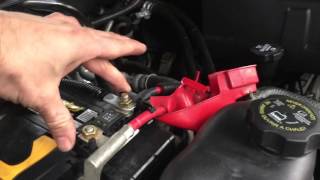
- Inspect the battery terminals and cables for any corrosion, looseness, or damage. Pay special attention to the negative battery cable and its ground connection points on the chassis and engine block. 🎬 Watch: Fixing a common total loss of electrical power Look for corrosion that may have crept under the cable's insulation.
- Perform a voltage drop test on both the positive and negative cables to ensure there is no excessive resistance, which would indicate an internal cable fault.
- Locate and inspect the main engine-to-chassis ground straps. Ensure they are clean, tight, and free of corrosion. Key locations include G103, G104, G105, G106, and G218.
- Check for any available Technical Service Bulletins (TSBs) related to P0606 for your specific year and model. Many issues are resolved with a software update.
- If TSBs point to a software fix, have the relevant module (TCM, BCM, ECM, etc.) reprogrammed by a dealer or qualified shop.
- Inspect for any aftermarket electrical accessories and temporarily disconnect them to see if the code disappears.
- If all power, ground, and software issues have been ruled out, the control module that set the code is likely faulty and requires replacement and programming.
Parts You'll Likely Need
- Battery — A weak or failing battery is a primary cause of voltage-related module faults like P0606 on this platform.
Trusted brands: ACDelco, Interstate, DieHard
OEM price range: $200-$350
Aftermarket price range: $150-$300 - Negative Battery Cable
(OEM #84634109 (replaces 23235511, 23286906, 23421539, etc.))— This specific cable is a known weak point, failing internally and causing intermittent voltage issues that trigger P0606.
Trusted brands: ACDelco (OEM)
OEM price range: $50-$110
Aftermarket price range: $40-$80 - Transmission Control Module (TCM) — If harsh shifting is present and a software reflash (per TSB 150730002A) doesn't solve the issue, the TCM may have an internal hardware fault.
Trusted brands: ACDelco (OEM)
OEM price range: $400-$800
Aftermarket price range: $300-$600
Related Codes That Often Appear With This One
- P0562 — This code means "System Voltage Low." It frequently appears with P0606 and strongly indicates the root cause is a weak battery, failing alternator, or bad connection, as noted in TSB #PIT6347B.
- P16F3 — This is a GM-specific code for "Control Module Redundant Memory Performance." It often accompanies P0606 when there is a TCM software issue, as seen in TSB #150730002A.
- P2818 — This code relates to Transmission Pressure Control Solenoid performance. It can be set alongside P0606 due to the TCM software glitch described in TSB #150730002A.
Technical Service Bulletins (TSBs) & Recalls
- ABS SES MIL / Service Brake System / Service StabiliTrak / BSCM DTC P0606 P0562: Explicitly links P0606 and P0562 set in the Brake System Control Module (BSCM) to low battery voltage, noting it's more common in cold weather. Advises testing the battery, checking connections, and looking for parasitic draws from aftermarket accessories before any module replacement.
- TCM Reprogramming for Firm Shifts, Shudder, DTCs P0606, P16F3, P2818: Addresses customer complaints of harsh shifting and engine flares on 2015 models by reprogramming the Transmission Control Module (TCM) with updated software. This confirms a software anomaly can directly cause P0606.
- MIL Illuminated with EBCM DTC P0606, P0562, or P0563: Released March 2024, this TSB states that low or high voltage events (like jump starts or charging) can cause the Electronic Brake Control Module (EBCM) to set P0606. It emphatically states 'Do not replace the Electronic Brake Control Module (EBCM) for this condition' and mentions a new, more robust software calibration is in development.
- ECM Reprogramming for P0606: A July 2020 bulletin addresses P0606 set in the ECM due to a software anomaly. It instructs dealers to reprogram the ECM with the latest software and explicitly says 'DO NOT replace the Engine Control Module at this time.'
- BCM DTC P0606 and Check Engine Lamp: Provides diagnostic tips for when the Body Control Module (BCM) sets P0606. It may involve a software update or, in some cases, simply clearing the code, as engineering is aware of the issue.
Platform-Specific Known Issues
- Negative Battery Cable Failure: → Shop Vehicle Battery Beyond simple corrosion at the terminal, the OEM negative battery cable on this platform is a known failure point. Owners report internal corrosion or breaks within the cable sheathing that are not visually apparent, leading to intermittent and confusing electrical issues, including P0606. A voltage drop test is required to condemn the cable properly.
- Cold Weather Sensitivity: Multiple TSBs and owner complaints indicate that the P0606 code is more likely to appear in cold ambient temperatures. This is because a battery's ability to deliver sufficient voltage is reduced in the cold, making the sensitive control modules more susceptible to voltage drops during startup.
Mechanic-Grade Diagnostic Values
- Battery Voltage (Key Off, Engine Off) — expected: 12.4V to 12.6V. Failure: Below 12.4V indicates a discharged or failing battery that can cause module communication errors.
- Alternator Output (Engine Running) — expected: 13.5V to 14.5V. Failure: Voltage below 13.5V (undercharging) or above 14.8V (overcharging) can cause modules to set fault codes or shut down.
- CAN Bus Resistance — expected: Approximately 60 Ohms (with battery disconnected, measured between CAN High and CAN Low pins at the DLC). Failure: A reading of 120 Ohms indicates one of the two terminating resistors is offline. A reading near 0 Ohms indicates a short between the CAN lines.
Scan Tool Commands That Help
- GDS2 / Techline Connect: Control Solenoid Valve and Transmission Control Module Assembly Programming and Setup — Required after replacing the TCM or when performing a software update per TSBs like 150730002A or 16-NA-181 to resolve software-induced P0606 codes.
- GDS2 / Techline Connect: Module Replacement and Setup — When replacing any major control module (ECM, BCM, TCM). This function programs the new module with the vehicle's VIN and specific configuration, which is mandatory for operation, especially on Global B vehicles (2021+).
Wiring & Ground Locations
- G218 — On the driver's side A-pillar, behind the instrument panel, near the dash speaker.. This is a primary ground for the Body Control Module (BCM). TSB PIT5405C identifies that the dash insulation mat can get trapped under this ground, causing a poor connection and a host of electrical issues, including conditions that can lead to a P0606 in the BCM.
- G103 — On the front of the passenger side (right) cylinder head.. This is a critical engine and module ground. A loose or corroded connection here can affect the ECM and other engine-related modules, directly causing voltage instability that can trigger a P0606.
- Negative Battery Cable Frame Ground — The main negative cable runs from the battery to a stud on the engine block, but a smaller branch attaches to the chassis/frame, often behind the driver-side fender liner near a body mount.. This chassis ground is essential for overall vehicle electrical stability. Internal corrosion in this cable is a very common failure point, causing intermittent and hard-to-diagnose voltage drops that confuse control modules.
Real Owner Repair Stories
- YouTube user comment on video about Escalade electrical issues (2015+ Cadillac Escalade) — Clock randomly resetting to 12:00, factory settings being deleted, as if the battery was disconnected.
❌ Tried (didn't work) Initial diagnosis pointed towards a module issue or battery problem.
✅ What actually fixed it The owner requested the replacement of the negative battery ground cable (Part No. 22846471 mentioned in video). The mechanic confirmed this resolved the symptoms, which are classic signs of the voltage instability that can also cause a P0606 code. - Tahoe Yukon Forum user (2015 Cadillac Escalade) — Intermittent no-start, clock resetting, vehicle acting like it has insufficient power despite a newer battery.
❌ Tried (didn't work) Ensuring battery was new.
✅ What actually fixed it The user identified through research that the negative battery cable was a likely culprit. Other users in the thread confirmed that replacing this cable is a common fix for these exact electrical gremlins, noting the cables corrode internally where it isn't visible.
Model Year Variations Within This Range
- 2021-2022: These models use GM's Vehicle Intelligence Platform (VIP), also known as 'Global B' electrical architecture. This system has five times the data processing power of the previous 'Global A' system (2015-2020 models) and uses different communication protocols (e.g., high-speed Ethernet). Module replacement and programming requires the newer 'Techline Connect' software, and many aftermarket programming tools will not work.
- 2015-2017: These models with the 8-speed transmission were prone to a torque converter shudder issue. While not a direct cause of P0606, the associated TSB (N192217820) involves a complex fluid flush procedure. If other transmission-related work was done incorrectly, it could lead to electrical issues or TCM faults.
Helpful Videos
We Have This Part in Stock

The information in this article is provided for general reference and educational purposes only. Vehicle specifications, procedures, and part compatibility can vary by production date, trim level, and region. Always consult your vehicle's factory service manual and verify part numbers before purchasing or performing repairs. Safety-critical components such as airbags, seat belts, and braking systems should be installed by a qualified professional.
- Cadillac ESCALADE ESV:
- 🧭 Diagnostic Flowchart
- 🎬 Helpful Videos
- 🛍️ Shop This Part
- What's Unique About the 2015-2022 Cadillac ESCALADE ESV
- Symptoms You May Notice
- Most Likely Causes
- Rare But Worth Checking
- Diagnosis Steps
- Parts You'll Likely Need
- Related Codes That Often Appear With This One
- Technical Service Bulletins (TSBs) & Recalls
- Platform-Specific Known Issues
- Mechanic-Grade Diagnostic Values
- Scan Tool Commands That Help
- Wiring & Ground Locations
- Real Owner Repair Stories
- Model Year Variations Within This Range
- 🎟️ Get 5% Off