

P0606 on 2011-2017 Chevrolet Cruze: ECM Processor Fault or a Simpler Fix?
P0606 on a Chevy Cruze indicates an Engine Control Module (ECM) processor fault. However, before spending $1,000+ on a new ECM, you must investigate simpler causes. GM has issued service bulletins advising that a faulty camshaft position sensor or a software glitch can falsely trigger this code, making these much cheaper and more likely starting points for diagnosis.
- P0606 is a critical code indicating an ECM processor fault; do not drive the vehicle.
- Before replacing the expensive ECM, you MUST follow GM's own advice and investigate simpler causes.
- First, test the camshaft position sensors and their wiring, as a fault here is a known issue that can falsely trigger P0606 on a Cruze.
- Second, have a dealer or qualified shop check if your ECM needs a software update, as per TSB #20-NA-144.
- Always ensure the battery, its connections, and main ground points are in excellent condition before beginning any complex electrical diagnosis.
What's Unique About the 2011-2017 Chevrolet CRUZE
What makes the Chevrolet Cruze unique regarding P0606 is that General Motors has issued multiple Technical Service Bulletins (TSBs) acknowledging that other, less expensive parts can trick the ECM into setting this code. TSB #17-NA-132 specifically warns that an open in the camshaft position sensor circuit can cause a P0606 during engine cranking *instead* of the appropriate cam sensor code. The bulletin explicitly states, "Do Not replace the Engine Control Module (ECM) for this condition." Another bulletin, #20-NA-144, points to a software anomaly that can be fixed with an update. This makes it critical to rule out these known issues before condemning the expensive ECM.
Diagnostic Flowchart
Tap your situation to follow the diagnostic path that matches what you're seeing on this vehicle.
Generation note: The 2011-2017 year range covers the first generation (2011-2016) and the beginning of the second generation (2016-2017). The 2016 model year is an overlap, with both a Gen 1 "Limited" and a new Gen 2 model available. TSBs related to P0606 specifically mention the 2016 and 2017 models, indicating these issues are well-documented on both generations covered in this range.
Symptoms You May Notice
- Check Engine Light is on.
- Engine stalls intermittently, especially at stops or during idle.
- Vehicle enters 'Reduced Power' or 'Limp Mode'.
- Engine will not start or is very hard to start (crank-no-start).
- Rough or erratic idling.
- Automatic transmission may shift erratically or harshly.
- Service Stabilitrak and/or Traction Control lights may illuminate.
- Cooling fans may run on high speed constantly.
- Replacing the Engine Control Module (ECM) without first testing the camshaft position sensors, checking for software updates, and verifying power/ground circuits. This is a very expensive mistake explicitly warned against in GM service bulletin #17-NA-132.
Most Likely Causes
- Faulty Engine Control Module (ECM) 🔴 High Probability → Shop Engine Control Module (ECM) The ECM is the default diagnosis for a processor fault code, but should only be confirmed after ruling out all other causes. These modules can fail from internal component degradation over time.
How to confirm: After all other potential causes (sensors, wiring, grounds, software) have been thoroughly tested and ruled out per GM's TSBs, the ECM is the remaining likely point of failure.
Typical fix: Replace the Engine Control Module and have it programmed by a dealer or qualified shop with the correct software for the vehicle's VIN.
Est. part cost: $400-$900 - Faulty Camshaft Position Sensor(s) or Circuit 🟡 Medium Probability → Shop Engine Camshaft Position Sensor GM TSB #17-NA-132 explicitly states that a cam sensor fault can cause a P0606 to set during cranking before the correct sensor code can be logged. The TSB explains that once P0606 sets, the crank is aborted, and the cam sensor code is never stored, masking the true root cause.
How to confirm: Test the camshaft position sensor circuits for opens, shorts, and proper voltage as per the service manual. Scan for any pending or history codes related to cam sensors (e.g., P0340, P0365). A common real-world test is to simply replace the sensors, as they are inexpensive.
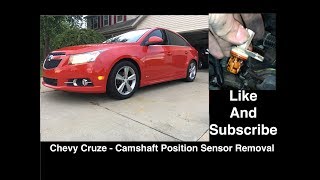
Typical fix: Replace the faulty camshaft position sensor(s). There is one for the intake and one for the exhaust camshaft.
Est. part cost: $25-$75 - ECM Software Anomaly 🟡 Medium Probability GM TSB #20-NA-144 identifies a software anomaly as a potential cause for P0606 on 2016-2017 models.
How to confirm: A GM dealer or a shop with a subscription to GM's service information system can check if the vehicle's ECM software is outdated and if an update is available to address this specific code.
Typical fix: Reprogram (reflash) the ECM with the latest software calibration from GM.
Est. part cost: $0 (if under warranty) - $150 (shop labor) - Poor ECM Power or Ground Connections ⚪ Low Probability All control modules are sensitive to voltage fluctuations. On the Cruze, the ground wire running from the main harness to the valve cover is a known trouble spot. Corrosion on battery terminals, main chassis grounds, or the ECM's own ground strap can also cause unpredictable behavior.
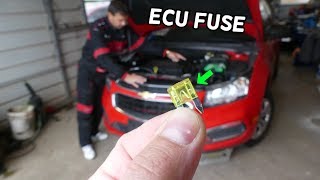
How to confirm: Visually inspect and clean all battery terminals and main engine/chassis grounds. 🎬 Check this guide to find your ECU and ECM fuses. Specifically check the small ground wire attached to the valve cover near the coil pack for looseness or corrosion. Perform a voltage drop test on the ECM's power and ground circuits to check for high resistance.
Typical fix: Clean or repair corroded terminals and ground points. Tighten any loose connections. Some owners have had success running a new, dedicated ground wire.
Est. part cost: $5-$20 (for cleaning supplies/hardware)
Rare But Worth Checking
- Weak Battery or Faulty Alternator: → Shop Vehicle Battery Low system voltage, especially during cranking, can cause various control modules to behave erratically and set internal fault codes. Before complex diagnostics, ensure the battery and charging system are healthy.
- Shorted External Sensor: While the cam sensor is a known culprit, a severe short circuit in another engine sensor that shares a 5V reference voltage or ground with the ECM could theoretically cause an internal processor error.
Diagnosis Steps
- Check the battery and charging system. Ensure battery voltage is above 12.4V with the engine off and between 13.5V-14.5V with the engine running.
- Scan for all DTCs in all modules. Note any other codes present, especially sensor-related codes, even if they are in 'history' status.
- Visually inspect all power and ground connections. Check the battery terminals, main chassis ground straps, and the ECM connectors for looseness or corrosion. Pay special attention to the ground wire on the valve cover.
- Follow the diagnostic procedure outlined in TSB #17-NA-132. Test the camshaft position sensor circuits for opens, shorts, or high resistance. Given their low cost, consider replacing both cam sensors as a primary diagnostic step.
- Check for available ECM software updates. A dealer or qualified shop can determine if a reflash is available per TSB #20-NA-144.
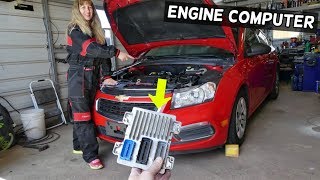
- If all other tests pass and no other cause can be found, the Engine Control Module is likely faulty and requires replacement and programming. 🎬 See this walkthrough for the engine computer replacement and location.
Parts You'll Likely Need
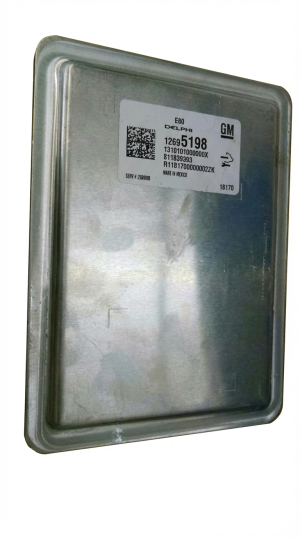
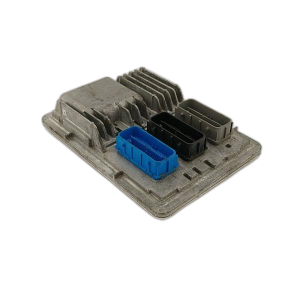
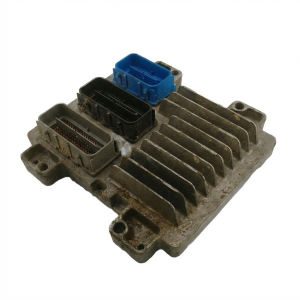
- Engine Control Module (ECM)
(OEM #Varies by year/engine. Ex: 12669749, 12670942 for 2014 1.4L.)— This is the default failure for a P0606 code, but should only be replaced after all other diagnostics have failed.
Trusted brands: ACDelco (Genuine GM)
OEM price range: $500-$900
Aftermarket price range: $300-$600 (Remanufactured) - Camshaft Position Sensor
(OEM #55566932 (for 1.4L), 25195556 (for 1.8L Intake), 25195555 (for 1.8L Exhaust))— A known cause for falsely triggering a P0606 on this vehicle, as documented in a GM Technical Service Bulletin.
Trusted brands: ACDelco, Delphi, Spectra Premium
OEM price range: $22-$40
Aftermarket price range: $15-$30
Related Codes That Often Appear With This One
- P0340 / P0341 — These codes for the intake camshaft position sensor circuit may appear with P0606. However, TSB #17-NA-132 notes that P0606 can appear *instead* of these codes, masking the true problem.
- P0365 / P0366 — These codes for the exhaust camshaft position sensor circuit can also be related. The diagnostic logic is the same as with the intake cam sensor codes.
- U0100 — This code indicates a loss of communication with the ECM. It can appear alongside P0606 as other modules in the car fail to get a response from the malfunctioning engine computer.
Technical Service Bulletins (TSBs) & Recalls
- 17-NA-132: Information on Malfunction Indicator Lamp (MIL) Illuminated - DTC P0606 Set
- 20-NA-144: Check Engine Light Illuminated, DTC P0606 Set in Engine Control Module
- 05-06-04-060A: Information on Control Module Diagnostic Trouble Code(s)
Platform-Specific Known Issues
- TSB #17-NA-132: A technical bulletin was issued to prevent the unnecessary replacement of the ECM. It instructs technicians that an open in the camshaft position sensor circuit can cause P0606 to set during cranking, and that the crank process is aborted before the correct cam sensor code can be logged. It explicitly says not to replace the ECM for this condition.
- TSB #20-NA-144: This bulletin addresses a condition where a software anomaly in the ECM can cause P0606 to set on 2016-2017 models. The recommended fix is to reprogram the ECM with updated software.
- Problematic Grounding: Owners on forums frequently report that a small, often overlooked ground wire that attaches to the valve cover can become loose or corroded, causing a host of electrical issues, including symptoms associated with P0606.
Mechanic-Grade Diagnostic Values
- Camshaft Position Sensor Signal Voltage (Hall-Effect Type) — expected: Switches between approximately 0V and 5V (or battery voltage) when a metal object is passed in front of the sensor tip.. Failure: Voltage does not change or is stuck at 0V or 5V, indicating a failed sensor.
- Battery Voltage (Engine Off) — expected: 12.4V to 12.6V.. Failure: Below 12.4V indicates a weak or discharged battery which can cause spurious module faults.
- Charging System Voltage (Engine Running) — expected: 13.5V to 14.5V.. Failure: Voltage below 13.5V or above 14.5V suggests an alternator or voltage regulator fault, which can cause unstable power to the ECM.
- ECM Power and Ground at Connector — expected: Voltage at the ECM power pins should match battery voltage, and resistance on ground pins to chassis ground should be less than 0.1 ohms.. Failure: A voltage drop of more than 0.5V between the battery and the ECM pin, or resistance to ground greater than 0.5 ohms, indicates a wiring issue.
Scan Tool Commands That Help
- GDS2 (GM Tech Tool): Module Self-Test — To command the ECM to run its internal diagnostic routines, which can sometimes provide more specific failure information than the generic P0606 code.
- GDS2 (GM Tech Tool): SPS (Service Programming System) — Required to flash a software update (per TSB #20-NA-144) or to program a new replacement ECM to the vehicle's VIN and security system.
- Professional Scan Tool: Throttle/Idle Learn Reset — After replacing or cleaning a throttle body, or after a prolonged battery disconnect, to reset learned values. While the Cruze can self-learn, a manual reset can resolve idle instability faster.
Wiring & Ground Locations
- G103 — On the left front shock tower in the engine compartment.. This is a major grounding point for multiple components, including the Instrument Panel Fuse Block and Body Control Module (BCM). A poor connection here can cause widespread communication and module errors.
- G100 / G105 — Located at the left front corner of the engine compartment.. These are primary ground points for the engine harness, directly affecting the ECM and other critical engine components.
- G102 — Located on the lower right rear of the engine block.. Provides a ground path for the engine block itself, which is critical for many sensors and the ignition coil module.
- ECM Connector X1 — The larger of the two main connectors on the Engine Control Module.. This connector contains the primary power and ground pins for the ECM. For example, on some models, Pin 20 is Battery Positive Voltage and Pin 18/19 are Ignition Voltage. Checking for stable voltage at these pins is a key diagnostic step.
Real Owner Repair Stories
- EFILive Forum User (GM Truck (similar E38 ECM architecture)) — P0606 code that would not clear.
❌ Tried (didn't work) Attempting to clear the code with multiple scan tools., Inspecting the ECM.
✅ What actually fixed it The problem was not the ECM, but the Fuel Pump Control Module (FPCM). Replacing the FPCM and flashing it with the GM SPS (Service Programming System) resolved the P0606 code. - CarKiller Forum User (2007 Toyota Camry (illustrates a common pattern)) — P0606 code appeared temporarily after replacing a dead battery.
❌ Tried (didn't work) Worrying about major ECM failure.
✅ What actually fixed it The code was likely a one-time glitch caused by the voltage fluctuation during the battery failure and replacement. After clearing the code, it did not return, indicating the ECM was not faulty.
OEM Part Supersession History
12668866→12669749— Standard part revision and update by the manufacturer.
Heads up: Part number 12669749 is listed for 2012-2016 and 2016-2017 Cruze models, indicating it may have superseded earlier numbers and covers both Gen 1 and early Gen 2 vehicles. Always verify the correct part number for the specific VIN before ordering.
Model Year Variations Within This Range
- 2016-2017: TSB #20-NA-144 specifically calls out these model years for a potential software anomaly causing P0606, which can be fixed with a reflash. This is less likely to be the documented cause for earlier 2011-2015 models.
- 2011-2016 (Gen 1) vs 2016.5-2017 (Gen 2): The engine control module and some wiring will differ between the first and second generations, even for the same 1.4L engine (LUV vs LE2). Grounding points and connector pinouts may vary. For example, G103 is on the shock tower in a 2014 model but may be elsewhere on a 2017.
Helpful Videos

We Have This Part in Stock


The information in this article is provided for general reference and educational purposes only. Vehicle specifications, procedures, and part compatibility can vary by production date, trim level, and region. Always consult your vehicle's factory service manual and verify part numbers before purchasing or performing repairs. Safety-critical components such as airbags, seat belts, and braking systems should be installed by a qualified professional.
- Chevrolet CRUZE:
- 🧭 Diagnostic Flowchart
- 🎬 Helpful Videos
- 🛍️ Shop This Part
- What's Unique About the 2011-2017 Chevrolet CRUZE
- Symptoms You May Notice
- Most Likely Causes
- Rare But Worth Checking
- Diagnosis Steps
- Parts You'll Likely Need
- Related Codes That Often Appear With This One
- Technical Service Bulletins (TSBs) & Recalls
- Platform-Specific Known Issues
- Mechanic-Grade Diagnostic Values
- Scan Tool Commands That Help
- Wiring & Ground Locations
- Real Owner Repair Stories
- OEM Part Supersession History
- Model Year Variations Within This Range
- 🎟️ Get 5% Off