

P0606 on 2024 GMC Sierra 3500: Causes and Fixes for Processor Faults
On a 2024 GMC Sierra 3500, code P0606 is often not a catastrophic engine computer failure. It's frequently caused by electrical issues like a weak battery or a faulty alternator, or a problem in the Lighting or Brake Control Modules, as noted in GM service bulletins. Always test the battery and charging system first before considering module replacement.
- For a 2024 GMC Sierra 3500, P0606 is often an electrical issue, not a failed Engine Control Module (ECM).
- Always start diagnostics by testing the battery and charging system thoroughly.
- Check for other codes, especially P0562 (low voltage) or P0563 (high voltage), as they are key indicators per TSB #24-NA-050.
- Note any unusual symptoms like flashing headlights, which point to specific modules like the LCM per TSB #24-NA-005.
- Do not replace any control module until all power, ground, and wiring checks have been completed.
What's Unique About the 2024-2024 Gmc SIERRA 3500
For the 2024 Sierra HD trucks and their platform mate, the Chevrolet Silverado HD, GM has specifically issued bulletins advising technicians *not* to replace control modules for a P0606 code until other causes are ruled out. TSB 24-NA-050 directly links P0606 in the brake module (EBCM) to battery voltage problems and notes a software calibration update has been released to make the diagnostics more robust. TSB 24-NA-005 links the code to the lighting module when headlamps flash. This indicates a known sensitivity to voltage stability or specific software anomalies in these peripheral modules, a significant departure from the generic advice for P0606 which often points directly to main computer replacement.
🎬 Watch: Understanding common causes and fixes for the P0606 code.Diagnostic Flowchart
Tap your situation to follow the diagnostic path that matches what you're seeing on this vehicle.
Symptoms You May Notice
- Check Engine Light (Malfunction Indicator Lamp) is on.
- "Service Brakes" or "Service StabiliTrak" message on the Driver Information Center (DIC).
- Headlights may flash or flicker, or wipers may pause intermittently.
- Vehicle may not start or may have a no-crank condition (clicking sound).
- Potential for engine stalling, rough idle, or poor performance.
- Loss of power steering.
- Reduced Engine Power (Limp Mode).
- Erratic automatic transmission shifting.
- Immediately replacing the Engine Control Module (ECM) without testing the battery and charging system. GM TSBs specifically warn against this.
- Replacing the Electronic Brake Control Module (EBCM) when the actual fault is just a low battery or a software anomaly that requires a reflash.
- Clearing the code without addressing the root cause (e.g., a weak battery), leading to the code returning.
Most Likely Causes
- Low or High System Voltage 🔴 High Probability TSB #24-NA-050 explicitly states that a low battery state of charge, jump-starting, or battery charging events can cause the Electronic Brake Control Module (EBCM) to set a P0606. The bulletin notes this is due to voltage diagnostics failing in the EBCM when the system goes above or below its expected threshold. Forum users across various GM platforms corroborate that a weak or dying battery is a very common trigger for a P0606 code.
How to confirm: Use a multimeter to test the battery voltage with the engine off (should be ~12.6V) and running (should be ~13.5-14.5V). More importantly, perform a load test on the battery using a digital battery analyzer to check its Cold Cranking Amps (CCA) capacity, as a simple voltage check can be misleading.
Typical fix: Charge or replace the battery. Diagnose the alternator and charging system. Crucially, the code must be cleared from the EBCM with a scan tool, as disconnecting the battery may not be sufficient to clear the code and turn off the MIL. A software update for the EBCM may also be required per the latest version of TSB #24-NA-050.
Est. part cost: $150-$400 for a new AGM battery. - Faulty Lighting Control Module (LCM) or Software 🟡 Medium Probability → Shop Body Control Module TSB #24-NA-005 was issued to address a concern of flashing headlamps accompanied by a P0606 set in the LCM. The bulletin explains that a low battery state can cause the LCM to reset every 8-10 seconds, causing the flashing.
How to confirm: A professional-grade scan tool is needed to check for codes specifically within the Lighting Control Module. The primary symptom is flashing headlamps, sometimes with erratic wiper behavior.
Typical fix: The fix involves reprogramming the Lighting Control Module with updated software per TSB #24-NA-005. First, address any underlying battery or charging system issues. The TSB explicitly states NOT to replace the LCM for this condition.
Est. part cost: $200-$500 for the module, plus programming. - Poor Power or Ground Connections 🟡 Medium Probability Modern trucks have numerous grounds and complex wiring harnesses. A loose or corroded ground can cause unstable voltage to any module, triggering a processor fault. GM has issued engineering inquiries (e.g., PIE0548 for G110/G114 on prior model years) to investigate loose grounds causing various electrical issues. Key ground locations include battery to chassis, engine block to firewall, and specific module grounds.
How to confirm: Visually inspect the main battery terminals, engine-to-chassis ground straps, and the power/ground connections at the suspect control module (ECM, EBCM, LCM). Perform a voltage drop test on the ground circuits to identify high resistance. Check for known problem ground locations like G110 and G114. 🎬 Watch: How to find and fix bad ground wires on Chevy trucks.
Typical fix: Disconnect, clean with a wire brush, and securely tighten all corroded or loose connections. Replace damaged wiring or ground straps.
Est. part cost: $5-$50 for cleaning supplies or new cables. - Faulty Engine Control Module (ECM) ⚪ Low Probability → Shop Engine Control Module (ECM) While this is the classic cause for P0606, GM bulletins for this specific vehicle suggest it's far less common than other issues. However, internal hardware failure is always a possibility, and on previous generation trucks, wiring harness chafing near the ECM could mimic a P0606 fault.
How to confirm: This is a diagnosis of exclusion. If all other possible causes (voltage, wiring, other modules) have been thoroughly ruled out using a professional scan tool, the ECM is the likely culprit.
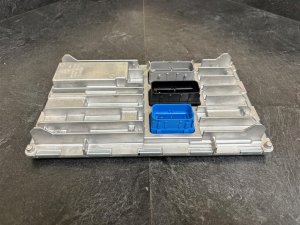
Typical fix: Replace the ECM and have it programmed to the vehicle's VIN and specific configuration by a dealer or qualified shop.
Est. part cost: $800-$1500 for a new, programmed ECM.
Rare But Worth Checking
- Faulty Camshaft Position Sensor: → Shop Engine Camshaft Position Sensor An older GM TSB (#17-NA-132) for previous model years indicates that an open in the camshaft position sensor circuit can sometimes incorrectly set a P0606 code during cranking instead of the appropriate sensor code. While for an older model, it's a known pattern on GM trucks worth keeping in mind.
- Aftermarket Electrical Accessories: Poorly installed aftermarket accessories like dash cameras, auxiliary lighting, or chargers can create parasitic draws or introduce electrical noise into the system, leading to voltage instability and triggering a P0606 code. Always check for and disconnect any non-factory wiring during diagnosis.
Diagnosis Steps
- Connect a professional-grade OBD-II scanner (like a GM MDI with GDS2 software) and check for codes in ALL modules (ECM, EBCM, LCM, BCM, etc.). Note which specific module has logged the P0606.
- Check for accompanying codes, especially P0562 (System Voltage Low) or P0563 (System Voltage High).
- Thoroughly test the battery's health using a digital battery tester (e.g., Midtronics) that checks CCA, not just a simple voltage check.
- With the engine running, test the alternator output to ensure it is within the proper range (typically 13.5-14.5 volts).
- Inspect all main power and ground connections. This includes battery terminals, chassis grounds (especially under the driver's side near the radiator), and engine ground straps (often on the back of the cylinder head). Clean any corrosion and tighten all connections.
- If headlamps are flashing, follow diagnostic procedures for the Lighting Control Module as per TSB #24-NA-005.
- If TSB #24-NA-050 applies, follow its instruction to test the battery and clear the code from the EBCM with the scan tool. Note that a software update for the EBCM is now the specified repair.
- Inspect for any aftermarket accessories that could be causing a parasitic draw or electrical interference.
- If all other possibilities are exhausted, the final step is to diagnose the control module that set the code, which may require replacement and programming.
Parts You'll Likely Need
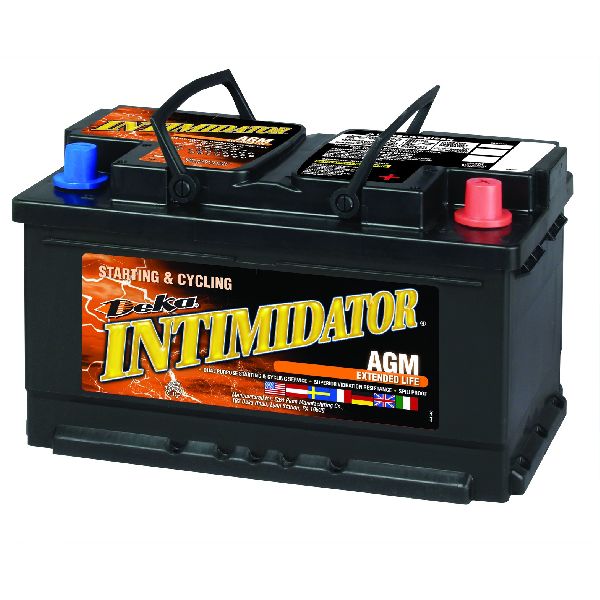
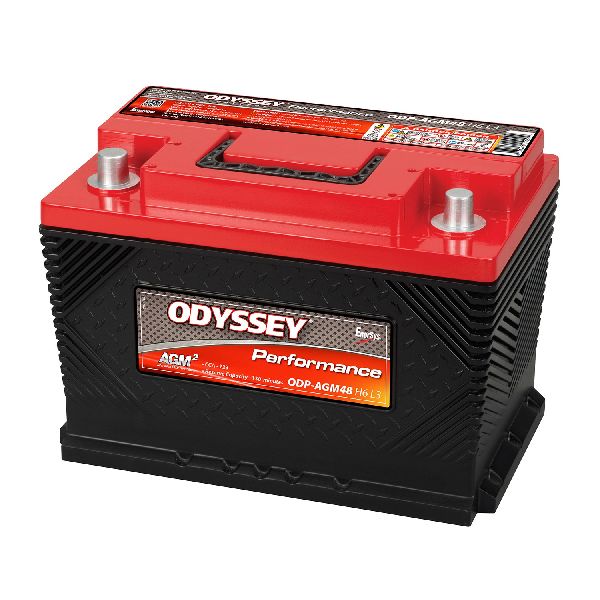
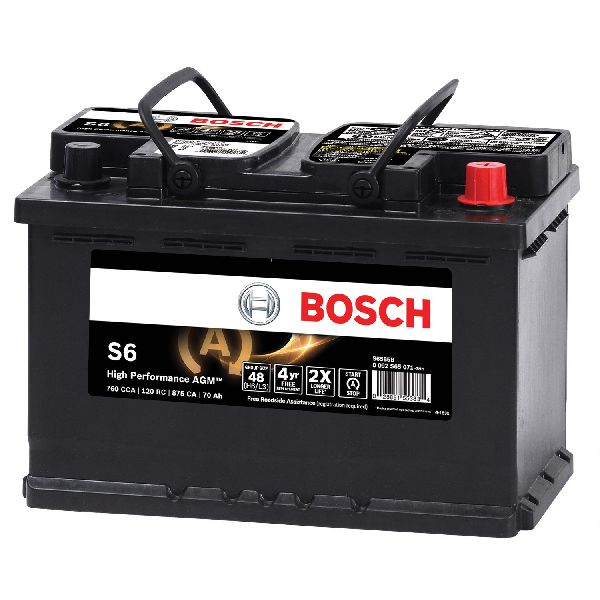
- Battery
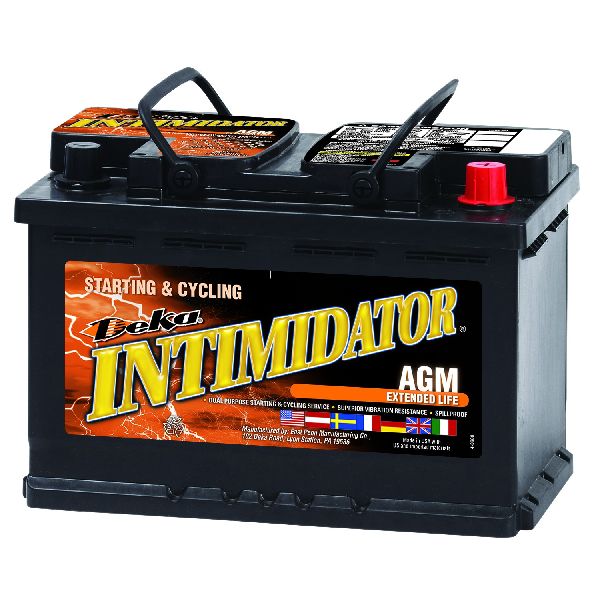
(OEM #ACDelco Gold 94RAGM (88865934) or 48AGM (depending on configuration))— A weak or failing battery is a primary cause of P0606 on this truck, as confirmed by TSB #24-NA-050. Modern AGM batteries can fail in ways that aren't obvious from a simple voltage test.
Trusted brands: ACDelco, Optima
OEM price range: $250-$400
Aftermarket price range: $200-$350 - Engine Control Module (ECM) — This is the 'last resort' part. It is the cause if all electrical and other module issues have been ruled out.
Trusted brands: ACDelco
OEM price range: $800-$1500
Aftermarket price range: $500-$1000 (remanufactured) - Lighting Control Module (LCM) — TSB #24-NA-005 identifies a software issue in the LCM that can cause P0606. The fix is reprogramming, not replacement, but a faulty module is still a remote possibility if programming fails.
Trusted brands: ACDelco
OEM price range: $200-$500
Related Codes That Often Appear With This One
- P0562 — System Voltage Low. TSB #24-NA-050 directly links this code with P0606, indicating a battery or charging system problem is the root cause.
- P0563 — System Voltage High. Also linked with P0606 in TSB #24-NA-050, pointing to a charging system issue (e.g., faulty alternator/regulator).
Technical Service Bulletins (TSBs) & Recalls
- 24-NA-050: Addresses P0606 set in the Electronic Brake Control Module (EBCM) along with voltage codes P0562 or P0563.
- 24-NA-005: Addresses P0606 set in the Lighting Control Module (LCM) causing headlamps to flash.
- 17-NA-132: An older TSB noting that a camshaft position sensor fault can sometimes manifest as a P0606 code.
- 21-NA-149: A TSB for the previous generation (2017-2022) warning that a chafed engine wiring harness can cause a P0606 code, mimicking ECM failure.
Platform-Specific Known Issues
- TSB #24-NA-050: A known issue where low or high voltage events (like jump-starting or charging) can cause the Electronic Brake Control Module (EBCM) to log a P0606 fault. The bulletin advises against replacing the EBCM and to first address the battery/charging system. It also notes that a software update is being developed to make the module less sensitive.
- TSB #24-NA-005: A documented problem where the Lighting Control Module (LCM) can set a P0606 code, causing the headlamps to flash. This is also often triggered by a low battery state during cranking.
- Customer Satisfaction Program N232414840: While not directly causing P0606, this program for 2024 models involves replacing the Trailer Brake Power Module (Part No. 85073615) to fix an issue where a trailer battery with a higher charge can cause false electrical faults. This highlights the sensitivity of the truck's electrical systems to external voltage inputs.
Mechanic-Grade Diagnostic Values
- Battery Voltage (Engine Off) — expected: ~12.6 Volts. Failure: Below 12.4V indicates a discharged or failing battery that can trigger P0606.
- Charging System Voltage (Engine Running) — expected: ~13.5 - 14.5 Volts. Failure: Voltage below 13.2V or above 15.0V indicates a faulty alternator or regulator, which can trigger P0606 with P0562 or P0563.
- EBCM Harness to Transmission Bolt Clearance — expected: Minimum 10mm. Failure: Less than 10mm clearance can lead to the harness chafing on the bolt, causing shorts and multiple DTCs including potential communication faults that could be related to P0606.
Scan Tool Commands That Help
- GDS2 (GM Global Diagnostic System 2): Module Diagnostics > EBCM/LCM > Diagnostic Trouble Codes (DTC) — This is the first step to confirm which specific module has set the P0606 code, as it could be the EBCM or LCM, not the main ECM.
- GDS2 / SPS2 (Service Programming System 2): Reprogram Control Module (EBCM or LCM) — This is the specific fix called for in TSB #24-NA-050 and #24-NA-005 after confirming the battery and charging system are healthy. It loads updated software to correct diagnostic anomalies.
- GDS2: Clear DTCs — After performing repairs or reprogramming. TSB #24-NA-050 notes that simply disconnecting the battery may not clear the code from the EBCM and that a scan tool must be used.
- GDS2: Output Controls — To manually activate components like headlights or wipers to test the functionality of a module's output drivers, helping to isolate if a problem is with the module, wiring, or the component itself.
Wiring & Ground Locations
- EBCM Body Harness Branch — Located down behind the radiator surge tank, near the brake pressure modulator valve (BPMV) and frame/strut tower.. A GM TSB for a previous model year identifies a potential chafe point where this harness can rub against a transmission mounting bolt, causing shorts, blown fuses, and multiple DTCs. Poor power or ground integrity to the EBCM can trigger a P0606.
- G110 / G114 — Frame grounds located in the front of the vehicle, typically on the frame rails or radiator core support area.. GM issued an engineering inquiry (PIE0548) for previous model years to investigate loose connections at these specific grounds causing a wide range of electrical issues. A poor main ground can cause voltage instability to all modules.
- Engine-to-Firewall Ground Strap — Typically a braided strap running from the rear of a cylinder head to a stud on the vehicle's firewall.. This is a critical ground path for the engine and its sensors. Corrosion or a break in this strap is a very common cause of intermittent and difficult-to-diagnose electrical problems, including module processor faults.
Real Owner Repair Stories
- Torque News article citing owner reports (2022 Chevrolet Silverado) — Vehicle was nearly dead after a short trip, loss of power steering, and eventually a no-start condition. The truck threw code P0606.
❌ Tried (didn't work) The story does not detail failed attempts, but focuses on the severity of the symptoms.
✅ What actually fixed it The article does not state the final repair for this specific owner, but uses the story to strongly advise other owners with a P0606 to have a technician check ground wires and battery health first, as a simple voltage drop can mimic a PCM failure, aligning perfectly with GM's TSBs.
Helpful Videos

Used OEM Parts in Stock
New Aftermarket Parts Available


The information in this article is provided for general reference and educational purposes only. Vehicle specifications, procedures, and part compatibility can vary by production date, trim level, and region. Always consult your vehicle's factory service manual and verify part numbers before purchasing or performing repairs. Safety-critical components such as airbags, seat belts, and braking systems should be installed by a qualified professional.
- Gmc SIERRA 3500:
- 🧭 Diagnostic Flowchart
- 🎬 Helpful Videos
- 🛍️ Shop This Part
- What's Unique About the 2024-2024 Gmc SIERRA 3500
- Symptoms You May Notice
- Most Likely Causes
- Rare But Worth Checking
- Diagnosis Steps
- Parts You'll Likely Need
- Related Codes That Often Appear With This One
- Technical Service Bulletins (TSBs) & Recalls
- Platform-Specific Known Issues
- Mechanic-Grade Diagnostic Values
- Scan Tool Commands That Help
- Wiring & Ground Locations
- Real Owner Repair Stories
- 🎟️ Get 5% Off