

P0606 on 2006-2010 Hyundai Sonata 3.3L V6: ECM/PCM Processor Fault Causes and Fixes
P0606 on a 2006-2010 Sonata almost always indicates a failed Powertrain Control Module (PCM/ECM). Before replacing it, check for PCM software updates and verify all power and ground connections are clean and tight. A replacement PCM will require programming and costs between $400-$900. Sudden stalling, even at highway speeds, is a common and dangerous symptom.
- P0606 is a critical code indicating the engine computer has likely failed.
- Before replacing the expensive computer, ALWAYS check for available software updates with a dealer.
- Thoroughly test the battery, alternator, and all main power/ground connections to the PCM.
- Replacement PCMs must be programmed to your car's VIN and security system.
- Do not continue to drive the vehicle, as sudden stalling is a real possibility.
What's Unique About the 2006-2010 Hyundai Sonata
On the 'NF' generation Sonata with the 3.3L V6, a P0606 code is a strong indicator of internal PCM hardware failure. While external issues like wiring or power supply can be a cause, this platform has a documented history of PCM-related issues, sometimes appearing with companion code P2610 (Internal Engine Off Timer Performance), which also points to a faulty PCM. Unlike some other vehicles where this code is ambiguous, on this Sonata, the focus quickly turns to the health of the control module itself. Owner forums frequently report that after basic checks, only a PCM replacement resolves the code and associated stalling.
Symptoms You May Notice
- Check Engine Light is on
- Engine may not start or may be difficult to start
- Engine stalling intermittently while driving or at idle, sometimes without warning at highway speed
- Rough running, hesitation, or misfiring
- Erratic automatic transmission shifting or getting stuck in 3rd gear (fail-safe mode)
- Reduced fuel economy
- Other warning lights (like ABS or TCS) may illuminate
- Complete loss of throttle response
- Replacing sensors (like O2 or camshaft sensors) without checking for P0606 first. If P0606 is present, it must be addressed as the primary fault, as it can cause other false sensor codes.
- Replacing the transmission or transmission components due to erratic shifting, when the root cause is the faulty PCM.
Most Likely Causes
- Internal PCM Failure 🔴 High Probability The Lambda V6 platform from this era has documented instances of PCM hardware failure, sometimes accompanied by other internal fault codes like P2610. Forum discussions for this specific Sonata model confirm that PCM replacement is the most frequent successful repair after basic checks are performed.
How to confirm: This is a diagnosis of exclusion. If all power, ground, and wiring checks pass, and a software update doesn't resolve the issue, the PCM is condemned. A hard reset (disconnecting the battery) that results in the code immediately returning also points to a failed PCM.
Typical fix: Replace the Powertrain Control Module (PCM/ECM) and program the new unit to the vehicle.
Est. part cost: $300-$800 for a remanufactured unit - PCM Software/Calibration Issue 🟡 Medium Probability Hyundai has released software updates for this vehicle's PCM to address other drivability issues (TSB 10-FL-002, TSB 09-FL-004), indicating that software bugs can be a source of problems. An update may resolve internal logic errors before they escalate to a hard fault.
How to confirm: A Hyundai dealership or a qualified shop with a factory scan tool (GDS) can check the current software calibration ROM ID against the latest available version.
Typical fix: Update or 'reflash' the PCM software to the latest version.
Est. part cost: $0 (if covered) - $150 - Poor PCM Power or Ground Connection ⚪ Low Probability All electronic modules are sensitive to voltage fluctuations. Corrosion or loose connections at battery terminals, main engine grounds, or the specific PCM ground points can cause unpredictable behavior and trigger internal self-test faults.
How to confirm: Visually inspect all battery terminals and main chassis/engine grounds for corrosion and tightness. Use a multimeter to perform a voltage drop test on the PCM power and ground circuits to ensure there is less than 0.1-0.2 volts of drop. A workshop manual specifies testing resistance between the PCM connector and chassis ground, with a specification of 1 Ohm or less.
Typical fix: Clean or tighten the corroded or loose ground straps and power connections. The main PCM grounds on the 3.3L are designated G109/G110.
Est. part cost: $1-$10 for cleaning supplies or new bolts
Rare But Worth Checking
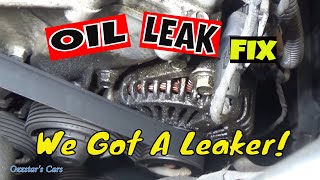
- Charging System Malfunction: An alternator that is over-charging (voltage above 15V) or under-charging can create an unstable voltage supply, confusing the PCM and potentially triggering an internal fault code. On this engine, a failing alternator is often caused by an oil leak from the front valve cover gasket. 🎬 Watch: How a leaking valve cover gasket ruins your alternator
- Wiring Harness Damage: A short or open in the wiring harness leading to the PCM can mimic an internal failure. This is uncommon without prior physical damage or rodent activity.
Diagnosis Steps
- Scan for other DTCs. If codes like P0605 or P2610 are present, it heavily reinforces the diagnosis of PCM failure. Address any power supply codes (P0562) first.
- Perform a PCM Hard Reset. Disconnect the negative battery terminal for at least 30 minutes to fully discharge the PCM's internal capacitors. Reconnect and start the vehicle. If P0606 returns immediately, it is a strong sign of a permanent hardware fault.
- Check for Technical Service Bulletins (TSBs). Contact a Hyundai dealer with your VIN to see if a PCM software update (reflash) is available. Relevant TSBs for this engine include 10-FL-002 and others that address drivability via software.
- Inspect Battery and Charging System. Test the battery to ensure it is fully charged and healthy. With the engine running, check the alternator output with a multimeter; it should be stable, between 13.5 and 14.5 volts.
- Verify PCM Power and Grounds. Inspect the battery terminals, main engine-to-chassis ground straps, and the specific PCM ground connections (G109/G110) for tightness and corrosion. Perform a voltage drop test on the PCM's main power and ground pins at the connector if a wiring diagram is available. Resistance between the PCM ground circuit and chassis should be 1 Ohm or less.
- Inspect the PCM and Wiring. Visually inspect the PCM connectors and nearby wiring for any signs of corrosion, moisture intrusion, or physical damage.
- If steps 2-6 pass, the PCM is highly likely to have failed and requires replacement.
Parts You'll Likely Need
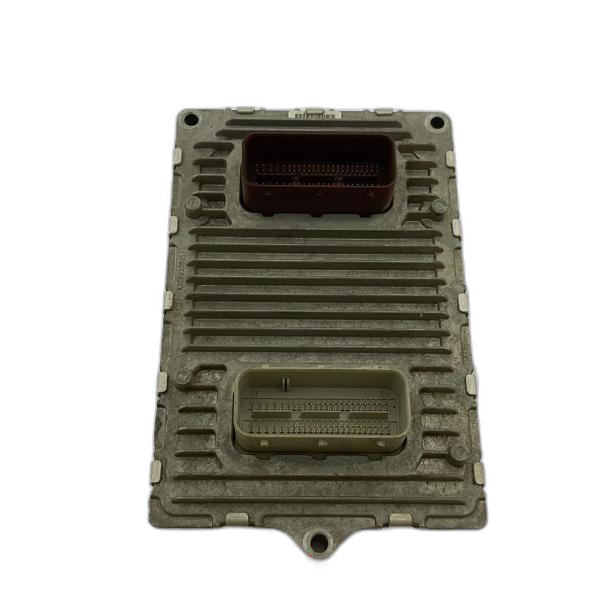
- Powertrain Control Module (PCM/ECM)
(OEM #Varies by year/transmission. Examples include 39110-3C760. Must be matched by VIN.)— This code indicates a fatal internal error in the module itself. After ruling out external power, ground, and software issues, replacement is the only solution.
Trusted brands: Hyundai (OEM), Cardone, Flagship One, Solo Auto Electronics
OEM price range: $800-$1200+
Aftermarket price range: $300-$800 (Remanufactured)
Related Codes That Often Appear With This One
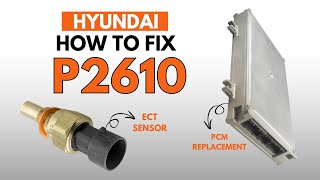
- P2610 — P2610 refers to an 'ECM/PCM Internal Engine Off Timer Performance' fault. On this platform, it is often caused by the same internal PCM failure that triggers P0606. They are frequently seen together and both strongly point to a bad PCM. 🎬 See three ways to troubleshoot the P2610 error code
- P0605 — This code indicates an internal Read Only Memory (ROM) error in the control module. It is another self-test failure code that points directly to a faulty PCM and is often considered a related internal fault.
Technical Service Bulletins (TSBs) & Recalls
- TSB 10-FL-002: Mentions a PCM software update for the 2006-2010 Sonata 3.3L to fix hard starting and rough idle, confirming that software re-flashing is a valid procedure for this PCM.
- TSB 09-FL-004: Provides updated diagnostic procedures for misfire DTCs on 2006-2009 3.3L engines, which can be related to PCM logic.
- Hyundai Service Campaign 113: A safety recall to inspect and rust-proof or replace the rear subframe assembly due to corrosion in salt-belt states.
Platform-Specific Known Issues
- Sudden Stalling at Speed: A common and dangerous failure pattern reported by owners on forums like CarComplaints.com is the engine stalling completely without warning while driving, sometimes at highway speeds. The transmission may also slam into a fail-safe gear (3rd). This is a classic symptom of the P0606 fault on this vehicle.
- PCM Replacement as the Definitive Fix: Multiple owner accounts describe a diagnostic journey of checking batteries and connections, only to find that replacing the PCM was the ultimate solution. One owner on Hyundai Forums with a 2006 Sonata 3.3L experiencing a P2610 (a related code) resolved a hot-soak no-start condition by replacing the PCM with a remanufactured unit.
Mechanic-Grade Diagnostic Values
- PCM Ground Circuit Resistance — expected: 1 Ohm or less. Failure: Resistance higher than 1 Ohm indicates a poor ground connection that can cause erratic PCM behavior.
- Charging System Voltage (Engine Running) — expected: 13.5V - 14.5V. Failure: Voltage outside this range indicates an alternator or regulator fault, which can cause electrical instability and damage the PCM.
- Battery Voltage (Key OFF) — expected: 12.4V - 12.8V. Failure: Voltage below 12.3V indicates a weak battery that can cause various erroneous electronic fault codes.
Scan Tool Commands That Help
- Hyundai GDS (Global Diagnostic System): ECU Update / Reprogramming — This function is used to check for and apply available software updates that may resolve logic errors causing the P0606 code. It is also required to program a new or used replacement PCM to the vehicle's VIN and immobilizer system.
Wiring & Ground Locations
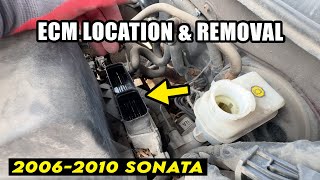
- PCM/TCM Assembly — Located in the engine bay, under the hood near the driver's side strut tower.. This is the physical location of the module that has failed. Its location in the hot engine bay can contribute to heat-related stress and eventual hardware failure.
- G109 / G110 — Main ground points for the PCM on the 3.3L engine.. A poor connection at these specific grounds can cause unstable voltage and trigger internal PCM self-test failures like P0606. These should be inspected for corrosion and tightness before condemning the PCM.
- PCM Ground Bolt — A specific ground bolt for the PCM/TCM assembly.. Service literature specifically calls out checking this ground bolt for tightness and cleanliness when diagnosing transmission-related codes that are controlled by the integrated PCM/TCM. A loose ground here can cause a host of issues, including P0606.
Real Owner Repair Stories
- Hyundai Forums user, cited in Go-Parts article (2006 Hyundai Sonata 3.3L) — P2610 code (often seen with P0606) and a 'hot-soak no-start' condition, where the car would not restart after being driven and sitting for a short period.
❌ Tried (didn't work) Initial diagnostics that did not immediately point to the PCM.
✅ What actually fixed it The problem was resolved by replacing the Powertrain Control Module (PCM) with a remanufactured unit.
OEM Part Supersession History
39110-3C760→39110-3C761, 39110-3C762, 39110-3C763, 39110-3C764— Standard part revisions for hardware or software updates.
Heads up: The original part number 39110-3C760 is noted as discontinued. When ordering, it is critical to match the part number from the original unit or use a VIN-lookup service. The listed numbers are considered interchangeable for 2006-2008 models without an immobilizer, but always verify.
Model Year Variations Within This Range
- 2006-2008: For these years, PCMs were available for vehicles with and without an immobilizer system. It is critical to specify which type is needed when ordering a replacement, as a mismatch will cause a no-start condition.
- 2009-2010: The 2009 model year refresh included a power increase for the 3.3L V6 (from 235 to 249 hp) achieved through revised engine tuning. This means the PCM software and calibration IDs are different from the earlier 2006-2008 models, and the modules are likely not interchangeable.
Diagnostic Flowchart
Other Known Issues on This Vehicle
Issues unrelated to this code that are worth knowing about as an owner of this generation:
- Front/Rear Subframe Corrosion 🔴 High — Very common in 'Salt Belt' regions. Affects 2006-2010 models. (Ref: NHTSA Recall 13V354000 (Campaign 113) was issued for the rear crossmember. An earlier campaign (089) addressed front subframes on older models.)
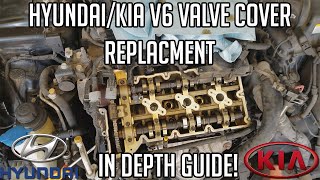
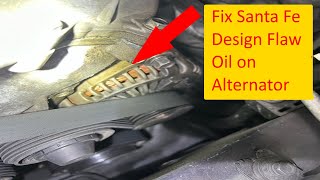
- Valve Cover Gasket Oil Leak onto Alternator 🟠 Medium — Common failure on the 3.3L V6. The front (Bank 2) valve cover gasket leaks oil directly onto the alternator, causing premature alternator failure. (Ref: Hyundai Service Campaign 936 (later TSB 23-01-076H) addressed this on the Santa Fe, but the design flaw is identical on the Sonata.)
- Stretched Timing Chain / Failed Tensioner 🔴 High — A known weak point. Often presents as a 2-5 second rattle on cold startup before progressing to timing correlation codes like P0016.
- Faulty Stop Lamp Switch 🟡 Low — Extremely common. Causes brake lights to fail or stay on, ESC light to illuminate, and can prevent the shifter from moving out of Park. (Ref: NHTSA Recall 09V122000 (Campaign 092).)
- Timing Chain Cover Oil Leak 🟠 Medium — A semi-common but expensive leak to repair, as it often requires significant labor, sometimes including dropping the subframe.
Used vs. New Parts: Buying Guide for This Vehicle
When a used part is the smart pick: A used OEM part from a junkyard is a viable, cost-effective option ONLY if you have access to a Hyundai dealership or a specialized shop with a GDS/J2534 tool to program it. Without programming, the car will not start. A 'plug-and-play' remanufactured unit from a reputable seller is a smarter choice for most DIYers, as it arrives pre-programmed to your VIN.
Donor-vehicle mileage cap: roughly under 150000 miles for the part to have meaningful remaining life.
What to inspect on the donor part:
- Ensure the part number on the donor PCM EXACTLY matches your original unit.
- Inspect the connectors for any bent pins, corrosion, or signs of water intrusion.
- Avoid modules from vehicles with obvious signs of flood or fire damage.
- If possible, get the VIN of the donor car to verify its original configuration (e.g., with/without immobilizer).
OEM-only on this vehicle (don't cheap out):
- Powertrain Control Module (PCM) - While aftermarket 'remanufactured' units are widely available and work well, a brand-new, non-OEM 'clone' module is not recommended. Stick to genuine used OEM or professionally remanufactured OEM units.
Aftermarket brands forum-validated for this vehicle:
- Cardone (Remanufactured)
- Flagship One (FS1) (Remanufactured, often pre-programmed)
- Solo Auto Electronics (Remanufactured, often pre-programmed)
Brands owners have reported issues with on this vehicle:
- Unbranded, no-name sellers on marketplaces without a warranty or programming service.
Real Owner Stories
Aggregated from forums and TSBs cited above. Mileages and costs reflect what owners reported in those sources.
2006 Hyundai Sonata 3.3L V6
Symptoms: The vehicle experienced a 'hot-soak' no-start condition where it would not start after being driven and parked. It was throwing code P2610.
What fixed it: Replacing the PCM with a remanufactured unit resolved the issue.
Source hint: https://www.hyundai-forums.com/threads/p2610-and-hot-no-start.129651/
2006-2010 Hyundai Sonata 3.3L V6
Symptoms: Engine stalls completely without warning while driving, sometimes at highway speeds. The transmission may also slam into a fail-safe gear (3rd).
What fixed it: PCM replacement was identified as the definitive fix after basic checks of batteries and connections were performed.
Source hint: https://www.carcomplaints.com/Hyundai/Sonata/2006/electrical/engine_stalls_shuts_down_while_driving.shtml
Related OBD-II Codes
Frequently Asked Questions
Does TSB 10-FL-002 apply to my 2006-2010 Sonata 3.3L experiencing P0606?
My Sonata is stalling at highway speeds and shifting into 3rd gear; is this related to P0606?
Can a bad battery or ground cause a P0606 code on the Lambda V6?
Is there a recall for the PCM on the 2006-2010 Sonata?
How can I confirm if my PCM actually needs replacement?
What is the typical cost for a PCM replacement on this model?
Helpful Videos

We Have This Part in Stock

The information in this article is provided for general reference and educational purposes only. Vehicle specifications, procedures, and part compatibility can vary by production date, trim level, and region. Always consult your vehicle's factory service manual and verify part numbers before purchasing or performing repairs. Safety-critical components such as airbags, seat belts, and braking systems should be installed by a qualified professional.
- Hyundai Sonata:
- 🧭 Diagnostic Flowchart
- 🎬 Helpful Videos
- 🛍️ Shop This Part
- What's Unique About the 2006-2010 Hyundai Sonata
- Symptoms You May Notice
- Most Likely Causes
- Rare But Worth Checking
- Diagnosis Steps
- Parts You'll Likely Need
- Related Codes That Often Appear With This One
- Technical Service Bulletins (TSBs) & Recalls
- Platform-Specific Known Issues
- Mechanic-Grade Diagnostic Values
- Scan Tool Commands That Help
- Wiring & Ground Locations
- Real Owner Repair Stories
- OEM Part Supersession History
- Model Year Variations Within This Range
- Other Known Issues on This Vehicle
- Used vs. New Parts: Buying Guide for This Vehicle
- Real Owner Stories
- 2006 Hyundai Sonata 3.3L V6
- 2006-2010 Hyundai Sonata 3.3L V6
- Related OBD-II Codes
- Frequently Asked Questions
- 🎟️ Get 5% Off