

P0606 on 2002-2006 Toyota Camry: ECM Processor Fault Causes and Fixes
On a 2002-2006 Toyota Camry, code P0606 is most often caused by a faulty downstream oxygen (O2) sensor, not the engine computer itself. An internal short in the O2 sensor's heater circuit sends a voltage spike that the ECM misinterprets as an internal failure. Replacing the bad O2 sensor, which costs about $50-$150 for the part, will usually fix the problem and clear the code.
- Do not immediately replace the ECM. This code is most often a symptom of a different, cheaper problem.
- If you have any other codes, especially for an oxygen sensor (like P0137), fix that problem first. It will likely clear the P0606.
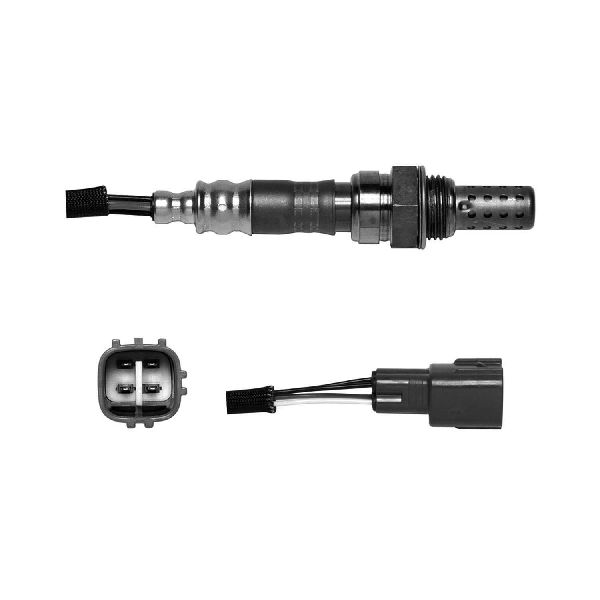
- The most likely part you'll need to buy is a downstream oxygen sensor, specifically a Denso-branded one for best results.
- Always check the simple things first: battery health, clean and tight ground wires, and the O2 sensor wiring for any visible damage.
What's Unique About the 2002-2006 Toyota Camry
For this generation of Toyota Camry, the P0606 code is notorious for being misleading. While the official diagnostic procedure might point directly to replacing the expensive ECM, experienced technicians and owners have found that the root cause is almost always a much cheaper external part. A momentary short or failure in an oxygen sensor's heater circuit is the most common trigger, causing a voltage spike that fools the ECM into setting the P0606 code. Technicians on forums like iATN specifically warn against immediate ECM replacement without first investigating the O2 sensors. Manufacturer service bulletin T-SB-0001-10 Rev confirms this behavior, noting that a P0606 DTC may be present specifically due to incorrect oxygen sensor operation. Always investigate external components before considering ECM replacement.
Symptoms You May Notice
- Check Engine Light is on
- VSC and/or TRAC OFF lights may also illuminate
- Engine may run rough, stall, or fail to start
- Poor engine performance or acceleration
- Noticeable drop in fuel economy
- Issues with automatic transmission shifting, such as erratic or hard shifts
- Vehicle may enter a reduced power 'limp mode'
- Replacing the Engine Control Module (ECM) without first diagnosing external components like oxygen sensors, wiring, and the vehicle's charging system. This is an extremely expensive and often unnecessary repair.
- Ignoring accompanying O2 sensor codes (like P0137/P0138) and focusing only on the P0606, assuming the ECM is the primary failure. The O2 sensor codes are the key to the real diagnosis.
Most Likely Causes
- Faulty Oxygen (O2) or Air/Fuel (A/F) Sensor 🔴 High Probability An internal short-circuit in the sensor's heater element is a very common failure mode that sends a voltage spike to the ECM, triggering a false P0606. The downstream (post-catalyst) sensor, often referred to as Bank 1 Sensor 2, is the most frequent culprit. The ECM interprets the abnormal voltage from the heater circuit as an internal processor error.
How to confirm: Scan for other codes. P0606 is often accompanied by O2 sensor-specific codes like P0137 or P0138. If present, diagnose the O2 sensor code first. You can also use a scan tool to graph the O2 sensor voltage and heater circuit resistance (if available) and watch for erratic behavior, spikes, or dropouts, especially when wiggling the wiring harness.
Typical fix: Replace the faulty oxygen sensor. If codes point to the downstream sensor (Bank 1, Sensor 2), replace that one.
Est. part cost: $50-$150 - Damaged Oxygen Sensor Wiring 🟡 Medium Probability → Shop Oxygen Sensor The wiring for the downstream O2 sensor runs under the vehicle and is susceptible to damage from road debris, speed bumps, or corrosion, which can cause wires to short out against each other or the chassis. This is especially noted to occur during wet or rainy conditions, causing intermittent issues. 🎬 Watch: Diagnosing P0606 and P0137 codes on wet, rainy days.
How to confirm: Visually inspect the entire wiring harness leading to the oxygen sensors. Look for frayed wires, melted plastic sheathing, or corrosion, especially where the harness is exposed or has been impacted. One owner found two gray wires had been cut by road debris, causing a short when wet.
Typical fix: Repair the damaged section of the wiring harness. This may involve soldering the wires and protecting them with high-quality electrical tape and heat-shrink tubing.
Est. part cost: $5-$20 - Low or Unstable System Voltage ⚪ Low Probability A weak battery or a failing alternator can provide 'dirty' or insufficient power, which can confuse the sensitive ECM and cause it to fail its self-test during startup or while running. This can cause a variety of seemingly unrelated electrical codes.
How to confirm: Use a multimeter to test the battery voltage with the engine off (should be ~12.6V). Then, test it with the engine running (should be ~13.5-14.5V). If the voltage is low or fluctuates wildly, the battery or alternator is suspect. A battery load test is the most definitive way to confirm a weak battery. One technician discovered high voltage (16V) from a failing alternator was the root cause.
Typical fix: Replace the weak battery or failing alternator.
Est. part cost: $150-$400 - Poor ECM Power or Ground Connections ⚪ Low Probability Over time, the main engine and chassis ground straps can corrode or loosen, creating high resistance and electrical issues. The ECM is highly sensitive to its ground path.
How to confirm: Inspect the main ground straps from the battery to the chassis and from the engine block to the chassis. Check the ECM's own ground wires per the factory service manual. Look for corrosion (green crust) or looseness. A voltage drop test on the ground side can confirm a bad connection.
Typical fix: Disconnect the grounds, clean the contact points on the wire terminal and the chassis with a wire brush until shiny, and securely tighten the connections. Apply dielectric grease to prevent future corrosion.
Est. part cost: $0-$10
Rare But Worth Checking
- Internal ECM Failure: This is the issue the code directly points to, but it is the least likely cause on this platform. A Toyota TSB (EG051-04) did exist for 2003-2004 models with the 2AZ-FE engine, recommending ECM replacement for this code, but this should only be considered after all other external causes (especially O2 sensors and wiring) have been definitively ruled out.
- Faulty Brake Light Bulb: On some Toyota models (specifically noted on a 2009 Camry but potentially applicable), a failing dual-filament brake light bulb can cause a short when the broken filament falls and bridges the two circuits (running light and brake light). This can create a voltage spike that the ECM registers as a P0606 fault, even with no other codes present.
Diagnosis Steps
- Scan for all stored trouble codes. If any codes other than P0606 are present, diagnose and fix them first, especially O2 sensor codes (P0137, P0138, etc.).
- If only P0606 is present, perform a full visual inspection of the wiring harnesses for the upstream and downstream oxygen sensors. Look for any signs of melting, chafing, or corrosion. Pay close attention to the section under the car that is exposed to road debris.
- Check the vehicle's charging system. With a multimeter, verify battery voltage is ~12.6V with the engine off and ~13.5-14.5V with the engine running. Look for any fluctuations.
- Inspect and clean the main engine-to-chassis and battery-to-chassis ground connections. Ensure they are tight and free of corrosion.
- If O2 sensor codes were present, or if all other checks pass, replace the indicated oxygen sensor. The downstream sensor (Bank 1, Sensor 2) is the most common culprit.
- As a diagnostic test, you can use a scan tool to graph O2 sensor data while an assistant carefully wiggles the sensor's wiring harness. A sudden spike or drop in the graph indicates a wiring issue.
- After repairs, clear all codes using the scan tool, then perform a drive cycle (including city and highway driving) and rescan to ensure the P0606 code does not return.
- If the code persists after all these steps, the ECM may be faulty. At this point, consulting the TSB (EG051-04) and considering professional diagnosis is recommended.
Parts You'll Likely Need
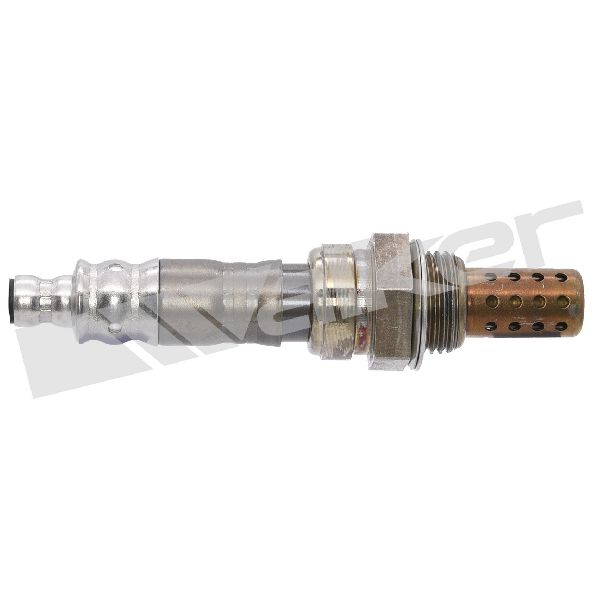
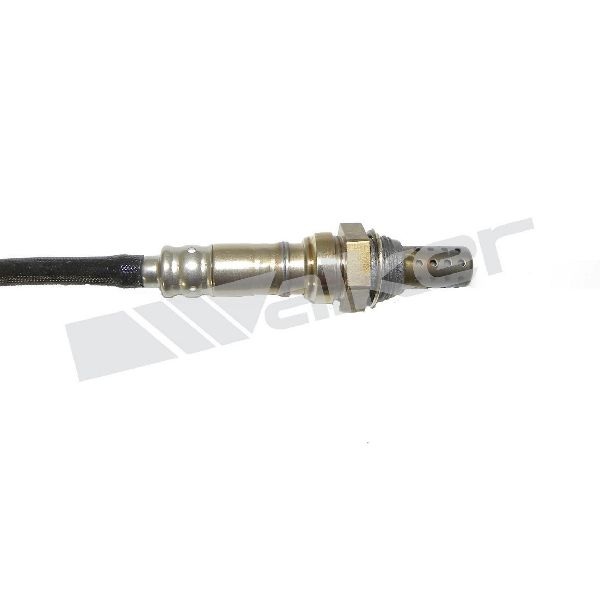
- Downstream Oxygen Sensor (Bank 1, Sensor 2)
(OEM #89465-06060)— This is the most frequent cause of a false P0606 code on this vehicle due to internal heater circuit failures sending voltage spikes to the ECM. This part number fits 2.4L, 3.0L, and 3.3L engines for the 2002-2006 Camry. 🎬 See this walkthrough for replacing the downstream oxygen sensor.
Trusted brands: Denso (OEM supplier), Bosch, NGK/NTK
OEM price range: $120-$160
Aftermarket price range: $50-$90
Related Codes That Often Appear With This One
- P0137 — This code indicates 'O2 Sensor Circuit Low Voltage (Bank 1, Sensor 2)'. Its presence strongly suggests the downstream oxygen sensor or its wiring is the true cause of the P0606.
- P0138 — This code for 'O2 Sensor Circuit High Voltage (Bank 1, Sensor 2)' also points directly to a fault with the downstream O2 sensor, which is known to trigger a false P0606.
Technical Service Bulletins (TSBs) & Recalls
- EG051-04: Mentions potential ECM replacement for P0606 on 2003-2004 Camry 2AZ-FE models.
- EG042-07: A similar TSB was released for Toyota Corolla and Matrix with the 1ZZ-FE engine, also suggesting ECM replacement for P0606, highlighting a pattern in Toyota's approach at the time.
- T-SB-0001-10 Rev: Notes that a P0606 (ECM/PCM Processor) DTC may be present due to incorrect Oxygen Sensor operation.
- T-SB-0050-22: While for a different model, this bulletin describes how Toyota modified control computer logic to reduce the possibility of a P0606 "Control Module Processor Unexpected Operation" condition.
Platform-Specific Known Issues
- A Technical Service Bulletin (TSB EG051-04) was issued for 2003-2004 Camry and Solara models with the 2AZ-FE engine, which advised that codes P0604, P0606, and/or P0607 may require an ECM replacement. This is an exception to the more common 'faulty sensor' diagnosis and should be treated as a last resort.
- The false P0606 trigger from a faulty O2 sensor is not unique to the Camry; it is a known issue across a wide range of Toyota, Lexus, and Scion vehicles of this era.
- NHTSA ODI #10384313 describes a case where a dealer replaced the ECM for a P0606 code, but the fault code recurred just 10 minutes later, illustrating that the ECM is often not the root cause.
Mechanic-Grade Diagnostic Values
- O2 Sensor Heater Resistance (Bank 1, Sensor 2) — expected: 5 to 6 Ohms at 20°C (68°F). Failure: An open circuit (infinite resistance) or a reading significantly outside the expected range indicates a failed heater element. A resistance of many thousands of Ohms can also be an indicator.
- ECM Power Supply Voltage (at ECM connector) — expected: 9V to 14V with ignition ON. Failure: Voltage below 9V or above 14V points to issues with the battery, alternator, or wiring harness power feeds to the ECM.
- Alternator Output Voltage (at battery terminals) — expected: 13.5V to 14.5V with engine running. Failure: Voltage consistently below 13.5V (undercharging) or above 14.5V (overcharging) indicates a faulty alternator or voltage regulator, which can create electrical noise and trigger a P0606.
Scan Tool Commands That Help
- Toyota Techstream: Active Test: Control the Injection Volume for A/F Sensor — This function allows a technician to manually force a rich or lean condition (+/- 12.5% fuel). By observing the A/F sensor's response (Lambda value) on the live data screen, you can confirm if the sensor is reacting properly. A healthy sensor should show a lambda of ~0.85 (rich) or ~1.14 (lean) during the test. This helps verify sensor function independently.
- Toyota Techstream: Active Test: O2 Heater — This allows you to manually turn the oxygen sensor's internal heater on and off. While monitoring the sensor's data PIDs, you can confirm if the heater circuit is functioning. When activated, the sensor's status should change to 'Warm and Ready to Operate' and voltage may change, confirming the heater is working.
- Toyota Techstream: Read Freeze Frame Data — This is a critical first step. For a P0606, the freeze frame data can reveal if an O2 sensor heater circuit resistance jumped to a very high value or if the sensor voltage went out of its normal range for just a few frames when the code was set. This is a strong clue that the sensor, not the ECM, is the problem.
Wiring & Ground Locations
- E1 (Ground) — On the engine block. A primary ground point for the ECM.. The ECM relies on this ground for stable operation. Corrosion or a loose connection at this point can cause erratic ECM behavior and trigger a P0606 fault.
- ECM Connectors (e.g., E6, E8, E10) — At the ECM, which is located behind the glove compartment on the passenger side.. These are the main interface points for the ECM. Testing for power (Connector E6, Pin 3) and ground (Connector E8, Pin 1) directly at these pins is the definitive way to confirm the ECM is receiving proper power.
- Engine Room Ground Points (Ea, Eb, Ec, Ed) — Located on the left and right fenders in the engine compartment.. These are major chassis ground distribution points for various engine compartment components. While not directly the ECM ground, poor connections here can affect components that communicate with the ECM, potentially causing electrical noise that could lead to a P0606.
Real Owner Repair Stories
- YouTube user '2002-2006 Toyota Camry P0137 and P0606...' (2006 Toyota Camry, 250,000 miles) — Check engine light with codes P0137 and P0606, particularly on wet or rainy days. The light would sometimes go off on its own.
❌ Tried (didn't work) The owner initially ignored the intermittent light.
✅ What actually fixed it The owner found the plastic sheathing on the downstream O2 sensor wiring harness had been ripped open by road debris. Two gray wires were cut and would short out when wet. The fix was to repair and re-insulate the damaged wires with high-quality electrical tape. No parts were replaced. - iATN (International Automotive Technicians Network) Forum Post (2007 Toyota Camry LE 3.5L (Note: slightly newer but the principle is identical and widely cited for this issue)) — Check Engine Light with only code P0606 present. The factory diagnostic chart pointed directly to 'Replace ECM'.
❌ Tried (didn't work) Following the factory service manual which immediately recommended ECM replacement.
✅ What actually fixed it Based on iATN forum research, the technician graphed the rear O2 sensor data on a scan tool. While wiggling the sensor wires, they observed a glitch/spike in the data. Replacing the Bank 2 Sensor 2 (B2S2) oxygen sensor resolved the P0606 code. - YouTube user 'Parts shooter' (Toyota Camry (year not specified, but of similar era)) — P0606 and P0613 codes, car left driver stranded on the highway, intermittent no-start, computer would go offline.
❌ Tried (didn't work) Initial diagnosis was confusing due to multiple codes and intermittent nature.
✅ What actually fixed it The technician discovered the alternator was failing and producing excessively high voltage (spiking to 16V). The unstable and high voltage was causing the ECM to malfunction and set the P0606 code. Replacing the faulty alternator stabilized the system voltage and fixed the problem.
Documented NHTSA Reports
- An owner reported in NHTSA ODI #10551666 that their vehicle failed to start and was found with codes P0606 and P0303 present on the OBD 2 computer.
- NHTSA ODI #10325896 describes a situation where an engine would cut out or stall while driving, accompanied by a check engine light and codes P0606 and P0456.
OEM Part Supersession History
89661-04B50→89661-04B51— Part revision or update by manufacturer.
Heads up: This is an example from a Toyota Tacoma, but illustrates a common pattern. When replacing an ECM, it is critical to verify if the part number has been superseded and if the replacement is a direct fit or requires a software update. Using an incorrect part number, even if it physically fits, can cause a no-start or other system malfunctions.
Model Year Variations Within This Range
- 2003-2004: Toyota issued TSB EG051-04 specifically for 2003-2004 Camry and Solara models with the 2AZ-FE engine. For these specific models and engine, if P0606 is present, ECM replacement is a more likely outcome than for other years in the range, though external faults should still be ruled out first.
Diagnostic Flowchart
Real Owner Stories
Aggregated from forums and TSBs cited above. Mileages and costs reflect what owners reported in those sources.
2007 Toyota Camry
Symptoms: P0606 code was present, and the factory manual instructed an ECM replacement.
What fixed it: Graphed the O2 sensors and wiggled the wires, finding a glitch in Bank 2 Sensor 2. Replaced the sensor, which fixed the car and avoided a costly ECM replacement.
Source hint: iATN (International Automotive Technicians Network) - 'Toyota P0606 - Don't replace the ECM'
2002-2006 Toyota Camry
Symptoms: P0137 and P0606 Check Engine Light codes would appear specifically on wet, rainy days.
What fixed it: Discovered exposed wires on the downstream O2 sensor harness that were shorting when wet. Repaired the wires with electrical tape to solve the problem permanently.
Source hint: YouTube - '2002-2006 Toyota Camry P0137 and P0606 Check Engine Light on Wet Rainy Days Diagnosis / Repair'
2007 Toyota Camry
Symptoms: Check engine light came on with codes P0138 and P0606 after the car sat for a month.
What fixed it: Diagnosed and addressed the O2 sensor indicated by P0138 first, as it is the likely root cause of the false P0606.
Source hint: Reddit r/Cartalk - 'Check engine light came on for first time on my 2007 Toyota Camry (code P0138 and P0606)...what should I do?'
Related OBD-II Codes
Frequently Asked Questions
Does TSB EG051-04 mean I definitely need to replace the ECM on my 2003-2004 Camry?
Why does my Camry have a P0606 code along with P0137 or P0138?
My P0606 code only seems to appear when it rains. What causes this?
Can a bad battery or alternator cause a P0606 code on my 2002-2006 Camry?
Which oxygen sensor is most likely to cause a false P0606 code on this generation of Camry?
Helpful Videos
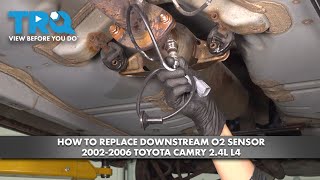
We Have This Part in Stock
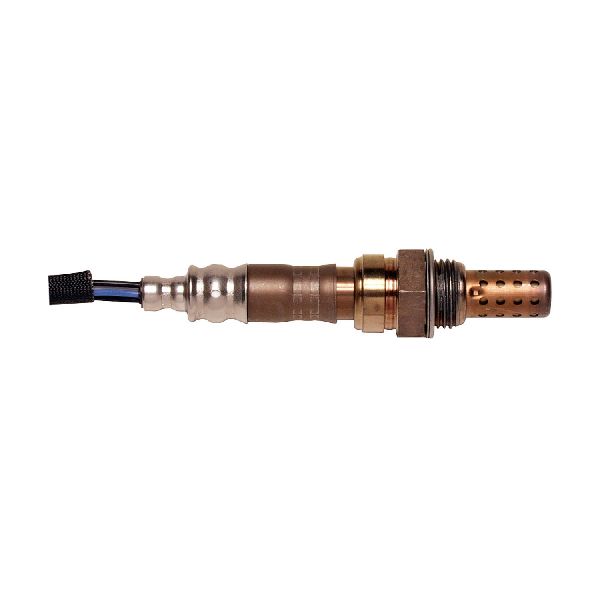
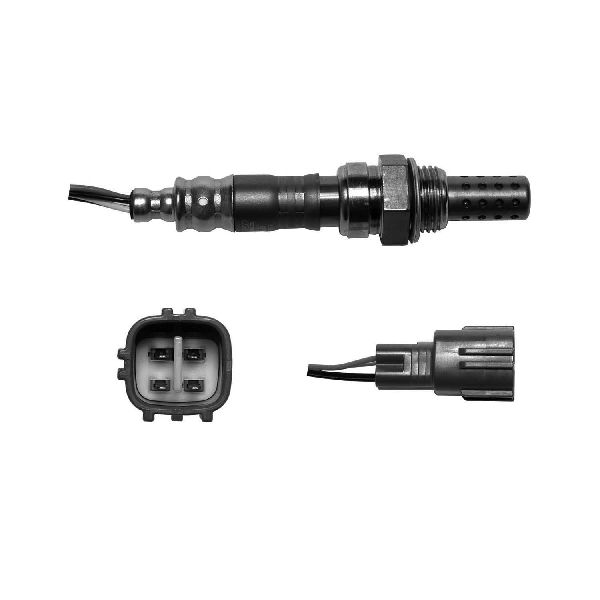


The information in this article is provided for general reference and educational purposes only. Vehicle specifications, procedures, and part compatibility can vary by production date, trim level, and region. Always consult your vehicle's factory service manual and verify part numbers before purchasing or performing repairs. Safety-critical components such as airbags, seat belts, and braking systems should be installed by a qualified professional.
- Toyota Camry:
- 🧭 Diagnostic Flowchart
- 🎬 Helpful Videos
- 🛍️ Shop This Part
- What's Unique About the 2002-2006 Toyota Camry
- Symptoms You May Notice
- Most Likely Causes
- Rare But Worth Checking
- Diagnosis Steps
- Parts You'll Likely Need
- Related Codes That Often Appear With This One
- Technical Service Bulletins (TSBs) & Recalls
- Platform-Specific Known Issues
- Mechanic-Grade Diagnostic Values
- Scan Tool Commands That Help
- Wiring & Ground Locations
- Real Owner Repair Stories
- Documented NHTSA Reports
- OEM Part Supersession History
- Model Year Variations Within This Range
- Real Owner Stories
- 2007 Toyota Camry
- 2002-2006 Toyota Camry
- 2007 Toyota Camry
- Related OBD-II Codes
- Frequently Asked Questions
- 🎟️ Get 5% Off