

P0606 on 2004-2013 Volkswagen Golf: Causes and Fixes for an ECM/PCM Processor Fault
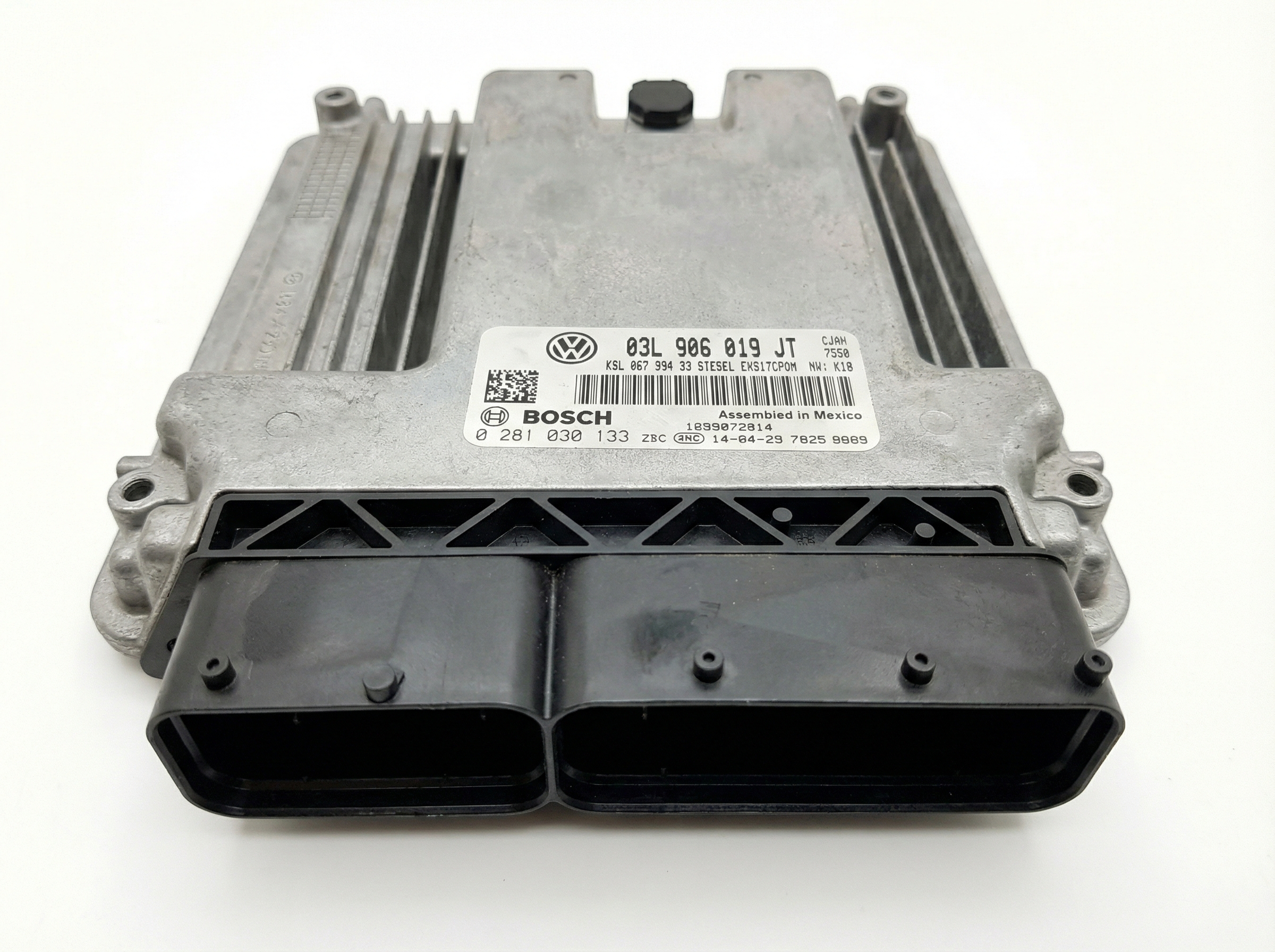
The P0606 code on a 2004-2013 VW Golf almost always indicates a critical internal failure of the Engine Control Module (ECM). While external wiring, grounds, or voltage issues must be ruled out first, the most common solution is replacing or remanufacturing the ECM. This is a costly, professional-level repair requiring vehicle-specific programming.
- P0606 is a critical fault code indicating a problem with the Engine Control Module's internal processor.
- Before replacing the expensive ECM, thoroughly inspect and test the battery, alternator, and all ECM power and ground wires for issues.
- The most common fix is replacing the ECM, a job that must be done by a professional with the correct programming tools.
- On a Mk6 Golf, be aware that external issues like a faulty fuel injector can sometimes trigger this code.
- Do not drive the vehicle with an active P0606 code, as it can stall or fail to start at any time.
What's Unique About the 2004-2013 Volkswagen Golf
The 2004-2013 Golf spans two generations, the Mk5 and Mk6. The Mk6 Golf (2008-2013) is noted as being more commonly affected by P0606, particularly models equipped with the Continental Simos PCR2.1 ECU, which is known to be prone to this failure. These VW models can also trigger the code due to external issues like faulty fuel injectors or wiring harness damage, which can mimic an ECU failure and complicate diagnosis.
Generation note: This range covers the Volkswagen Golf Mk5 (2004-2009) and Mk6 (2009-2013), both built on the PQ35 platform. The P0606 fault is reportedly more common in the Mk6 generation, especially those with Continental Simos PCR2.1 ECUs often found in TDI models. However, gasoline models (GTI) with Bosch MED17.5 ECUs can also be affected.
Symptoms You May Notice
- Check Engine Light is on (may be accompanied by EPC light)
- Engine stalls, especially at idle or low speeds
- Engine cranks but will not start, or will not crank at all
- Noticeable loss of power and poor drivability (limp mode)
- Erratic automatic transmission shifting
- Reduced fuel economy
- Engine cooling fans running constantly at high speed when the ignition is on
- Inability to communicate with the ECM using a diagnostic scan tool
- Replacing sensors (like oxygen sensors, MAF sensors, or camshaft sensors) when the ECM is the actual problem. A faulty ECM can misinterpret good sensor data or generate false sensor-related fault codes, leading to misdiagnosis.
- Immediately replacing the ECM without first thoroughly checking for bad grounds, unstable voltage from the battery/alternator, or wiring harness issues. These external problems are cheaper to fix and can mimic an internal ECM failure.
Most Likely Causes
- Internal Engine Control Module (ECM) Failure 🔴 High Probability → Shop Engine Control Module (ECM) Component deterioration from heat cycles and vibration over time is the leading cause. The Mk6 Golf in particular uses ECU models, like the Continental Simos PCR2.1, that are known to be susceptible to this failure. A user on the Ross-Tech forums noted that cracked solder balls on the processor from heat fatigue are a likely culprit, causing a no-start when hot.
How to confirm: After confirming all power, ground, and external sensor inputs to the ECM are correct, the module itself is condemned. This requires professional diagnostic tools and wiring diagrams to test pins at the ECU connector.
Typical fix: The ECM must be replaced with a new or remanufactured unit and programmed to the vehicle. Remanufacturing by a specialist (like ECU Testing or ACtronics) is often a reliable alternative to buying a new part.
Est. part cost: $400-$1200 - Poor Power or Ground Connections to ECM 🟡 Medium Probability Corroded or loose ground straps and battery terminals are a common issue on many vehicles and can cause unstable voltage that triggers a false P0606 code. A user on golfmk6.com reported a P0606 code was caused by a loose, stripped negative battery terminal. Bad grounds can cause all sorts of unpredictable electrical issues.
How to confirm: Visually inspect all ground straps from the engine and chassis to the battery. Check the battery terminals for tightness and corrosion. Use a multimeter to perform a voltage drop test on the main power and ground circuits to the ECM to check for high resistance.
Typical fix: Clean and tighten all ground connections and battery terminals. Replace any corroded or damaged wiring or terminals. The user on golfmk6.com fixed their loose terminal with a simple nut and bolt.
Est. part cost: $10-$50 - Low Battery Voltage or Failing Alternator ⚪ Low Probability → Shop Vehicle Battery The ECM is sensitive to voltage. A weak battery or a failing alternator can provide 'dirty' or insufficient power, causing the ECM to fail its self-test, especially during engine cranking when voltage drops significantly.
How to confirm: Test the battery voltage with the car off; it should be 12.4-12.6V. A reading below 12V may indicate a dead cell. With the engine running, check the alternator output; it should be stable between 13.5-14.5V.
Typical fix: Replace the weak battery or failing alternator.
Est. part cost: $150-$500
Rare But Worth Checking
- Faulty External Component or Wiring: On some VW models, a shorted fuel injector or damaged injector wiring can send an improper voltage signal to the ECM, triggering a P0606 code even though the ECM itself is functional. Similarly, a shorted O2 sensor has been known to cause a P0606 on other vehicle makes. It's crucial to check sensor reference voltages before condemning the ECU.
- Software Glitch / Corrupt Firmware: In some cases, particularly after a software update or a sudden battery disconnect, a P0606 code can be set erroneously. A dealer-level reflash or a specific reset procedure may be required to clear it. A VW TSB for the 2022 Taos (TSB 93-23-95) acknowledges that a P0606 can appear after a software flash, indicating this is a known possibility in the VW ecosystem.
- Water Ingress: The ECM is often located in the engine bay's plenum area, which can be susceptible to water collection if the sunroof or cowl drains are clogged. Water intrusion can corrode connector pins or short the internal circuit board, leading to a P0606 fault. A user on the Ross-Tech forums mentioned checking for moisture damage on the board as a key diagnostic step.
Diagnosis Steps
- Scan for all other DTCs. If other sensor or communication codes are present, investigate them, but be aware they could be symptoms of the P0606, not the cause.
- Check the battery and charging system. Ensure battery voltage is above 12.4V with the engine off and that the alternator is charging between 13.5-14.5V with the engine running. Perform a load test on the battery.
- Inspect all power and ground connections to the ECM. Look for loose terminals, corrosion, or physical damage to the wiring harness. Pay special attention to the main battery ground, engine-to-chassis ground straps, and the ECM's own ground wires.
- Using a wiring diagram for your specific model and engine, use a multimeter to verify correct battery voltage and clean grounds directly at the ECM connector pins.
- Check for Technical Service Bulletins (TSBs) related to P0606 or ECM software updates for your vehicle. A software reflash may be available to fix known glitches.
- If all wiring, power, and grounds are confirmed to be good, the fault is highly likely to be internal to the ECM.
- If the ECM is suspected, consider sending it to a specialized repair service for testing and remanufacturing. This is often more cost-effective than a new unit and avoids programming issues if they can repair your original module.
- If replacing, the new or remanufactured ECM must be programmed to the vehicle with the correct VIN and immobilizer data using professional tools.
Parts You'll Likely Need
- Engine Control Module (ECM)
(OEM #Varies by engine/year. Ex: 06J906026AB (2.0TSI), 03L906023LP (TDI))— This is the most common cause of a P0606 code after external electrical issues are ruled out, indicating an irreparable internal processor fault.
Trusted brands: Bosch, Continental
OEM price range: $1000-$1500
Aftermarket price range: $400-$800 (Remanufactured)
Related Codes That Often Appear With This One
- P060C (Internal Control Module Main Processor Performance)
- Various sensor circuit fault codes (e.g., for O2 sensors, injectors) which may be falsely triggered by the faulty ECM.
Technical Service Bulletins (TSBs) & Recalls
- While not directly for the 2004-2013 Golf, VW TSB 93-23-95 (for the 2022 Taos) acknowledges that a P0606 code can be erroneously set after a software update and provides a specific procedure to clear it, showing precedent for software-related P0606 issues in the VW family.
Platform-Specific Known Issues
- Heat-Related Failure in TDI Models: A user on the Ross-Tech forums with a 2014 TDI experienced a no-start and P0606 specifically when the car was hot. The temporary fix was to cool the ECU in a freezer. This points to heat-induced failure of internal components, such as cracked solder joints on the processor, which lose connection when they expand.
- Continental Simos PCR2.1 ECU Vulnerability: ECU repair specialists specifically call out the Continental Simos PCR2.1, common in Mk6 TDI models, as being particularly prone to developing the P0606 fault due to internal component degradation over time.
Mechanic-Grade Diagnostic Values
- Battery Voltage (Engine Off) — expected: 12.4V - 12.6V. Failure: Below 12.0V indicates a weak or dead battery. A voltage drop divisible by 2.1V (e.g., from 12.6V to 10.5V) suggests a dead cell.
- Alternator Output (Engine Running) — expected: 13.5V - 14.5V. Failure: Voltage below 13.5V or fluctuating erratically indicates a charging system problem that can trigger a false P0606.
- ECM Power/Ground Voltage Drop — expected: Near 0V difference compared to battery terminals.. Failure: A significant voltage difference between the battery terminals and the corresponding pins at the ECM connector indicates high resistance in the wiring harness, which can cause the P0606 code.
- Common Rail Diesel Injector Resistance (TDI models) — expected: Approximately 0.4 - 0.5 Ohms between terminals.. Failure: A reading that is significantly different on one injector compared to the others can indicate a faulty injector, which has been known to trigger a P0606 code.
Hidden / Shadow Codes Worth Checking
- 16990 / 001542 / P060600: These are alternative ways the P0606 fault may be displayed on VW-specific diagnostic tools like VCDS or ODIS. They all point to the same "ECM/PCM Processor Fault." (see via VCDS (VAG-COM) or ODIS (dealer-level) diagnostic software.)
Wiring & Ground Locations
- Main ECU Ground — Typically a brown wire on the main engine ground point. On many Mk5/Mk6 models, a primary ground point is located on the chassis behind the battery on the bulkhead/firewall.. A poor ground connection is a primary cause of unstable voltage to the ECM, which can trigger a false P0606 code. This is one of the first external checks to perform.
- G607 / G609 — Ground connections located in the plenum chamber (the area below the windshield wipers), left (607) and right (609).. The ECM is located in the plenum chamber. These grounds are critical for the ECM and other components in the area. Corrosion here due to water ingress from clogged drains is common.
- G652 — Transmission/engine ground connection, often a strap from the engine block or transmission housing to the chassis frame rail.. This is a main ground path for the entire powertrain. A loose or corroded strap can cause a host of electrical issues, including false processor faults.
- Plenum / Sunroof Drains — Front drains run down the A-pillars and exit under the cowl/plenum area. Rear drains run down the C-pillars. The front drain exits can be accessed by removing the plastic cowl cover below the wipers.. Clogged drains cause water to overflow into the plenum chamber, directly onto the ECM and its connectors, leading to corrosion and short circuits that cause P0606.
Real Owner Repair Stories
- golfmk6.com user 'JW with a VW' (2010 VW GTI (Mk6)) — P0606 code present.
❌ Tried (didn't work) Initial diagnosis pointed towards a faulty ECM.
✅ What actually fixed it The user discovered the negative battery terminal was extremely loose and appeared stripped. They secured it tightly using a nut and bolt combination, which resolved the P0606 code.
Model Year Variations Within This Range
- 2008-2013 (Mk6): The Mk6 generation, particularly TDI models, frequently uses the Continental Simos PCR2.1 ECU, which is cited by ECU repair specialists as being especially prone to internal failures that manifest as a P0606 code. Earlier Mk5 models may use different ECU hardware (e.g., Bosch EDC16) that can still fail but are not called out with the same frequency for this specific fault.
Diagnostic Flowchart
Real Owner Stories
Aggregated from forums and TSBs cited above. Mileages and costs reflect what owners reported in those sources.
Mk5 GTI
Symptoms: Intermittent no-start with engine light and EPC light on. Multiple codes thrown, including P0606, P2149, P0010, and P2293. The car would start fine after sitting for a while.
What fixed it: Not resolved in the post. The owner replaced the low-pressure fuel pump, but that diagnostic dead end did not resolve the issue.
Source hint: Reddit r/MechanicAdvice
2010 Volkswagen GTI
Symptoms: Triggered a P0606 code due to unstable voltage.
What fixed it: Traced to a stripped negative battery terminal. The issue was resolved by securing the terminal with a simple nut and bolt.
Source hint: golfmk6.com thread titled 'P0606 caused by loose ground terminal?'
2014 Volkswagen TDI
Symptoms: Experienced a no-start condition and a P0606 code specifically when the car was hot.
What fixed it: The temporary fix was to cool the ECU in a freezer, pointing to heat-induced failure of internal components like cracked solder joints.
Source hint: Ross-Tech forums
Related OBD-II Codes
Frequently Asked Questions
Is the Continental Simos PCR2.1 ECU in my Mk6 Golf TDI prone to the P0606 code?
My 2010 GTI has a P0606 code. Could it just be a bad battery connection?
Does VW TSB 93-23-95 apply to my 2004-2013 Golf?
Why does my Golf only throw the P0606 code and fail to start when the engine is hot?
Should I buy a brand new ECM if my Golf is diagnosed with an internal failure?
Why are my engine cooling fans running constantly at high speed with the ignition on?
We Have This Part in Stock

The information in this article is provided for general reference and educational purposes only. Vehicle specifications, procedures, and part compatibility can vary by production date, trim level, and region. Always consult your vehicle's factory service manual and verify part numbers before purchasing or performing repairs. Safety-critical components such as airbags, seat belts, and braking systems should be installed by a qualified professional.
- Volkswagen Golf:
- 🧭 Diagnostic Flowchart
- 🛍️ Shop This Part
- What's Unique About the 2004-2013 Volkswagen Golf
- Symptoms You May Notice
- Most Likely Causes
- Rare But Worth Checking
- Diagnosis Steps
- Parts You'll Likely Need
- Related Codes That Often Appear With This One
- Technical Service Bulletins (TSBs) & Recalls
- Platform-Specific Known Issues
- Mechanic-Grade Diagnostic Values
- Hidden / Shadow Codes Worth Checking
- Wiring & Ground Locations
- Real Owner Repair Stories
- Model Year Variations Within This Range
- Real Owner Stories
- Mk5 GTI
- 2010 Volkswagen GTI
- 2014 Volkswagen TDI
- Related OBD-II Codes
- Frequently Asked Questions
- 🎟️ Get 5% Off