

P0607 on 2016-2024 Audi A4 2.0L TDI: Control Module Performance Causes and Fixes
P0607 on a B9 Audi A4 typically indicates an internal failure of the Engine Control Module (ECM). The most distinct symptom is the engine stalling immediately when shifting into Drive or Reverse. While checking battery voltage and grounds is a crucial first step, the most common fix is replacing the ECM, which requires professional programming and can cost over $1500.
- P0607 on a B9 A4 is a critical code indicating a likely failure of the Engine Control Module (ECM).
- A key symptom on this specific car is the engine stalling immediately when you shift into Drive or Reverse.
- Do not drive the vehicle. It is unsafe due to the risk of sudden stalling.
- While you should check the battery and grounds first, prepare for the likelihood that the ECM needs to be replaced and professionally programmed.
What's Unique About the 2016-2024 Audi A4
For the B9 generation A4 with the 2.0L TDI engine and S-Tronic automatic transmission, code P0607 is often more than just a check engine light. Owners report a specific, severe symptom where the engine shuts off immediately after selecting Drive or Reverse. This points to a critical communication breakdown between the Engine Control Module (ECM) and the Transmission Control Module (TCM) triggered by the ECM's internal fault. While a TSB exists for this code, it applies to very specific fault conditions and may not cover this particular drivability issue, as the TSB notes that driving characteristics are unaffected in its specific scenario.
Symptoms You May Notice
- Engine stalls or shuts off when shifting into Drive or Reverse.
- Check Engine Light is on.
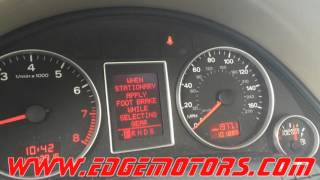
- Transmission Malfunction warning message on the instrument cluster.
- Vehicle enters limp mode with significantly reduced engine power.
- Complete no-start condition where the engine cranks but does not fire.
- Harsh or jerky gear changes.
- Unresponsive throttle or sluggish acceleration.
- Replacing the Transmission Control Module (TCM) or Mechatronic unit. While the symptoms are transmission-related (failure to engage gear), the P0607 code specifically points to a fault within the ECM itself. Forum users have reported that updating or changing the TCU did not solve the problem. However, if P0607 is stored with specific symptom codes, a TSB does point to the Mechatronic unit.
Most Likely Causes
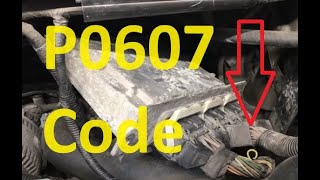
- Internal Engine Control Module (ECM) Failure 🔴 High Probability → Shop Engine Control Module (ECM) The ECM (Bosch EDC17 series) is a complex computer susceptible to failure from thermal stress, age, and internal component degradation. The specific symptom of stalling when engaging a gear strongly points 🎬 Watch: How one owner solved S-Tronic stalling to an internal processing error when the ECM is tasked with communicating load and torque requests with the S-Tronic transmission's TCM.
How to confirm: After confirming all power, ground, and network connections are perfect (voltage drop under 0.1 Ω), a diagnostic scan tool (like VCDS or ODIS) is used to check for other codes. If P0607 is the primary fault and a software 🎬 Watch: Understanding P0607 causes and fixes re-flash doesn't solve the issue, the ECM is condemned.
Typical fix: Replace the Engine Control Module and have it professionally programmed to the vehicle.
Est. part cost: $1200-$2000 - Low or Unstable System Voltage 🟡 Medium Probability Modern Audis have high electrical demands and sensitive electronics. A weak battery or failing alternator can cause voltage drops during high-load events (like engaging the transmission), causing the ECM to fail its internal self-check and log a P0607.
How to confirm: Test the battery and charging system. The battery should have at least 12.5V with the engine off. With the engine running, the alternator should produce a stable voltage between 13.8V and 14.8V. Check for excessive voltage drop during cranking.
Typical fix: Replace the battery and/or alternator. Ensure the new battery is correctly coded to the vehicle's Battery Management System.
Est. part cost: $250-$800 - Poor ECM Power or Ground Connections ⚪ Low Probability Ground straps and power connections can corrode or loosen over time, creating high resistance. This can starve the ECM of stable voltage, causing internal logic errors that mimic a module failure.
How to confirm: Visually inspect the main ECM ground strap and all connections at the battery and ECM connector for corrosion or looseness. Perform a voltage drop test on the power and ground circuits; a reading above 0.1-0.2V indicates a problem.
Typical fix: Clean or replace corroded terminals, ground straps, or repair the wiring harness.
Est. part cost: $20-$200
Rare But Worth Checking
- Corrupted ECM Software: This can happen after a failed software update or from aftermarket tuning. A dealership or specialist shop can attempt to reflash the ECM with factory software as a diagnostic step before replacing the entire unit. Forum users have reported attempting this fix, though often the problem lies with the hardware.
- Water Intrusion: If the plenum drains under the windshield are clogged, water can overflow and potentially reach the ECM or its connectors, causing short circuits. A visual inspection for water damage or corrosion in the ECM housing area is a wise step.
Diagnosis Steps
- Scan for all DTCs in all modules. Confirm P0607 is the primary code. Note any other communication (U-codes) or voltage-related codes.
- Clear the codes and attempt to start the vehicle and engage a gear. Note if the code returns immediately and if the stalling symptom occurs.
- Perform a complete battery and charging system test. Ensure battery voltage is above 12.5V (engine off) and alternator output is stable between 13.8-14.8V (engine running).
- Visually inspect the ECM, its connectors, and the main engine wiring harness for any signs of corrosion, water damage, or physical damage.
- Locate and inspect the main ECM power and ground connections. Ensure they are clean, tight, and free of corrosion. Perform a voltage drop test to check for high resistance (should be <0.2V).
- If all external wiring, power, and grounds are confirmed to be good, the fault is highly likely to be internal to the ECM.
- As a final step before replacement, a qualified shop may attempt to re-flash the ECM with the latest factory software.
- If the re-flash fails or does not resolve the symptoms, replace the ECM. This must be followed by professional programming (including Component Protection removal) and coding.
Parts You'll Likely Need
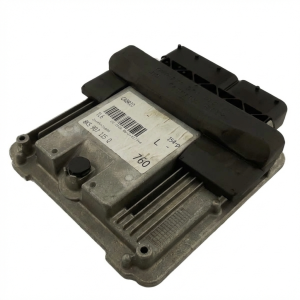
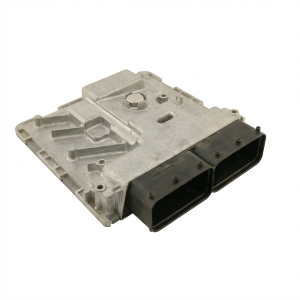
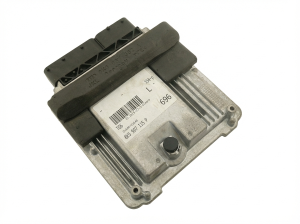
- Engine Control Module (ECM)
(OEM #04L906026T (Example, must be verified by VIN))— This code indicates an internal performance failure of the ECM itself. After ruling out external power and ground issues, replacement is the definitive fix.
Trusted brands: Bosch (OEM), Genuine Audi
OEM price range: $1500-$2000
Aftermarket price range: $800-$1500 (Remanufactured/Programmed)
Technical Service Bulletins (TSBs) & Recalls
- 2049449/2 - '35 Gearbox warning light on (DTC P0607)'. This TSB notes the customer may see a transmission malfunction warning, but that driving characteristics are unaffected, which differs from common owner complaints. It directs replacement of the Mechatronic unit only if specific secondary codes are present.
Platform-Specific Known Issues
- Audi Technical Service Bulletin (TSB) 2049449/2 addresses a gearbox warning light with DTC P060700, but only applies if very specific 'Symptom Code' and 'Error type 2' criteria are met, in which case the Mechatronic unit is the cause. This TSB explicitly states driving characteristics are unaffected, which is contrary to the common stalling complaint.
- Multiple owner reports on forums for the B9 A4 2.0L TDI with S-Tronic describe a repeatable stall when shifting from Park to Drive or Reverse, which is directly linked to the P0607 code.
Mechanic-Grade Diagnostic Values
- Battery Voltage, Engine Off — expected: At least 12.5 volts. Failure: Voltage below 12.5V can cause control modules to malfunction during self-tests.
- ECM Power Supply Relay (J271) Socket 1/30 to Ground — expected: Battery Voltage. Failure: No voltage indicates an open or short in the wiring from the battery.
- ECM Power Supply Relay (J271) Socket 3/86 to Ground (Ignition ON) — expected: Battery Voltage. Failure: No voltage indicates a problem with the ignition switch signal to the relay.
- Resistance between ECM Relay Socket 3/86 and ECM Connector T94 Pin 92 — expected: Max 3.2 Ohms. Failure: Higher resistance indicates a wiring problem between the relay and the ECM.
Hidden / Shadow Codes Worth Checking
- P060700 with Symptom Code: The Audi-specific TSB for P060700 only applies if a specific secondary 'Symptom Code' is present, which points to a Mechatronic unit fault rather than an ECM fault. This requires a dealer-level scan tool like ODIS to view. (see via Audi ODIS Diagnostic Software)
Scan Tool Commands That Help
- ODIS (Offboard Diagnostic Information System): Replace Control Module (Guided Function) — This guided function in ODIS is the official procedure to follow when installing a new ECM. It walks the technician through the process, connects to VW/Audi servers, codes the new module, and handles Component Protection adaptation.
- ODIS (Offboard Diagnostic Information System): Component Protection (Guided Function) — If a new or used module is installed and a 'Component Protection Active' fault is present, this function must be run. It requires an online connection with a GEKO account to match the module's serial number to the vehicle's VIN on factory servers.
- ODIS (Offboard Diagnostic Information System): Software Version Management (SVM) — SVM is used to verify the correct software is on a module and to perform updates. After replacing an ECM, running SVM ensures the module has the latest, correct firmware for the vehicle's specific configuration and VIN.
Wiring & Ground Locations
- ECM Connector T94 — At the Engine Control Module, typically located in the plenum area under the windshield cowling.. This is the main connector for the ECM. Pins 69 and 92 are critical for power supply relay control and are checked during advanced diagnostics.
- Ground Point 602 — In the front left footwell.. A primary interior ground point. While not a direct engine ground, poor interior grounds can cause communication issues on the CAN bus that can sometimes manifest as module performance codes.
- Earth Point on Front of Right Longitudinal Member (685) — On the frame rail in the engine bay, on the right (passenger) side.. This is a major chassis ground point. Corrosion or looseness here can affect multiple systems, including the stability of the power supply to sensitive modules like the ECM.
Model Year Variations Within This Range
- 2016-2019 (B9.0): These pre-facelift models use the MIB2 infotainment system with a rotary dial controller. The ECU and associated communication modules are part of this generation's architecture.
- 2020-2024 (B9.5): The facelifted B9.5 models feature a newer MIB3 infotainment system with a touchscreen, eliminating the console dial. The ECU and gateway modules were updated, and some engines received a 12v mild-hybrid system. These changes mean ECUs are not interchangeable between B9.0 and B9.5 generations.
Diagnostic Flowchart
Other Known Issues on This Vehicle
Issues unrelated to this code that are worth knowing about as an owner of this generation:
- AdBlue System Malfunctions 🔴 High — Commonly occurs between 30,000 and 80,000 km. Affects sensors, pumps, and can lead to a no-start condition if ignored.
- Water Pump / Thermostat Housing Leaks 🟠 Medium — Failures are common, often starting around 60,000-80,000 miles. A class-action lawsuit in North America led to an extended warranty on this part for some vehicles. (Ref: Extended Warranty via Class Action (Region Dependent))
- S-Tronic Mechatronic Unit Problems 🔴 High — Can occur between 60,000-80,000 km, presenting as jerky shifting, hesitation, or complete failure to engage gears. (Ref: TSB 2049449/2 (applies in specific scenarios))
- Diesel Particulate Filter (DPF) Clogging 🟠 Medium — More frequent on vehicles used for short trips, typically between 40,000-70,000 km. Leads to reduced power and requires forced regeneration or cleaning.
Used vs. New Parts: Buying Guide for This Vehicle
When a used part is the smart pick: A used ECM is a viable option only if you have access to a specialized service that can either 'clone' your original ECM's data to the used unit or has the tools to adapt the used ECM to your car. This is not a dealer service; it's performed by independent specialists. It makes sense if the cost of the used ECM plus the programming service is significantly less than a new, dealer-installed unit.
Donor-vehicle mileage cap: roughly under 80000 miles for the part to have meaningful remaining life.
What to inspect on the donor part:
- Verify the Bosch part number (e.g., 04L907309R) and software version match exactly.
- Ensure the donor part is from an identical vehicle (model, year, engine, transmission).
- Inspect for any signs of water damage, corrosion on the pins, or physical damage to the casing.
- Confirm the donor ECM can communicate with a diagnostic tool before purchase, if possible. A non-communicating ECU cannot be cloned.
OEM-only on this vehicle (don't cheap out):
- Engine Control Module (ECM)
Aftermarket brands forum-validated for this vehicle:
- Bosch (OEM supplier)
Brands owners have reported issues with on this vehicle:
- No-name, unbranded remanufactured units without a warranty or clear programming support.
Real Owner Stories
Aggregated from forums and TSBs cited above. Mileages and costs reflect what owners reported in those sources.
Audi A4 B9 2.0 TDI S-Tronic
Symptoms: Fault code P0607 Control Module Performance Implausible. When putting the gearbox in D or R, the car does not recognize the gear and the engine switches off.
What fixed it: The owner attempted to update the TCU and ECU software, but it did not fix the problem. A TCU module change was suggested by the community as a potential fix for this specific S-Tronic II GEN behavior.
Source hint: MHH AUTO - Thread 'Audi A4 B9 2.0 TDI S-Tronic II GEN , fault P0607 - Control Module Performance Impl..'
Related OBD-II Codes
Frequently Asked Questions
Does Audi TSB 2049449/2 apply to my A4 if it stalls when shifting into gear?
Can I fix the P0607 code on my 2.0L TDI by just updating the software?
Why does my Audi A4 B9 stall specifically when I shift into Drive or Reverse?
Is the P0607 code related to the common AdBlue or DPF issues on the 2.0L TDI?
Could a weak battery cause a P0607 code on my Audi?
Helpful Videos


We Have This Part in Stock


The information in this article is provided for general reference and educational purposes only. Vehicle specifications, procedures, and part compatibility can vary by production date, trim level, and region. Always consult your vehicle's factory service manual and verify part numbers before purchasing or performing repairs. Safety-critical components such as airbags, seat belts, and braking systems should be installed by a qualified professional.
- Audi A4:
- 🧭 Diagnostic Flowchart
- 🎬 Helpful Videos
- 🛍️ Shop This Part
- What's Unique About the 2016-2024 Audi A4
- Symptoms You May Notice
- Most Likely Causes
- Rare But Worth Checking
- Diagnosis Steps
- Parts You'll Likely Need
- Technical Service Bulletins (TSBs) & Recalls
- Platform-Specific Known Issues
- Mechanic-Grade Diagnostic Values
- Hidden / Shadow Codes Worth Checking
- Scan Tool Commands That Help
- Wiring & Ground Locations
- Model Year Variations Within This Range
- Other Known Issues on This Vehicle
- Used vs. New Parts: Buying Guide for This Vehicle
- Real Owner Stories
- Audi A4 B9 2.0 TDI S-Tronic
- Related OBD-II Codes
- Frequently Asked Questions
- 🎟️ Get 5% Off