

P0607 on 2019 Ram 3500 6.7L Cummins: Control Module Performance Causes and Fixes
On a 2019 Ram 3500 with the 6.7L Cummins, P0607 almost always indicates a software issue, not a failed engine computer. The most common fix is a dealer-performed software update (reflash) per manufacturer TSBs, costing around $150-$300. Before replacing any parts, check for other codes, verify battery and ground connections, and have a dealer check for applicable software updates for your VIN.
- Do not replace the PCM for a P0607 code on a 2019 Ram 3500 until you have checked for software updates.
- Contact a Ram dealer with your VIN to see if TSB 18-066-23 applies to your truck; a software reflash is the most common fix.
- Always diagnose and fix any other trouble codes first, as P0607 is often a symptom of another problem, especially with the emissions system.
- Before any expensive repairs, ensure the battery is healthy and all main power and ground connections are clean and tight.
What's Unique About the 2019-2019 Ram 3500
For the 2019 Ram 3500 with the 6.7L Cummins engine, P0607 is rarely a sign of a failed PCM. Instead, it frequently appears as a secondary or 'consequential' code caused by a software calibration issue. Manufacturer Technical Service Bulletin (TSB) 18-066-23 explicitly lists P0607-00 as a code fixed by a PCM software update. This TSB addresses dozens of other codes simultaneously, from emissions (P1C54, P2463) to misfires (P0301-P0306), confirming the root cause is often flawed PCM logic that gets overwhelmed, rather than expensive hardware failure.
Symptoms You May Notice
- Check Engine Light (Malfunction Indicator Lamp) is on
- Vehicle may enter reduced power or "limp mode"
- Engine may stall, run rough, or fail to start
- Unpredictable engine or transmission behavior
- Erratic gauge readings or other warning lights, such as for the DEF system
- Tachometer bouncing at idle with no actual change in engine RPM
- Harsh downshift clunk during exhaust brake deceleration
- Replacing the Powertrain Control Module (PCM) without first attempting a software update or diagnosing other DTCs. This is an expensive and often unnecessary repair.
- Replacing emissions components for other codes present without realizing that a single PCM reflash per TSB 18-066-23 is the intended fix for all of them together.
Most Likely Causes
- PCM Software Requires Update 🔴 High Probability Manufacturer TSB #18-066-23 specifically calls out a software update to fix P0607 and a host of other seemingly unrelated codes, indicating a known logic flaw in the original software. This update was also released as Rapid Service Update (RSU) 21-028. The sheer number of codes and symptoms addressed by this single reflash (including idle instability, DPF issues, and misfires) points to a systemic software problem.
How to confirm: A Ram dealer or a properly equipped independent shop must use a tool like wiTECH to check the vehicle's VIN against TSB 18-066-23 and verify the current software calibration ID.
Typical fix: Reprogramming (reflashing) the Powertrain Control Module with the latest manufacturer-supplied software. This is a non-negotiable first step before any hardware replacement.
Est. part cost: $0 - Fault in Another System (Emissions, Fuel, etc.) 🟡 Medium Probability The PCM on this complex diesel engine processes thousands of inputs. A fault in a subsystem, like a clogged DPF, a failing NOx sensor, or a DEF system pressure issue, can overwhelm the processor, causing it to fail its internal self-check and set a P0607 as a secondary code. TSBs confirm this link by bundling the P0607 fix with fixes for numerous emissions codes.
How to confirm: Scan for all other Diagnostic Trouble Codes (DTCs). If codes like P2463 (DPF Restriction) or P20E8 (Reductant Pressure Too Low) are present, diagnose and fix them first. P0607 is often a symptom, not the root cause.
Typical fix: Diagnose and repair the primary fault (e.g., service the DPF system, repair a DEF system leak, fix a faulty sensor). The P0607 code may resolve on its own or require a reflash after the primary repair.
Est. part cost: $50-$2000+ - Poor Battery, Charging System, or Ground Connection ⚪ Low Probability → Shop Vehicle Battery All control modules require stable voltage. The dual-battery system and high electrical demands of a modern diesel truck can expose weaknesses in failing batteries or the alternator, causing voltage spikes or drops that trigger module self-test failures. Corroded or loose ground straps are a known source of electrical gremlins on these trucks.
How to confirm: Load test both batteries, even if they seem to be working. Check the alternator output under load (should be ~13.5-14.5 volts). Visually inspect and verify the integrity of all main battery cables, chassis grounds, and PCM ground straps. A common ground point is from the frame to the body.
Typical fix: Replace weak batteries, a faulty alternator, or clean/repair corroded or loose ground connections. Ensure all connections are tight and free of corrosion.
Est. part cost: $20-$600
Rare But Worth Checking
- Faulty Powertrain Control Module (PCM): → Shop Engine Control Module (ECM) While this is the direct definition of the code, actual hardware failure is rare on this platform compared to software or voltage issues. This should only be considered after all other possibilities, especially software updates and checking for other DTCs, have been exhausted. One owner of an older model reported a dealer had to re-flash the VIN into the ECM to solve the code after an aftermarket tuner was removed.
- Aftermarket Performance Tuner: Improperly written or installed performance tunes can cause the PCM to operate outside of its expected parameters, leading to internal conflicts and a P0607 code. A user on an EFILive forum reported P0607 appeared randomly after flashing a deleted tune to an '08 6.7L, suggesting a conflict between the tune and the PCM's internal checks.
Diagnosis Steps
- Connect a professional OBD-II scanner (like wiTECH) and check for any other codes besides P0607. If other codes exist, document them but do not begin repairs yet.
- Contact a Ram dealer with your VIN. Ask if TSB 18-066-23 or any other PCM software update applies to your vehicle. This is the most critical step.
- If a software update is available, have the PCM reflashed. This is the most likely solution and often resolves a large batch of codes simultaneously.
- If no software update is available or the code returns, perform a full electrical system check. Load test both batteries individually. Check alternator output (~13.5-14.5V). Inspect, clean, and tighten all power and ground connections, including main battery terminals, chassis grounds, and the PCM's own ground straps.
- If other DTCs were present in Step 1, and the reflash did not clear them, diagnose and repair those primary issues now. A persistent fault in another system can cause P0607 to return.
- Check for the presence of any aftermarket performance tuners or wiring modifications. If one is installed, remove it and return the vehicle to the stock calibration to see if the code disappears.
- If all other steps have failed, the PCM itself may be faulty. This should be the last resort and requires professional confirmation before replacement.
Parts You'll Likely Need
- Powertrain Control Module (PCM) Reprogramming — This is not a physical part, but a service. TSB 18-066-23 confirms a software update is the most common required fix for P0607 on this vehicle.
Trusted brands: Mopar Dealer Service
OEM price range: $150-$300
Aftermarket price range: N/A - Powertrain Control Module (PCM)
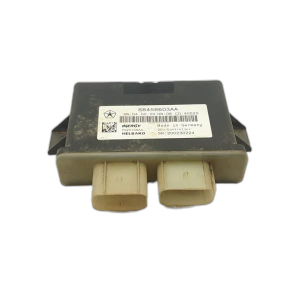
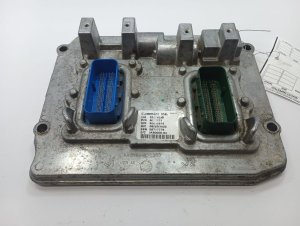
(OEM #68363277AA (Mopar), 4384696 (Cummins))— This is the last resort if all other diagnostics fail and the module is confirmed to have an internal hardware failure. It is sold unprogrammed and requires dealer tools to be configured to the truck's VIN.
Trusted brands: Mopar
OEM price range: $1500-$2800
Aftermarket price range: $800-$1500
Related Codes That Often Appear With This One
- P0604 — Stands for 'Internal Control Module RAM Error'. This is another internal self-check code often resolved by the same PCM software update that fixes P0607.
- P1C54 — Stands for 'SCR NOx Catalyst Missing'. This is one of many emissions-related codes listed in TSB 18-066-23 alongside P0607, highlighting the link between emissions system faults and the PCM performance code.
- P0301-P0306 — Cylinder misfire codes. These can be triggered as a result of the PCM's instability and are also mentioned in TSB 18-066-23 as being resolved by a software update.
- P2463 — Stands for 'Diesel Particulate Filter Restriction'. This is another common code that can trigger P0607 as a secondary fault and is specifically mentioned in TSB 18-066-23.
- P20E8 — Stands for 'Reductant Pressure Too Low'. This DEF system code is frequently cited alongside P0607 in Ram TSBs, with the fix being a PCM software update.
- P061B — Stands for 'Internal Control Module Torque Calculation Performance'. This is another internal PCM self-check code that is also listed as being resolved by the software update in TSB 18-066-23.
Technical Service Bulletins (TSBs) & Recalls
- 18-066-23: Flash: Powertrain Control Module (PCM) Updates. This TSB involves reprogramming the PCM to fix dozens of potential DTCs, including P0607-00 - ECU Internal Performance. It applies to 2019 Ram 2500/3500 pickups.
- 18-011-21 REV. A: Flash: Powertrain Control Module (PCM) Updates. A similar TSB to the one above, but specifically for 2019 Ram 3500/4500/5500 Cab Chassis models, also fixing P0607 with a software update.
- Bulletin #1810122REVA: This manufacturer bulletin notes that a technician may find P0607-00 set alongside emissions codes like P2463-00 (DPF Restriction) and P20E8-00 (Reductant Pressure Too Low), requiring a PCM software flash.
- Bulletin #18-101-22: This TSB addresses Malfunction Indicator Lamp (MIL) illumination where P0607-00 and P20E8-00 are present, indicating the need for a software update to resolve internal performance logic errors.
- Bulletin #18-056-22: A service bulletin for 2019 models where P0607-00 may be found with P0506-00 (Idle Control System RPM Lower Than Expected) and various cylinder misfire codes (P0301-P0303).
- Bulletin #1800724: This 2024 update confirms that P0607-00 - ECU Internal Performance remains a known issue that can be set alongside P0506-00 and P20E8-00, requiring the latest fuel system software calibration.
Platform-Specific Known Issues
- TSB 18-066-23 was released by the manufacturer to address P0607 and a long list of other codes with a PCM software update, indicating a widespread issue with the original software calibration.
- The TSB explicitly notes that the software update includes dozens of improvements, from fixing DTCs to improving cold start behavior, idle stability, and even correcting the DEF gauge logic, showing how interconnected the systems are.
- Manufacturer records such as Bulletin #1806623 highlight that P0607-00 is frequently bundled with P026B (Injection Timing Performance) and soot accumulation codes, suggesting the PCM logic can fail when processing complex emissions and injection timing data.
Mechanic-Grade Diagnostic Values
- PCM Power Pin Voltage (Key On, Engine Off) — expected: 12.2 V ± 0.5 V. Failure: Voltage below this range indicates a power supply issue from the battery, fuse, or wiring before it reaches the PCM.
- PCM Ground Circuit Resistance — expected: Below 0.1 Ω. Failure: Resistance higher than 0.1 Ω signifies a poor ground connection, which can cause voltage instability and module glitches.
- Alternator Output Voltage (Engine Running at Idle) — expected: 13.5V - 14.5V. Failure: Voltage that is unstable, too low, or too high points to a failing alternator or voltage regulator, a primary cause of P0607.
- Minimum Cranking Voltage — expected: Above 9.0V. Failure: A voltage dip below 9.0V during engine cranking can cause the PCM to reset or glitch, logging a P0607 code.
Scan Tool Commands That Help
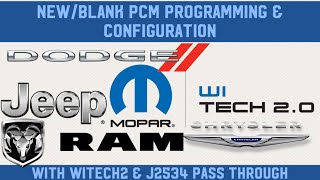
- wiTECH (or equivalent): Check for PCM Software Updates — This should be one of the very first diagnostic steps. It checks Chrysler's servers for any available software updates (reflashes) for the vehicle's VIN, which is the most common fix for P0607 on this platform.
- wiTECH (or equivalent): ECU/PCM Internal Self-Test — This command forces the PCM to run its internal diagnostic routines on demand. A failure here strongly suggests an internal hardware fault, but it should only be used after verifying all power and ground circuits are perfect.
- wiTECH (or equivalent): Restore Vehicle Configuration — This function is mandatory after replacing a PCM. It programs the new module with the vehicle's VIN, security information (SKIM), and other vehicle-specific options to allow it to function in the truck.
- AlfaOBD: Change VIN / Injector Codes — While not a full programming tool like wiTECH, AlfaOBD may be capable of writing a VIN and injector codes to a diesel PCM. However, this is not sufficient for a full replacement on 2018+ trucks due to the Secure Gateway Module (SGW) and immobilizer, which will likely result in a start-and-stall condition.
Wiring & Ground Locations
- Engine Harness Chafe Points — General areas to inspect on the 6.7L Cummins are where the harness passes the A/C compressor, A/C lines, starter motor body, and the back of the engine block near metal brackets.. While not a direct cause of P0607, a shorted sensor wire (e.g., for the crank or cam sensor) can send garbage data to the PCM, potentially overwhelming it and causing it to fail its internal self-check, logging P0607 as a secondary code.
- Main PCM Ground Strap — Typically runs from the back of the cylinder head to the firewall or frame.. A loose or corroded main ground for the PCM is a primary cause of unstable voltage, leading to internal processing errors and the P0607 code. Ensuring this connection is clean and tight is a critical diagnostic step.
- Battery to Frame/Body Grounds — Main ground cables from the negative battery terminals to the chassis/frame. On dual-battery systems, both sets must be inspected.. The entire vehicle's electrical system relies on these main grounds. Corrosion or looseness here can cause widespread, intermittent electrical issues, including the voltage instability that triggers P0607.
Real Owner Repair Stories
- Go-Parts article citing owner reports (Ram 2500 with 6.7L Cummins (year not specified but platform-relevant)) — Check Engine Light with code P0607.
❌ Tried (didn't work) Initial diagnosis was unclear.
✅ What actually fixed it The code appeared after installing an aftermarket Edge tuner. The owner took it to the dealer, who found the ECM had 'lost the VIN'. The dealer reflashed the ECM back to the stock configuration, which resolved the P0607 code. - EFILive Forum user (2008 Ram 6.7L Cummins) — P0607 and reduced power mode.
❌ Tried (didn't work) Reflashing the tune multiple times., Flashing back to a modified stock tune.
✅ What actually fixed it The user was still diagnosing, but the problem started immediately after flashing a custom 'deleted' tune onto a truck that had never been tuned before. The P0607 code would appear randomly about a day after each flash, indicating a persistent conflict between the tune file and the PCM's internal self-checks.
OEM Part Supersession History
68092086AA→68603870AA— Standard part update/revision.
Heads up: This is for a critical ECU ground strap, not the PCM itself. The new part is a direct replacement for the old one.
Diagnostic Flowchart
Other Known Issues on This Vehicle
Issues unrelated to this code that are worth knowing about as an owner of this generation:
- Bosch CP4 High-Pressure Fuel Pump Failure 🔴 High — Common enough on 2019-2020 models to trigger a major safety recall (Y78 / NHTSA 21V880). Failure can occur at any mileage. (Ref: Recall Y78 (NHTSA 21V880) was issued to replace the CP4 pump with a more robust CP3 pump and reflash the PCM.)
- Aisin AS69RC Transmission Problems 🟠 Medium — Multiple owner complaints of erratic/harsh shifting, and in some cases, early failure or loss of gears. A TSB was issued for a K1 clutch snap ring issue on later models. (Ref: TSB 21-002-23 was issued for K1 Clutch Snap Ring repair on 2021-2023 models, but owners of 2019 models have also reported transmission issues.)
- Premature Water Pump Failure 🟡 Low — Reports of coolant leaks from the water pump are not uncommon. Some owners report replacing them every 50k-70k miles. (Ref: A recall existed for water pumps on earlier (2013-2017) models, but 2019+ models can still experience leaks.)
- Variable Geometry Turbocharger (VGT) Issues 🟠 Medium — Over time (typically over 100k miles), the turbo vanes can stick due to soot/carbon buildup, leading to underboost/overboost codes, poor performance, and actuator failure.
- Premature Lifter Failure 🟠 Medium — Some specialists note an increase in premature lifter and camshaft failure on 2019+ models, potentially exacerbated by using incorrect oil types.
Used vs. New Parts: Buying Guide for This Vehicle
When a used part is the smart pick: For this specific vehicle (2019+), buying a used PCM from a junkyard is NOT a smart choice for a DIY or typical independent shop repair. The integrated security, including the Secure Gateway Module (SGW), makes it extremely difficult to reprogram. A used module will cause a VIN mismatch and immobilizer lock-out, resulting in a no-start or start-and-stall condition.
What to inspect on the donor part:
- Not applicable, as a used module is not recommended due to programming and security challenges.
OEM-only on this vehicle (don't cheap out):
- Powertrain Control Module (PCM): Due to the complex VIN, immobilizer, and vehicle configuration programming required, only a new, unprogrammed Mopar PCM installed and flashed by a dealer with a legitimate wiTECH subscription is a guaranteed fix.
Aftermarket brands forum-validated for this vehicle:
- Flagship One (FS1) / All Computer Resources (ACR): These companies offer refurbished PCMs that they pre-program with your vehicle's VIN before shipping, advertising a 'plug and play' solution. However, success can be mixed, and it's critical to ensure they have the correct software for your specific 2019+ Cummins due to the advanced security.
Brands owners have reported issues with on this vehicle:
- Any generic, unprogrammed used PCM from sources like eBay or a junkyard should be avoided unless you have access to advanced, dealer-level bench programming tools and expertise to clone the original module's data.
Real Owner Stories
Aggregated from forums and TSBs cited above. Mileages and costs reflect what owners reported in those sources.
2019 Ram 2500/3500 6.7L Cummins Diesel
Symptoms: The vehicle experienced a wide range of issues including P0607, idle instability, DPF issues, misfires, and incorrect DEF gauge readings.
What fixed it: Reprogramming the Powertrain Control Module (PCM) with the latest software as per TSB 18-066-23.
Source hint: TSB 18-066-23: Flash: Powertrain Control Module (PCM) Updates
2019 Ram 3500/4500/5500 Cab Chassis 6.7L Cummins Diesel
Symptoms: The truck set code P0607-00 (ECU Internal Performance).
What fixed it: A PCM software update/reflash specifically for Cab Chassis variants.
Source hint: TSB 18-011-21 REV. A: Flash: Powertrain Control Module (PCM) Updates
2004.5 Ram 6.7L Cummins Diesel
Symptoms: Owner received a P0607 code after experiencing issues with an aftermarket Edge tuner.
What fixed it: The dealer reflashed the ECM to restore the VIN and stock calibration.
Source hint: Turbo Diesel Register - Check engine light with code P0607
2019 Ram 3500 6.7L Cummins Diesel
Symptoms: The owner noted a P20EE code (SCR NOx Catalyst Efficiency) which persisted even after a DEF pump replacement.
What fixed it: Applying the software update outlined in TSB 18-066-23, which resolved the emissions codes and related logic errors.
Source hint: Turbo Diesel Register - TSB 18-066-23 Discussion
Related OBD-II Codes
Frequently Asked Questions
Does TSB 18-066-23 apply to my 2019 Ram 3500 with the 6.7L Cummins?
I have a 2019 Ram 3500 Cab Chassis; is there a different update for my truck?
Can a problem with my DEF system cause the P0607 code on my 2019 Ram?
Will an aftermarket tuner cause a P0607 code on my Cummins diesel?
Should I replace my PCM immediately if I see the P0607 code?
Is the CP4 fuel pump recall related to the P0607 code?
Helpful Videos
We Have This Part in Stock


The information in this article is provided for general reference and educational purposes only. Vehicle specifications, procedures, and part compatibility can vary by production date, trim level, and region. Always consult your vehicle's factory service manual and verify part numbers before purchasing or performing repairs. Safety-critical components such as airbags, seat belts, and braking systems should be installed by a qualified professional.
- Ram 3500:
- 🧭 Diagnostic Flowchart
- 🎬 Helpful Videos
- 🛍️ Shop This Part
- What's Unique About the 2019-2019 Ram 3500
- Symptoms You May Notice
- Most Likely Causes
- Rare But Worth Checking
- Diagnosis Steps
- Parts You'll Likely Need
- Related Codes That Often Appear With This One
- Technical Service Bulletins (TSBs) & Recalls
- Platform-Specific Known Issues
- Mechanic-Grade Diagnostic Values
- Scan Tool Commands That Help
- Wiring & Ground Locations
- Real Owner Repair Stories
- OEM Part Supersession History
- Other Known Issues on This Vehicle
- Used vs. New Parts: Buying Guide for This Vehicle
- Real Owner Stories
- 2019 Ram 2500/3500 6.7L Cummins Diesel
- 2019 Ram 3500/4500/5500 Cab Chassis 6.7L Cummins Diesel
- 2004.5 Ram 6.7L Cummins Diesel
- 2019 Ram 3500 6.7L Cummins Diesel
- Related OBD-II Codes
- Frequently Asked Questions
- 🎟️ Get 5% Off