

P0700 on 2008-2014 Mercedes-Benz C-Class: Transmission Fault Guide and Fixes
P0700 indicates a transmission fault. On a 2008-2014 C-Class, this almost always means the transmission conductor plate has failed. This part contains the control module (TCM) and integrated speed sensors. A professional repair involving replacement or repair of the plate is the typical solution, costing roughly $1,000-$2,200.
- P0700 is just a messenger code; the real problem is stored in your Transmission Control Module (TCM).
- For the 2008-2014 C-Class, the most likely cause is a failed transmission conductor plate due to faulty integrated speed sensors.
- Diagnosis requires a scanner that can read Mercedes-specific transmission codes, not just a basic OBD-II reader.
- Repair is not a simple DIY job. It involves internal transmission work and likely requires electronic programming of the new part.
- Consider having your original conductor plate repaired by a specialist service to potentially avoid costly programming at a dealership.
What's Unique About the 2008-2014 Mercedes-Benz C-Class
The 2008-2014 Mercedes-Benz C-Class (W204 generation) primarily uses the 7G-Tronic (model 722.9) automatic transmission. This transmission is known for a very common failure point: the conductor plate, also known as the Valve Body Control Unit (VGS). This single mechatronic component integrates the Transmission Control Module (TCM) and critical speed sensors (Y3/8n1 and Y3/8n2). When P0700 appears on this vehicle, it is highly probable that one of these non-serviceable, integrated sensors has failed, requiring the entire conductor plate to be addressed. This is different from vehicles where speed sensors are separate, externally mounted parts.
Symptoms You May Notice
- Check engine light is on
- Vehicle enters "limp mode" (stuck in a single gear, often 2nd or 3rd)
- Harsh, jerky, or delayed shifting
- Inability to shift gears at all
- Sudden, aggressive downshifts when coming to a stop
- Transmission holds a gear too long before shifting
- Instrument cluster does not correctly display the selected gear (P, R, N, D)
- Replacing the entire transmission. Many shops unfamiliar with this specific issue may quote a full transmission replacement when only the conductor plate needs to be repaired or replaced, which is a fraction of the cost.
- Assuming the TCM itself is faulty without specific codes. While the TCM is part of the conductor plate, the issue is almost always the integrated speed sensors, not the logic portion of the module.
- Replacing only the transmission fluid without addressing the underlying electronic fault. If a speed sensor has failed, a fluid change will not fix the problem.
Most Likely Causes
- Failed Transmission Conductor Plate 🔴 High Probability → Shop Transmission Assembly The speed sensors (specifically Y3/8n1 Turbine Speed Sensor and Y3/8n2 Internal Speed Sensor) are integrated into the conductor plate and are a well-documented weak point on the 722.9 transmission, prone to internal electronic failure.
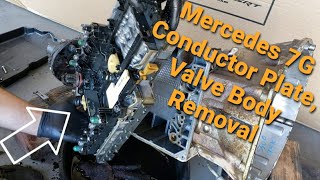
How to confirm: Use a Mercedes-specific diagnostic scanner (like STAR/XENTRY) to read codes from the TCM (EGS). Fault codes such as 0717, 0718, 2767, or 2768 directly indicate a failure of the speed sensors on the conductor plate. 🎬 Watch: How to identify and repair these specific fault codes.
Typical fix: The conductor plate must be either replaced with a new, programmed unit or the original unit must be removed and sent to a specialist for repair, which avoids the need for SCN coding.
Est. part cost: $250-$600 for a repair service, or $700-$1050 for a new OEM part. - Low or Degraded Transmission Fluid / Leaking Connector 🟡 Medium Probability → Shop Transmission Assembly The 13-pin electrical connector sleeve on the transmission case is a common failure point. It can leak fluid, which can then wick up the wiring harness all the way to the TCM, causing electrical faults.
How to confirm: Visually inspect the round 13-pin connector on the transmission for fluid leakage. Check the transmission fluid level and condition using the proper procedure for the 722.9 transmission (which does not have a traditional dipstick). The fluid should be bright red (for early models) or blue (for later models) and not smell burnt.
Typical fix: Replace the 13-pin connector sleeve and perform a transmission fluid and filter service. If fluid has contaminated the harness, it may need to be cleaned or replaced.
Est. part cost: $20-$40 for the connector sleeve, plus $150-$300 for a fluid and filter kit. - Faulty Valve Body Solenoids ⚪ Low Probability → Shop Transmission Valve Body While less common than sensor failure, the solenoids on the valve body can fail electrically or become clogged with debris over time, causing shifting problems.
How to confirm: A Mercedes-specific scanner may show codes pointing to a specific solenoid's electrical fault or performance issue.
Typical fix: Replace the individual faulty solenoid(s) located on the valve body. This is often done during a conductor plate replacement.
Est. part cost: $50-$150 per solenoid.
Diagnosis Steps
- Connect a basic OBD-II scanner to confirm the presence of the P0700 code in the ECM.
- Connect a Mercedes-Benz compatible scanner (such as STAR/XENTRY, iCarsoft, or Autel) to the vehicle.
- Access the Transmission Control Module (TCM / EGS) to read the stored, specific fault codes.
- Analyze the TCM codes. Look for codes related to speed sensors (Y3/8n1, Y3/8n2) like 0717, 0718, 2767, 2768, which strongly suggest conductor plate failure.
- If no speed sensor codes are present, check for solenoid or pressure control codes.
- Inspect the round 13-pin electrical connector on the transmission case for any signs of fluid leakage. If wet, unplug the connector at the TCM (often located in the passenger footwell or engine bay) to see if fluid has wicked up the harness.
- Check the transmission fluid level and condition according to the manufacturer's procedure. This requires the vehicle to be at a specific temperature and is done via the service port, as there is no dipstick.
- If symptoms are intermittent and no codes are stored, a technician may need to monitor live data from the speed sensors while driving to spot erratic signals.
Parts You'll Likely Need
- Transmission Conductor Plate / TCU / VGS
(OEM #A0002702600 (often superseded, check VIN). Other numbers include A0002701700, A0034460310.)— This is the component that contains the speed sensors that commonly fail, causing the P0700 code and associated symptoms.
Trusted brands: Mercedes-Benz Genuine, Siemens VDO
OEM price range: $700-$1050
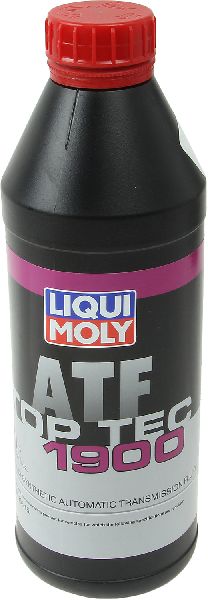
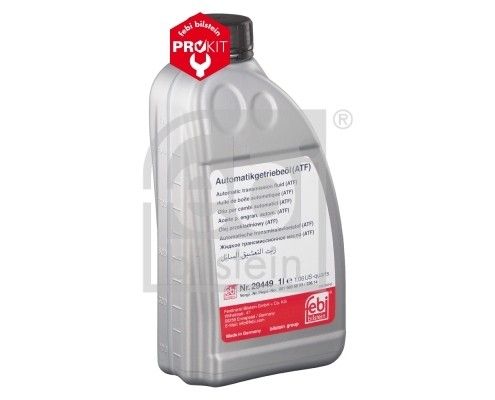
Aftermarket price range: $250-$500 (for a repair service) - Transmission Fluid and Filter Kit — The transmission fluid must be drained to access the conductor plate, so it must be replaced as part of the job. There are different fluid specs (e.g., red vs. blue) depending on the year, so verifying the correct fluid is critical.
Trusted brands: Mercedes-Benz Genuine, Fuchs, Liqui Moly, Vaico
OEM price range: $200-$300
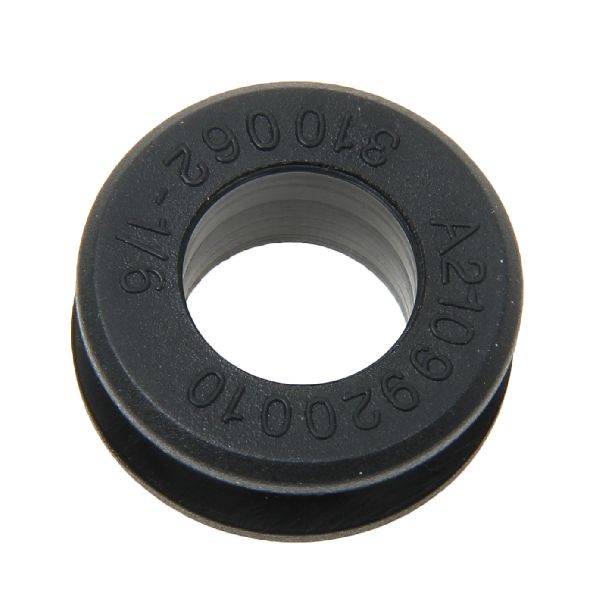
Aftermarket price range: $100-$180 - Transmission Connector Plug / 13-pin Adapter
(OEM #A2035400253)— This inexpensive seal is a very common leak point and should always be replaced when servicing the valve body or conductor plate.
Trusted brands: Mercedes-Benz Genuine, Febi, Meyle
OEM price range: $20-$40
Aftermarket price range: $10-$25
Related Codes That Often Appear With This One
- 0717 — This Mercedes-specific code means 'The signal from component Y3/8n1 (Turbine Speed Sensor, VGS) is not available,' directly pointing to a common conductor plate failure.
- 0718 — This Mercedes-specific code means 'Component Y3/8n1 (Turbine Speed Sensor, VGS) is defective,' also directly indicating a conductor plate failure.
- P0715 — This is a generic OBD-II code for 'Input/Turbine Speed Sensor Circuit Malfunction,' which corresponds to the Mercedes-specific 0717/0718 codes.
- 2767 — This Mercedes-specific code means 'The signal from component Y3/8n2 (Internal Speed Sensor, VGS) is not available,' pointing to the other integrated sensor on the conductor plate.
- 2768 — This Mercedes-specific code means 'Component Y3/8n2 (Internal Speed Sensor, VGS) is defective,' confirming a fault with the conductor plate's internal speed sensor.
Technical Service Bulletins (TSBs) & Recalls
- LI27.60-P-049538: While not found in full text, this TSB number is frequently referenced in forums regarding 722.9 conductor plate and speed sensor faults, indicating an official acknowledgment of the issue by Mercedes-Benz.
Platform-Specific Known Issues
- The 7G-Tronic (722.9) transmission's conductor plate is a well-documented, high-failure item across many Mercedes-Benz models from this era, not just the C-Class.
- Because the conductor plate is a theft-relevant part (TRP), Mercedes-Benz dealerships have strict procedures for ordering a replacement, often requiring proof of ownership and the return of the old part. A new unit cannot be returned once purchased.
- Repairing the original unit is a popular and cost-effective alternative to buying a new one, as it bypasses the need for SCN coding. Companies like Circuit Board Medics and ECU Testing specialize in this.
- There are multiple versions of the conductor plate (VGS1, VGS2, VGS3). It is critical to match the correct part to the vehicle's VIN. Early models may require a valve body update if being fitted with a newer style plate.
Hidden / Shadow Codes Worth Checking
- 0717 / 0718: Fault with component Y3/8n1 (Turbine Speed Sensor). The signal is either not available or the component is defective. This is a primary indicator of conductor plate failure. (see via Mercedes-Benz STAR/XENTRY diagnostic tool connected to the Transmission Control Module (EGS).)
- 2767 / 2768: Fault with component Y3/8n2 (Internal Speed Sensor). The signal is either not available or the component is defective. This is the other common speed sensor failure on the conductor plate. (see via Mercedes-Benz STAR/XENTRY diagnostic tool connected to the Transmission Control Module (EGS).)
- 0705 / 0706: Fault with component Y3/8s1 (Selection range sensor). Indicates a problem with the sensor that detects the gear lever position (P, R, N, D). (see via Mercedes-Benz STAR/XENTRY diagnostic tool.)
- 0641 / 0642: Fault in the control unit itself or the voltage supply to the speed sensors is faulty (Undervoltage). This can also point to a defective conductor plate. (see via Mercedes-Benz STAR/XENTRY diagnostic tool.)
- 0748, 0778, 2716, etc.: Codes indicating an internal electrical check of a specific solenoid valve (e.g., Y3/8y2, Y3/8y5, Y3/8y4) has failed. This points to a fault on the conductor plate/valve body assembly, though less common than speed sensor failure. (see via Mercedes-Benz STAR/XENTRY diagnostic tool.)
Scan Tool Commands That Help
- Mercedes-Benz XENTRY/STAR Diagnosis: Display and reset of adaptation data — This must be performed after replacing or repairing the conductor plate/valve body. It clears the learned values the transmission has stored to compensate for old fluid and wear. The path is typically: Control Units > Drive > Transmission > Control Unit Adaptations > Display and reset of adaptation data > Resetting of adaptation data.
- Mercedes-Benz XENTRY/STAR Diagnosis: Forced Adaptation / Teach-in Process — After resetting adaptation data, a forced adaptation (or teach-in) process is required. This involves driving the vehicle while the scan tool guides the technician through specific speed, torque, and gear ranges to properly re-learn the fill times and pressures for each clutch pack, ensuring smooth shifts.
- Mercedes-Benz XENTRY/STAR Diagnosis: SCN (Software Calibration Number) Coding — This is required when installing a NEW conductor plate. It is an online process that 'marries' the new, theft-relevant part to the vehicle's VIN. This is not required if the original conductor plate is repaired and reinstalled.
Wiring & Ground Locations
- TCM / VGS / Conductor Plate — Inside the automatic transmission, bolted to the valve body. It is not a separate module in the cabin or engine bay on the 722.9 transmission.. This is the component that fails. Knowing it's an internal transmission part is key to understanding the scope and cost of the repair.
- Fuse F3 (Engine Bay Fuse Box) — In the front SAM (Signal Acquisition Module), which is the fuse box located in the engine bay, often on the driver's side near the brake fluid reservoir. It is typically a 10-amp fuse.. While rare, a blown fuse could cause a loss of communication with the TCM, triggering a P0700. It's a simple, preliminary check before condemning the conductor plate.
- Main Chassis Grounds — Key ground points for the W204 are located near the battery in the engine bay, under the carpet in the passenger/driver footwells, and in the trunk near the rear SAM.. A poor or corroded ground connection can cause a wide range of unpredictable electronic faults, including transmission communication issues. Verifying main grounds are clean and tight is good practice during complex electronic diagnosis.
Real Owner Repair Stories
- YouTube channel 'Mercedessource', Kent Bergsma (Mercedes E500 with early 7G-Tronic 722.9 transmission (same as in C-Class)) — Transmission went into limp-home mode, stuck in 2nd gear.
❌ Tried (didn't work) Initial diagnosis pointed towards a very expensive repair, with a quote of over $3,500 to replace the entire valve body and conductor plate assembly from Mercedes-Benz.
✅ What actually fixed it The owner removed the conductor plate himself, sent it to a repair service on the East Coast for $500. The service repaired the faulty speed sensors on his original plate. He reinstalled the repaired plate, cleared the fault codes with a scanner, and the transmission shifting was restored. Because the original, VIN-programmed unit was repaired and reused, no expensive SCN coding was necessary. The car was still running perfectly 3,000 miles later.
OEM Part Supersession History
VGS1 Conductor Plate (Various PNs, approx. 2004-2007)→VGS2, then VGS3 (e.g., A0034460310)— Design improvement to enhance reliability of electronics and sensors.
Heads up: For vehicles originally equipped with a VGS1 conductor plate, Mercedes-Benz policy often requires replacing it as a complete assembly with the valve body, which is significantly more expensive than the plate alone. Later VGS2 and VGS3 plates can be purchased separately from the valve body.
Model Year Variations Within This Range
- 2008 - Mid-2010: These vehicles use the early 7G-Tronic (722.9) transmission, which requires red-colored ATF meeting MB-Approval 236.14. The transmission oil pan typically has four small, round dimples stamped into it.
- Mid-2010 - 2014: Vehicles manufactured after June 21, 2010, are equipped with the updated 7G-Tronic Plus transmission. These require a blue-colored, lower-viscosity ATF meeting MB-Approval 236.15. The two fluids are NOT interchangeable and using the wrong fluid can cause damage. The oil pan on these 'Plus' models has large, oval-shaped dimples.
Diagnostic Flowchart
Other Known Issues on This Vehicle
Issues unrelated to this code that are worth knowing about as an owner of this generation:
- Rear Subframe Corrosion/Failure 🔴 High — Common enough for Mercedes to issue a 20-year/unlimited-mile extended warranty. Affects vehicles especially in regions where road salt is used. (Ref: Mercedes-Benz has extended the warranty to 20 years/unlimited miles for replacement if the subframe has corrosion with perforation.)
- Electronic Steering Lock (ESL) Failure 🔴 High — A very common failure on the W204 platform that results in a no-start condition. The key will turn, but the engine will not crank. Often starts intermittently.
- M272 V6 Engine Balance Shaft Gear Wear 🔴 High — Affects early W204 models (approx. 2008-2009) with the M272 V6 engine built before a specific engine serial number. The gear wears prematurely, causing timing issues and a check engine light. Repair is very labor-intensive. (Ref: A service bulletin was issued outlining the affected engine number range.)
- M271 4-Cylinder Engine Timing Chain Stretch 🔴 High — Common on the 1.8L M271 engine, typically presenting as a rattling noise on cold starts between 80,000-150,000 km. If ignored, the chain can jump, causing catastrophic engine damage.
- OM651 Diesel Piezo Injector Failure 🟠 Medium — A known issue on the 2.1L diesel engines (C220/C250 CDI), often occurring between 100,000 and 180,000 km, leading to rough running and poor performance.
Used vs. New Parts: Buying Guide for This Vehicle
When a used part is the smart pick: A 'used' part only makes sense in the context of having your ORIGINAL conductor plate sent to a specialist for repair. This is a very smart choice as it preserves the vehicle's VIN coding, avoiding the need for expensive dealer programming.
What to inspect on the donor part:
- When sending your part for repair, take clear photos of the part number and serial number.
- Pack it extremely well to prevent any physical damage in transit.
- Use a reputable repair service with a warranty and good reviews, such as Circuit Board Medics, ECU Testing, or UpFix.
OEM-only on this vehicle (don't cheap out):
- Transmission Conductor Plate (TCU/VGS): Do NOT buy a used, unrepaired conductor plate from a junkyard. It is a theft-relevant part that is VIN-locked to the donor car and will not function in your vehicle without complex, often impossible, reprogramming.
Aftermarket brands forum-validated for this vehicle:
- For transmission fluid and filter service kits, brands like Liqui Moly, Fuchs, Vaico, and Rein are considered high-quality alternatives to Mercedes-Benz Genuine parts.
Brands owners have reported issues with on this vehicle:
- Avoid unbranded, generic conductor plate speed sensors from marketplaces like AliExpress unless you are an experienced electronics technician. The repair process is delicate and failure rates of cheap sensors can be high.
Real Owner Stories
Aggregated from forums and TSBs cited above. Mileages and costs reflect what owners reported in those sources.
2008 C300 — 193000 miles
Symptoms: Car would not shift gears, engine revs up to 4k RPM. A loud 'THUD' when selecting Drive or Reverse. The gear selector indicator on the dashboard disappeared.
What fixed it: The conductor plate must be either replaced with a new, programmed unit or the original unit must be removed and sent to a specialist for repair.
Source hint: mbworld.org
Related OBD-II Codes
Frequently Asked Questions
My 2008 C300 is stuck in one gear and the dashboard display for P, R, N, D is gone. Is this related to P0700?
Does TSB LI27.60-P-049538 apply to my 7G-Tronic transmission issues?
I heard the conductor plate is a 'Theft-Relevant Part' (TRP). How does this affect my repair?
Can a leaking 13-pin connector cause the P0700 code on my C-Class?
Are there different versions of the conductor plate for the W204?
Is the P0700 code related to the 20-year extended warranty Mercedes issued?
Helpful Videos


We Have This Part in Stock

The information in this article is provided for general reference and educational purposes only. Vehicle specifications, procedures, and part compatibility can vary by production date, trim level, and region. Always consult your vehicle's factory service manual and verify part numbers before purchasing or performing repairs. Safety-critical components such as airbags, seat belts, and braking systems should be installed by a qualified professional.
- Mercedes-Benz C-Class:
- 🧭 Diagnostic Flowchart
- 🎬 Helpful Videos
- 🛍️ Shop This Part
- What's Unique About the 2008-2014 Mercedes-Benz C-Class
- Symptoms You May Notice
- Most Likely Causes
- Diagnosis Steps
- Parts You'll Likely Need
- Related Codes That Often Appear With This One
- Technical Service Bulletins (TSBs) & Recalls
- Platform-Specific Known Issues
- Hidden / Shadow Codes Worth Checking
- Scan Tool Commands That Help
- Wiring & Ground Locations
- Real Owner Repair Stories
- OEM Part Supersession History
- Model Year Variations Within This Range
- Other Known Issues on This Vehicle
- Used vs. New Parts: Buying Guide for This Vehicle
- Real Owner Stories
- 2008 C300 — 193000 miles
- Related OBD-II Codes
- Frequently Asked Questions
- 🎟️ Get 5% Off