

P0700 on 2007-2021 Mitsubishi Outlander: Transmission Control System Malfunction Guide
P0700 on a Mitsubishi Outlander is a general alert from the transmission control module (TCM). It means a more specific fault code is stored in the TCM, often related to the CVT transmission on later models. The most common underlying issues are degraded CVT fluid, a faulty valve body, or failing sensors.
- P0700 is a general warning; the real problem is identified by other codes stored in the Transmission Control Module (TCM).
- A scan tool that can read TCM codes is essential for proper diagnosis.
- For Outlanders with a CVT, the issue is frequently related to the fluid condition, valve body, or sensors.
- Check for open recalls and relevant Technical Service Bulletins (TSBs), especially TSB-20-23-001 for CVT shudder issues.
- Do not ignore this code. Driving with a transmission fault can lead to severe and costly damage.
What's Unique About the 2007-2021 Mitsubishi Outlander
The 2007-2021 Outlander spans two generations with different transmission technologies. Early models used conventional automatic transmissions or the Jatco JF011E CVT. Later models, particularly from 2014 onwards, predominantly feature a Jatco CVT8 (F1CJC/W1CJC), which is known for issues like shuddering, surging, and internal component wear. These known CVT issues prompted Mitsubishi to issue technical service bulletins (TSBs) like TSB-20-23-001, which specifically addresses hydraulic pressure circuit problems that trigger P0700 along with other codes.
Generation note: This range covers the second generation (2007-2013) and the third generation (2014-2021) of the Mitsubishi Outlander. The second generation offered 4-speed/6-speed automatics and the Jatco JF011E CVT. The third generation primarily uses a Jatco CVT8 (F1CJC/W1CJC), which is the subject of several technical service bulletins for issues like shuddering and surging. Diagnostics and common failures can differ significantly between the conventional automatics and the CVTs, with CVT issues being more prevalent in online forums.
Symptoms You May Notice
- Check Engine Light is on.
- Transmission may enter 'fail-safe' or 'limp' mode, limiting vehicle speed.
- Harsh, erratic, or delayed shifting.
- Vehicle hesitation or lack of acceleration.
- Shuddering or shaking during acceleration.
- Reduced fuel economy.
- Whining or humming noises from the transmission area.
- 'Transmission Service Required' message on the dash display.
- Replacing the Engine Control Module (ECM) instead of diagnosing the transmission.
- Clearing the P0700 code without first scanning the TCM for the specific, underlying fault codes.
- Assuming a major transmission failure without first checking fluid level/condition and for simpler sensor or wiring issues.
- Replacing the entire transmission when only a valve body, stepper motor, or fluid service was required.
Most Likely Causes
- Low or Degraded CVT/Transmission Fluid 🔴 High Probability → Shop Transmission Assembly CVT transmissions are highly sensitive to fluid condition and level. Old, burnt, or incorrect fluid can cause hydraulic pressure issues, leading to slipping, overheating, and fault codes like P0868. Many models lack a traditional dipstick, making checks less straightforward.
How to confirm: Check the transmission fluid level and condition via the service plug, which requires a specific procedure. The fluid should be at the correct level and appear clean (typically bright green for Mitsubishi CVTF-J4), not dark, burnt, or containing debris. A fluid change that temporarily resolves symptoms is a strong indicator.
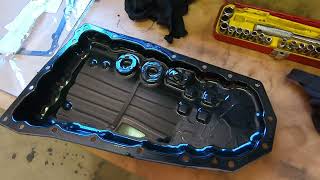
Typical fix: Perform a transmission fluid and filter change using the correct OEM-spec fluid (Mitsubishi Diamond Queen CVTF-J4). Later models have two filters: an internal strainer and an external cartridge filter, both of which should be replaced. 🎬 Watch: Step-by-step CVT service including both filter replacements.
Est. part cost: $100-$250 - Faulty Transmission Valve Body or Solenoids 🟡 Medium Probability → Shop Transmission Valve Body On CVT models, the valve body can malfunction due to abrasion powder from belt slip contaminating the hydraulic circuit, leading to pressure control issues. This is a known issue addressed in TSB-20-23-001 and is a common failure point discussed by owners.
How to confirm: Requires a diagnostic scan to check for specific solenoid codes (e.g., P0776, P0969) and may require hydraulic pressure testing with a capable scan tool. Resistance checks can be performed on solenoids; for example, the TCC control solenoid on a JF011E should be 3 to 9 ohms.
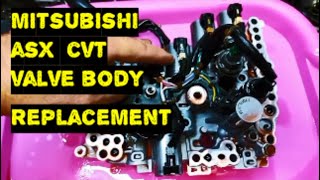
Typical fix: Replacement of the faulty solenoid or the entire valve body assembly. This often requires specialized tools and procedures, and sometimes a TCM software update and calibration file writing. 🎬 See this walkthrough for replacing the CVT8 valve body assembly.
Est. part cost: $400-$1200 - Failing Transmission Sensors (Input/Output Speed, Range Sensor) 🟡 Medium Probability → Shop Transmission Assembly
How to confirm: A TCM scan will reveal specific codes pointing to a sensor, such as P0720 for the output speed sensor. The sensor's signal can be monitored with a scan tool during a test drive to check for erratic readings or dropouts.
Typical fix: Replace the specific sensor that has failed. These are typically located on the exterior of the transmission case and are accessible for replacement.
Est. part cost: $50-$200 - Faulty Stepper Motor (Ratio Control Motor) ⚪ Low Probability On earlier JF011E CVT models, the stepper motor that controls the pulley ratio is a known failure point, often triggering code P1777.
How to confirm: Scan the TCM for code P1777. The stepper motor is part of the valve body assembly, and diagnosis involves checking the motor windings for specific resistance values (e.g., 15 ohms between pins 1 & 2, 30 ohms between pins 1 & 3).
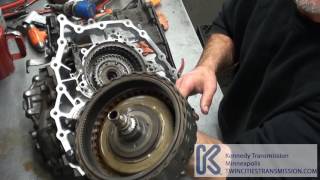
Typical fix: Replacement of the stepper motor, which is located on the valve body. This can often be done by just removing the transmission pan. 🎬 Watch: Understanding the JF011E CVT and its internal components.
Est. part cost: $50-$150 - Damaged Wiring Harness or Connectors ⚪ Low Probability
How to confirm: Visually inspect the wiring harness leading to the transmission for any signs of damage, corrosion, or loose connections. A multimeter can be used to check for continuity and shorts in the wiring to specific components like the stepper motor or speed sensors.
Typical fix: Repair the damaged section of the harness or replace the affected connector.
Est. part cost: $20-$300
Rare But Worth Checking
- Faulty Transmission Control Module (TCM): → Shop Transmission Assembly While rare, the TCM itself can fail. This is usually suspected only after all other possibilities (fluid, sensors, wiring, internal mechanics) have been ruled out. A tell-tale sign can be a P0700 code with no other accompanying codes, a complete loss of communication with the TCM, or multiple false sensor codes.
Diagnosis Steps
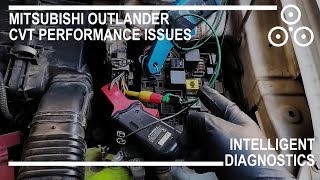
- Connect an OBD-II scanner capable of communicating with the Transmission Control Module (TCM).
- Read and record all codes from both the ECM (which will show P0700) and the TCM (which will show the specific fault).
- Check the transmission fluid level and condition. For models without a dipstick, this requires a specific service procedure. Ensure it is at the proper level and is not burnt or contaminated.
- Inspect the transmission wiring harness and connectors for any visible damage, corrosion, or loose connections.
- Based on the specific codes found in the TCM, follow the manufacturer's diagnostic procedure for that code. This may involve testing sensors, solenoids, or checking circuit integrity with a multimeter.
- If codes like P0776 or P0741 are present on a CVT-8 model, consult Mitsubishi TSB-20-23-001 (and its revisions) for specific diagnostic steps related to shudder and hydraulic circuit issues.
- If P0868 is present, a fluid and filter change is the first step, but be aware it may indicate a more severe internal issue like a failing oil pump flow control valve.
- If P1777 is present (on older CVTs), diagnose the stepper motor and its circuit, including checking resistance values.
- If no other codes are present and all components test good, the TCM itself may be the issue, though this is uncommon.
Parts You'll Likely Need
- CVT Fluid (CVTF-J4)
(OEM #MZ320185)— Incorrect or degraded fluid is a primary cause of CVT issues. Using the correct OEM fluid is critical for proper operation and longevity.
Trusted brands: Mitsubishi Genuine
OEM price range: $20-$30 per quart
Aftermarket price range: $15-$25 per quart - Transmission Valve Body
(OEM #2700A406 (example for 2016 4WD, many variations exist))— Often the source of hydraulic pressure issues in CVT models, leading to various fault codes alongside P0700.
Trusted brands: Mitsubishi Genuine, Rostra
OEM price range: $800-$1500
Aftermarket price range: $500-$1000
Related Codes That Often Appear With This One
- P0776 — Indicates an issue with the Pressure Control Solenoid 'B', a common fault in Mitsubishi CVT-8 transmissions addressed by TSB-20-23-001REV4.
- P0741 — Points to a problem with the Torque Converter Clutch (TCC) circuit performance or it being stuck off, often related to fluid quality or solenoid issues within the valve body.
- P0868 — Indicates secondary fluid pressure is low, a frequent and serious issue in CVTs that can be caused by a faulty pump, clogged filters, valve body, or low/degraded fluid.
- P0720 — Signals a fault with the Output Speed Sensor circuit, which is a critical input for the TCM.
- P1777 — Specific to older models with the JF011E CVT, this code points to a malfunction of the stepper motor (ratio control motor).
Technical Service Bulletins (TSBs) & Recalls
- TSB-20-23-001: Addresses potential transmission shudder/surge with possible DTCs (P0776, P0730, P0741, etc.) on CVT-8 equipped vehicles, including 2016-2020 Outlanders.
Platform-Specific Known Issues
- TSB TSB-20-23-001 (Revised multiple times, e.g., TSB-22-23-001, TSB-24-23-001): Addresses a potential shudder or surge condition in 2016-2020+ Outlanders with the CVT-8 transmission. This can be caused by issues in the hydraulic pressure circuit from abrasion powder contamination and may log codes like P0776, P0741, and P0969. The fix may involve valve body or full transmission replacement after inspection.
- Recall SR-16-006: Affects certain 2016 Outlander, 2016 Lancer, and 2015-2016 Outlander Sport models for delayed acceleration. The fix is a CVT ECU software update. TSB-20-23-001 requires technicians to verify this recall has been completed before proceeding with other diagnostics.
- Fluid Check Procedure: Unlike older cars, many of these Outlanders do not have a transmission fluid dipstick. Checking the fluid level involves removing a service plug and following a specific temperature-dependent procedure, which is best done by a knowledgeable technician.
Mechanic-Grade Diagnostic Values
- JF011E Stepper Motor Winding Resistance — expected: Between pins 1&2 and 4&5: ~15 ohms. Between pins 2&3 and 5&6: ~15 ohms. Between pins 1&3 and 4&6: ~30 ohms.. Failure: Readings outside of a 5-ohm tolerance from the expected values indicate a faulty motor winding.
- JF011E TCC Control Solenoid Resistance — expected: 3 to 9 ohms. Failure: Resistance outside this range suggests a faulty solenoid.
- JF011E Lockup Select Switch Solenoid Resistance — expected: 15 to 30 ohms. Failure: Resistance outside this range suggests a faulty solenoid.
- CVT-8 Solenoid Coil Resistance (at 20°C fluid temp) — expected: Line Pressure Solenoid: 5.5 - 7.0 Ω. Other solenoids (Primary, Secondary, Select, Lock-up) have slightly different ranges.. Failure: Resistance outside the specified range for the given solenoid indicates a fault.
- CVT Hydraulic Pressure Test Conditions — expected: CVT fluid temperature must be between 70°C and 80°C (158°F - 176°F).. Failure: Testing outside this temperature range can lead to inaccurate pressure readings and misdiagnosis.
Scan Tool Commands That Help
- Mitsubishi MUT-III / MUT-IIISE: Reset (item No.1: Control learning value) / C/V initial & learned value — This function is required after replacing the CVT assembly or valve body to initialize learned values. It requires a specific sequence of placing the vehicle in 'R', pressing both brake and accelerator pedals, and then executing the command.
- Mitsubishi MUT-III / MUT-IIISE: Clear CVT oil degradation level — This must be performed after changing the CVT fluid to reset the counter that tracks fluid life within the TCM.
- Mitsubishi MUT-III / MUT-IIISE: Write calibration value (Saved calibration value writing) — For CVT8 transmissions, when a new valve body or CVT assembly is installed, a specific calibration file must be downloaded from Mitsubishi's server and written to the TCM. This file is unique to the serial number of the new part.
- Mitsubishi MUT-III / MUT-IIISE: Control valve learning mode — After replacing only the valve body and writing the calibration data, this learning mode must be executed to allow the TCM to adapt to the new component.
Wiring & Ground Locations
- Transmission Control Module (TCM) Ground — The TCM is often grounded through its mounting points or a dedicated ground wire nearby. On the Outlander Sport, the TCM is listed as a component grounded near the transaxle assembly itself.. A poor ground connection to the TCM can cause erratic behavior, loss of communication, or false fault codes, including P0700. Verifying a clean, tight ground is a crucial step in diagnosing electrical faults.
- Main Engine/Transmission Ground Strap — On some model years (e.g., 2013), a key grounding strap is located on the alternator's mount. On newer models, it may be moved to a higher position on the engine mount.. This primary ground strap ensures a stable ground reference for all engine and transmission electronics. Corrosion or a loose connection here can cause widespread electrical issues, including problems with the transmission control system.
- CVT Assembly Connector — This is the main round connector on the transmission case that connects the internal transmission harness (sensors, solenoids) to the main vehicle harness leading to the TCM.. This is the primary point for testing solenoid resistance without opening the transmission. Disconnecting it allows a technician to measure resistance between the pins to diagnose individual components like the stepper motor or pressure solenoids.
OEM Part Supersession History
Varies by year→Varies by year— Revisions to address shudder and surge conditions.
Heads up: When replacing a CVT-8 valve body or the entire CVT assembly, a new, unique calibration file corresponding to the new part's serial number must be downloaded from Mitsubishi and written to the TCM using a dealer-level scan tool. Failure to do this will result in improper operation.
Model Year Variations Within This Range
- 2007-2013 (approx.): These models primarily used the Jatco JF011E (also called F1CJA/W1CJA) CVT. A common failure point specific to this transmission is the stepper motor (ratio control motor), which often triggers code P1777.
- 2014-2021 (approx.): These models primarily use the Jatco CVT8 (F1CJC/W1CJC). This design eliminated the stepper motor. Common issues are different, focusing more on hydraulic pressure control problems within the valve body (e.g., code P0776) and are addressed by specific TSBs like TSB-20-23-001REV4.
- 2016+: A major refresh for the 2016 model year included driveline improvements aimed at reducing noise and vibration and improving refinement. While still a CVT8, software and potentially internal components may differ from the 2014-2015 models.
Diagnostic Flowchart
Other Known Issues on This Vehicle
Issues unrelated to this code that are worth knowing about as an owner of this generation:
- A/C Compressor or Clutch Failure 🟠 Medium — Common after 80,000-100,000 miles. Symptoms include intermittent cooling, the A/C blowing warm air, or grinding/squealing noises when the A/C is engaged.
- Premature Wheel Bearing Failure 🟠 Medium — Can occur as early as 55,000 miles. The primary symptom is a loud humming or roaring noise that increases with vehicle speed and may change pitch when turning. (Ref: An early TSB existed for 2007 models, but failures are reported across the generation range.)
- Paint Peeling/Delamination (Especially White) 🟡 Low — Widespread reports of white and sometimes other color paint peeling in large sheets, often starting on the roof and hatch. This is a known cosmetic issue across many Mitsubishi models of this era.
- Front Strut Bearing Noise 🟡 Low — Affects some 2022 models, but similar noises are reported on earlier third-gen vehicles. Causes a creaking or popping sound from the front suspension when turning the steering wheel at low speeds. (Ref: TSB-23-33-002)
- Engine Oil Leaks 🟡 Low — Can occur at higher mileage from areas like the valve cover gasket or oil cooler seals.
Used vs. New Parts: Buying Guide for This Vehicle
When a used part is the smart pick: A complete used transmission assembly from a low-mileage, documented donor vehicle can be a cost-effective alternative to a full rebuild, especially for older, lower-value vehicles. External components like speed sensors are also good candidates for used parts.
Donor-vehicle mileage cap: roughly under 70000 miles for the part to have meaningful remaining life.
What to inspect on the donor part:
- Obtain service records if possible, specifically looking for regular CVT fluid changes every 30,000 miles.
- Ask the dismantler to drain a small sample of the CVT fluid. It should not be dark brown, black, or have a burnt smell.
- Inspect the transmission case for any cracks, heavy corrosion, or signs of impact damage.
- Ensure all electrical connectors are intact and not damaged during removal.
OEM-only on this vehicle (don't cheap out):
- CVT Fluid (Mitsubishi Diamond Queen CVTF-J4): The transmission is extremely sensitive to fluid chemistry. Using non-OEM fluid is a common cause of failure, even if the aftermarket brand claims compatibility.
- Transmission Control Module (TCM): Due to programming and VIN-locking, a used TCM is often not a viable plug-and-play option.
Aftermarket brands forum-validated for this vehicle:
- For remanufactured valve bodies, look for established builders that provide a warranty and confirm their solenoids are tested and calibrated (e.g., Sunbelt Valve Body Builders, Rostra).
Brands owners have reported issues with on this vehicle:
- Avoid unbranded, low-cost solenoids or stepper motors from online marketplaces. These parts have a high failure rate and can lead to repeat repairs.
Real Owner Stories
Aggregated from forums and TSBs cited above. Mileages and costs reflect what owners reported in those sources.
2011 Mitsubishi Outlander Sport
Symptoms: Vehicle was stuck in first gear and throwing code P0868.
What fixed it: Community members suggested a fluid and filter change as the first step to address low transmission fluid pressure.
Source hint: EvolutionM - 'transmission problem'
2016 Mitsubishi Outlander — 38000 miles
Symptoms: Bad, whining bearings in the CVT.
What fixed it: The CVT was replaced under warranty.
Source hint: Mitsubishi Forum - 'CVT Rebuild'
2009 Mitsubishi Outlander — ~124274 miles
Symptoms: Classic CVT failure symptoms including jerky movement, slow reaction, and stalling.
What fixed it: Owner was quoted for a full transmission rebuild or replacement.
Cost: $4000-$6500
Source hint: Reddit r/CarsAustralia - 'Is it worth replacing the CVT in a 2009 Outlander'
2015 Mitsubishi Outlander
Symptoms: Dead CVT transmission.
What fixed it: Discussion of valve body failure; suggested fix involves machining the valve body and installing an oversized valve.
Source hint: Reddit r/mitsubishi - 'Are CVTs repairable?'
Related OBD-II Codes
Frequently Asked Questions
My 2016 Outlander is shuddering and surging; does TSB-20-23-001 apply to my vehicle?
I have a 2016 Outlander with delayed acceleration; is there a recall for this?
How do I check the transmission fluid on my newer Outlander if there is no dipstick?
What specific fluid should I use for a CVT fluid change on my Mitsubishi?
Can I just replace the stepper motor on my older JF011E CVT if I get code P1777?
My dash says 'Transmission Service Required' and the car feels slow. Is this 'limp mode'?
Helpful Videos
We Have This Part in Stock

The information in this article is provided for general reference and educational purposes only. Vehicle specifications, procedures, and part compatibility can vary by production date, trim level, and region. Always consult your vehicle's factory service manual and verify part numbers before purchasing or performing repairs. Safety-critical components such as airbags, seat belts, and braking systems should be installed by a qualified professional.
- Mitsubishi Outlander:
- 🧭 Diagnostic Flowchart
- 🎬 Helpful Videos
- 🛍️ Shop This Part
- What's Unique About the 2007-2021 Mitsubishi Outlander
- Symptoms You May Notice
- Most Likely Causes
- Rare But Worth Checking
- Diagnosis Steps
- Parts You'll Likely Need
- Related Codes That Often Appear With This One
- Technical Service Bulletins (TSBs) & Recalls
- Platform-Specific Known Issues
- Mechanic-Grade Diagnostic Values
- Scan Tool Commands That Help
- Wiring & Ground Locations
- OEM Part Supersession History
- Model Year Variations Within This Range
- Other Known Issues on This Vehicle
- Used vs. New Parts: Buying Guide for This Vehicle
- Real Owner Stories
- 2011 Mitsubishi Outlander Sport
- 2016 Mitsubishi Outlander — 38000 miles
- 2009 Mitsubishi Outlander — ~124274 miles
- 2015 Mitsubishi Outlander
- Related OBD-II Codes
- Frequently Asked Questions
- 🎟️ Get 5% Off