

P0701 on 2009-2010 Chevrolet Silverado 2500: Transmission Control System Fault Guide
P0701 on a 2009-2010 Silverado 2500 indicates a general transmission fault. It's an informational code telling you to scan the Transmission Control Module (TCM) for more specific codes. The most common causes are low transmission fluid or a failing internal Transmission Electro-Hydraulic Control Module (TEHCM), which is a known failure point in the 6L90 transmission. Other possibilities include torque converter failure or internal mechanical issues.
- P0701 is a general code; you MUST use a scanner that can read the Transmission Control Module (TCM) to find the specific problem.
- Always check the transmission fluid level and condition first, as low or burnt fluid is a common and simple cause.
- On these trucks, be prepared for the possibility of a failed Transmission Electro-Hydraulic Control Module (TEHCM), which is a common issue requiring professional repair.
- Do not drive the vehicle extensively with this code, as you risk getting stranded or causing catastrophic, more expensive damage to the transmission.
What's Unique About the 2009-2010 Chevrolet SILVERADO 2500
The 2009-2010 Silverado 2500 typically uses a GM 6-speed automatic transmission (the 6L90). For these models, P0701 is often the first sign of a known issue with the internal Transmission Electro-Hydraulic Control Module (TEHCM), which combines the TCM, valve body, and solenoids into one unit inside the transmission pan. This integrated design makes it susceptible to failure from heat, vibration, and internal debris contamination, particularly from a failing torque converter. The provided TSB #PIP4379N also points to a range of internal issues, from engagement problems to solenoid faults, that can trigger this code.
Diagnostic Flowchart
Tap your situation to follow the diagnostic path that matches what you're seeing on this vehicle.
Symptoms You May Notice
- Check Engine Light is on
- Transmission warning light may be on
- Delayed or no engagement into Drive or Reverse.
- Harsh or erratic shifting.
- Vehicle stuck in "limp mode" (usually a single gear).
- Message on Driver Information Center like "Shift Inhibited Select Neutral to Reset".
- Transmission slipping.
- PRNDL indicator on the dash flashing or disappearing.
- Shuddering or vibration during acceleration, which may indicate torque converter issues.
- Replacing the external Engine Control Module (ECM) when the fault is within the transmission's internal control module (TEHCM).
- Clearing the P0701 code without using an advanced scanner to read the specific, underlying codes from the Transmission Control Module.
- Performing a simple fluid and filter change when the underlying cause is an electronic (TEHCM) or major mechanical failure (torque converter).
- Replacing the TEHCM without checking for a bad ground connection (e.g., G103 on the passenger side cylinder head) or harness damage first.
Most Likely Causes
- Low or Burnt Transmission Fluid 🔴 High Probability → Shop Transmission Assembly Leaks from pan gaskets, seals, or cooler lines can lead to low fluid. GM TSB #PIP4379N specifically notes that low fluid can cause a loss of pump prime, especially during a cold start, triggering P0701 and other DTCs.
How to confirm: Check the transmission fluid level and condition using the dipstick, following the 'Hot Check Procedure' outlined in service information. The fluid should be at the correct level, pinkish-red, and not smell burnt.
Typical fix: Top off the fluid with the correct type (ACDelco DEXRON-VI) and repair any leaks.
Est. part cost: $20-$80 - Faulty Transmission Electro-Hydraulic Control Module (TEHCM) 🔴 High Probability → Shop Transmission Assembly The TEHCM, located inside the transmission oil pan, is a very common failure point on GM 6-speed transmissions. It integrates the TCM, pressure switches, and solenoids. The pressure-diaphragms are known to fail due to erratic line pressure, and the electronics are susceptible to heat and vibration.
How to confirm: A professional scan tool can monitor live data from the transmission pressure switches. In a documented 2009 Silverado 2500 HD repair, a failing TEHCM was diagnosed by observing the pressure switch data values change erratically on their own about a minute after the engine started, while the truck was idling in Park.
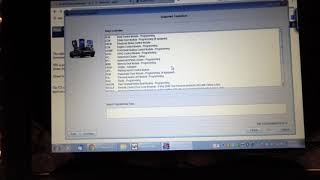
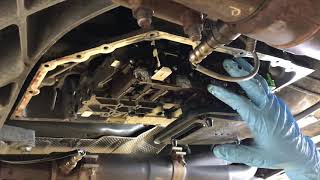
Typical fix: Replace the entire TEHCM assembly. This requires removing the transmission pan and valve body. 🎬 See this walkthrough on how to remove the valve body. The new module (e.g., ACDelco P/N 24256861) must be programmed to the vehicle's VIN using GM's Service Programming System (SPS).
Est. part cost: $400-$800 - Torque Converter Failure 🟡 Medium Probability → Shop Automatic Transmission Torque Converter The torque converter, especially the clutch, is a known weak point in the 6L90 transmission. When it fails, it can produce a shudder and send metallic debris throughout the transmission, contaminating fluid and damaging the pump, 🎬 Watch: Common 6L90 problems that lead to total transmission destruction. valve body, and the sensitive TEHCM.
How to confirm: Symptoms include shuddering during acceleration, unusual vibrations, and a burnt smell from the fluid. Finding significant metal shavings in the transmission pan during a fluid service is a strong indicator.
Typical fix: Requires replacement of the torque converter and often a full transmission rebuild or replacement due to the widespread contamination.
Est. part cost: $1500-$4500+ - Internal Mechanical Failure ⚪ Low Probability Beyond the torque converter, the 6L90 can suffer from other mechanical failures like a cracked pump rotor, worn clutch packs, or a broken intermediate shaft, which can cause shifting problems and trigger a P0701.
How to confirm: This requires a professional diagnosis. If other codes for gear ratio errors (e.g., P0731-P0736) or slipping (P0894) are present alongside P0701, it points towards an internal issue.
Typical fix: Requires a partial or complete transmission rebuild or replacement.
Est. part cost: $1500-$4500+
Rare But Worth Checking
- Wiring Harness Issues: The main transmission connector or wiring harness can become damaged or corroded, leading to communication errors between the TEHCM and the rest of the vehicle. GM TSB 08-07-30-021H notes that the harness can chafe where it routes over the bell housing, causing shorts. Always inspect the harness before replacing expensive components.
- Contaminated Mass Air Flow (MAF) Sensor: While indirect, GM has issued bulletins (like #04-06-04-047) warning that an over-oiled aftermarket air filter can contaminate the MAF sensor. A skewed MAF sensor signal can cause incorrect engine load calculations, leading to poor transmission shift quality and potentially triggering fault codes.
Diagnosis Steps
- Check the transmission fluid level and condition. Ensure it is full and does not appear burnt or contaminated. Follow the specific 'Hot Check' procedure from GM.
- Use an OBD-II scanner capable of communicating with the Transmission Control Module (TCM/TEHCM) to read the manufacturer-specific fault codes. P0701 is just a general request; the real codes are in the TCM.
- Record all codes stored in the TCM. These will point to the specific circuit, solenoid, or component that has failed.
- Inspect the main transmission wiring harness and connector for any signs of damage, corrosion, or loose pins, paying close attention to the area over the bell housing.
- With a capable scan tool, monitor live data. Watch the Transmission Fluid Pressure (TFP) switches. A key sign of TEHCM failure is seeing the switch states change on their own while the vehicle is idling in Park, typically after about a minute.
- If codes point to a TEHCM failure, confirm good power and ground (like ground G103) to the module before condemning it.
- If significant internal codes are present (e.g., gear ratio errors, slipping), inspect the transmission pan for excessive metal debris, which points to torque converter or other mechanical failure.
- If the TEHCM is replaced, it MUST be programmed to the vehicle's VIN using appropriate diagnostic software like GM's SPS.
Parts You'll Likely Need
- Transmission Electro-Hydraulic Control Module (TEHCM)
(OEM #24256861)— This is a very common failure point on the 6L-series transmissions in these trucks, responsible for controlling all electronic and hydraulic functions. Failure triggers P0701 and other specific codes.
Trusted brands: ACDelco, GM Genuine
OEM price range: $500-$800
Aftermarket price range: $350-$600 - Automatic Transmission Fluid
(OEM #10-9395 (ACDelco DEXRON-VI))— Low or degraded fluid is a primary cause of transmission performance issues and can trigger a P0701
Related Codes That Often Appear With This One
- P0700 — This is the sister code to P0701, also meaning "Transmission Control System Malfunction." They often appear together and serve the same purpose: indicating a fault is stored in the TCM.
- P0731-P0736 — These codes indicate incorrect gear ratios, which are often stored in the TCM when P0701 is set by the ECM. They point to internal slipping or hydraulic issues.
- P0751, P0756, P0761, P0776 — These are codes for specific shift solenoid performance issues. The TEHCM contains these solenoids, and their failure is a common reason for P0701.
- P0843, P0848, P0873, P0877 — These codes relate to faults in the transmission fluid pressure sensor circuits, which are also integrated into the TEHCM.
- P0894 — This code for 'Transmission Component Slipping' is a strong indicator of internal wear or hydraulic problems, often linked to torque converter or clutch failure.
Technical Service Bulletins (TSBs) & Recalls
- PIP4379N: Mentions P0701 in conjunction with delayed or no engagement in drive/reverse and lists numerous other potential transmission codes, indicating a known range of internal faults, often related to low fluid or loss of pump prime.
- 08-07-30-021H: Identifies a common wiring harness chafe point over the transmission bell housing that can cause shorts in the GMLAN data bus, leading to communication loss with the TCM and setting P0701.
- 09-06-04-026W: Warns that non-GM ECM calibrations (tunes) can subject the transmission to stresses it wasn't designed for, leading to premature failure.
- 10-06-01-008H: Discusses engine oil consumption issues on V8 engines with AFM, which, while not a direct cause, highlights related engine issues that can occur on these platforms.
Platform-Specific Known Issues
- The provided TSB #PIP4379N directly links P0701 to a wide range of internal transmission faults on these vehicles, including issues with engagement and multiple solenoid and sensor circuits, often stemming from a loss of pump prime on cold starts.
- A YouTube repair video on a 2009 Silverado 2500HD with P0701 and a 'Shift Inhibited' message provides a real-world example of diagnosis. The technician confirmed a bad TEHCM by watching the pressure switch values on a scan tool change illogically after the truck ran for one minute in park. The fix was a new TEHCM (P/N 24256861) and programming.
Mechanic-Grade Diagnostic Values
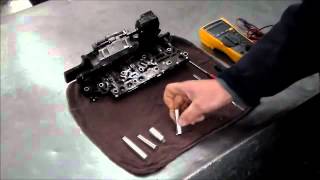
- Shift Solenoid (On/Off type) Resistance — expected: 20-40 Ohms. Failure: A reading outside this range indicates a failed solenoid coil within the TEHCM.
- Shift and Line Pressure Solenoid (PWM type) Resistance — expected: 3-8 Ohms. Failure: A reading outside this range points to a failed PWM solenoid inside the TEHCM.
- Transmission Fluid Pressure (TFP) Switch States (Live Data) — expected: Switches should change state predictably according to the gear selected and remain stable in Park.. Failure: Observing the pressure switch values change erratically on their own while the vehicle is idling in Park (typically after one minute) is a strong indicator of internal TEHCM failure.
- Transmission Fluid Level Check (Hot Check) — expected: With the engine running in Neutral at idle and fluid temperature between 160-200°F, the level should be in the hot range on the dipstick.. Failure: A low fluid level can cause a loss of pump prime and trigger various transmission codes, including P0701.
Scan Tool Commands That Help
- GDS2 / Tech2: Transmission Service Fast Learn / Transmission Adaptive Values Learn — This stationary procedure must be performed after replacing the TEHCM, valve body, or the entire transmission. It allows the new module to quickly learn clutch fill volumes and hydraulic parameters to ensure proper shift quality without requiring a long road test.
Wiring & Ground Locations
- G103 — On the front of the passenger-side cylinder head.. This is a critical ground for the TEHCM. A poor connection here can cause erratic behavior, multiple solenoid codes, and a P0701, often leading to misdiagnosis of the TEHCM itself. Cleaning this ground point can sometimes resolve the issue without replacing parts.
- G104 — On the rear of the driver's side (left) cylinder head, where a ground strap connects to the body/firewall.. This is a main engine-to-chassis ground. A poor connection can cause a wide range of electrical issues, including problems with transmission control and communication.
- G110 — On the right rear of the engine, mounted to the back of the cylinder head.. This ground point is sometimes missed or improperly connected after transmission work. A loose G110 ground has been documented to cause intermittent transmission issues.
Real Owner Repair Stories
- YouTube channel 'SuperMarioDiagnostics' (2009 Chevrolet Silverado 2500 HD with 6.6L Duramax and Allison Transmission) — Towed in for no engagement in Drive or Reverse. DIC message 'Shift Inhibited Select Neutral to Reset'. PRNDL indicator flashing. Code P0701 was current.
❌ Tried (didn't work) The internal mode switch had been replaced four months prior for a similar issue.
✅ What actually fixed it The technician observed on a scan tool that all four transmission pressure switches would change state on their own about one minute after starting the engine while in Park. This pointed to an internal failure of the TEHCM. Replacing the TEHCM (GM P/N 24256861) and programming it with GM's SPS software resolved all symptoms. - BobIsTheOilGuy forum user 'userfriendly' (2011 GM Truck with Allison 1000 (similar TEHCM architecture)) — Transmission went into limp mode, PRNDL indicator disappeared, and multiple codes appeared.
❌ Tried (didn't work) Resetting faults with a tuner was only a temporary fix to get to a shop., A Snap-On scanner could clear the faults, but they returned within 5 minutes.
✅ What actually fixed it The transmission shop diagnosed and replaced the faulty TEHCM. The new module required programming at a Chevrolet dealership to match the VIN. The user noted a 6% improvement in fuel economy after the fix.
OEM Part Supersession History
24256861→19431596, then 19435614— Part was updated to address common failure modes and improve reliability. The part was on backorder for an extended period, indicating a high failure rate and subsequent redesign.
Heads up: TEHCMs are not interchangeable between different year ranges or software calibrations. Installing the wrong TEHCM can result in a no-start condition or immediate limp mode. The module must be programmed to the vehicle's VIN after installation.
Model Year Variations Within This Range
- 2009: Early Gen 1 TEHCMs used in 2009 models are known for frequent pressure switch failures. Later versions, like P/N 24256861, featured improved solenoids and an updated pressure manifold gasket to increase durability.
Helpful Videos
We Have This Part in Stock

The information in this article is provided for general reference and educational purposes only. Vehicle specifications, procedures, and part compatibility can vary by production date, trim level, and region. Always consult your vehicle's factory service manual and verify part numbers before purchasing or performing repairs. Safety-critical components such as airbags, seat belts, and braking systems should be installed by a qualified professional.
- Chevrolet SILVERADO 2500:
- 🧭 Diagnostic Flowchart
- 🎬 Helpful Videos
- 🛍️ Shop This Part
- What's Unique About the 2009-2010 Chevrolet SILVERADO 2500
- Symptoms You May Notice
- Most Likely Causes
- Rare But Worth Checking
- Diagnosis Steps
- Parts You'll Likely Need
- Related Codes That Often Appear With This One
- Technical Service Bulletins (TSBs) & Recalls
- Platform-Specific Known Issues
- Mechanic-Grade Diagnostic Values
- Scan Tool Commands That Help
- Wiring & Ground Locations
- Real Owner Repair Stories
- OEM Part Supersession History
- Model Year Variations Within This Range
- 🎟️ Get 5% Off