

P0705 on 2008-2014 Mercedes-Benz C-Class: Transmission Range Sensor Fault Explained
On a 2008-2014 C-Class, P0705 almost always means the transmission conductor plate (which houses the range sensor) has failed. This puts the car in limp mode. The fix requires replacing the conductor plate/TCU inside the transmission, which is a complex job costing $1000 or more at a shop. Repair or remanufacturing of the original part is a viable, cost-effective alternative to a new part from the dealer.
- P0705 on a W204 C-Class is not a simple sensor issue; it points to a failure of the electronic conductor plate inside the 722.9 transmission.
- Symptoms are severe, often putting the car into a 'limp mode' with very low power or preventing it from starting.
- This is not a DIY-friendly repair. It requires specialized tools to access the part and, for new units, proprietary software (SCN coding) to program the module to the car.
- A cost-effective alternative is to have your original conductor plate repaired by a specialist, which avoids the need for expensive and difficult SCN coding.
- Do not replace the entire transmission. The problem is with the bolt-on electronics, not the mechanicals.
- Expect a repair cost of over $1000 at an independent specialist or dealership, with dealer repairs potentially approaching $1800.
What's Unique About the 2008-2014 Mercedes-Benz C-Class
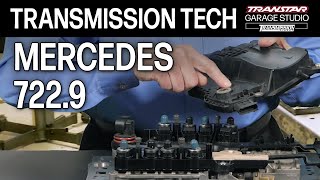
Unlike many vehicles with a simple, external range sensor, the 2008-2014 C-Class (W204 generation) with the 7G-Tronic (722.9) transmission has this sensor integrated directly into the Transmission Control Unit (TCU), also known as the conductor plate. This entire assembly is located inside the transmission oil pan, mounted on top of the valve body. This design means a simple sensor swap is not possible; the entire electronic conductor plate assembly must be addressed. Because the conductor plate is a theft-relevant part (TRP), a new unit must be SCN (Software Calibration Number) coded by a dealer or authorized specialist, making the repair significantly more involved and costly than on other cars.
Symptoms You May Notice
- Vehicle enters 'limp mode,' refusing to accelerate or rev past 3,000 RPM.
- Check Engine Light is illuminated.
- Transmission shifts harshly, gets stuck in one gear, or fails to shift.
- Engine may not start.
- The gear indicator on the dashboard (P, R, N, D) does not match the selected gear or is blank.
- Reverse lights do not turn on when in Reverse.
- Jolting or jerking when shifting into Drive or Reverse.
- Replacing the transmission fluid and filter. While good maintenance, this will not fix a failed electronic conductor plate.
- Replacing the entire transmission. This is often unnecessary, as the fault is typically with the bolt-on electronic plate, not the mechanical gears themselves.
- Replacing the shifter assembly in the center console. While this can be a cause on other vehicles, the P0705 on a W204 almost always points to an issue inside the transmission itself.
Most Likely Causes
- Defective Transmission Conductor Plate (TCU) 🔴 High Probability → Shop Transmission Assembly The 722.9 transmission's conductor plate is a known failure point. The range sensor (Y3/8s1) is integrated into this plate, and internal electronic faults, failed solder joints, or sensor degradation due to heat and vibration are common over time.
How to confirm: Diagnosis requires a Mercedes-specific scan tool (like Xentry/STAR) to read the transmission control module's fault codes directly. The tool can confirm that the range sensor signal is faulty or implausible, often with codes like P0705 or P0706. Live data will show an incorrect or static gear position reading.
Typical fix: There are three main options: 1) Replace the conductor plate with a new OEM part, which requires SCN coding at a dealership. 2) Send the original conductor plate to a specialist service for repair/remanufacturing, which typically does not require recoding. 3) Purchase a pre-programmed aftermarket plate, though quality varies. The fix always involves draining fluid, dropping the pan, and removing the valve body.
Est. part cost: $300-$1000 - Damaged Wiring or Connector ⚪ Low Probability On some older Mercedes models, the transmission electrical connector seal can leak, allowing transmission fluid to wick up the wiring harness into the TCU, even if the TCU is located remotely. While less common for the P0705 fault on a W204 where the TCU is internal, checking the main external connector is still a valid diagnostic step.
How to confirm: Visually inspect the main round electrical connector at the transmission housing for fluid intrusion or damage. Check the wiring harness for any signs of chafing or heat damage.
Typical fix: Repair the damaged section of the wiring harness or replace the connector and seal.
Est. part cost: $20-$150
Rare But Worth Checking
- Spilled Liquid on Center Console Shifter: While the primary fault is usually internal to the transmission, sugary drinks spilled into the gear selector module (ISM/ESM) in the center console can cause erratic signals and communication errors with the TCU, sometimes triggering related faults. However, on the W204, the ISM is more commonly mounted on the side of the transmission itself, making it susceptible to heat and vibration rather than spills.
- Failing Intelligent Servo Module (ISM): The ISM is the component that physically carries out the gear selection commands. A failing ISM, often due to internal solder joint fatigue, can also produce P0705 and P0706 codes and cause a no-drive condition, making it a potential misdiagnosis for a conductor plate failure.
Diagnosis Steps
- Scan the vehicle with an OBD-II scanner to confirm P0705 is present.
- For accurate diagnosis, use a Mercedes-specific scan tool (Xentry/STAR) to read fault codes directly from the Transmission Control Module (TCM). Look for associated codes like P0706 or speed sensor faults (0717, 0718, 2767, 2768).
- Check the live data from the transmission range sensor. Observe if the gear position reading (e.g., Y3/8s1) changes correctly as you move the shifter through P, R, N, and D.
- If the signal is erratic, incorrect, or stuck, the next step is to inspect the transmission's main electrical connector for fluid contamination or damage.
- If the connector and wiring are intact, the fault is almost certainly internal to the transmission, pointing to the conductor plate/TCU.
- Before ordering, confirm the exact part number and VGS generation (VGS1, VGS2, or VGS3) of the conductor plate in your vehicle.
- If replacing with a new OEM part, the new conductor plate must be SCN programmed/coded to the vehicle's immobilizer system. If using a repair service for your original part, this is typically not required.
Parts You'll Likely Need
- Transmission Conductor Plate / TCU
(OEM #A0002702600, A0335457332, A0034460310 (numbers vary by VGS version and VIN))— This is the component that houses the integrated transmission range sensor (Y3/8s1), which is the root cause of the P0705 code on this platform.
Trusted brands: Mercedes-Benz (OEM), Bosch, Circuit Board Medics (Repair Service), Injectronics (Repair Service)
OEM price range: $600-$1000
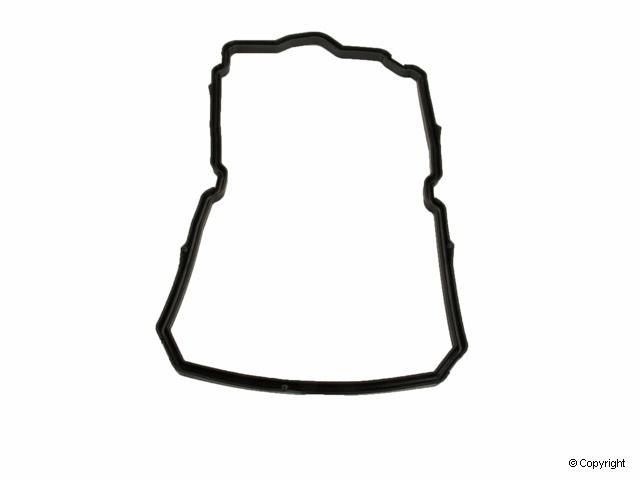
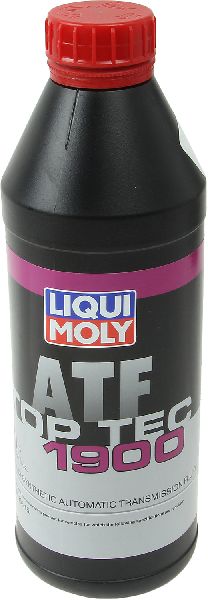
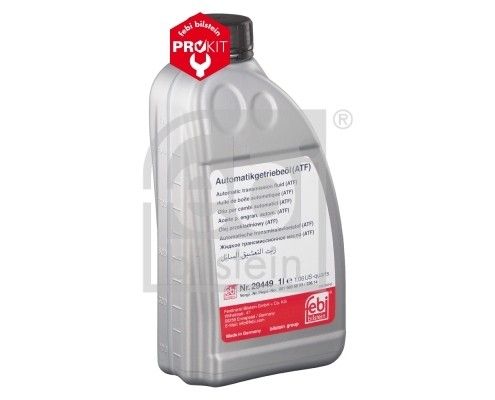
Aftermarket price range: $300-$700 - Transmission Pan Gasket, Filter, and Fluid — These are required service items when replacing the conductor plate, as the transmission pan must be removed.
Trusted brands: Mercedes-Benz, Vaico, FCP Euro (kit)
OEM price range: $150-$250
Aftermarket price range: $80-$150
Related Codes That Often Appear With This One
- P0706 - Transmission Range Sensor 'A' Circuit Range/Performance
- 0717 - The signal from component Y3/8n1 (Turbine Speed Sensor) is not available
- 0718 - Component Y3/8n1 (Turbine Speed Sensor) is defective
- 2767 - The signal from component Y3/8n2 (Internal Speed Sensor) is not available
- 2768 - Component Y3/8n2 (Internal Speed Sensor) is defective
Platform-Specific Known Issues
- The 722.9 transmission's conductor plate is a widely recognized failure point across many Mercedes-Benz models from this era, not just the C-Class.
- A user on MBWorld.org with a 2012 C250 at only 57k miles experienced P0705 that only appeared when the transmission was hot. The fix was a complete conductor plate replacement.
- Because the conductor plate is considered a 'theft-relevant part', many independent shops cannot perform the replacement of a new unit, as it requires special dealer-level SCN coding, forcing owners to go to the dealership.
Mechanic-Grade Diagnostic Values
- Resistance of individual shift solenoids on the conductor plate — expected: 5–15 ohms. Failure: An open circuit (infinite resistance) or erratic readings (e.g., >50 ohms) indicate a failure within the conductor plate assembly.
Hidden / Shadow Codes Worth Checking
- P2805: The signal from component Y3/8s1 (selection range sensor) and/or A80 (intelligent servo module) for Direct Select is not plausible. This code often appears as 'stored' alongside a current P0705. (see via Mercedes-Benz Xentry/STAR Diagnostic System)
- P179Cxx: Indicates an internal fault in the control unit of the intelligent servo module (ISM) (A80). This points directly to the ISM as the cause, not the conductor plate. (see via Mercedes-Benz Xentry/STAR Diagnostic System)
Scan Tool Commands That Help
- Xentry / Advanced Aftermarket Scanners: Detach transport protection — This is a required first step after installing a new or virginized Conductor Plate (TCU) or Intelligent Servo Module (ISM) to allow it to be programmed.
- Xentry / Advanced Aftermarket Scanners: Teach-in process of selection range sensor / Initialization — After installing a new conductor plate, this procedure learns the positions of the gear selector. It is critical for restoring normal operation and must be completed before clearing codes.
- Xentry / Advanced Aftermarket Scanners: Personalization and Activation — This step 'marries' the new theft-relevant conductor plate to the vehicle's Drive Authorization System. Without this, the vehicle will not start or shift.
- Xentry / Advanced Aftermarket Scanners: SCN (Software Calibration Number) Coding — Required when installing a new, virgin conductor plate. This online process downloads vehicle-specific software from Mercedes-Benz servers to the new module.
Wiring & Ground Locations
- Transmission Ground Strap — A bare, braided ground strap running from a lower bell housing bolt on the driver's side of the transmission to a mounting point on the vehicle's chassis, near the steering box.. A corroded or loose transmission ground can cause erratic voltage and communication errors between the transmission control modules (conductor plate, ISM) and the rest of the vehicle, potentially triggering false P0705 codes.
- W37 (or similar) — Main ground point under the coolant overflow tank in the engine bay.. Multiple engine and chassis sensors share this ground point. Corrosion here can lead to a wide range of electrical issues, including communication faults with the transmission.
Real Owner Repair Stories
- MBWorld.org user 'RGFINN' (2012 Mercedes-Benz C250 with 57,000 miles) — Check Engine Light with code P0705 would only illuminate when the transmission was hot. For example, after a long drive, if the car was shut off and restarted within an hour, the code would appear. If it sat for hours (e.g., overnight), it would not appear on the next cold start.
❌ Tried (didn't work) Clearing the code would temporarily fix it until the next hot restart.
✅ What actually fixed it The conductor plate on the valve body was replaced. This resolved the heat-related, intermittent P0705 code. - PeachParts Forum user 'marinmbfan' (Mercedes-Benz with 722.9 Transmission (post-2014 summary)) — Transmission enters limp mode, often with no Check Engine Light, due to conductor plate failure.
❌ Tried (didn't work) Going to the dealership, which quoted $2,500 - $3,500 for a new, coded conductor plate.
✅ What actually fixed it The user removed the valve body and sent the original conductor plate to a repair service for $200-$250. Upon reinstallation, no programming was needed. The stored fault codes were successfully cleared with an Autel scanner, restoring normal function.
OEM Part Supersession History
VGS2-NAG2 Conductor Plate (e.g., A0335457332)→VGS3-NAG2 Conductor Plate (e.g., A0034460310)— VGS3 is a newer design with updated, more reliable speed sensors.
Heads up: VGS2 and VGS3 units are NOT directly interchangeable. The software is different, and a VGS2 vehicle requires specific online SCN coding to accept a new VGS3 unit. Mixed results are reported by independents attempting this swap, while dealers can typically perform it successfully.VGS1 Conductor Plate→N/A - Must be replaced with Valve Body— Early design for pre-W204 models.
Heads up: If a vehicle has a VGS1 conductor plate (not typical for the 2008-2014 C-Class but good to be aware of), a new replacement from Mercedes requires purchasing the entire valve body assembly as a unit. Repairing the original VGS1 plate is the only way to avoid this significant extra cost.
Model Year Variations Within This Range
- 2008-2010 (approx.): These earlier W204 models are more likely to be equipped with the VGS2 generation of the conductor plate.
- 2011-2014 (approx.): Later models in this range are typically equipped with the VGS3 conductor plate, which features an updated design and more robust speed sensors. The software and coding are specific to this version.
Diagnostic Flowchart
Other Known Issues on This Vehicle
Issues unrelated to this code that are worth knowing about as an owner of this generation:
- Electronic Steering Lock (ESL/ELV) Failure 🔴 High — Very common failure, often occurs without warning between 6-10 years of age, leading to a no-start condition.
- Rear Subframe Corrosion/Rust 🔴 High — Prevalent in regions using road salt, leading to catastrophic failure. Onset can be after 8-10 years. (Ref: Mercedes-Benz issued a 20-year/unlimited mileage extended warranty for perforated subframes on affected models, including the W204.)
- M272/M273 Engine Balance Shaft/Idler Gear Wear 🔴 High — Affects V6 (M272) and V8 (M273) engines in pre-2009 models. Sprockets made of soft metal wear prematurely, typically between 60k-100k miles, causing timing issues that can lead to engine damage. (Ref: Subject of a class-action lawsuit, but no official recall. Updated parts were used in later production.)
- M271 Engine Timing Chain Stretch 🔴 High — Common on early 1.8L supercharged/turbocharged 4-cylinder engines. The chain stretches, causing a rattle on startup and can lead to the chain jumping teeth, causing engine failure. Often occurs from 80k-120k km.
Used vs. New Parts: Buying Guide for This Vehicle
When a used part is the smart pick: A used conductor plate from a donor vehicle is almost NEVER a good choice. It is VIN-locked to the original car and cannot be programmed into yours. The only exception is a used part that has been professionally 'virginized' (reset to factory state) by a specialist, which allows it to be programmed like a new part.
Donor-vehicle mileage cap: roughly under 80000 miles for the part to have meaningful remaining life.
What to inspect on the donor part:
- A guarantee from the seller that the part is tested and 'virginized' or 'unlocked'.
- Clear return policy and warranty.
- For repair services, look for online reviews and a stated warranty period (e.g., 1 year).
OEM-only on this vehicle (don't cheap out):
- New Conductor Plate (TCU): This is a 'theft-relevant part' and can only be sourced new from a Mercedes-Benz dealer. It will require dealer-level SCN coding.
Aftermarket brands forum-validated for this vehicle:
- This is not a typical aftermarket part. The best non-dealer option is to have your ORIGINAL part repaired and returned. Reputable services for this include: Circuit Board Medics, ACTRONICS, and various highly-rated eBay vendors specializing in TCU repair.
Brands owners have reported issues with on this vehicle:
- Avoid any used conductor plate sold 'as-is' from a junkyard without a specific guarantee of it being virginized.
- Be cautious with the cheapest repair services on platforms like eBay; one forum user noted that while okay for a one-off, dealing with problems can be difficult.
Real Owner Stories
Aggregated from forums and TSBs cited above. Mileages and costs reflect what owners reported in those sources.
2012 Mercedes-Benz C250 — 57000 miles
Symptoms: The engine management light came on and the car entered limp mode, refusing to go past 3,000 RPM. The owner noticed a loss of power and the P0705 code specifically appeared when the transmission was hot.
What fixed it: Complete conductor plate replacement.
Source hint: mbworld.org: A thread on a 2012 C250 with code P0705
2010 Mercedes-Benz C350
Symptoms: Vehicle experienced P0705 fault; owner was informed the part was an 'anti-theft' device.
What fixed it: The owner sought a conductor plate replacement, but was told it required dealer programming.
Cost: $1,800-$1,800
Source hint: mbworld.org: A 2010 C350 owner reported being told by an independent Mercedes specialist
Related OBD-II Codes
Frequently Asked Questions
Why can't my local independent mechanic replace the conductor plate on my 2010 C350?
Is there a way to fix P0705 on my W204 without paying for expensive dealer SCN coding?
I have a 2012 C250 and the P0705 code only appears when the car is hot. Is this common?
Could a recent interior cleaning or car wash be related to the P0705 code in my Mercedes?
Does the 20-year extended warranty for the W204 cover the P0705 transmission issue?
What specific part inside the transmission is causing the P0705 code?
Helpful Videos

We Have This Part in Stock

The information in this article is provided for general reference and educational purposes only. Vehicle specifications, procedures, and part compatibility can vary by production date, trim level, and region. Always consult your vehicle's factory service manual and verify part numbers before purchasing or performing repairs. Safety-critical components such as airbags, seat belts, and braking systems should be installed by a qualified professional.
- Mercedes-Benz C-Class:
- 🧭 Diagnostic Flowchart
- 🎬 Helpful Videos
- 🛍️ Shop This Part
- What's Unique About the 2008-2014 Mercedes-Benz C-Class
- Symptoms You May Notice
- Most Likely Causes
- Rare But Worth Checking
- Diagnosis Steps
- Parts You'll Likely Need
- Related Codes That Often Appear With This One
- Platform-Specific Known Issues
- Mechanic-Grade Diagnostic Values
- Hidden / Shadow Codes Worth Checking
- Scan Tool Commands That Help
- Wiring & Ground Locations
- Real Owner Repair Stories
- OEM Part Supersession History
- Model Year Variations Within This Range
- Other Known Issues on This Vehicle
- Used vs. New Parts: Buying Guide for This Vehicle
- Real Owner Stories
- 2012 Mercedes-Benz C250 — 57000 miles
- 2010 Mercedes-Benz C350
- Related OBD-II Codes
- Frequently Asked Questions
- 🎟️ Get 5% Off