

P0705 on 2006-2011 Mercedes-Benz ML-Class: Transmission Range Sensor Fault Guide
On a 2006-2011 (W164) ML-Class, code P0705 almost always points to a faulty transmission conductor plate inside the 7G-Tronic (722.9) transmission. This part contains the range sensor and other critical speed sensors. Replacement is complex, requiring removal of the valve body and specialized programming (SCN coding), with costs typically ranging from $800 to over $2,000.
- P0705 on a 2006-2011 ML-Class is a serious code indicating a problem with the transmission range sensor.
- The most probable cause is a failure of the internal transmission conductor plate, a known issue with the 722.9 transmission.
- Diagnosis should begin with a Mercedes-specific scan and an inspection of the transmission's main electrical plug for fluid leaks.
- This is not a simple DIY repair. Replacing the conductor plate requires specialized tools, a clean working environment, and electronic programming.
- Do not continue to drive the vehicle, as it can get stuck in gear or shift unpredictably, posing a safety risk.
What's Unique About the 2006-2011 Mercedes-Benz ML-Class
The 2006-2011 ML-Class (W164 generation) uses the 7G-Tronic (722.9) automatic transmission. A very common and well-documented failure on these units is the electronic conductor plate. This component, which houses the Transmission Control Unit (TCU) and various sensors including the range sensor, is known to fail electronically due to heat and contamination from metallic particles in the fluid. Unlike many other vehicles where the range sensor is an external switch, on the W164 ML-Class, fixing a P0705 code requires accessing the transmission's internal components. Mercedes classifies the conductor plate as a theft-relevant part (TRP), meaning purchasing a new one is restricted and requires programming at a dealership or by a specialist with the correct equipment.
Symptoms You May Notice
- Vehicle enters "limp mode" (stuck in a single gear, usually 2nd).
- Check Engine Light is on.
- Gear indicator on the dashboard is blank, shows incorrect gear, or does not update.
- Harsh or jerky shifting, especially when cold.
- Inability to shift out of Park, or shift past Neutral.
- Vehicle will not start (cannot verify P/N position).
- Message on dash: "Transmission - Visit Workshop"
- Replacing the entire transmission when only the conductor plate is needed.
- Replacing the conductor plate without first checking for a leaking electrical connector and fluid-contaminated wiring harness.
- Assuming the shifter module (ESM) is bad when the conductor plate is the actual culprit.
Most Likely Causes
- Faulty Transmission Conductor Plate (VGS/EHS) 🔴 High Probability → Shop Transmission Assembly The conductor plate (which includes the integrated range sensor and TCU) is a known high-failure item on the 722.9 transmission due to internal electronic breakdowns caused by heat cycles and fluid contamination.
How to confirm: A Mercedes-specific diagnostic scan tool (like STAR/XENTRY) will show specific fault codes pointing to the range sensor (Y3/8s1) or internal speed sensors (Y3/8n1, Y3/8n2, Y3/8n3), confirming a conductor plate issue. Generic readers only show P0705.
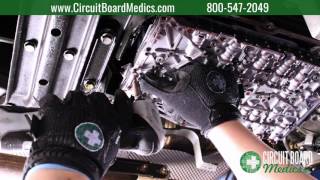
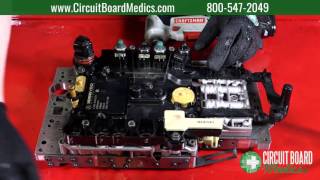
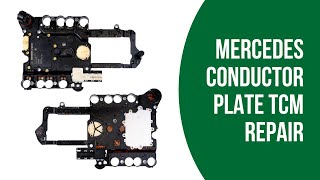
Typical fix: Replace the conductor plate and the valve body seals. The new unit must be programmed (SCN coded) to the vehicle by a dealer or specialist. Alternatively, the original plate can be sent to a specialist like ACTRONICS or Circuit Board Medics for remanufacturing, which is often a plug-and-play 🎬 Watch: How to reinstall the conductor plate and valve body solution not requiring reprogramming.
Est. part cost: $400-$900 for a new OEM part; $250-$450 for a remanufacturing service. - Leaking Transmission Electrical Connector Plug 🟡 Medium Probability → Shop Transmission Assembly The O-rings on the 13-pin connector plug at the transmission housing are known to fail, allowing transmission fluid to leak out and wick up the wiring harness into the TCU. This is a very common issue on both 722.6 and 722.9 transmissions.
How to confirm: Visually inspect the round electrical connector on the transmission (passenger side, towards the front). If it is wet with transmission fluid, the seal has failed. Unplug it and check for fluid inside the pins. It's critical to also check the other end of the harness at the TCU (often in the passenger footwell) for fluid contamination.
Typical fix: Replace the connector plug adapter, which includes new O-rings. It's an inexpensive part and considered preventative maintenance. If fluid has reached the TCU, it and the harness must be thoroughly cleaned with electronic cleaner. If the TCU is damaged by fluid, it may need replacement, but often cleaning is sufficient if caught early.
Est. part cost: $15-$40 - Low or Contaminated Transmission Fluid ⚪ Low Probability → Shop Transmission Assembly The 722.9 transmission is sensitive to fluid level and quality. While not a platform-specific defect, neglecting service allows metallic filings to accumulate, which can clog sensors and solenoids on the valve body and conductor plate, leading to failure.
How to confirm: Check the transmission fluid level using the proper procedure (this transmission has no dipstick and requires a special tool and temperature monitoring). Check the fluid's condition for burning or excessive metal particulates.
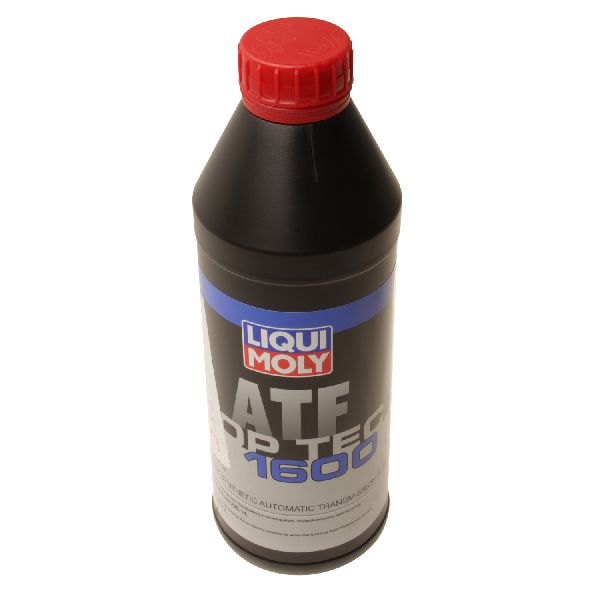
Typical fix: Perform a transmission fluid and filter service using the correct MB-approved fluid (e.g., MB 236.14 or 236.15 depending on the year). This is required as part of a conductor plate replacement.
Est. part cost: $150-$250
Rare But Worth Checking
- Faulty Electronic Shifter Module (ESM): The shifter assembly in the center console or on the steering column (Direct Select) contains its own circuit board. Spilling liquid into the shifter is a known cause of failure that can produce P0705 or similar symptoms. If the conductor plate and wiring are confirmed good, the ESM is the next component to investigate. A scan tool should show faults related to the ESM if it is the cause.
Diagnosis Steps
- Scan the vehicle with a Mercedes-Benz specific scanner (STAR/XENTRY, Foxwell with MB software, etc.) to retrieve detailed fault codes from the Transmission Control Module (TCM). Generic OBD-II readers will only show P0705, but a specialized tool will provide manufacturer-specific codes (like 0717, 0718, 0722) that definitively pinpoint the conductor plate.
- Inspect the 13-pin transmission electrical connector for any signs of automatic transmission fluid leakage. This is a critical and easy first check. If fluid is present, unplug it and inspect the pins and the wiring harness.
- If the connector is leaking, trace the wiring harness to the TCU (located under the passenger side floor/kick panel) and check for fluid contamination there. If fluid is found, the harness and TCU connector must be cleaned thoroughly with electronics cleaner.
- Check the transmission fluid level and condition following the correct manufacturer procedure. This requires the vehicle to be at a specific temperature and using a special dipstick tool, as there is no factory-installed dipstick.
- If the wiring is dry, the fluid level is correct, and the fault codes point to the range sensor (Y3/8s1) or other internal speed sensors (Y3/8n1, n2, n3), the conductor plate is the confirmed cause of the failure.
Parts You'll Likely Need
- Transmission Conductor Plate (VGS2 or VGS3)
(OEM #A0002702600 (VGS3), A0335457332 (VGS2))— This is the most common point of failure for code P0705 on the 722.9 transmission, as it contains the integrated range sensor. The specific version (VGS2 or VGS3) depends on the vehicle's production date.
Trusted brands: Mercedes-Benz (OEM), Bosch
OEM price range: $500-$900
Aftermarket price range: $250-$450 (for remanufacturing services) - Transmission Electrical Connector Plug Adapter
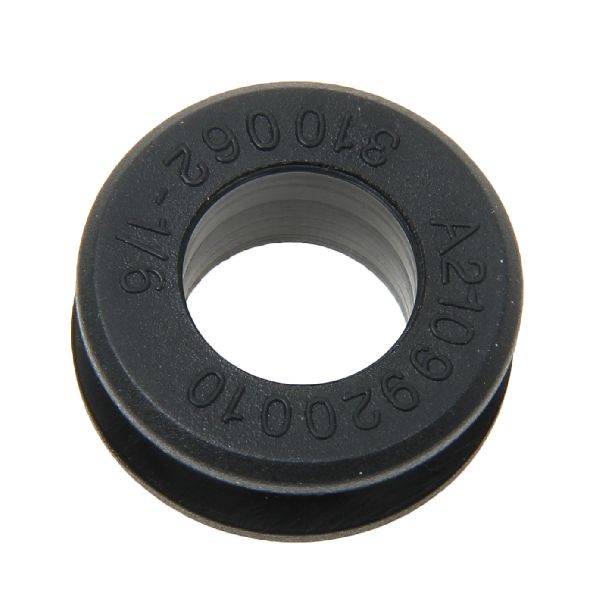
(OEM #2035400253)— The O-rings on this plug frequently fail, causing fluid leaks that can damage electronics. It is inexpensive and should be replaced whenever the transmission pan is dropped or if any leak is observed.
Trusted brands: Mercedes-Benz (OEM), Febi Bilstein, Vemo
OEM price range: $20-$40
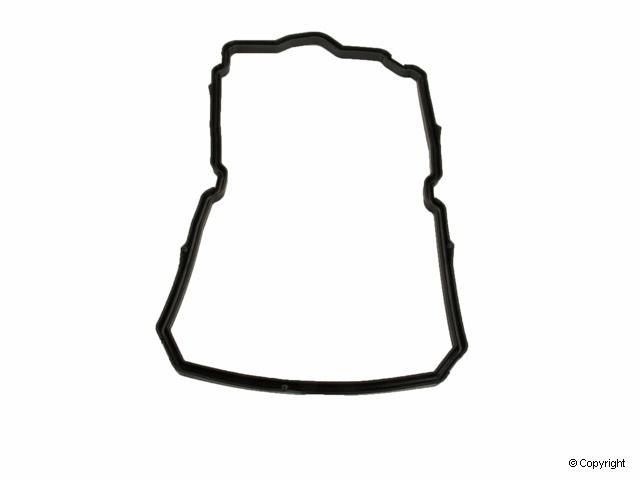
Aftermarket price range: $10-$20 - Transmission Pan Gasket, Filter, and Fluid Kit — These parts are required for any service that involves opening the transmission, such as replacing the conductor plate. Includes pan gasket, filter, pan bolts (which are single-use aluminum), and MB 236.14/236.15 spec fluid.
Trusted brands: Mercedes-Benz (OEM), FCP Euro, Vaico, ECS Tuning
OEM price range: $200-$300
Aftermarket price range: $100-$180
Related Codes That Often Appear With This One
- 0717 / P2767 — Codes for 'The signal from component Y3/8n1 (Turbine Speed Sensor, VGS) is not available'. This sensor is also located on the conductor plate and often fails at the same time.
- 0718 / P2768 — Codes for 'Component Y3/8n1 (Turbine Speed Sensor, VGS) is defective'. This points directly to a hard fault on the conductor plate.
- 2201 / P2201 — Codes for 'Component Y3/8n2 (Internal Speed Sensor) is defective'. This is another sensor integrated into the conductor plate, indicating a failure of the unit.
- 0722 / P0722 — Codes for 'The signal from component Y3/8n3 (Output Speed Sensor, VGS) is not available'. This is the third speed sensor on the conductor plate.
- P0606 — Generic code for 'ECM/PCM Processor Fault'. On this platform, it often accompanies P0705 and points to a faulty TCU, which is part of the conductor plate assembly.
Platform-Specific Known Issues
- A class-action lawsuit was filed against Mercedes-Benz regarding defects in the 722.9 7G-Tronic automatic transmission, citing conductor plate and valve body failures as common problems.
- Due to the conductor plate being a 'Theft Relevant Part' (TRP), Mercedes dealers will not sell the part over the counter to customers. It must be installed and SCN coded by an authorized facility, which increases repair costs.
- Some owners on forums report success with remanufacturing services, which repair the original plate. This avoids the need for SCN coding and can be a more affordable plug-and-play solution.
Mechanic-Grade Diagnostic Values
- Direct sensor resistance/voltage testing — expected: Not applicable for 722.9 conductor plate sensors.. Failure: Diagnosis is not performed by measuring individual sensor values with a multimeter. The integrated nature of the VGS conductor plate means that diagnosis is almost exclusively done by reading the specific fault codes (e.g., 0705, 0717, 2767) with a Mercedes-specific scan tool.
- Battery Voltage during programming — expected: 13.5V or higher recommended. Failure: A voltage below 12.5V can cause the adaptation and personalization process to fail after installing a new conductor plate. It is critical to have a stable power supply connected to the vehicle.
Hidden / Shadow Codes Worth Checking
- 0705: Component Y3/8s1 (Selection range sensor (VGS)) is defective. This is the direct Mercedes equivalent of the generic P0705 code. (see via Mercedes-Benz STAR/XENTRY, or advanced aftermarket scanners with MB-specific software (Autel, Foxwell, etc.).)
- 0706: Check component Y3/8s1 (Selection range sensor (VGS)). This indicates an implausible signal or intermittent fault from the range sensor. (see via Mercedes-Benz STAR/XENTRY or equivalent.)
- 1904: The message from the electronic gear selector module (ESM) is not available on the CAN bus. This points towards an issue with the ISM (A80 module), not the conductor plate, but can cause similar no-shift symptoms. (see via Mercedes-Benz STAR/XENTRY or equivalent.)
- 0641: Component Y3/8n4 (Fully integrated transmission control (VGS) control unit) is defective. This is a general internal failure code for the entire conductor plate/TCU assembly. (see via Mercedes-Benz STAR/XENTRY or equivalent.)
Scan Tool Commands That Help
- Mercedes XENTRY/DAS: Initial Startup / Teach-in Process — This multi-step process is mandatory after installing a new or virginized conductor plate. It 'marries' the new part to the vehicle's security and adapts it. The process typically includes: 1. Detach transport protection. 2. Personalize control module. 3. Activate control module. 4. Teach-in of selection range sensor.
- Mercedes XENTRY/DAS: Control unit adaptations -> Y3/8s1 (VGS) — This specific function guides the technician through the process of teaching the new range sensor the positions (P, R, N, D) by having them move the gear selector as prompted on the screen.
- Advanced Aftermarket Scanners (e.g., Autel, Thinkcar): Special Function -> Detach the transport protection, personalize, activate — Higher-end aftermarket scanners can perform the same critical initialization functions as the factory tool. This is used to program a new or virginized conductor plate to the vehicle.
- Mercedes XENTRY/DAS: Transmission adaptation -> Performing adaptation (Shift) — After the initial startup is complete, a full adaptation drive may be required to smooth out shift quality. This involves following on-screen prompts for upshifts and downshifts to allow the TCU to learn the valve body's specific hydraulic characteristics.
Wiring & Ground Locations
- Transmission Electrical Plug (Integrated) — On the transmission housing, where the main vehicle harness connects to the transmission.. The 722.9 transmission's integrated control unit (VGS) has a greatly reduced pin count compared to older models. The connector only has 5 pins: Pin 1 = CAN C High, Pin 2 = CAN C Low, Pin 4 = Circuit 87 (Power), Pin 5 = Circuit 31 (Ground). A fault on the power, ground, or CAN bus wiring at this connector will cause a total loss of communication and codes like P0705.
Real Owner Repair Stories
- MBWorld.org Forums User (2001 S500 (with a similar 722.6 transmission, but the user references 722.9 videos and parts)) — Car would not shift past Neutral into Reverse or Park, gear indicator was blank. Threw code P0705.
❌ Tried (didn't work) Initial research and code clearing.
✅ What actually fixed it The user replaced the transmission conductor plate and the electrical connector plug. They noted the labor was about 3 hours and the fix was successful, with the transmission working correctly afterward. - YouTube video by user 'Grant' (2005 Mercedes CLK500 with 722.9 Transmission) — Implied conductor plate failure with associated fault codes.
✅ What actually fixed it The user performed a DIY replacement of the conductor plate. Critically, they purchased a pre-programmed, virginized conductor plate online. They then used a Foxwell NT510 Elite scanner to perform the 'Initial Startup' process, including activating the module and teaching the range sensor. The video details the step-by-step process of using the scanner to complete the repair.
"I Checked Everything" — The Actual Cause
- For code P0705, the equivalent of a 'smoke test clean' scenario is when a new conductor plate is installed, but the fault code immediately returns or the transmission still won't shift correctly. The cause is almost always a failure in the electronic setup, not a mechanical or wiring fault. The most common reasons are: 1) Installing a used conductor plate that was not 'virginized', meaning it is still locked to the donor car's VIN. 2) Failure to perform the complete 'Initial Startup' procedure with a capable scan tool, which includes personalizing, activating, and teaching-in the new module.
OEM Part Supersession History
VGS1 (e.g., A0335456732)→VGS2 (e.g., A0335457332), then VGS3 (e.g., A0034460310)— Design revision and improvement by Mercedes-Benz.
Heads up: This is a critical trap. If a vehicle has a VGS1 conductor plate that fails, Mercedes-Benz requires that both the conductor plate AND the entire valve body be replaced as a matched set. For vehicles originally equipped with VGS2 or VGS3, the conductor plate can be purchased and replaced separately from the valve body.
Model Year Variations Within This Range
- Pre-June 2010: These earlier 722.9 transmissions use MB 236.14 specification fluid, which is red in color. They are commonly referred to as 'Red Fluid' models.
- Post-June 2010: These later 722.9 transmissions are designated as A89 option code and require MB 236.15 specification fluid, which is blue. The two fluids are NOT interchangeable and using the wrong fluid can cause shifting problems and damage.
- Approx. 2006-2007: These early W164 models are more likely to be equipped with the VGS1 or VGS2 conductor plate. Later models (2008-2011) are more likely to have VGS2 or VGS3. Identifying the installed version is crucial before ordering parts, as VGS1 has unique replacement requirements.
Diagnostic Flowchart
Other Known Issues on This Vehicle
Issues unrelated to this code that are worth knowing about as an owner of this generation:
- M272 V6 Engine Balance Shaft Failure 🔴 High — Common on engines built before 2009 (up to engine serial number 2729..30 468993). Failure can occur from 60,000 to 100,000 miles. (Ref: A class-action lawsuit was filed, but no official recall. Mercedes issued service bulletins outlining the repair.)
- OM642 V6 Diesel Oil Cooler Seal Leak 🔴 High — Extremely common on all OM642 engines. The original orange/purple Viton seals harden and leak oil into the engine valley, often misdiagnosed as a rear main seal leak. Typically occurs after 60,000 miles. (Ref: No recall, but updated seals (purple, then a newer design) were released. The repair is very labor-intensive (12+ hours).)
- Airmatic Suspension Failure 🟠 Medium — Common as the vehicle ages (over 80,000 miles). Air springs (bellows) develop leaks, and compressors or valve blocks can fail. (Ref: No recall. Symptoms include one corner of the vehicle sagging overnight or an "Airmatic Malfunction" warning on the dash.)
- Rear Tailgate Latch Failure 🟡 Low — The motorized soft-close latch mechanism often fails, resulting in a grinding noise and inability for the tailgate to lock or open. (Ref: No recall. The OEM part number is A1647400335. Replacement is a common DIY job.)
- Rear Taillight Gasket Leak 🟠 Medium — The foam gaskets for the taillights degrade, allowing water to leak into the trunk area, potentially damaging the rear SAM (Signal Acquisition Module) and other electronics located in the right-side cargo compartment. (Ref: No recall. An updated, thicker gasket is available. Proactive replacement is recommended.)
Used vs. New Parts: Buying Guide for This Vehicle
When a used part is the smart pick: A used conductor plate is ONLY a viable option if you have access to a specialized service that can 'virginize' (renew) the part. A used plate cannot be directly installed and programmed; it is electronically locked to the donor vehicle's VIN. Sending a compatible used part for virginizing and then having it SCN coded can be cheaper than a new part, but adds complexity.
Donor-vehicle mileage cap: roughly under 80000 miles for the part to have meaningful remaining life.
What to inspect on the donor part:
- Ensure the part number is an exact match or a confirmed compatible supersession (VGS2 for VGS2, etc.).
- Visually inspect the plastic for cracks or heat damage.
- Check the delicate speed sensor stalks for any physical damage or bending.
- Confirm with the seller that the part is from a functional, running vehicle and not from a wreck with unknown history.
OEM-only on this vehicle (don't cheap out):
- Transmission Conductor Plate (TCU/VGS). While remanufacturing services are a good option, installing a non-OEM, unverified clone from a questionable source is extremely risky due to the complex programming and security requirements.
Aftermarket brands forum-validated for this vehicle:
- For remanufacturing services of your ORIGINAL part (which avoids programming issues): Circuit Board Medics, ACTRONICS, UpFix. These services repair the common failure points on your specific board, making it plug-and-play upon reinstallation.
Brands owners have reported issues with on this vehicle:
- Unnamed, cheap eBay/AliExpress 'new' conductor plates that do not come from a reputable vendor with a clear process for VIN programming or virginizing. Many of these are simply used parts that have been cleaned and will not be programmable.
Real Owner Stories
Aggregated from forums and TSBs cited above. Mileages and costs reflect what owners reported in those sources.
2008 Mercedes-Benz C-Class (W204) — 57000 miles
Symptoms: The P0705 code and transmission fault only appeared once the transmission reached operating temperature (hot).
What fixed it: Replacement of the transmission conductor plate.
Source hint: MBWorld.org: P0705 Transmission Range sensor
2005 Mercedes-Benz C-Class (W203)
Symptoms: The dashboard displayed a blank gear indicator; the owner initially suspected the shifter mechanism.
What fixed it: Replacing the conductor plate.
Source hint: MBWorld.org: Transmission problems, P0705
2008 Mercedes-Benz C-Class (W204)
Symptoms: Owner was informed by a mechanic that only a dealer could perform the repair due to anti-theft restrictions.
What fixed it: Dealer replacement and SCN programming of the conductor plate.
Cost: $1,800-$1,800
Source hint: MBWorld.org: P0705 Code - Transmission sensor - mechanic says only dealer can fix
2007 Mercedes-Benz S-Class (W221)
Symptoms: Recurring failure of the valve body and conductor plate unit.
What fixed it: The owner was quoted for a rebuilt valve body and conductor plate assembly.
Cost: $1,500-$2,600
Source hint: MBWorld.org: 722.9 transmission fault, second time: valve body/conductor plate
Related OBD-II Codes
Frequently Asked Questions
Why can't I buy a new conductor plate for my ML-Class and install it myself?
My ML-Class gear indicator is blank and the car is stuck in one gear. Is this the conductor plate?
Can I avoid the expensive dealer SCN coding for the P0705 fix?
Is there a class-action lawsuit regarding these transmission failures in the ML-Class?
Could a simple leak at the transmission plug cause a P0705 code?
What specific diagnostic tool do I need to confirm the range sensor (Y3/8s1) is failing?
Helpful Videos

We Have This Part in Stock


The information in this article is provided for general reference and educational purposes only. Vehicle specifications, procedures, and part compatibility can vary by production date, trim level, and region. Always consult your vehicle's factory service manual and verify part numbers before purchasing or performing repairs. Safety-critical components such as airbags, seat belts, and braking systems should be installed by a qualified professional.
- Mercedes-Benz ML-Class:
- 🧭 Diagnostic Flowchart
- 🎬 Helpful Videos
- 🛍️ Shop This Part
- What's Unique About the 2006-2011 Mercedes-Benz ML-Class
- Symptoms You May Notice
- Most Likely Causes
- Rare But Worth Checking
- Diagnosis Steps
- Parts You'll Likely Need
- Related Codes That Often Appear With This One
- Platform-Specific Known Issues
- Mechanic-Grade Diagnostic Values
- Hidden / Shadow Codes Worth Checking
- Scan Tool Commands That Help
- Wiring & Ground Locations
- Real Owner Repair Stories
- "I Checked Everything" — The Actual Cause
- OEM Part Supersession History
- Model Year Variations Within This Range
- Other Known Issues on This Vehicle
- Used vs. New Parts: Buying Guide for This Vehicle
- Real Owner Stories
- 2008 Mercedes-Benz C-Class (W204) — 57000 miles
- 2005 Mercedes-Benz C-Class (W203)
- 2008 Mercedes-Benz C-Class (W204)
- 2007 Mercedes-Benz S-Class (W221)
- Related OBD-II Codes
- Frequently Asked Questions
- 🎟️ Get 5% Off