

P0706 on 2016-2022 Honda HR-V: Transmission Range Sensor Causes and Fixes
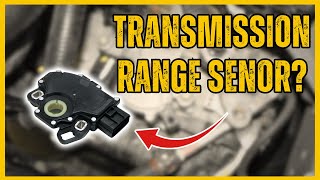
Code P0706 on a 2016-2022 Honda HR-V most often means the transmission range sensor has failed. This sensor, also called a neutral safety switch, tells the car's computer the position of the gear shifter. Replacing this sensor, which is located on the outside of the transmission, is the most common fix. Expect to pay around $130 for an OEM part and 1-2 hours for labor.
- P0706 on your HR-V points to a problem with the transmission range sensor or its circuit, not a major internal transmission failure.
- The most common fix is to replace the transmission range sensor, which is located on the outside of the transmission.
- Before replacing parts, check the wiring and connector for corrosion or damage, as this is also a frequent cause.
- It is highly recommended to use a genuine OEM Honda sensor for the replacement, as aftermarket parts may not solve the problem.
- Due to the risk of being unable to start the car or having it get stuck in gear, this issue should be addressed promptly.
What's Unique About the 2016-2022 Honda HR-V

The 2016-2022 Honda HR-V uses a Continuously Variable Transmission (CVT), and the P0706 code is a well-documented issue. The transmission range sensor is mounted externally on the transmission housing, making it more accessible than on some other vehicles where it can be internal. However, owners and technicians on Honda forums frequently report that these vehicles are sensitive to aftermarket electronic parts. Using a non-OEM replacement sensor can sometimes fail to resolve the code, making it crucial to use a genuine Honda part for this repair. While this code is often sensor-related, Honda has also issued warranty extensions for the CVT drive belt on these models, which can cause other transmission-related codes and symptoms, though P0706 is typically an external electrical circuit fault.
Symptoms You May Notice

- Check Engine Light is on
- Transmission may be stuck in Park or Neutral
- Harsh or delayed gear engagement
- Vehicle enters limp mode (stuck in one gear, often with sluggish acceleration)
- Engine won't start, or will only start in Neutral
- Incorrect gear selection indicator on the dashboard (e.g., all positions lit up, or the wrong gear shown)
- Cruise control may not work
- Unresponsive gear lever
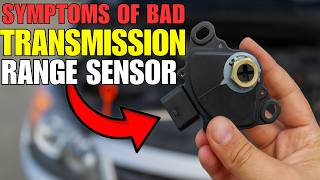
- Ability to start the engine while in gear, creating a safety hazard 🎬 See a breakdown of common symptoms and how they happen
- Replacing the transmission range sensor with a cheap aftermarket part. Many Hondas, including the HR-V, are sensitive to sensor quality, and a non-OEM part may not fix the code or may fail prematurely.
- Assuming an internal transmission failure. P0706 is almost always an external electrical or sensor issue, not a mechanical problem inside the transmission.
Most Likely Causes

- Faulty Transmission Range Sensor (TRS) 🔴 High Probability → Shop Transmission Assembly The sensor is an electronic component exposed to heat and vibration on the transmission housing, leading to internal wear and eventual failure. It is the most common failure point for this code. 🎬 Watch: Diagnostic walkthrough for the P0706 code on an HR-V
How to confirm: Use a diagnostic scanner (like a Honda HDS) to monitor the sensor's output signal while moving the shifter through each gear. If the signal is erratic, missing, or doesn't match the gear position, the sensor is likely bad. The sensor can also be tested with a multimeter for correct resistance values according to the service manual.
Typical fix: Replace the transmission range sensor. It is critical to ensure the new sensor is properly aligned (clocked) in the Neutral position during installation. 🎬 Watch: How to replace the sensor without using special tools Using a genuine Honda OEM part is highly recommended as aftermarket sensors are known to fail or not work correctly.
Est. part cost: $100-$200 - Damaged Wiring or Corroded Connector 🟡 Medium Probability The wiring harness and 10-pin connector for the sensor are located under the vehicle and are exposed to moisture, road debris, and physical stress, which can lead to corrosion, frayed wires, or loose pins over time.
How to confirm: Visually inspect the sensor's 10-pin connector and the associated wiring harness for any signs of green corrosion, frayed wires, or loose pins. A multimeter can be used to check for continuity between the sensor connector and the PCM. A common diagnostic step involves disconnecting the sensor and using a jumper wire to ground the suspected faulty circuit terminal; if the scanner then shows a valid signal, it confirms the wiring is good and the sensor is bad.
Typical fix: Clean the connector terminals if corroded. Repair or replace any damaged sections of the wiring harness. In some cases, a short sub-harness between the main harness and the sensor is the culprit and may need replacement.
Est. part cost: $10-$50 for repair materials, more if a harness section needs replacement. - Misadjusted Shift Cable ⚪ Low Probability Over time, the cable linking the gear shifter inside the car to the transmission can stretch or become misaligned. This can cause a mismatch between the shifter's physical position and the position registered by the sensor.
How to confirm: Verify that the gear indicated on the dashboard perfectly matches the physical position of the shifter. If there is play or a mismatch, an adjustment is needed. This is often the first and simplest recommended check.
Typical fix: Adjust the shift cable linkage at the transmission to ensure it accurately reflects the shifter's position.
Est. part cost: $0
Rare But Worth Checking
- Faulty Powertrain Control Module (PCM): This is very uncommon. Before condemning the PCM, all other possibilities (sensor, wiring, adjustment) must be exhaustively ruled out. A diagnostic scanner with bi-directional control can help test the PCM's communication with the sensor. If the sensor and wiring are proven to be good but the code persists, a faulty PCM becomes a possibility.
Diagnosis Steps

- Connect an OBD-II scanner and confirm that P0706 is the primary code present (often with P0700).
- Check the shift cable adjustment. Ensure the gear selector position matches the gear indicated on the instrument panel. Adjust if necessary.
- Visually inspect the transmission range sensor, its 10-pin electrical connector, and the wiring harness for any obvious signs of damage, corrosion, or loose connections.
- Using a capable scanner (like a Honda HDS), view the live data for the transmission range sensor. Observe the sensor's output as you slowly move the shifter through all gears (P, R, N, D, L). The reading should change cleanly and logically for each position.
- If the live data signal is erratic, incorrect, or absent, perform a continuity test. Disconnect the sensor connector. Use a jumper wire to ground the terminal for the problematic circuit. If the scanner now shows the signal as 'ON', it confirms the wiring to the PCM is good and the sensor itself is faulty.
- If the signal remains off even with the jumper wire, there is an open circuit (broken wire) between the sensor connector and the PCM that needs to be located and repaired.
- If the sensor and wiring test good, the problem may be a rare failure of the Powertrain Control Module (PCM). This should be confirmed by a professional.
- After any repair, clear the codes, and perform a test drive covering various conditions to ensure the issue is resolved and the code does not return.
Parts You'll Likely Need

- Transmission Range Sensor
(OEM #28900-R9L-004)— This sensor is the most common point of failure for the P0706 code. It is an electronic part that wears out over time. It is also referred to as a 'Sensor Assembly, Position' or 'Neutral Safety Switch'.
Trusted brands: Honda (Genuine OEM), Dorman
OEM price range: $130-$190
Aftermarket price range: $40-$90
Related Codes That Often Appear With This One
- P0700 — P0700 is a generic code that simply means the Transmission Control Module (TCM) has stored a fault code. It acts as a 'check engine light' for the transmission and will almost always appear alongside a more specific code like P0706.
- P0705 — P0705 indicates a 'Transmission Range Sensor Circuit Malfunction (PRNDL Input)'. It is a closely related code that can appear if the PCM receives multiple, conflicting signals from the sensor simultaneously, whereas P0706 is more about the signal being out of the expected performance range.
Technical Service Bulletins (TSBs) & Recalls
- TSB #21-047: 'Warranty Extension: 2016-20 HR-V CVT Premature Belt Deterioration' - While not directly for code P0706, this TSB is critical context for the 2016-2020 HR-V's CVT. It extends the warranty on the CVT drive belt to 7 years/150,000 miles due to potential early deterioration. This highlights known issues with the transmission on this platform, though P0706 itself is typically an external electrical fault.
Platform-Specific Known Issues
- Wiring Damage After Motor Mount Replacement: On related Honda models like the Element, owners have reported that the P0706 code appeared immediately after replacing engine or transmission mounts. The theory is that shifting the engine/transmission during the repair can stretch and break a wire in the nearby range sensor harness, which is often brittle from age and heat exposure. The fix required bypassing the broken wire in the harness, as a new sensor did not solve the problem.
Mechanic-Grade Diagnostic Values
- Transmission Range Sensor Voltage (Live Data) — expected: Signal should vary logically with gear selection. General example values are: Park ≈ 0V, Reverse ≈ 5V, Neutral ≈ 2.5V, Drive ≈ 4V.. Failure: Voltage deviates more than ±0.5V from the expected value for a given gear, or the voltage does not change when the shifter is moved.
- Transmission Range Sensor Resistance — expected: Resistance should vary as the gear selector is moved. A service manual is needed for exact specifications, but example values might be ~100Ω in Park and ~500Ω in Drive.. Failure: Resistance is infinite (OL) or does not change when the sensor's actuator is moved, indicating an internal failure.
- Sensor Ground Circuit Voltage Drop — expected: Less than 0.1V between the sensor's ground pin and the negative battery terminal with the key on.. Failure: A reading above 0.1V indicates a bad or high-resistance ground connection, which can cause incorrect sensor readings.
Scan Tool Commands That Help
- Honda HDS (Honda Diagnostic System): Live Data / Data List Monitoring — This is the primary step to confirm the fault. It allows the technician to view the range switch signal inputs for each gear position in real-time to see if they match the expected values.
- Honda HDS (Honda Diagnostic System): Jump SCS Line — This is a specific diagnostic command used to create a controlled environment for testing continuity between the sensor connector and the PCM, as part of the official Honda troubleshooting procedure.
- Honda HDS (Honda Diagnostic System): Clear DTCs — Used after the repair is complete to erase the stored fault code from the PCM's memory before performing a verification test drive.
Wiring & Ground Locations
- Transmission Range Sensor Connector — On the exterior of the CVT transmission housing, where the shift linkage connects.. This is the 10-pin connector for the sensor itself. It's a primary point for visual inspection (corrosion, damage) and electrical testing (continuity, grounding).
- PCM Connector B (51P) — At the Powertrain Control Module (PCM). The exact location of the PCM can vary but is often in the engine bay or under the dashboard.. This is the connector at the vehicle's computer where the signals from the range sensor terminate. Technicians test for continuity between pins at this connector and the sensor connector to find broken wires.
- Ground G101 — In the engine bay, typically a bolt where multiple ground wires connect to the chassis or transmission housing.. This is a critical ground point for multiple engine and transmission components, including the range sensor circuit. A loose or corroded G101 can cause an open circuit or high resistance, triggering a P0706 code even if the sensor and its direct wiring are good.
OEM Part Supersession History
28900-R9L-004→N/A— This is the current and correct part number for the CVT transmission in the 2016-2022 HR-V.
Heads up: Do not use part number 28760-R4A-003. While it may be listed for the HR-V, it is for the 6-speed manual transmission (6MT) and is not compatible with the CVT.
Model Year Variations Within This Range
- 2016-2022: No significant variations have been documented for the diagnosis or repair of code P0706 within this model year range, including the 2019 facelift. The same OEM part number applies to the entire generation.
Diagnostic Flowchart
Used vs. New Parts: Buying Guide for This Vehicle
When a used part is the smart pick: A used OEM sensor from a reputable auto recycler can be a cost-effective option if the budget is tight. Since this is an electronic part, it carries more risk than a purely mechanical one. It makes the most sense if the donor vehicle has low mileage and the part comes with a short-term warranty.
Donor-vehicle mileage cap: roughly under 60000 miles for the part to have meaningful remaining life.
What to inspect on the donor part:
- Verify the part number (28900-R9L-004) matches exactly.
- Inspect the electrical connector pins for any signs of corrosion, bending, or damage.
- Check the plastic housing for cracks or signs of extreme heat exposure.
- Ask for the mileage of the donor vehicle if possible.
OEM-only on this vehicle (don't cheap out):
- Transmission Range Sensor: Due to the PCM's sensitivity, using a genuine Honda (OEM) new part is very strongly recommended to ensure the code is resolved on the first attempt and to avoid premature failure.
Brands owners have reported issues with on this vehicle:
- Generic, unbranded sensors from online marketplaces. While the price is tempting, they have a high failure rate and often do not resolve the code on Honda vehicles.
Real Owner Stories
Aggregated from forums and TSBs cited above. Mileages and costs reflect what owners reported in those sources.
Related Honda models (e.g., Element)
Symptoms: The P0706 code appeared immediately after replacing engine or transmission mounts.
What fixed it: A new sensor did not solve the problem. The fix required finding and bypassing a broken wire in the sensor's wiring harness that was likely damaged during the mount replacement.
Source hint: Vehicle Specific Issue: Wiring Damage After Motor Mount Replacement
Honda Accord Owner Report
Symptoms: The transmission was reported as failing due to codes P0705 and P0706.
What fixed it: According to NHTSA ODI #10544028, a local Honda dealership stated it would cost $4,800 to replace the transmission, noting this as a long-standing issue for the manufacturer.
Source hint: NHTSA ODI #10544028
Related OBD-II Codes
Frequently Asked Questions
My 2018 HR-V has a P0706 code. Should I use a cheaper aftermarket transmission range sensor to save money?
Is the P0706 code on my 2019 Honda HR-V related to the CVT warranty extension mentioned in TSB #21-047?
I just had the motor mounts replaced on my Honda and now the P0706 code is on. Could the repair have caused this?
What is the official Honda part number for the transmission range sensor on a 2016-2022 HR-V?
Before I buy a new sensor for my P0706 code, what is the first and easiest thing I should check on my HR-V?
My mechanic is trying to diagnose P0706 and can't find the sensor connector. Where is it located on the HR-V?
Helpful Videos
We Have This Part in Stock


The information in this article is provided for general reference and educational purposes only. Vehicle specifications, procedures, and part compatibility can vary by production date, trim level, and region. Always consult your vehicle's factory service manual and verify part numbers before purchasing or performing repairs. Safety-critical components such as airbags, seat belts, and braking systems should be installed by a qualified professional.
- Honda HR-V:
- 🧭 Diagnostic Flowchart
- 🎬 Helpful Videos
- 🛍️ Shop This Part
- What's Unique About the 2016-2022 Honda HR-V
- Symptoms You May Notice
- Most Likely Causes
- Rare But Worth Checking
- Diagnosis Steps
- Parts You'll Likely Need
- Related Codes That Often Appear With This One
- Technical Service Bulletins (TSBs) & Recalls
- Platform-Specific Known Issues
- Mechanic-Grade Diagnostic Values
- Scan Tool Commands That Help
- Wiring & Ground Locations
- OEM Part Supersession History
- Model Year Variations Within This Range
- Used vs. New Parts: Buying Guide for This Vehicle
- Real Owner Stories
- Related Honda models (e.g., Element)
- Honda Accord Owner Report
- Related OBD-II Codes
- Frequently Asked Questions
- 🎟️ Get 5% Off