

P0706 on 2006-2010 Hummer H3: Transmission Range Sensor Causes and Fixes
On a 2006-2010 Hummer H3, code P0706 almost always points to a faulty or misadjusted Transmission Range Sensor, also known as the Neutral Safety Switch (or NSBU switch). This part is located on the driver's side of the transmission and is a very common, well-documented failure item that is relatively easy to replace.
- P0706 on your H3 is almost certainly caused by the Transmission Range Sensor (Neutral Safety Switch) located on the driver's side of the transmission.
- Key symptoms are a no-start condition (or only starting in Neutral) and the Check Engine Light.
- This is a DIY-friendly repair. The most critical step is to correctly align the new sensor in the Neutral position before tightening it down.
- Do not immediately suspect a major transmission or starter issue; this inexpensive external part is the cause over 90% of the time.
What's Unique About the 2006-2010 Hummer H3
The Hummer H3 uses a GM 4L60-E automatic transmission, common in many GM trucks. For this platform, the Transmission Range Sensor (TRS)—also known as the NSBU (Neutral Safety Back-Up) switch—is mounted externally on the driver's side of the transmission case, bolted to the manual shift shaft. This is a significant advantage as it makes inspection and replacement much easier compared to transmissions where the sensor is located inside the oil pan or on the valve body. Failure of this external switch is a well-documented and frequent issue on the H3 and its sibling platforms, the Chevrolet Colorado, GMC Canyon, and Isuzu i-Series.
Symptoms You May Notice
- Check Engine Light is on
- Engine will not start, or only starts when the shifter is in Neutral
- Reverse lights do not work
- Gear indicator on the instrument cluster is incorrect or blank
- Harsh or delayed gear engagement
- Vehicle may enter a limited-function 'limp mode'
- Inability to shift out of Park
- Replacing the starter when a no-start condition is present. If the vehicle starts in Neutral but not Park, the issue is almost certainly the range sensor circuit, not the starter.
- Replacing the transmission valve body. On the H3, the range sensor is external, so valve body work is unnecessary for this specific code. This might be a valid diagnosis on other vehicles where the sensor is internal, but not here.
Most Likely Causes
- Faulty Transmission Range Sensor (Neutral Safety Switch) 🔴 High Probability → Shop Transmission Assembly The sensor is mounted externally on the side of the transmission, making it susceptible to corrosion from water, road salt, and damage from road debris and weather over time. The internal electrical contacts simply wear out.
How to confirm: Use a scan tool to monitor the gear position data (PRNDL) while moving the shifter. If the data is erratic, incorrect, or doesn't change, the sensor is likely bad. A classic symptom is the ability to start the engine in Neutral but not in Park. You can also test for correct voltage signals at the sensor's electrical connector per the service manual.
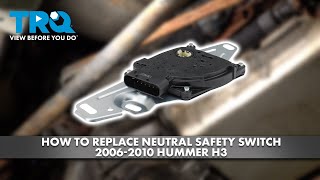
Typical fix: Replace the Transmission Range Sensor. This requires safely lifting the vehicle, disconnecting the shift linkage and electrical connector, removing the two bolts holding the old sensor, and installing the new one with careful alignment. The OEM part number is GM 24229422 🎬 Watch this step-by-step Hummer H3 sensor replacement walkthrough., which is superseded by ACDelco D2261C.
Est. part cost: $40-$80 - Misadjusted Transmission Range Sensor or Shift Linkage 🟡 Medium Probability → Shop Transmission Assembly The sensor's mounting holes are slotted to allow for adjustment. Vibrations or previous incorrect installation can cause it to move out of alignment with the transmission's internal manual shaft.
How to confirm: Check if the vehicle starts in Neutral but not Park, or vice-versa. Visually inspect the alignment marks on the sensor. There are two small lines on the sensor body and the rotating center hub that must align perfectly when the transmission is in Neutral.
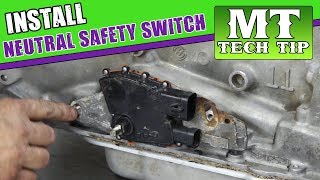
Typical fix: Loosen the sensor's two mounting bolts and rotate it slightly until it is properly aligned. The standard procedure is to place the shifter and the transmission's manual lever in Neutral, then align the marks on the sensor and tighten the bolts. 🎬 See how to properly align the 4L60E neutral safety switch.
Est. part cost: $0 - Damaged Wiring or Corroded Connector ⚪ Low Probability The wiring harness leading to the sensor is located under the vehicle and can be damaged by road debris, heat from the exhaust, or moisture causing corrosion in the connector pins. This is less common than outright sensor failure.
How to confirm: Visually inspect the entire length of the wiring harness for breaks, chafing, or melted sections. Unplug the connector and check for green or white corrosion, bent pins, or moisture.
Typical fix: Repair the damaged section of wire or clean the connector terminals with an electrical contact cleaner. If the connector itself is damaged, it may need to be replaced.
Est. part cost: $5-$50
Rare But Worth Checking
- Faulty Transmission Control Module (TCM): → Shop Transmission Assembly This is very rare. The TCM is the computer that receives the signal from the range sensor. Before condemning the TCM, all other possibilities (sensor, wiring, adjustment) must be exhaustively ruled out.
Diagnosis Steps
- Connect an OBD-II scanner and confirm the presence of P0706 and any other related codes.
- Monitor the live data stream for the Transmission Range Sensor (PRNDL input) on the scanner. Cycle the shifter through all gears (P, R, N, D, etc.) and verify that the computer's reading matches the shifter position.
- If the reading is erratic, incorrect, or only works in some positions, try starting the engine in both Park and Neutral. If it starts in N but not P, this strongly points to a sensor or alignment issue.
- Raise and safely support the vehicle on jack stands.
- Locate the sensor on the driver's side of the transmission. Visually inspect its electrical connector and the wiring harness for any obvious signs of damage, corrosion, or loose connections.
- Check the adjustment of the sensor. Place the gear shifter in Neutral. The two alignment marks (one on the stationary body, one on the rotating hub) on the sensor should line up perfectly. If they don't, adjustment is needed.
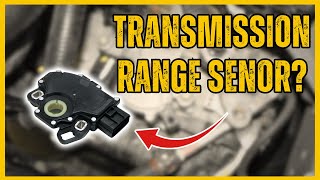
- If the wiring appears correct and adjustment doesn't fix it (or it's already aligned), the sensor itself is the most likely culprit. Proceed with replacement. 🎬 Learn how to replace the sensor without using special tools.
- After installing a new sensor, ensure it is properly aligned in the Neutral position before tightening the mounting bolts.
- Clear the trouble codes with the scanner and perform a test drive, shifting through all gears to ensure the problem is resolved.
Parts You'll Likely Need
- Transmission Range Sensor / Neutral Safety Switch
(OEM #24229422)— This is the most common failure point for code P0706 on the Hummer H3. The internal contacts wear out or get contaminated, leading to incorrect signals.
Trusted brands: ACDelco (D2261C), Standard Motor Products (NS636), Rostra, TRQ
OEM price range: $70-$120
Aftermarket price range: $40-$80
Related Codes That Often Appear With This One
- P0705 — This code indicates a general 'Transmission Range Sensor Circuit Malfunction (PRNDL Input)' and is often triggered along with P0706 when the sensor fails.
- P0700 — This is a generic code indicating that the Transmission Control Module (TCM) has stored a fault code. It acts as a 'heads-up' to check the TCM for more specific codes like P0706.
Technical Service Bulletins (TSBs) & Recalls
- No specific Technical Service Bulletin for DTC P0706 on the Hummer H3 was found after an extensive search of NHTSA and GM databases. The issue is typically handled as a standard component replacement.
Mechanic-Grade Diagnostic Values
- Transmission Range Sensor Signal Voltage (General) — expected: Park: ~0V, Reverse: ~5V, Neutral: ~2.5V, Drive: ~4V. Failure: Voltage deviates more than +/- 0.5V from the expected value for a given gear, or is stuck at one value.
- 1-2 and 2-3 Shift Solenoid Resistance (at transmission connector) — expected: 20 - 40 Ohms at 68°F (20°C). Failure: Reading is significantly outside this range, or shows an open circuit (OL).
- TCC Solenoid Resistance (at transmission connector) — expected: 20 - 40 Ohms at 68°F (20°C). Failure: Reading is significantly outside this range. Note: Pass 2 part number is for a later model, this test was on a '94 but specs are often similar.
- Electronic Pressure Control (EPC) Solenoid Resistance (at transmission connector) — expected: 3.5 - 8.0 Ohms at 68°F (20°C). Failure: Reading is outside this range.
Scan Tool Commands That Help
- Tech2 / GDS2 or equivalent professional scanner: Live Data > Transmission Data > TR Switch Position or PRNDL Input — This is the primary diagnostic step. Use this to watch the gear position signal received by the control module in real-time as you move the shifter. An incorrect or non-changing reading strongly indicates a fault in the sensor, wiring, or adjustment.
Wiring & Ground Locations
- G103 / G104 — G103 is on the lower left side of the engine block. G104 is on the left side of the engine block, in front of the starter.. These are primary engine block grounds. The Park/Neutral Position (PNP) switch circuit is part of this ground distribution. A loose or corroded connection at these points can cause erratic electrical behavior for transmission sensors.
- G100 — In the engine compartment, mounted to the left front inner fender, behind the battery.. This is a major chassis ground point. While less direct than the engine block grounds, a poor connection here can cause a variety of electrical issues, including problems with control modules that interpret the range sensor signal.
- Transmission Main Connector (C2) — Large, round 20-pin connector on the passenger side of the 4L60-E transmission case.. This is the main electrical interface for the transmission. While the TRS has its own separate connector on the driver's side, issues at this main connector (corrosion, pushed pins) can cause related transmission codes and symptoms. Knowing its location is key for comprehensive wiring checks.
Real Owner Repair Stories
- YouTube channel 'DiagnoseDan' (Vehicle with a persistent P0706 code (specific model not H3, but demonstrates a universal advanced diagnostic technique).) — Check Engine Light on with code P0706, car in fail-safe mode. Could not pass inspection.
❌ Tried (didn't work) Replacing the Transmission Range Sensor (Neutral Safety Switch) did not fix the problem.
✅ What actually fixed it The technician verified the wiring had good continuity. Using a scan tool, he saw one of the range signals (C3) was stuck. However, when he tested the same signal wire with a voltmeter directly at the PCM, the voltage was changing correctly as the gears were shifted. This proved the sensor and wiring were good, but the PCM was not interpreting the signal correctly. Replacing the Powertrain Control Module (PCM) and programming it fixed the vehicle.
OEM Part Supersession History
24229422→ACDelco D2261C— Standard part lifecycle update, branding change from GM to ACDelco Professional.
Heads up: Ensure the part is for 2004+ 4L60-E transmissions. An earlier part number, 24221125, was used on pre-2004 models and may have different internal logic or connector details.
Model Year Variations Within This Range
- 2006-2007 vs 2008-2010: The primary control module for the transmission changed. On 2006-2007 models, the transmission is controlled by the main Powertrain Control Module (PCM). On 2008-2010 models, a separate, standalone Transmission Control Module (TCM), designation T42, is used. This is critical for diagnosis; if the control module is suspected, you must identify whether you are diagnosing the PCM or a separate TCM.
Diagnostic Flowchart
Other Known Issues on This Vehicle
Issues unrelated to this code that are worth knowing about as an owner of this generation:
- Premature Cylinder Head Failure (3.5L L52 Engine) 🔴 High — Very common on 2006 models. Caused by improperly hardened valve seats from the factory, leading to loss of compression and misfires, often before 100,000 miles. (Ref: TSB 06-06-01-017G)
- Clogged Sunroof Drain Tubes 🔴 High — Extremely common across all years. The drain tube ends have small check valves that clog with debris, causing water to back up and leak into the cabin, typically onto the passenger floorboard. This can damage the Body Control Module (BCM) and other electronics.
- GM Passlock II Anti-Theft System Failure 🟠 Medium — A frequent and frustrating issue where the sensor in the ignition lock cylinder fails, preventing the vehicle from starting and causing the security light to flash for a 10-minute lockout period.
- Worn/Failed Front Differential Bushings 🟠 Medium — The rubber bushings that mount the front differential to the frame wear out, causing a distinct 'clunk' when shifting into gear or during acceleration/deceleration.
- Failed Blower Motor Resistor and Connector 🟡 Low — The blower motor resistor and its electrical connector are prone to overheating and melting, causing the fan to work only on the highest setting or not at all. (Ref: NHTSA Campaign ID: 15V202000 (Recall))
Used vs. New Parts: Buying Guide for This Vehicle
When a used part is the smart pick: It is strongly recommended to NOT use a used Transmission Range Sensor for this repair. The part is inexpensive new, and the failure mode is related to internal wear and exposure to elements. A used part has unknown remaining life and may fail shortly after installation.
What to inspect on the donor part:
- Not applicable as used parts are not recommended.
OEM-only on this vehicle (don't cheap out):
- The Transmission Range Sensor is NOT an OEM-only part. Reputable aftermarket brands are widely available and considered a cost-effective alternative.
Aftermarket brands forum-validated for this vehicle:
- ACDelco Professional
- Standard Motor Products (SMP)
- Rostra
Brands owners have reported issues with on this vehicle:
- No specific brands were consistently reported as problematic in research, but it is generally wise to avoid no-name, deeply discounted parts from online marketplaces for a critical safety component.
Real Owner Stories
Aggregated from forums and TSBs cited above. Mileages and costs reflect what owners reported in those sources.
2006-2010 Hummer H3
Symptoms: The vehicle had a no-start condition and was showing a P0706 trouble code.
What fixed it: The owner replaced the neutral safety switch (part number 24229422) themselves, which resolved the issue.
Source hint: hummer4x4offroad.com - A thread titled 'Neutral Safety Switch' from 2014
2006-2010 Hummer H3
Symptoms: Owners reported experiencing no-start conditions and various shifting issues.
What fixed it: Replacement of the external neutral safety switch, which is described as a common failure item.
Source hint: hummerforums.com - Various user threads
Related OBD-II Codes
Frequently Asked Questions
My 2008 Hummer H3 won't start but the lights work. Could the P0706 code be the cause?
Where is the Transmission Range Sensor located on my H3?
Can I just adjust the neutral safety switch instead of replacing it to fix P0706?
What is the correct part number for the Hummer H3 Transmission Range Sensor?
Are there any GM recalls or Technical Service Bulletins (TSBs) for code P0706 on the Hummer H3?
My reverse lights stopped working and my gear indicator is blank. Is this related to the P0706 code?
Helpful Videos
We Have This Part in Stock

The information in this article is provided for general reference and educational purposes only. Vehicle specifications, procedures, and part compatibility can vary by production date, trim level, and region. Always consult your vehicle's factory service manual and verify part numbers before purchasing or performing repairs. Safety-critical components such as airbags, seat belts, and braking systems should be installed by a qualified professional.
- Hummer H3:
- 🧭 Diagnostic Flowchart
- 🎬 Helpful Videos
- 🛍️ Shop This Part
- What's Unique About the 2006-2010 Hummer H3
- Symptoms You May Notice
- Most Likely Causes
- Rare But Worth Checking
- Diagnosis Steps
- Parts You'll Likely Need
- Related Codes That Often Appear With This One
- Technical Service Bulletins (TSBs) & Recalls
- Mechanic-Grade Diagnostic Values
- Scan Tool Commands That Help
- Wiring & Ground Locations
- Real Owner Repair Stories
- OEM Part Supersession History
- Model Year Variations Within This Range
- Other Known Issues on This Vehicle
- Used vs. New Parts: Buying Guide for This Vehicle
- Real Owner Stories
- 2006-2010 Hummer H3
- 2006-2010 Hummer H3
- Related OBD-II Codes
- Frequently Asked Questions
- 🎟️ Get 5% Off