

P0707 on 2003-2013 Honda Accord: Transmission Range Sensor Fixes
On a 2003-2013 Honda Accord, code P0707 is most often caused by a faulty transmission range sensor (also called a neutral safety switch). This can prevent the car from starting or cause erratic shifting and a flashing 'D' light. Replacing the sensor is the most common fix, with an aftermarket part costing between $50 and $150. Always inspect the wiring connector for corrosion before replacing the sensor.
- P0707 on a 2003-2013 Accord almost always points to a bad transmission range sensor or its wiring.
- Key symptoms are a no-start condition, a flashing 'D' light, and/or erratic transmission shifting.
- Do not continue to drive the vehicle, as it can get stuck in gear or fail to start, leaving you stranded.
- Before replacing the sensor, always inspect the wiring and connector for corrosion or damage, as this can cause the same code.
- This is a DIY-friendly repair for those comfortable with basic tools and electrical testing, as the sensor is located on the outside of the transmission.
What's Unique About the 2003-2013 Honda Accord
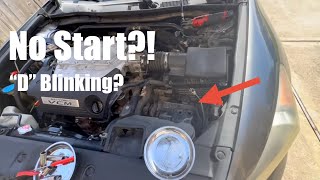
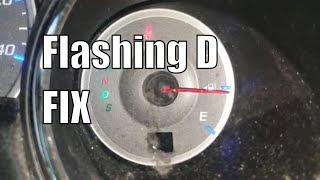
For the 7th and 8th generation Honda Accord, the transmission range sensor is an external component mounted on the transmission case. Its location can expose it to significant heat and road spray, which may contribute to a higher rate of failure over time compared to more protected sensors. Owners frequently report that replacing this single sensor resolves the P0707 code and associated starting or shifting issues. 🎬 Watch: How to fix a no-start and blinking D light This issue is common across both 4-cylinder and V6 models.
Generation note: This guide covers the 7th generation (2003-2007) and 8th generation (2008-2012) Honda Accord. The function and common failure of the transmission range sensor are similar across these generations, though the specific part number differs. The 7th gen V6 models, in particular, are also known for premature automatic transmission failure, which is a separate and more severe issue.
Symptoms You May Notice
- Engine will not start, especially when in Park or Neutral
- Check Engine Light is on
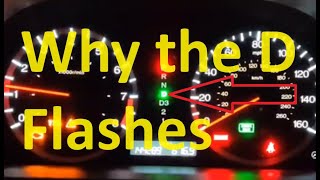
- Flashing 'D' (Drive) indicator light on the instrument cluster
- Transmission may not shift properly or may shift erratically
- Vehicle enters 'limp mode' (stuck in a single gear)
- Inability to shift the gear selector out of Park
- Decreased fuel economy
- Reverse lights may not illuminate
- Replacing the transmission solenoids when the issue is electrical and related to the range sensor.
- Condemning the entire transmission when the fault is an inexpensive external sensor.
Most Likely Causes
- Faulty Transmission Range Sensor (Neutral Safety Switch) 🔴 High Probability → Shop Transmission Assembly The sensor's external placement on the transmission makes it vulnerable to heat, moisture, and road debris, which can lead to premature internal failure or corrosion.
How to confirm: Use a multimeter to test for correct voltage output from the sensor as the gear selector is moved through each position. Or, use an advanced scan tool to monitor the sensor's live data; a reading stuck below 0.5V or an unchanging value when shifting indicates a problem.
Typical fix: Replace the transmission range sensor. Ensure the new sensor is properly aligned during installation, 🎬 Watch: Step-by-step transmission range sensor replacement tutorial typically by shifting to Neutral and aligning marks on the sensor body and shaft.
Est. part cost: $50 - $150 - Corroded or Damaged Wiring/Connector 🟡 Medium Probability Moisture and road salt can get into the sensor's connector, causing corrosion ('green crust') on the pins or a short to ground, which drops the voltage signal. This can happen after driving through deep puddles or from pressure washing the engine bay.
How to confirm: Visually inspect the sensor's electrical connector and nearby wiring for any signs of corrosion, damage, or loose connections. Disconnect it and check for bent or pushed-back pins. Perform a 'wiggle test' on the harness while monitoring sensor voltage to see if the reading changes.
Typical fix: Clean the connector terminals with an electrical contact cleaner or repair/replace the damaged section of the wiring harness. Apply dielectric grease upon reassembly to prevent future moisture intrusion.
Est. part cost: $5 - $50 - Misadjusted Transmission Range Sensor or Shift Linkage ⚪ Low Probability → Shop Transmission Assembly
How to confirm: Ensure the shift linkage is properly connected and not loose. When installing a new sensor, it must be correctly aligned. This usually involves placing the shifter in Neutral and aligning marks on the sensor and the transmission case.
Typical fix: Adjust the sensor or shift linkage to the correct position.
Est. part cost: $0
Rare But Worth Checking
- Faulty Powertrain Control Module (PCM): This is very rare. Before condemning the PCM, all other possibilities, including the sensor, wiring, and connections, must be exhaustively tested and ruled out.
- Low System Voltage: A failing battery or a bad main ground can lower the overall system voltage, potentially causing the PCM to incorrectly flag a P0707 code on a healthy sensor circuit. If other electrical-related codes are present, diagnose the battery and charging system first.
Diagnosis Steps
- Read the code with an OBD-II scanner and check for any other related transmission or electrical codes.
- Check the transmission fluid level and condition. Burnt or low fluid can cause a variety of transmission issues, though it's less likely to be the direct cause of a P0707.
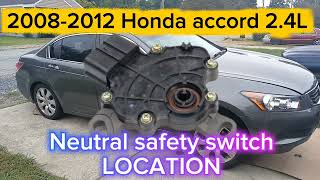
- Locate the transmission range sensor on the exterior 🎬 See this video to locate the sensor on 8th Gen Accords of the transmission case. Visually inspect the sensor, its electrical connector, and the wiring harness for any obvious signs of damage, corrosion, or loose connections.
- Disconnect the connector and inspect the pins for corrosion (green crust) or being bent/pushed back. Clean if necessary.
- Using a scan tool that can read live data, monitor the voltage from the transmission range sensor while moving the gear selector through all positions (P, R, N, D, etc.). The voltage should change distinctly for each gear. A reading stuck below ~0.5 volts points to the problem.
- If a scan tool is unavailable, use a digital multimeter to back-probe the signal wire at the sensor's connector and check for the correct voltage specifications as per the vehicle's service manual.
- If the sensor and wiring appear to be good, check the adjustment of the shift linkage to ensure it is moving the sensor through its full range of motion.
- If the sensor has been replaced and the wiring is confirmed to be good, the final step would be to investigate the PCM, though this is an extremely unlikely cause.
Parts You'll Likely Need
- Transmission Range Sensor / Neutral Safety Switch
(OEM #28900-RYF-023 (8th Gen, 2008-2012), 28900-PPV-023 / 28900-RCR-013 (7th Gen, 2003-2007, check VIN))— This sensor is the most common failure point for a P0707 code due to wear and tear and its exposure to the elements.
Trusted brands: Honda (OEM), Standard Motor Products, Dorman, Beck/Arnley
OEM price range: $120-$200
Aftermarket price range: $50-$150
Related Codes That Often Appear With This One
- P0705 — P0705 indicates a general circuit malfunction for the range sensor, while P0707 specifically points to a low voltage condition. They can appear together if the sensor is failing intermittently.
- P0706 — This code means the sensor's signal is out of range or has a performance problem, which can occur alongside P0707 if the signal is erratic and not just consistently low.
- P0708 — This is the opposite of P0707, indicating a high voltage signal. Seeing P0707 and P0708 intermittently strongly suggests a wiring issue where a wire is chafing and shorting to both ground and a power source.
Platform-Specific Known Issues
- On 7th generation (2003-2007) V6 models, the 5-speed automatic transmission (codename BAYA/MAYA) has a very high failure rate, often before 100,000 miles. While P0707 is usually the sensor, be aware that other codes like P0730 (Incorrect Gear Ratio) often signal catastrophic internal failure requiring a rebuild or replacement.
- For 8th generation (2008-2012) models with the 4-cylinder K24 engine, a common issue is a rattling noise from the VTC actuator on cold starts. This is a separate issue from P0707 but is a well-known problem for this engine.
Diagnostic Flowchart
Other Known Issues on This Vehicle
Issues unrelated to this code that are worth knowing about as an owner of this generation:
- Automatic Transmission Failure (7th Gen V6) 🔴 High → Shop Transmission Assembly — Very common on 2003-2004 models, less so on 2005-2007 but still a significant weak point. Often fails before 120,000 miles. (Ref: NHTSA Recall #04V176000 was issued for a defect that could cause the transmission to lock up.)
- Excessive Oil Consumption (8th Gen V6 and some I4) 🟠 Medium — Widespread issue, particularly on V6 models with Variable Cylinder Management (VCM). Led to a class-action lawsuit. (Ref: Honda settled a class-action lawsuit and extended the powertrain warranty for affected vehicles.)
- VTC Actuator Rattle on Cold Start (8th Gen I4) 🟠 Medium — Extremely common on the K24Z engines. A loud grinding or rattling noise for ~2 seconds on a cold start. (Ref: Honda TSB 09-010 addresses this issue.)
- Cracked Front Compliance Bushings 🟡 Low — Very common across both generations after 80,000-100,000 miles. Causes clunking noises from the front suspension and can affect alignment.
- Power Steering Hose Leak (7th Gen V6) 🔴 High — Common enough to warrant a recall. The hose deteriorates from engine heat, leaking fluid onto the hot catalytic converter, creating a fire risk. (Ref: Honda recalled 2003-2007 Accord V6 models to replace the hose.)
Real Owner Stories
Aggregated from forums and TSBs cited above. Mileages and costs reflect what owners reported in those sources.
2008-2012 Honda Accord
Symptoms: Multiple range sensor codes appearing together along with a flashing 'D' light on the instrument cluster.
What fixed it: Diagnosis pointed towards a failing sensor or a wiring issue, common when high and low voltage codes appear together.
Source hint: Drive Accord (.net) thread titled 'P0707, P0708, P1717 and D light flashing'
2003 Honda Accord
Symptoms: Vehicle threw a P0707 code; owner sought confirmation on the most likely cause.
What fixed it: Replacement of the transmission range switch, which was confirmed as a relatively straightforward fix.
Source hint: Honda-Tech Forum thread '2003 Accord P0707 Code'
2003-2007 Honda Accord V6 — ~95000 miles
Symptoms: Transmission failing to shift properly, potentially accompanied by code P0730 (Incorrect Gear Ratio).
What fixed it: Because these BAYA/MAYA 5-speed automatics have high failure rates before 100,000 miles, the fix often requires a full rebuild or replacement rather than just a sensor.
Source hint: vehicle_specific_issues section regarding 7th generation V6 models
Related OBD-II Codes
Frequently Asked Questions
My 2003 Accord V6 is showing P0707; could this be related to the major transmission recall?
Is there a specific part number I should look for when replacing the sensor on my 8th Gen Accord or Ridgeline?
My 2008 Accord I4 has a P0707 code and a loud rattle when I start it in the morning. Are these related?
Can driving through deep puddles cause the P0707 code on my Honda?
How do I ensure the new sensor is installed correctly so the 'D' light stops flashing?
Why won't my Accord start in Park now that the Check Engine Light is on?
Helpful Videos
We Have This Part in Stock

The information in this article is provided for general reference and educational purposes only. Vehicle specifications, procedures, and part compatibility can vary by production date, trim level, and region. Always consult your vehicle's factory service manual and verify part numbers before purchasing or performing repairs. Safety-critical components such as airbags, seat belts, and braking systems should be installed by a qualified professional.
- Honda Accord:
- 🧭 Diagnostic Flowchart
- 🎬 Helpful Videos
- 🛍️ Shop This Part
- What's Unique About the 2003-2013 Honda Accord
- Symptoms You May Notice
- Most Likely Causes
- Rare But Worth Checking
- Diagnosis Steps
- Parts You'll Likely Need
- Related Codes That Often Appear With This One
- Platform-Specific Known Issues
- Other Known Issues on This Vehicle
- Real Owner Stories
- 2008-2012 Honda Accord
- 2003 Honda Accord
- 2003-2007 Honda Accord V6 — ~95000 miles
- Related OBD-II Codes
- Frequently Asked Questions
- 🎟️ Get 5% Off