

P0720 on 2005 Dodge Ram 2500 5.9L Cummins: Output Speed Sensor Causes and Fixes
For a 2005 Dodge Ram 2500 with the 5.9L Cummins, code P0720 is almost always caused by a failed transmission Output Speed Sensor (OSS). This can cause erratic shifting, a non-working speedometer, and the truck to enter 'limp mode'. Replacing the sensor is a simple DIY fix, with the part costing around $20-$50 for an aftermarket version or $50-$80 for an OEM Mopar part.
- P0720 on a 2005 Ram 5.9L Cummins points directly to a problem with the transmission Output Speed Sensor circuit.
- The most likely fix is replacing the Output Speed Sensor (OEM Part # 4800879BC), which is an inexpensive part and a simple DIY job.
- Symptoms include erratic shifting, a non-working speedometer, and the transmission entering 'limp mode'.
- Before replacing parts, check the transmission fluid level and inspect the sensor's wiring for any visible damage, especially from water intrusion.
- Do not confuse the transmission Output Speed Sensor (on the driver's side of the transmission) with the rear wheel speed sensor (on the rear differential).
What's Unique About the 2005-2005 Dodge Ram 2500
The 2005 Dodge Ram 2500 with the 5.9L Cummins diesel engine is equipped with the robust 48RE automatic transmission. For this specific P0720 code, the issue is almost always mechanical or electrical, relating directly to the external Output Speed Sensor or its wiring. Unlike some other vehicles where this code can be triggered by complex software issues, the 48RE's straightforward design makes diagnosis relatively simple. The most common pitfall is confusing the transmission-mounted OSS with the rear differential speed sensor, a mistake that will not resolve the P0720 code. While the 48RE is a strong transmission, its external electronic sensors are known failure points over time.
Symptoms You May Notice
- Check Engine Light is on
- Transmission is stuck in one gear (limp mode) 🎬 Watch: Troubleshooting limp mode and overdrive issues on the 48RE
- Harsh, erratic, or delayed shifting
- Speedometer is erratic or not working at all
- Torque converter clutch fails to lock up or unlocks erratically
- Vehicle may stall when coming to a stop
- Cruise control does not work
- Delayed engagement when shifting into gear
- Replacing the Rear Wheel Speed Sensor on the differential. This sensor provides a signal for the ABS system and sometimes the speedometer on other models, but it will NOT fix a P0720 code, which is specific to the transmission's output sensor circuit.
Most Likely Causes
- Faulty Transmission Output Speed Sensor (OSS) 🔴 High Probability → Shop Transmission Assembly The sensor is an electronic component located on the outside of the transmission, exposed to heat, vibration, and road debris, making it a common failure item over time. The sensor's plastic housing can also become brittle and break.
How to confirm: Test the sensor's resistance with a multimeter; a bad sensor will show an open circuit or resistance far from spec. A more definitive test is to monitor the OSS signal on a scan tool while driving; dropouts or erratic readings confirm a bad sensor. 🎬 See how to diagnose intermittent P0720 issues using an oscilloscope An obviously broken or physically damaged sensor is also a clear indicator.
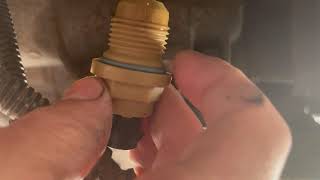
Typical fix: Replace the Output Speed Sensor. It is located on the driver's side of the transmission tail housing and typically requires a 1-inch socket or wrench for removal. 🎬 Watch: Step-by-step guide to replacing the output speed sensor
Est. part cost: $20 - $80 - Damaged Wiring or Connector 🟡 Medium Probability The wiring harness to the sensor is exposed under the truck and can be damaged by road debris, corrosion, or heat from the exhaust system, leading to a short or open circuit. Water intrusion into the connector is a known issue, sometimes triggered by driving through puddles.
How to confirm: Visually inspect the wiring harness and connector leading to the OSS for any signs of breaks, chafing, melting, or corrosion. Check for 5V reference and ground at the connector with the key on. In some cases, the fault only appears when wet.
Typical fix: Repair the damaged section of wiring or replace the connector pigtail. Ensure the connector is clean and apply dielectric grease before reconnecting to prevent moisture intrusion.
Est. part cost: $10 - $30
Rare But Worth Checking
- Faulty Powertrain Control Module (PCM): → Shop Engine Control Module (ECM) This is a rare cause. The PCM should only be considered after the sensor and wiring have been definitively ruled out as the problem. In some forum cases, after replacing the sensor and checking wires, the PCM was the final culprit.
- Low or Contaminated Transmission Fluid: → Shop Transmission Assembly Extremely low or dirty fluid can cause a host of transmission issues, including erratic shifting that might, in some fringe cases, trigger speed sensor codes. Always check the fluid level and condition first.
Diagnosis Steps
- Check Transmission Fluid: Verify the transmission fluid level is correct and the fluid is in good condition (not burnt or full of debris). Low fluid can cause numerous issues.
- Scan for Codes: Use an OBD-II scanner to confirm P0720 is the primary code. Note any other transmission-related codes like P0700 or gear ratio codes.
- Inspect the Sensor and Wiring: Visually inspect the Output Speed Sensor and its wiring harness on the driver's side of the transmission. Look for obvious damage, corrosion, or loose connections. Pay close attention to the connector for signs of water intrusion.
- Test the Circuit: Using a multimeter, check for a 5-volt reference signal and a good ground at the sensor's electrical connector with the ignition on. A service manual can confirm the correct pins.
- Test the Sensor: Disconnect the sensor and test its internal resistance with a multimeter. Compare the reading to the manufacturer's specification. An open or shorted sensor is faulty.
- Replace the Sensor: If the sensor tests bad or if the wiring is confirmed to be good, replace the Output Speed Sensor. A 1-inch socket is typically required. Be prepared for a small amount of transmission fluid to leak out.
- Apply Dielectric Grease: Before plugging in the new sensor, apply a small amount of dielectric grease to the connector pins to protect against moisture and corrosion.
- Clear Codes and Test Drive: After replacement, clear the codes with the scanner and perform a test drive to ensure the shifting is normal and the check engine light does not return. A hard reset (disconnecting the battery) may also be necessary.
Parts You'll Likely Need
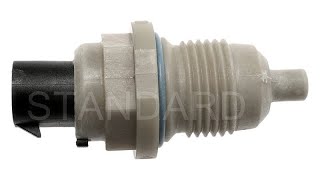
- Transmission Output Speed Sensor
(OEM #4800879BC)— This is the most common failure point for a P0720 code on the 48RE transmission.
Trusted brands: Mopar, Dorman, Standard Motor Products (SMP)
OEM price range: $50-$80
Aftermarket price range: $20-$50
Related Codes That Often Appear With This One
- P0700 — P0700 is a generic code indicating the Transmission Control Module (TCM), which is part of the PCM on this truck, has stored a fault. It's an informational code that points you toward more specific codes like P0720.
- P0731-P0736 — These are 'Incorrect Gear Ratio' codes. If the PCM doesn't get a reliable signal from the OSS, it can't verify that the transmission is in the correct gear, which may trigger one of these codes alongside P0720.
Technical Service Bulletins (TSBs) & Recalls
- No specific Technical Service Bulletins (TSBs) directly addressing the P0720 code on this platform were found during research. Diagnostic procedures are typically covered in the factory service manual.
Platform-Specific Known Issues
- Water Intrusion Triggering Fault: At least one owner on 'Dodge Diesel - Diesel Truck Resource' forums reported that the P0720 code and associated limp mode symptoms were reliably triggered immediately after driving through a puddle of water. This strongly suggests that a compromised wiring harness or a poor seal on the sensor connector can allow water to short the circuit. The issue was resolved by applying dielectric grease to the connector to seal it from moisture.
Mechanic-Grade Diagnostic Values
- Output Speed Sensor (OSS) internal resistance — expected: No specific Ohm value is consistently provided for a good sensor, as it is a magnetic pickup sensor. Testing focuses on circuit integrity and signal generation.. Failure: An open circuit (infinite resistance) or a short circuit (zero resistance) indicates a failed sensor.
- OSS Signal and Ground Circuit Resistance (at PCM connector) — expected: Below 5.0 ohms. Failure: Resistance above 5.0 ohms indicates an open or high-resistance wire in the harness between the sensor and the PCM.
- OSS Signal Circuit Voltage to Ground (Key On) — expected: Below 0.5 volts. Failure: Voltage above 0.5 volts indicates a short to voltage in the signal wire.
- OSS Sensor Type Identification — expected: The sensor is a two-wire magnetic pickup (variable reluctance) sensor that generates an AC sine wave.. Failure: Not applicable, this is an identification detail.
Scan Tool Commands That Help
- DRBIII or equivalent: Monitor Input/Output Speed Sensor RPM — Used during diagnosis to watch the live data from the OSS. With the drive wheels off the ground and the transmission in gear, the scan tool should show a steady RPM reading from the output sensor that increases with wheel speed. Dropouts or zero readings while the wheels are turning confirm a sensor or circuit fault.
- DRBIII with Miller tool #8333 (Transmission Simulator): Transmission Simulator Test — This is a dealer/specialist-level test to definitively rule out the PCM. The simulator sends a known-good speed signal (e.g., 1000 RPM) directly to the PCM. If the scan tool then reads 1000 RPM, the PCM and its internal processing are good, proving the fault is in the wiring or sensor.
Wiring & Ground Locations
- PCM Connector C2, Pin 25 — The Powertrain Control Module (PCM) is located on the driver's side of the engine block. C2 is one of the large multi-pin connectors.. Pin 25 of the C2 connector is the circuit for the Output Speed Sensor Ground. A bad connection or corrosion at this specific pin can cause a P0720 code.
- Main Body/Engine Grounds — There are several key ground points, including a primary ground from the battery to the engine block and various smaller ground wires attached to the core support and inner fenders.. While not directly for the OSS circuit, poor overall system grounds on these trucks are known to cause a host of electrical issues, including erratic sensor readings and communication codes between modules. Ensuring all main grounds are clean and tight is a critical preliminary step.
Real Owner Repair Stories
- Dodge Diesel - Diesel Truck Resource forum user 'vj_M' (3rd Gen Dodge Ram (assumed 2003-2007)) — Truck would not accelerate in first gear, but would work fine after coasting and allowing it to shift. The issue would only happen after the truck was shut off and restarted. P0720 code was present.
❌ Tried (didn't work) Clearing the code would temporarily fix it, but it would return on the next drive cycle.
✅ What actually fixed it Upon physical inspection, the user found the Output Speed Sensor was physically broken, with half of it still stuck in the transmission and the wiring harness just hanging. Replacing the broken sensor resolved the issue. - NHTSA ODI #10433836 — An owner reported a potentially dangerous situation while driving in the left lane when the check engine light appeared with a P0720 code. The report notes that after researching the code, they found that Output Speed Sensor (OSS) malfunctions are very common with Dodge vehicles.
OEM Part Supersession History
4800879BB→4800879BC— Standard part revision by the manufacturer.
Heads up: The new part number (4800879BC) is a direct replacement for the old one and is fully compatible.
Diagnostic Flowchart
Other Known Issues on This Vehicle
Issues unrelated to this code that are worth knowing about as an owner of this generation:
- Common Rail Fuel Injector Failure 🔴 High — Common between 150,000-200,000 miles. Can be caused by fuel contamination or simple wear. Symptoms include hard starting, rough idle, white smoke, and fuel in oil.
- "Death Wobble" from Worn Front-End Components 🔴 High — A violent shaking of the front wheels after hitting a bump at speed. Very common on these solid front axle trucks. Usually caused by a worn track bar, but ball joints, steering dampers, and tie rod ends also contribute. (Ref: While widely reported, no single comprehensive recall exists; several service campaigns have addressed individual steering components over the years.)
- 48RE Torque Converter Shudder/Failure 🟠 Medium — The stock single-disc torque converter is a known weak point, especially when towing or with increased power. Symptoms include shuddering at highway speeds and RPM flares.
- Fuel Lift Pump Failure 🟠 Medium — The factory lift pump (which supplies fuel to the main injection pump) is prone to failure. A failing lift pump can starve the expensive CP3 injection pump, leading to a more costly repair.
- Totally Integrated Power Module (TIPM) Failure 🟠 Medium — More prevalent on 2006+ models, but can affect this generation. A failing TIPM (the main fuse/relay box) can cause a wide range of bizarre electrical issues with lights, wipers, fuel pump, and door locks.
Used vs. New Parts: Buying Guide for This Vehicle
When a used part is the smart pick: For this specific repair, a used OEM sensor from a reputable auto recycler is a reasonable option. The part is external to the transmission and easy to access and replace. Given the low cost of a new aftermarket part, the savings may be minimal, but a used OEM Mopar sensor is often preferable to a new, unproven aftermarket brand.
Donor-vehicle mileage cap: roughly under 150000 miles for the part to have meaningful remaining life.
What to inspect on the donor part:
- Check for a clean, undamaged connector plug with no signs of corrosion on the pins.
- Inspect the plastic sensor body for cracks, especially around the mounting flange.
- Ensure the O-ring seal is present and not flattened or brittle, though it's best to replace this seal regardless.
- Ask the recycler about the donor vehicle's history if possible; avoid parts from vehicles with known major transmission failures.
Aftermarket brands forum-validated for this vehicle:
- Standard Motor Products (SMP)
- NTK
Brands owners have reported issues with on this vehicle:
- While Dorman is a common brand, some forum users express a preference for OEM or SMP for electronic sensors on this platform to avoid potential compatibility or longevity issues.
Real Owner Stories
Aggregated from forums and TSBs cited above. Mileages and costs reflect what owners reported in those sources.
2005 Dodge Ram 2500 5.9L Cummins Diesel
Symptoms: The transmission won't take anymore fuel in first gear, then if you let it coast it will work fine again and shift. The code returns after the truck is shut off and restarted.
What fixed it: The owner discovered the sensor was 'broken off rig' (physically damaged).
Source hint: Dodge Diesel - Diesel Truck Resource forum report
2005 Dodge Ram 2500 5.9L Cummins Diesel
Symptoms: P0720 code and associated limp mode symptoms were reliably triggered immediately after driving through a puddle of water.
What fixed it: Applying dielectric grease to the connector to seal it from moisture.
Source hint: Dodge Diesel - Diesel Truck Resource (DodgeDiesel.com): Thread 'P0720 caused by???' - User 'anpconnors'
2005 Dodge Ram 2500 5.9L Cummins Diesel
Symptoms: Persistent P0720 code even after replacing the sensor.
What fixed it: The report highlights the possibility of a faulty ECM as a rare but possible cause when sensor replacement fails.
Source hint: RamForum.com: Thread 'P0720 Replaced sensor, still have code..'
2005 Dodge Ram 2500 5.9L Cummins Diesel
Symptoms: Speedometer and transmission shifting were 'whacked.' Owner replaced both the transmission and rear axle speed sensors but the code remained.
What fixed it: The issue was identified as being in the wiring or PCM rather than the sensors themselves.
Source hint: DodgeForum.com: Thread 'P0720. Replaced sensors. Still whacked!'
2005 Dodge Ram 2500 5.9L Cummins Diesel
Symptoms: An owner reported that while driving in the left lane, the "Check Engine" light came on with a P0720 code, creating a potentially fatal disaster scenario.
What fixed it: NHTSA ODI #10433836 notes that after researching the code, the owner found that Output Speed Sensor (OSS) malfunctions are very common with Dodge vehicles.
Source hint: NHTSA ODI #10433836
Related OBD-II Codes
Frequently Asked Questions
Is there a specific TSB for the P0720 code on my 2005 Dodge Ram 2500 5.9L Cummins?
Why does my Ram 2500 go into limp mode and throw a P0720 code every time I drive through a puddle?
Where is the Output Speed Sensor located on my 48RE transmission, and what tools do I need to change it?
I replaced the Output Speed Sensor on my 5.9L Cummins but the P0720 code is still there. What else could it be?
Could my erratic speedometer and cruise control failure be related to the P0720 code?
Does the 2005 Ram 3500 with the 5.9L Cummins have this same P0720 issue?
Helpful Videos
We Have This Part in Stock


The information in this article is provided for general reference and educational purposes only. Vehicle specifications, procedures, and part compatibility can vary by production date, trim level, and region. Always consult your vehicle's factory service manual and verify part numbers before purchasing or performing repairs. Safety-critical components such as airbags, seat belts, and braking systems should be installed by a qualified professional.
- Dodge Ram 2500:
- 🧭 Diagnostic Flowchart
- 🎬 Helpful Videos
- 🛍️ Shop This Part
- What's Unique About the 2005-2005 Dodge Ram 2500
- Symptoms You May Notice
- Most Likely Causes
- Rare But Worth Checking
- Diagnosis Steps
- Parts You'll Likely Need
- Related Codes That Often Appear With This One
- Technical Service Bulletins (TSBs) & Recalls
- Platform-Specific Known Issues
- Mechanic-Grade Diagnostic Values
- Scan Tool Commands That Help
- Wiring & Ground Locations
- Real Owner Repair Stories
- OEM Part Supersession History
- Other Known Issues on This Vehicle
- Used vs. New Parts: Buying Guide for This Vehicle
- Real Owner Stories
- 2005 Dodge Ram 2500 5.9L Cummins Diesel
- 2005 Dodge Ram 2500 5.9L Cummins Diesel
- 2005 Dodge Ram 2500 5.9L Cummins Diesel
- 2005 Dodge Ram 2500 5.9L Cummins Diesel
- 2005 Dodge Ram 2500 5.9L Cummins Diesel
- Related OBD-II Codes
- Frequently Asked Questions
- 🎟️ Get 5% Off