

P0720 on 2006-2010 Hummer H3: Output Speed Sensor Causes and Fixes
On a 2006-2010 Hummer H3, code P0720 is almost always caused by a failed Output Speed Sensor (VSS) located on the transfer case. This typically results in a dead speedometer and the transmission being stuck in a low gear ('limp mode'). Replacing the sensor is a simple DIY fix costing between $20 and $70 for the part, but the wiring connector is also a common failure point.
- P0720 on an H3 almost always points to the Output Speed Sensor (VSS) on the transfer case.
- Key symptoms are a non-functional speedometer and the transmission being stuck in a low gear.
- The fix is typically a simple and inexpensive DIY replacement of the externally mounted sensor.
- Always check the sensor's wiring and connector for damage before replacing the sensor itself, as the connector is also a common failure point.
- Do not confuse this sensor with the ABS wheel speed sensors or the Input Speed Sensor (ISS).
What's Unique About the 2006-2010 Hummer H3
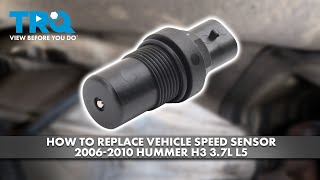
On the Hummer H3, the P0720 code points specifically to the speed sensor located externally on the rear of the transfer case, on the driver's side. This is a key distinction, as some vehicles have sensors inside the transmission pan. Its external placement makes it a particularly easy part to access and replace on the H3, often requiring just a single wrench. 🎬 Watch: Step-by-step guide to replacing the H3 speed sensor. The most frequently reported symptoms from H3 owners are very distinct: the transmission locks into 'limp mode' (stuck in a low gear, typically first) and the speedometer stops working entirely or intermittently drops to zero.
Symptoms You May Notice
- Transmission stuck in first or second gear ('limp mode')
- Speedometer is erratic or reads 0 MPH, sometimes after coming to a stop
- Check Engine Light is illuminated
- Cruise control will not engage
- Harsh or improper gear shifts
- Possible hesitation or stalling when coming to a stop
- Replacing the ABS wheel speed sensors. The P0720 code is specific to the transmission's output speed sensor on the transfer case, not the ABS sensors located at the wheels.
- Replacing the Input Speed Sensor (ISS). The ISS is a different sensor, typically located further forward on the transmission, and will set different trouble codes (e.g., P0716, P0717).
- Assuming a new sensor is bad out of the box. A faulty wiring connector can damage a brand new sensor, making it seem like the new part was defective.
Most Likely Causes
- Faulty Output Speed Sensor (VSS) 🔴 High Probability The sensor is exposed to heat from the transmission and exhaust, as well as road debris and moisture, leading to eventual electronic failure. It is the most common point of failure for this code.
How to confirm: Use a scan tool to monitor the vehicle speed data while driving. If the reading is 0 MPH or jumps erratically while the vehicle is moving, the sensor has likely failed. You can also test the sensor's internal resistance with a multimeter, though replacement is often done first due to the low part cost. 🎬 Watch: How to test and replace the output speed sensor.
Typical fix: Replace the Output Speed Sensor on the transfer case. This is a screw-in sensor held by a single bolt or its own hex body.
Est. part cost: $20-$70 - Damaged Wiring or Connector 🟡 Medium Probability The wiring harness leading to the transfer case is susceptible to damage from road debris, heat from the exhaust causing brittleness, and corrosion in the connector terminals from moisture. A bad connector can also damage a new sensor.
How to confirm: Visually inspect the wiring harness and connector for any signs of fraying, melting, corrosion, or broken wires. Wiggle the connector while the engine is running (with safety precautions) to see if it triggers the fault. Perform a continuity test on the wires between the sensor connector and the PCM.
Typical fix: Repair the damaged section of the wire or replace the pigtail connector. Thoroughly clean any corrosion from the connector terminals with electrical contact cleaner and apply dielectric grease to prevent future moisture intrusion.
Est. part cost: $15-$50 for a pigtail connector. - Low or Contaminated Transmission Fluid ⚪ Low Probability → Shop Transmission Assembly
How to confirm: Check the transmission fluid level and condition using the dipstick. The fluid should be at the correct level and appear clean (pink/red), not brown, black, or burnt-smelling.
Est. part cost: $50-$200
Rare But Worth Checking
- Faulty Powertrain Control Module (PCM): → Shop Engine Control Module (ECM) This is very rare. Before condemning the PCM, all other possibilities, including the sensor and its entire circuit (wiring and connector), must be exhaustively tested and ruled out.
Diagnosis Steps
- Connect an OBD-II scanner and confirm P0720 is present. Note any other transmission-related codes.
- Use the scanner's live data function to monitor 'Vehicle Speed'. Drive the vehicle slowly (or raise the rear wheels safely on jack stands) and check if the speed reading is 0 MPH or erratic, especially after coming to a complete stop and accelerating again.
- Locate the Output Speed Sensor on the driver's side of the transfer case, just in front of the rear driveshaft.
- Visually inspect the sensor's connector and wiring for obvious damage, corrosion, or loose connections. Pay close attention to heat damage from the nearby exhaust.
- As a first step, disconnect the sensor, spray both the sensor and the harness connector with electrical contact cleaner, let it dry, apply dielectric grease to the connector pins, and reconnect securely. Clear codes and test drive to see if the issue is resolved.
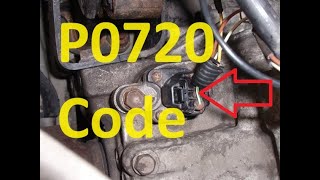
- If the problem persists, replace the sensor. It is a low-cost part and the most likely cause. 🎬 See this breakdown of common P0720 causes and fixes.
- If a new sensor does not fix the issue, or fixes it only temporarily, the wiring harness pigtail is the next likely suspect. Test the wiring for continuity and check for shorts to power or ground between the sensor connector and the PCM.
- If the sensor and wiring are confirmed to be good, the issue may be with the PCM, but this is highly unlikely and should be the last consideration.
Parts You'll Likely Need
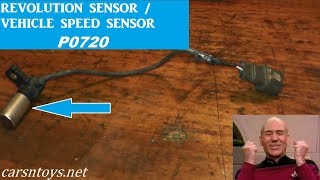
- Output Speed Sensor / Vehicle Speed Sensor (VSS)
(OEM #213-4336 (ACDelco GM Original Equipment))— This sensor is the most common cause of code P0720 and its associated symptoms on the H3.
Trusted brands: ACDelco (GM OE), NGK (VB0037), Standard Motor Products (SC168T), Dorman, Wells (5S4663)
OEM price range: $60-$80
Aftermarket price range: $20-$50 - Output Speed Sensor Connector (Pigtail) — The connector itself is a frequent failure point due to heat and corrosion and can cause intermittent issues or damage a new sensor.
Trusted brands: Dorman, ACDelco, Standard Motor Products
OEM price range: $25-$50
Aftermarket price range: $15-$30
Related Codes That Often Appear With This One
- P0500 — P0500 is a generic code for 'Vehicle Speed Sensor Malfunction'. It often appears with P0720 as they both relate to the same sensor's data.
- P0731, P0732, etc. — These codes indicate incorrect gear ratios. They can be triggered as a secondary fault when the TCM cannot command shifts correctly because it doesn't know the vehicle's speed due to the P0720 fault.
Platform-Specific Known Issues
- Intermittent Failure, Especially When Hot: A common owner complaint is that the P0720 symptoms (speedometer drops to 0, no shifting) occur intermittently, often after the vehicle has warmed up or during hot weather. The issue may appear after coming to a stop at a traffic light and then attempting to accelerate. A restart of the vehicle can temporarily resolve the symptom, making diagnosis difficult. This behavior often points to a failing sensor or a wiring/connector issue that is sensitive to heat expansion.
- Wiring Harness Damage Causing Repeat Failures: There are documented cases where a new speed sensor fails to fix the problem or fails again shortly after installation. This is often caused by a faulty wiring connector/pigtail that has a short or poor connection, which can damage the electronics of the new sensor. In these cases, replacing both the sensor and the wiring pigtail is required for a permanent fix.
Mechanic-Grade Diagnostic Values
- VSS Circuit Resistance — expected: 1,300-1,500 ohms at 25°C (77°F). Failure: A reading less than 1,300 ohms may indicate a shorted sensor or wiring. A reading greater than 1,500 ohms may indicate an open circuit in the sensor or wiring.
- VSS Circuit to Ground Resistance — expected: More than 10 ohms. Failure: A reading of less than 10 ohms indicates a short to ground in the VSS signal or low reference circuit.
- Sensor Ground Circuit Resistance — expected: Less than 0.1 Ω. Failure: Resistance higher than 0.1 Ω indicates a poor ground connection, which can cause erratic sensor readings.
- Sensor Reference Voltage — expected: 5 V ± 0.5 V. Failure: Voltage outside this range at the sensor connector (with key on, engine off) points to a problem with the PCM or the wiring, not the sensor itself.
Scan Tool Commands That Help
- GM Tech2 / Advanced OBD-II Scanner: Live Data Monitoring - Vehicle Speed (VSS) — This is the primary diagnostic step. Monitor the VSS parameter while driving. If the speed reads 0 MPH or is erratic while the vehicle is clearly moving, it confirms a fault in the VSS circuit. A professional scanner like the Tech2 provides the most reliable data stream.
- GM Tech2 / Advanced OBD-II Scanner: Clear Codes / Reset Modules — After replacing the sensor or repairing wiring, all codes must be cleared. On some GM vehicles, a full module reset using a capable scanner is recommended to ensure the PCM/TCM properly recognizes the new component, though it is not always strictly required for a VSS replacement.
Wiring & Ground Locations
- VSS Signal (2006-2007) — PCM Connector C1, Pin 21 (Dark Green/White wire).. This is the specific pin at the integrated Powertrain Control Module where the VSS signal arrives. It is the end-point for continuity and voltage testing from the sensor connector.
- VSS Signal (2008-2010) — ECM Connector X3, VSS High Signal at Pin 66 and VSS Low Signal at Pin 67.. On later models with a separate TCM, the VSS signal is processed by the ECM at these two pins. Using the wrong pinout for the model year will lead to misdiagnosis.
- G100 — In the engine compartment, mounted to the left front of the vehicle.. This is a primary engine-area ground point. While not directly for the VSS, a poor ground here can cause a variety of electrical issues and erratic behavior from modules like the PCM/ECM, potentially contributing to sensor signal problems.
- Transfer Case Control Module (TCCM) — Located behind the glove box, to the side. It is necessary to remove the side dash panel next to the glove box to access it.. While rare, a faulty TCCM can cause issues with transfer case functions and related sensors. Knowing its location is critical if it is suspected as the cause after the sensor and wiring have been ruled out.
OEM Part Supersession History
24244544 (GM Genuine Parts)→ACDelco 213-4336 is the direct OE equivalent service part.— Standard branding for service parts.
Heads up: The part ACDelco 213-4336 is used as both an Input Speed Sensor (ISS) and an Output Speed Sensor (OSS) on various GM vehicles. It is critical to confirm the application. For the H3 with code P0720, it is used as the OSS/VSS on the transfer case.
Model Year Variations Within This Range
- 2006-2007: These models use a single, integrated Powertrain Control Module (PCM) that contains the logic for the engine (ECM) and transmission (TCM). A suspected module failure involves replacing the entire PCM unit, which requires a reflash.
- 2008-2010: These models use a separate Engine Control Module (ECM) and Transmission Control Module (TCM). The VSS wiring routes to the ECM. This separation can simplify diagnostics if a module is suspected, as the TCM can potentially be replaced without affecting the ECM.
Diagnostic Flowchart
Used vs. New Parts: Buying Guide for This Vehicle
When a used part is the smart pick: For this repair, a used part is generally not recommended for the sensor itself. However, sourcing a used wiring harness pigtail from a junkyard vehicle is a very practical and cost-effective option if a new connector is unavailable or if a longer section of wiring is needed for the repair.
Donor-vehicle mileage cap: roughly under 120000 miles for the part to have meaningful remaining life.
What to inspect on the donor part:
- For a wiring pigtail, inspect for any signs of brittleness, cracking, or heat damage on the plastic connector and wire insulation.
- Ensure the connector's locking tab is intact and functional.
- Check the internal pins for corrosion (green or white powder). Avoid any connector with visible corrosion.
- Cut the pigtail from the donor vehicle with at least 6-8 inches of wire to provide ample length for splicing.
OEM-only on this vehicle (don't cheap out):
- While aftermarket sensors are available, using an OEM (ACDelco) sensor is strongly recommended for best reliability and to avoid compatibility issues. Aftermarket electronics can sometimes have slightly different resistance or signal properties that can cause persistent, intermittent problems.
Aftermarket brands forum-validated for this vehicle:
- NGK/NTK
- Standard Motor Products (SMP)
Brands owners have reported issues with on this vehicle:
- Ultra-cheap, unbranded sensors from online marketplaces are frequently reported by mechanics to be dead-on-arrival or fail prematurely.
Real Owner Stories
Aggregated from forums and TSBs cited above. Mileages and costs reflect what owners reported in those sources.
2006-2010 Hummer H3
Symptoms: The speedometer would intermittently drop to 0 and the transmission would not shift, especially after the vehicle warmed up and came to a stop at a light. Restarting the vehicle would sometimes temporarily fix it.
What fixed it: The owner had to replace the wiring pigtail and a second new speed sensor to achieve a permanent fix, as the faulty wiring likely damaged the first replacement sensor.
Source hint: HummerForums.com - Thread: 'Intermittent Speed Sensor Issue' (https://www.hummerforums.com/forum/hummer-h3-12/intermittent-speed-sensor-issue-36658/)
2006-2010 Hummer H3
Symptoms: A new speed sensor was installed to fix P0720, but the problem returned shortly after.
What fixed it: A permanent fix required replacing both the speed sensor and the wiring pigtail connector, which was found to have a poor connection.
Source hint: Vehicle Specific Issue: Wiring Harness Damage Causing Repeat Failures
2006-2010 Hummer H3
Symptoms: Vehicle entered 'limp mode' where the transmission would not shift properly.
What fixed it: Forum users suggested that a primary troubleshooting step, before replacing parts, is to thoroughly clean the electrical connector for the speed sensor.
Source hint: HummerForums.com - Thread: 'Speed sensor' (https://www.hummerforums.com/forum/hummer-h3-12/speed-sensor-40093/)
Related OBD-II Codes
Frequently Asked Questions
Where is the speed sensor that causes code P0720 located on my Hummer H3?
My speedometer drops to zero and the transmission gets stuck in gear, but only after the truck warms up. Could this still be the P0720 sensor?
I replaced the speed sensor for P0720, but the check engine light came back. What's the next step?
Is it okay to use a cheap aftermarket speed sensor, or should I buy an OEM part?
My cruise control also stopped working when the P0720 code appeared. Is this related?
Can I just try cleaning the sensor's electrical connector first?
Helpful Videos


The information in this article is provided for general reference and educational purposes only. Vehicle specifications, procedures, and part compatibility can vary by production date, trim level, and region. Always consult your vehicle's factory service manual and verify part numbers before purchasing or performing repairs. Safety-critical components such as airbags, seat belts, and braking systems should be installed by a qualified professional.
- Hummer H3:
- 🧭 Diagnostic Flowchart
- 🎬 Helpful Videos
- What's Unique About the 2006-2010 Hummer H3
- Symptoms You May Notice
- Most Likely Causes
- Rare But Worth Checking
- Diagnosis Steps
- Parts You'll Likely Need
- Related Codes That Often Appear With This One
- Platform-Specific Known Issues
- Mechanic-Grade Diagnostic Values
- Scan Tool Commands That Help
- Wiring & Ground Locations
- OEM Part Supersession History
- Model Year Variations Within This Range
- Used vs. New Parts: Buying Guide for This Vehicle
- Real Owner Stories
- 2006-2010 Hummer H3
- 2006-2010 Hummer H3
- 2006-2010 Hummer H3
- Related OBD-II Codes
- Frequently Asked Questions
- 🎟️ Get 5% Off