

P0730 on 2007-2013 Chevrolet Silverado 1500: Incorrect Gear Ratio Causes and Fixes
P0730 on a 2007-2013 Silverado most often points to low or dirty transmission fluid, or failing shift solenoids. Start by checking the fluid level and condition. If that's okay, a solenoid replacement is a common next step, costing around $50-$150 for parts. On 6L80-equipped trucks, this code can also be a precursor to torque converter or TEHCM failure.
- P0730 indicates a transmission gear ratio error, which usually means the transmission is slipping.
- Always check the transmission fluid level and condition first; this is the easiest and most common fix.
- Failing shift solenoids are another frequent cause and are much cheaper to replace than the entire transmission.
- Do not continue to drive with this code, as it can lead to catastrophic transmission failure.
- This code requires serious attention and is best diagnosed by a professional to avoid unnecessary, expensive repairs.
What's Unique About the 2007-2013 Chevrolet Silverado 1500
For the 2007-2013 Silverado (GMT900 generation), this code can apply to two main automatic transmissions: the 4-speed 4L60-E (2007-2008, some models up to 2013) and the 6-speed 6L80 (phased in starting 2009). The 4L60-E is known for potential internal failures like a worn 3-4 clutch pack and is susceptible to shift solenoid failure. The 6L80, while more advanced, has known issues with torque converter failure (shuddering, debris contamination) and problems with its internal TCM, known as the TEHCM (Transmission Electro-Hydraulic Control Module), which can cause this code.
Symptoms You May Notice
- Check Engine Light is on
- Transmission warning light may be illuminated
- Transmission slipping between gears, where engine RPMs flare up without an increase in speed.
- Harsh, abrupt, or delayed shifting.
- Vehicle enters 'limp mode' (stuck in a single gear, often 2nd or 3rd).
- Failure to shift into or out of a gear
- Reduced fuel economy.
- Vehicle may stall after driving at high speeds or when coming to a stop.
- A noticeable shudder or vibration at highway speeds, which could indicate a torque converter clutch issue (common on 6L80).
- Replacing the entire transmission without first checking fluid level/condition or testing the shift solenoids. A simple fluid service or solenoid replacement can often resolve the issue for a fraction of the cost.
- Condemning the transmission for an electrical issue, such as a bad ground strap or a faulty speed sensor providing incorrect data to the TCM.
Most Likely Causes
- Low or Dirty Transmission Fluid 🔴 High Probability → Shop Transmission Assembly Leaks from cooler lines or the pan gasket are common. Fluid can also become contaminated with clutch material or break down from heat, especially under towing or heavy use, reducing its hydraulic properties.
How to confirm: Check the transmission fluid dipstick (if equipped) with the engine running and transmission in Park after the vehicle is warm. The fluid should be at the correct level, pinkish-red in color, and not smell burnt. Many 6L80 models do not have a dipstick and must be checked via a fill plug on the side of the transmission, which is a more involved process.
Typical fix: Top off the fluid or perform a transmission fluid and filter change. Use fluid that meets the ACDelco DEXRON-VI specification only.
Est. part cost: $50-$150 - Failed Shift Solenoid(s) 🟡 Medium Probability → Shop Transmission Valve Body Solenoids are a very common failure point in the 4L60-E transmission. They can get clogged with debris or fail electrically, preventing proper gear engagement. On the 6L80, solenoids are integrated into the TEHCM, which is also a known failure point but is replaced as a whole unit.
How to confirm: A professional scan tool can command solenoids on and off to test their function and monitor for pressure drops. They can also be tested with a multimeter for correct resistance (typically 20-30 ohms for 4L60-E solenoids) after dropping the transmission pan.
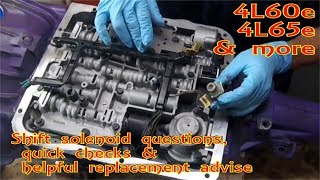
Typical fix: For the 4L60-E, replace the faulty solenoid(s) (A/B shift solenoids are often replaced in pairs). This requires removing the transmission oil pan. 🎬 Watch: Step-by-step 4L60-E shift solenoid replacement guide For the 6L80, the entire TEHCM assembly is typically replaced.
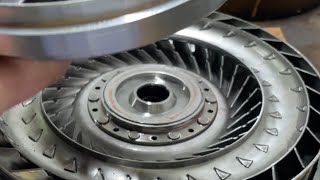
Est. part cost: $40-$100 per solenoid for 4L60-E, $300-$600 for a 6L80 TEHCM. - Internal Mechanical Failure (Clutches, Torque Converter) 🟡 Medium Probability The 4L60-E transmission is notorious for failure of the 3-4 clutch pack. The 6L80 is known for torque converter clutch failures, which can send debris 🎬 Watch: Common 6L80 torque converter issues explained throughout the transmission, clogging the valve body and TEHCM. Other internal issues can include a worn oil pump or broken planetary gear sets.
How to confirm: Diagnosed after all external components have been ruled out. Finding significant metal shavings, clutch material, or other debris in the transmission pan is a definitive sign of internal failure. A torque converter stall speed test can also help diagnose slipping.
Typical fix: The transmission must be removed from the vehicle for a complete rebuild or replacement with a remanufactured unit.
Est. part cost: $1800-$4000+ - Faulty Input or Output Speed Sensor ⚪ Low Probability
How to confirm: Use a scan tool to monitor the live data from both the Input Speed Sensor (ISS) and Output Speed Sensor (OSS) while driving. The readings should be smooth and logical. Erratic, jumpy, or absent signals point to a failed sensor or a wiring issue.
Typical fix: Replace the faulty speed sensor. The location varies; the OSS is typically on the tail shaft of the transmission, while the ISS is often internal, requiring more labor to access.
Est. part cost: $30-$80
Rare But Worth Checking
- Faulty Transmission Control Module (TCM) / Valve Body (TEHCM): → Shop Transmission Assembly On 6L80 transmissions, the TCM is integrated into the valve body assembly (called a TEHCM). These units are a known failure point 🎬 Watch: How to remove the TCM from a 6L80 transmission that can cause various shifting issues, including a P0730 code, due to either internal electronic failure or clogged solenoid passages from debris.
- Clogged Transmission Filter or Cooler Lines: → Shop Transmission Assembly A severely clogged filter can starve the transmission of fluid pressure, mimicking the symptoms of low fluid and causing slippage. This is often a secondary symptom of a larger problem, like a failing torque converter or clutch packs shedding material.
- Vehicle Moved with Engine Off: GM issued Technical Service Bulletin 19-NA-201, which states that code P0730 can be set falsely if the vehicle was moved (pushed, towed, or even rocked) while the engine was off. If freeze-frame data shows 0 engine RPM when the code was set, it should be cleared and the vehicle re-tested before attempting repairs. Manufacturer Bulletin #19NA201 notes that this code is considered a false code unless the customer states the MIL is on and other codes are present.
Diagnosis Steps
- Check the transmission fluid level and condition. Ensure the fluid is full, clean, and doesn't smell burnt. For 6L80 models without a dipstick, this must be done from the fill plug with the vehicle level and at operating temperature.
- Scan the TCM for any other trouble codes. Codes for specific gears (P0731-P0735) or solenoids (P0751, P0741) provide crucial diagnostic direction.
- Review Freeze Frame data. Check if the engine RPM was at 0 when the code was set, which could indicate a false code per TSB 19-NA-201.
- Inspect the wiring harness and connectors going to the transmission for any visible damage, corrosion, or loose connections. Pay special attention to the main connector and ground straps.
- Use a capable scan tool to monitor live data. Watch the Input Speed Sensor (ISS) and Output Speed Sensor (OSS) while driving to see if either sensor is providing an erratic or incorrect signal.
- If fluid and sensors are good, the next step is to test the shift solenoids. This can be done via a scan tool's actuation tests or by dropping the pan and testing resistance with a multimeter.
- While the pan is off, inspect the fluid and pan magnet for excessive metal shavings or clutch material. A small amount of fine metallic dust is normal, but large pieces, flakes, or a 'metallic paste' indicate serious internal damage.
- If all of the above check out, the issue is likely a major internal mechanical problem (clutches, torque converter, oil pump) or a faulty valve body/TEHCM, requiring professional service.
Parts You'll Likely Need
- Transmission Fluid and Filter Kit
(OEM #Fluid: ACDelco 10-9395 (DEXRON-VI))— Low or contaminated fluid is a primary cause of transmission issues. - Shift Solenoid (4L60-E)
(OEM #10478120 (ACDelco))— Shift solenoids are a common failure item on the 4L60-E, causing shifting problems. - TEHCM (Control Solenoid Valve Assembly) (6L80)
(OEM #24256861 (Varies by year/model))— The integrated control module/solenoid assembly is a known weak point on the 6L80 transmission. - Torque Converter — A failing torque converter, especially on the 6L80, can cause shuddering and contaminate the transmission with debris, leading to P0730.
Related Codes That Often Appear With This One
- P0700 — P0700 is a general transmission fault code that simply indicates the TCM has requested the check engine light to be turned on. It is almost always present with other specific transmission codes like P0730.
- P0731, P0732, P0733, P0734, etc. — These codes indicate an incorrect gear ratio in a specific gear (1st, 2nd, 3rd, 4th, etc.). They help pinpoint which gear circuit or clutch pack is having a problem, whereas P0730 is a more general failure code.
- P0751, P0756 — These codes point directly to a performance problem or a stuck state with a specific shift solenoid (e.g., Shift Solenoid 'A' or 'B'). They often accompany P0730 and help confirm a solenoid is the root cause.
- P0741 — This code indicates 'Torque Converter Clutch Circuit Performance or Stuck Off'. Seeing this alongside P0730 on a 6L80-equipped truck is a very strong indicator that the torque converter is failing.
Technical Service Bulletins (TSBs) & Recalls
- TSB 19-NA-201: Informs technicians that code P0730 can be set falsely if the vehicle was moved (pushed, towed) with the engine off. Diagnostic procedure should include checking freeze frame data for 0 engine RPM at the time of the fault.
- Bulletin #19NA201: This manufacturer bulletin explains that the DTC P0730 code may have set during vehicle transport and is considered a false code unless the MIL is on and other codes are present.
Platform-Specific Known Issues
- Real-World Repair Story: 2011 Silverado 5.3L with 6L80: A user on silveradosierra.com with a 2011 Silverado reported getting a P0730 code along with harsh shifting and a transmission warning light. Initially, a fluid and filter change was performed, which showed some dark fluid but no large metal chunks. The problem persisted. A diagnostic at a transmission shop revealed codes for torque converter clutch slip (P0741) in addition to the P0730. The ultimate diagnosis was a failing torque converter that was starting to shed material. The recommended fix was a full transmission rebuild to replace the converter and decontaminate the valve body and solenoids, a common failure pattern for the 6L80 transmission in these trucks.
Mechanic-Grade Diagnostic Values
- 4L60-E Shift Solenoid (A/B) Resistance — expected: 20-40 Ohms (typically 20-25 Ohms when good). Failure: Reading outside the 20-40 Ohm range, or an open/short circuit.
- 4L60-E EPC (Pressure Control) Solenoid Resistance — expected: 3.5-8.0 Ohms. Failure: A reading outside this range indicates a faulty solenoid coil.
- 6L80 Shift Solenoid Resistance — expected: 20-24 Ohms. Failure: A reading significantly outside this range points to a failure within the TEHCM.
- 6L80 Pressure Control Solenoid (PCS) Resistance — expected: 5-6 Ohms (or 3.0-5.5 Ohms depending on temperature). Failure: An open, short, or reading outside this narrow range indicates a bad solenoid inside the TEHCM.
- 6L80 Speed Sensor Voltage (ISS/OSS) — expected: 8.3-9.3 Volts (Signal Voltage from TEHCM). Failure: Incorrect voltage supply can indicate a TEHCM fault rather than a sensor fault.
Scan Tool Commands That Help
- Tech2 / GDS2: Solenoid Activation Test / Actuator Test — This bidirectional command allows a technician to individually command each shift and pressure control solenoid on and off while monitoring for an audible click or a change in line pressure. It's used to isolate a specific, mechanically stuck or electrically failed solenoid without first removing the transmission pan.
- Tech2 / GDS2: Transmission Service Functions > Reset Transmission Adapts — After replacing a component like a solenoid, valve body, TEHCM, or the entire transmission, the learned shift pressure values must be reset. Failing to do so can cause harsh shifting or continued codes as the TCM uses old, incorrect data.
Wiring & Ground Locations
- G103 — On the front of the right (passenger side) cylinder head.. This is a primary engine ground. A poor connection here can cause erratic sensor readings and communication issues between the ECM and TCM, potentially leading to false codes.
- G110 — On the left (driver's side) of the firewall.. This is a key body and module ground point. Corrosion or looseness at G110 can interrupt power to various control modules, including the TCM, causing a wide range of electronic issues.
- Transmission Case Connector (16-pin) — On the passenger side of the transmission case.. GM TSB 08-07-30-021H highlights that terminals for the GMLAN communication bus can back out of this connector, causing loss of communication with the TCM, leading to limp mode and numerous codes, including U-codes and potentially P0730.
Real Owner Repair Stories
- gm-trucks.com forum user (2007 Silverado with 4L60-E) — P0730 and P0756 (Shift Solenoid B Performance/Stuck Off), harsh 1-2 shift, no 3rd or 4th gear.
❌ Tried (didn't work) Replaced both shift solenoids (A and B), Replaced the EPC (pressure control) solenoid, Replaced the valve body separator plate
✅ What actually fixed it The root cause was a cracked stator support shaft within the transmission. The crack caused a loss of hydraulic pressure to the 3-4 clutch pack, preventing engagement. A complete transmission rebuild was required to replace the stator support and the burned 3-4 clutches. - silveradosierra.com forum user (2009 Silverado with 6L80) — P0730 and P0741 (TCC Stuck Off), shuddering at highway speeds, occasional harsh shifts.
❌ Tried (didn't work) Performing a transmission fluid flush
✅ What actually fixed it Replacement of the torque converter. The original converter's lock-up clutch was failing, causing the shudder and sending debris into the fluid. The fix involved replacing the torque converter, flushing the cooler lines, and performing a full fluid and filter service.
OEM Part Supersession History
24251029, 24256051, 24258304→24275874 (Example for 2010-2013 models)— Internal updates to electronics and pressure switches to improve durability and heat resistance.
Heads up: TEHCMs for the 6L80 are year-specific and generally not interchangeable. A 2010 TEHCM will not work in a 2008 truck, and vice-versa. The internal logic and communication protocols changed. Always order by VIN.24256939, 24259639→24276637 (Example for 2011+ models)— Revisions to address common solenoid and pressure switch failures.
Heads up: Installing the wrong year TEHCM will often result in a no-start condition or immediate limp mode with no communication to the scanner.
Model Year Variations Within This Range
- 2007-2008 (Primarily): These years primarily used the 4-speed 4L60-E. P0730 diagnosis focuses on individual shift solenoids, the 3-4 clutch pack, and potential stator shaft seal leaks. Solenoids are inexpensive and individually replaceable.
- 2009-2013: These years increasingly used the 6-speed 6L80. P0730 diagnosis shifts focus to the TEHCM (integrated control module), torque converter failure, and potential GMLAN communication issues at the main connector. Solenoids are not serviced separately from the TEHCM.
- 2010+ (6L80): GM made several internal hardware and software changes to the 6L80 TEHCM starting in 2010. These modules are not backward-compatible with 2007-2009 units. Using the wrong year TEHCM will cause communication failures.
Diagnostic Flowchart
Other Known Issues on This Vehicle
Issues unrelated to this code that are worth knowing about as an owner of this generation:
- Active Fuel Management (AFM) Lifter Failure 🔴 High — Very common, especially on 5.3L and 6.0L engines, often occurring between 80,000 and 150,000 miles. Can lead to misfires, ticking noises, and eventually catastrophic engine damage if ignored. (Ref: Multiple TSBs exist, though no official recall. A common fix involves replacing the AFM lifters with standard lifters and disabling AFM with a tuner.)
- Cracked Dashboard 🟡 Low — Extremely common across all GMT900 trucks and SUVs, especially in warmer climates. Cracks typically appear above the passenger airbag and on the driver's side near the instrument cluster surround. This has been the subject of class-action lawsuits. (Ref: No recall. GM has generally treated it as a cosmetic issue not covered under warranty, despite safety concerns about airbag deployment.)
- Excessive Oil Consumption 🟠 Medium — Common on AFM-equipped engines (5.3L, 6.0L, 6.2L). Often attributed to a faulty PCV system in the driver-side valve cover or piston rings becoming stuck due to carbon buildup from AFM operation. (Ref: GM issued TSBs related to this, with fixes ranging from an updated valve cover to piston and ring replacement in severe cases.)
- Frame and Body Rust 🟠 Medium — Common in regions that use road salt. Problem areas include the rear wheel wells, rocker panels, cab corners, and the frame itself. Proper undercoating and regular cleaning can mitigate the issue.
- Faulty Oil Pressure Sensor/Sender 🟡 Low — A frequent issue where the oil pressure gauge on the dash will read erratically or drop to zero. The cause is often a failed sensor or a clogged screen underneath it. The sensor is located in a difficult-to-reach spot behind the intake manifold.
Used vs. New Parts: Buying Guide for This Vehicle
When a used part is the smart pick: A complete used 4L60-E transmission from a low-mileage donor can be a cost-effective alternative to a rebuild, especially if a hard part like the stator support has failed. For the 6L80, a used TEHCM is generally not recommended due to high failure rates and programming requirements.
Donor-vehicle mileage cap: roughly under 80000 miles for the part to have meaningful remaining life.
What to inspect on the donor part:
- Check the donor vehicle's history for accidents or flood damage.
- Pull the dipstick (if 4L60-E) or drain a small amount of fluid. If it's dark black, smells burnt, or has glittery metal particles, avoid it.
- Ask the dismantler for any warranty, even if it's just 30-90 days.
- For a complete transmission, ensure the torque converter is included and its hub is not damaged.
OEM-only on this vehicle (don't cheap out):
- TEHCM (6L80): While remanufactured units from reputable sources like Sonnax are viable, cheap, unverified used or 'new old stock' TEHCMs from online marketplaces are a major gamble due to programming needs and high failure rates.
- Transmission Fluid: Always use DEXRON-VI certified fluid. Using incorrect or universal fluid can cause shifting problems and long-term damage.
Aftermarket brands forum-validated for this vehicle:
- Sonnax (For remanufactured TEHCMs, valve body components, and internal upgrades).
- ACDelco (OEM for solenoids, sensors, and TEHCMs).
- BorgWarner (Often the OEM manufacturer for solenoids, a good alternative to ACDelco branded parts).
Brands owners have reported issues with on this vehicle:
- Unbranded, no-name shift solenoid kits or TEHCMs from platforms like Amazon or eBay. These often have high defect rates and may not meet OEM specifications, causing repeat failures.
Real Owner Stories
Aggregated from forums and TSBs cited above. Mileages and costs reflect what owners reported in those sources.
2011 Chevrolet Silverado 5.3L (6L80 Transmission)
Symptoms: P0730 code, harsh shifting, and a transmission warning light. Fluid was dark but lacked large metal chunks.
What fixed it: A full transmission rebuild to replace the failing torque converter and decontaminate the valve body and solenoids.
Source hint: silveradosierra.com thread mentioned in Real-World Repair Story
2007-2013 Chevrolet Silverado (4L60-E Transmission)
Symptoms: Incorrect gear ratio code P0730.
What fixed it: Replacement of a pair of shift solenoids.
Source hint: gmtruckclub.com forum citation
Related OBD-II Codes
Frequently Asked Questions
Can my 2007-2013 Silverado 1500 set a P0730 code even if the transmission is fine?
I have a 6L80 transmission without a dipstick; how do I check the fluid for a P0730 diagnosis?
What specific transmission fluid should I use for my Silverado to avoid shifting issues?
Is the P0730 fix different for a Silverado with the 4L60-E versus the 6L80 transmission?
My 2011 Silverado is shuddering at highway speeds and threw a P0730; what is the likely cause?
Helpful Videos


We Have This Part in Stock



The information in this article is provided for general reference and educational purposes only. Vehicle specifications, procedures, and part compatibility can vary by production date, trim level, and region. Always consult your vehicle's factory service manual and verify part numbers before purchasing or performing repairs. Safety-critical components such as airbags, seat belts, and braking systems should be installed by a qualified professional.
- Chevrolet Silverado 1500:
- 🧭 Diagnostic Flowchart
- 🎬 Helpful Videos
- 🛍️ Shop This Part
- What's Unique About the 2007-2013 Chevrolet Silverado 1500
- Symptoms You May Notice
- Most Likely Causes
- Rare But Worth Checking
- Diagnosis Steps
- Parts You'll Likely Need
- Related Codes That Often Appear With This One
- Technical Service Bulletins (TSBs) & Recalls
- Platform-Specific Known Issues
- Mechanic-Grade Diagnostic Values
- Scan Tool Commands That Help
- Wiring & Ground Locations
- Real Owner Repair Stories
- OEM Part Supersession History
- Model Year Variations Within This Range
- Other Known Issues on This Vehicle
- Used vs. New Parts: Buying Guide for This Vehicle
- Real Owner Stories
- 2011 Chevrolet Silverado 5.3L (6L80 Transmission)
- 2007-2013 Chevrolet Silverado (4L60-E Transmission)
- Related OBD-II Codes
- Frequently Asked Questions
- 🎟️ Get 5% Off