

P0730 on 2007-2017 Jeep Patriot: Incorrect Gear Ratio Causes and Fixes
On a Jeep Patriot with a CVT transmission, code P0730 is most often caused by low, old, or incorrect CVT fluid. A failing Transmission Control Module (TCM) is another common cause. Start by verifying the fluid level and condition before suspecting a costly internal transmission failure, which is a known issue for this platform.
- For a Jeep Patriot with a CVT, P0730 is very frequently a fluid-related issue. Always start by checking the fluid level and condition using the correct procedure.
- Do not immediately assume the expensive CVT has failed. A faulty Transmission Control Module (TCM) is a known issue on this platform and can mimic the symptoms of a bad transmission.
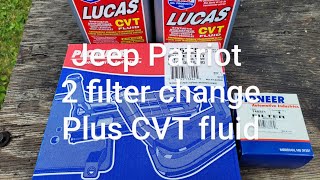
- This vehicle has two transmission filters that must be changed during a service: an internal pan strainer and an external cooler filter.
- Due to the complexity of the CVT and the special tools required, this is a difficult DIY job. Professional service is strongly recommended to avoid causing more damage.
What's Unique About the 2007-2017 Jeep Patriot
Most 2007-2017 Jeep Patriots are equipped with a Jatco JF011E Continuously Variable Transmission (CVT), which is notoriously sensitive to fluid level and quality and has a reputation for premature failure. Unlike traditional automatics, these CVTs have no dipstick, requiring a special tool and temperature-specific procedure to check the fluid. Furthermore, a documented issue for this platform is a faulty Transmission Control Module (TCM) that can incorrectly report a ratio error, leading to a misdiagnosis of internal transmission failure. A technician documented a case where a Patriot with P0730 and P0766 had a perfectly fine transmission, but the TCM was faulty and unable to command a final drive ratio lower than 0.7, when it should have been able to reach 0.45.
Symptoms You May Notice
- Check Engine Light and/or flashing transmission warning light.
- Transmission slipping, where engine RPMs increase but vehicle speed does not.
- Vehicle enters 'limp mode,' getting stuck in a single gear ratio and struggling to accelerate.
- Abnormally high engine RPMs at highway speeds, such as staying at 3800 RPM.
- Harsh or delayed engagement when shifting into Drive or Reverse.
- Hesitation or a feeling of poor acceleration.
- A noticeable decrease in fuel economy.
- Whining or humming noises from the transmission.
- Vehicle unexpectedly slips into neutral.
- Replacing the entire CVT transmission when the actual fault is a much cheaper and simpler fix, like a faulty Transmission Control Module (TCM).
- Assuming the transmission is failing when the symptoms are caused by a separate engine issue, such as a faulty throttle body, which is also a common Patriot problem.
Most Likely Causes
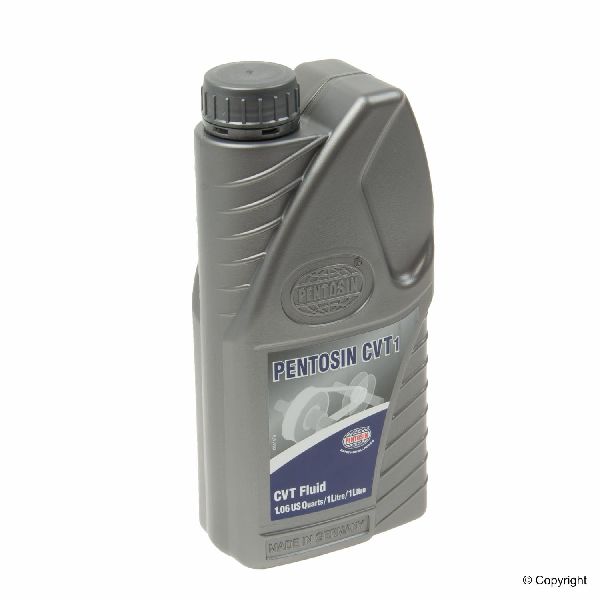
- Low, Degraded, or Incorrect CVT Fluid 🔴 High Probability The Jatco JF011E CVT is highly sensitive to fluid volume and condition for proper hydraulic pressure to operate the pulleys. Many owners neglect the 60,000-100,000 mile service interval, leading to fluid breakdown. Using anything other than the specified Mopar CVTF+4 or a compatible equivalent can cause damage.
How to confirm: The fluid level must be checked via a specific procedure involving a special dipstick tool (not included from the factory) inserted into the filler tool. The fluid must be at a designated temperature (e.g., 50-80°C), monitored with a scan tool. The fluid should be a transparent green/red color, not dark brown, burnt-smelling, or containing sparkly metal flakes.
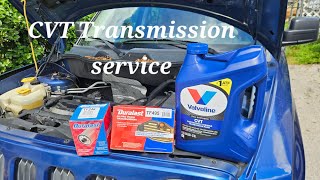
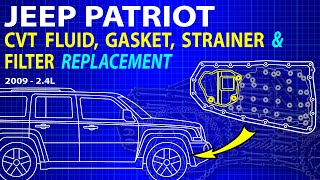
Typical fix: Perform a CVT fluid and filter service. 🎬 Watch: Step-by-step CVT fluid, strainer, and filter replacement This involves draining the fluid, dropping the pan to replace the internal strainer, and replacing the external cartridge filter. Refill with the correct type and amount of fluid (typically Mopar CVTF+4).
Est. part cost: $100-$250 - Faulty Transmission Control Module (TCM) 🟡 Medium Probability → Shop Transmission Assembly There are documented cases where the TCM fails internally and can no longer command the correct gear ratios, triggering P0730 even with a mechanically sound transmission. This can be a software glitch or a hardware failure, sometimes appearing after 20-30 miles of driving as the module heats up.
How to confirm: This is difficult to confirm without ruling out all other causes first. A diagnostic scan tool can be used to monitor the commanded vs. actual gear ratio. If the transmission is not responding to TCM commands despite good fluid and pressure, the TCM is suspect. In one case, a faulty TCM would not allow the ratio to drop below 0.7.
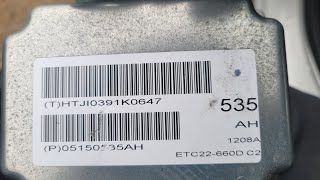
Typical fix: The TCM must be replaced with a new or remanufactured unit, 🎬 See how to locate and remove the TCM which then needs to be programmed or initialized to the vehicle's VIN. In some cases, a software reflash at a dealership may resolve the issue per a TSB.
Est. part cost: $300-$800 - Clogged CVT Filters 🟡 Medium Probability The Patriot's CVT has two filters: a metal/stainless steel strainer in the pan and a paper cartridge filter for the cooler. If these become clogged with debris from normal wear or failing components, fluid flow is restricted, leading to pressure drops and ratio errors.
How to confirm: The filters must be physically inspected during a fluid service. The pan filter (strainer) may be covered in sludge or metallic particles. The paper pleats of the cooler filter will appear dark and clogged.
Typical fix: Replace both the internal strainer and the external cooler filter during a transmission fluid service. This is considered standard procedure for a fluid change.
Est. part cost: $40-$100 - Internal CVT Failure ⚪ Low Probability High mileage, infrequent fluid changes, or overheating can cause wear on the internal components like the steel push belt, pulleys, or oil pump. The Jatco JF011E is known for premature failure under these conditions. NHTSA ODI #11191352 describes a scenario where a vehicle was unable to transfer to higher gears with error codes P0730 and P0777, resulting in multiple shops stating a new transmission was needed.
How to confirm: This is a diagnosis of exclusion. If the fluid, filters, and TCM are all confirmed to be good, the issue is likely internal. Finding significant metal shavings, gold sparkles, or chunks in the transmission pan is a definitive sign of catastrophic mechanical failure.
Typical fix: The CVT must be rebuilt by a specialist or replaced with a new or remanufactured unit. 🎬 Watch: Full CVT transmission replacement walkthrough
Est. part cost: $2500-$5000
Rare But Worth Checking
- Faulty Valve Body or Solenoids: → Shop Transmission Valve Body A sticking solenoid (like the secondary pressure solenoid, which can trigger P0776) or a blockage in the valve body can disrupt hydraulic control. This is less common than fluid or TCM issues but is a possibility before condemning the entire transmission. NHTSA ODI #11388639 notes a case where P0730 appeared alongside P0777 (Pressure Control Solenoid B Stuck On) and P0741 (Torque Converter Clutch Solenoid Stuck Off).
Diagnosis Steps
- Scan for all diagnostic trouble codes. Note any other transmission-related codes (e.g., P0776, P0766, P0746) that may provide more specific clues.
- Check the transmission fluid level and condition. This is the most common cause but requires a special tool and procedure for the CVT. The fluid must be at a specific temperature (check service manual, but typically 50-80°C).
- If the fluid is low, top it off with the correct Mopar CVTF+4 fluid, clear codes, and re-test. If the fluid is dark, burnt, or overdue for service, perform a full fluid and filter change (both filters).
- While the pan is off, inspect for excessive metal debris. A small amount of fine, dark fuzz on the pan magnet is normal. Large shavings, chunks, or a gold/glittery appearance in the fluid indicates internal failure.
- If the fluid and filters are good, use an advanced scan tool (like J-Scan or a professional tool) to monitor live data. Compare the commanded gear ratio from the TCM to the actual gear ratio while driving.
- If the transmission is not achieving the commanded ratio, investigate the valve body and solenoids for proper function. This may require pressure testing and checking solenoid resistance values.
- If all hydraulic and mechanical checks pass, the Transmission Control Module (TCM) is the most likely culprit.
- Check for any applicable TSBs or recalls related to the PCM/TCM. Software updates for the TCM have been issued for these transmissions and are critical.
Parts You'll Likely Need
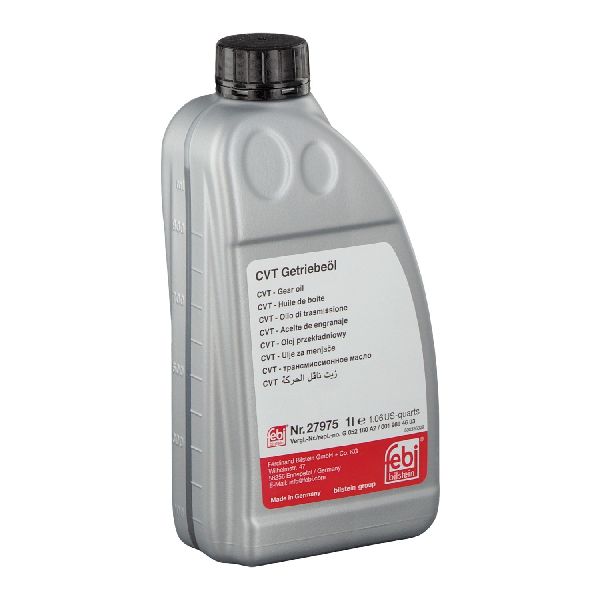
- CVT Fluid
(OEM #Mopar CVTF+4 (Part# 5191184AA, 5191184AB))— The CVT requires this specific fluid. Low or degraded fluid is the leading cause of P0730.
Trusted brands: Mopar, Valvoline CVT, Idemitsu, ENEOS, Amsoil
OEM price range: $25-$35 per quart
Aftermarket price range: $15-$25 per quart - CVT Filter Kit (Pan Strainer and Cooler Filter)
(OEM #Cooler Filter: 5191890AA; Pan Strainer: 68192984AA (verify by VIN))— The two filters in the CVT system can become clogged, restricting fluid flow and causing pressure issues. They should be replaced during any fluid service.
Trusted brands: Mopar, WIX, ATP, Fram
OEM price range: $80-$150
Aftermarket price range: $40-$100 - Transmission Control Module (TCM)
(OEM #68028456AB (2010), 05150533AH (2011-13), 5150823AG (2014+ 6-speed). Must match original part number.)— A faulty TCM can fail to command correct ratios, mimicking a mechanical transmission failure. Part numbers are year/engine specific and must be matched exactly.
Trusted brands: Mopar (OEM), All Computer Resources (Remanufactured), Module Mechanics (Remanufactured)
OEM price range: $600-$1000
Aftermarket price range: $300-$800 (Remanufactured)
Related Codes That Often Appear With This One
- P0776 — Secondary Pressure Solenoid Stuck Off. This often accompanies P0730 and can point towards a valve body issue or a failing TCM.
- P0766 — This code for a stuck-off shift solenoid can appear with P0730, as seen in a case study where the root cause was a faulty TCM.
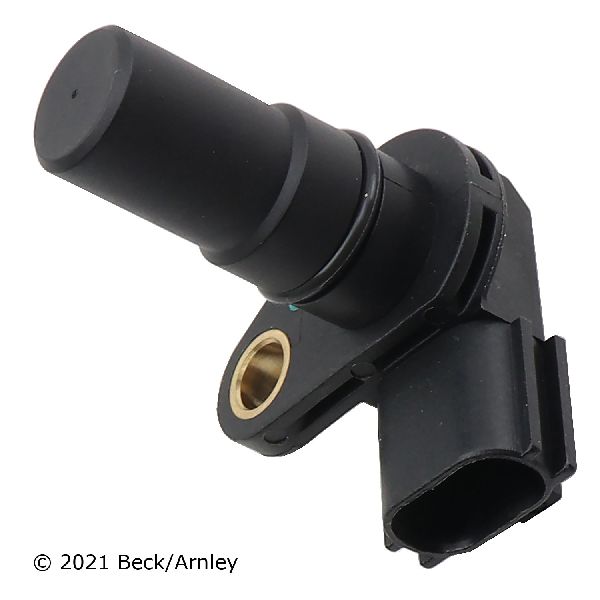
- P0715, P0720, P0722 — Codes for input or output speed sensor failures can cause P0730 because the TCM relies on these sensors to calculate the gear ratio. A P0722 (Output Speed Sensor Circuit No Signal) can occur after a TCM replacement, pointing to a sensor or wiring issue.
- P0746 — Line Pressure Solenoid Performance. Like P0776, this points to a hydraulic control issue within the valve body that can lead to an incorrect ratio.
Technical Service Bulletins (TSBs) & Recalls
- TSB 21-004-13: While for a different vehicle (Grand Cherokee), this TSB shows that flashing the Drivetrain Control Module is a common repair procedure for Chrysler/Jeep to fix operational issues, which could be relevant if a software update is available for the Patriot's TCM.
- Chrysler Extended Warranty X69 (related to TSB 23-007-17 REV. C): Covers front and rear subframe corrosion for 10 years. While not related to P0730, it's a critical issue for Patriot owners.
Platform-Specific Known Issues
- The transmission fluid filler tube is known to be fragile and can break off. A Reddit user noted this is a common problem people encounter.
- The vehicle's Jatco JF011E CVT is known for premature failure, often preceded by whining noises and overheating warnings.
Mechanic-Grade Diagnostic Values
- Pressure Control Solenoid (Line Pressure & Secondary) Resistance — expected: 3 - 9 ohms. Failure: A reading outside this range indicates a faulty solenoid coil.
- CVT Secondary Pressure Sensor Voltage — expected: Signal varies proportionally from ~0.5V to ~4.5V.. Failure: A static voltage, or a reading that doesn't correspond to commanded pressure changes, indicates a faulty sensor. 0.5V = 0 psi, 4.5V = ~870 psi.
- P0730 Set Condition — expected: The difference between the target gear ratio and the actual gear ratio should be minimal.. Failure: The code sets when the TCM detects a difference between the actual and target ratio equivalent to over 1000 RPM for 5 seconds, indicating significant slippage.
Scan Tool Commands That Help
- Launch X431, Autel MS908, WiTech: TCM Initialization — This function is required after replacing the TCM or the entire CVT assembly. It allows the new module to learn its baseline parameters and communicate with the vehicle.
- WiTech (Dealer Tool): Restore Vehicle Configuration — Used to resolve a 'vehicle configuration mismatch' fault after installing a new or used module, ensuring all vehicle options are correctly recognized by the TCM.
- J-Scan (Mobile App): Tire Size Calibration / Reprogram — Can be used to correct ratio calculations if non-standard tires are installed or if the adaptations have drifted. One user suggested this as a potential fix for lagging shifts associated with P0730.
Wiring & Ground Locations
- G300 — Under the right rear quarter trim panel for a 2009 model. Also listed as below the instrument panel for a 2008 model.. This is a primary ground point for the Transmission Control Module (TCM). A poor connection here can cause erratic TCM behavior and incorrect ratio commands.
- G110 — On the right front engine compartment side frame rail, between the alternator and coolant bottle.. This is a notorious ground point for corrosion on the Patriot platform. While it might look fine, corrosion under the insulation can cause a host of electrical problems, including those affecting the powertrain and transmission control systems.
- G102 / G103 — Located on the top of the transmission housing (for 2012 models).. These grounds are directly on the transmission case and are critical for the proper operation of sensors and solenoids within the transmission assembly.
Real Owner Repair Stories
- Certified Transmission Professional Case Study (2013 Jeep Patriot AWD, 2.4L engine, JF011E transmission) — Transmission warning light on, engine RPM stuck at 3800 on the highway, codes P0730 and P0766 present.
❌ Tried (didn't work) Replacing the entire transmission with a remanufactured unit. The problem persisted exactly as before, with the gear ratio refusing to drop below 0.7 on a scan tool.
✅ What actually fixed it Replacing the Transmission Control Module (TCM) with a used unit from a salvage yard. After installation, a road test confirmed the gear ratio now correctly dropped to 0.45 and engine RPMs were normal. - NHTSA ODI #11191352 — An owner reported that their car was unable to transfer to higher gears, displaying error codes P0730 and P0777 at approximately 84,000 miles.
- NHTSA ODI #11388639 — A report filed for a vehicle with 112,000 miles noted the presence of P0730 (Incorrect Gear Ratio) along with P0777 and P0741.
When the Usual Fixes Don't Work
- The most significant counter-evidence to the common 'P0730 means the transmission is toast' diagnosis is the well-documented case of a faulty TCM. In a 2013 Patriot, a shop replaced the entire transmission due to P0730 and burnt fluid, only to have the exact same symptoms persist. The final fix was a replacement TCM, which was preventing the transmission from shifting into its highest (lowest numerical) ratio. This proves that even with other signs of wear (like bad fluid), the root cause can be purely electronic.
OEM Part Supersession History
68028456AA→68028456AB— Revision update for the TCM for 2010 Patriot models with the 2.0L engine and CVT.
Heads up: Always match the part number from your original TCM. While some are plug-and-play, most require initialization or programming to the vehicle's VIN.5150823AD, 5150823AE, 5150823AF→5150823AG— Revision updates for the TCM for the 6-speed automatic transmission (not the CVT) found in 2014+ models.
Heads up: This part is for the 6F24 6-speed automatic transmission and is NOT compatible with CVT models.
Model Year Variations Within This Range
- 2007-2017: The Jatco JF011E CVT was used for most of the production run, but a conventional 6-speed automatic (6F24) became an option around 2014. Diagnostics and common failures are completely different between the two transmissions.
- Potentially post-2010: Other manufacturers using the same Jatco JF011E transmission, like Mitsubishi, made internal changes such as removing the secondary pressure transducer around 2010. While not confirmed for the Patriot, it indicates that running changes to sensors and electronics could exist within the model years, making year-specific diagnostics important.
Diagnostic Flowchart
Other Known Issues on This Vehicle
Issues unrelated to this code that are worth knowing about as an owner of this generation:
- Front and Rear Subframe Corrosion 🔴 High — Very common on vehicles in the 'Rust Belt'. Can become structurally unsafe around 100,000 miles. An extended warranty (X69) was issued, but may have expired for many vehicles. (Ref: Extended Warranty X69 (TSB 23-007-17 REV. C))
- Water Leaks into Cabin 🟠 Medium — Extremely common, especially on models with a sunroof. Clogged sunroof drain tubes are the primary cause, leading to water dripping from the dome light or A-pillars.
- Premature Alternator Failure 🟠 Medium — Frequently reported by owners. Symptoms include whining/grinding noises, dimming/flickering lights, and battery warning light illumination.
- Engine Stalling 🔴 High — Reported in earlier models, sometimes after refueling. Can be caused by a faulty throttle body or issues with the fuel tank. (Ref: Recall N17 (Fuel Tank Transfer Tube))
- Failing Throttle Body 🟠 Medium — A common cause for the electronic throttle control (lightning bolt) warning light, leading to lack of power and stalling.
Used vs. New Parts: Buying Guide for This Vehicle
When a used part is the smart pick: A used Transmission Control Module (TCM) from a reputable salvage yard can be a cost-effective fix, especially since a faulty TCM can misdiagnose a healthy transmission. A complete used CVT assembly is a high-risk, high-reward option for budget-conscious repairs, but its inherent reliability issues make it a gamble.
Donor-vehicle mileage cap: roughly under 80000 miles for the part to have meaningful remaining life.
What to inspect on the donor part:
- For a used CVT: Ask for the donor vehicle's VIN to check its history.
- If possible, inspect the transmission fluid from the donor; if it's black or smells burnt, avoid it.
- For a used TCM: Ensure the part number matches your original module EXACTLY. Inspect the connectors for any signs of corrosion or bent pins.
OEM-only on this vehicle (don't cheap out):
- CVT Fluid: Strictly use Mopar CVTF+4 or an aftermarket fluid that explicitly states it meets the CVTF+4 specification. Using a generic 'universal' fluid is a leading cause of failure.
- Transmission Control Module (TCM): While used is an option, a remanufactured unit from a specialist with a warranty is a much safer bet. This avoids the risk of getting another faulty unit from a junkyard.
Aftermarket brands forum-validated for this vehicle:
- CVT Fluid: Valvoline Full Synthetic CVT Fluid is widely cited by owners as a reliable and more affordable alternative to Mopar CVTF+4.
- CVT Filters: WIX, ATP, and Fram offer filter kits that are commonly used.
Brands owners have reported issues with on this vehicle:
- Any 'Universal' or 'Multi-Vehicle' CVT fluid that does not explicitly list 'Mopar CVTF+4' as a compatible specification should be avoided.
Real Owner Stories
Aggregated from forums and TSBs cited above. Mileages and costs reflect what owners reported in those sources.
2011 Jeep Patriot
Symptoms: The vehicle's transmission was acting up, leading to a P0730 code and concerns about the CVT's reliability.
What fixed it: A diagnostic scan tool was used to monitor the commanded vs. actual gear ratio, leading to the identification of a TCM problem.
Source hint: Reddit r/MechanicAdvice thread titled '2011 jeep patriot transmission'
Jeep Patriot (2007-2017) — ~100000 miles
Symptoms: Abnormally high engine RPMs at highway speeds, specifically staying at 3800 RPM after driving for 20-30 miles.
What fixed it: Replacement of the Transmission Control Module (TCM) because it would not allow the gear ratio to drop below 0.7.
Source hint: certifiedmastertech.com article 'p0730-p0766-jeep-patriot-cvt-tcm-problem'
Jeep Patriot (2007-2017)
Symptoms: Encountered a 'dealer nightmare' regarding the P0730 code and transmission issues.
What fixed it: Investigation of the TCM and gear ratio errors associated with the Jatco CVT.
Source hint: jeeppatriot.com thread titled 'p0730-and-the-dealer-nightmare'
Related OBD-II Codes
Frequently Asked Questions
How do I check the transmission fluid level on my 2007-2017 Jeep Patriot to see if it's causing the P0730 code?
Is there a specific type of fluid I must use for my Patriot's CVT to avoid gear ratio errors?
My Patriot is staying at 3800 RPM at highway speeds; could this be the TCM?
Are there any known physical vulnerabilities with the transmission components I should watch for during repair?
Does TSB 21-004-13 apply to my Jeep Patriot's P0730 issue?
What should I look for in the transmission pan to determine if my CVT has failed mechanically?
Helpful Videos
We Have This Part in Stock


The information in this article is provided for general reference and educational purposes only. Vehicle specifications, procedures, and part compatibility can vary by production date, trim level, and region. Always consult your vehicle's factory service manual and verify part numbers before purchasing or performing repairs. Safety-critical components such as airbags, seat belts, and braking systems should be installed by a qualified professional.
- Jeep Patriot:
- 🧭 Diagnostic Flowchart
- 🎬 Helpful Videos
- 🛍️ Shop This Part
- What's Unique About the 2007-2017 Jeep Patriot
- Symptoms You May Notice
- Most Likely Causes
- Rare But Worth Checking
- Diagnosis Steps
- Parts You'll Likely Need
- Related Codes That Often Appear With This One
- Technical Service Bulletins (TSBs) & Recalls
- Platform-Specific Known Issues
- Mechanic-Grade Diagnostic Values
- Scan Tool Commands That Help
- Wiring & Ground Locations
- Real Owner Repair Stories
- When the Usual Fixes Don't Work
- OEM Part Supersession History
- Model Year Variations Within This Range
- Other Known Issues on This Vehicle
- Used vs. New Parts: Buying Guide for This Vehicle
- Real Owner Stories
- 2011 Jeep Patriot
- Jeep Patriot (2007-2017) — ~100000 miles
- Jeep Patriot (2007-2017)
- Related OBD-II Codes
- Frequently Asked Questions
- 🎟️ Get 5% Off