

P0731 on 2002-2003 Chevrolet Silverado 1500 HD: Gear 1 Incorrect Ratio Fixes
P0731 on a 2002-2003 Silverado 1500 HD means the transmission is slipping in first gear. The most common causes are low or burnt transmission fluid and a failing 1-2 shift solenoid. Always check the fluid first; if it's low or dirty, a fluid and filter change with DEXRON-VI fluid might solve the problem for under $100. If a solenoid is bad, expect to pay $150-$400 for a shop to replace it. Ignoring the code can lead to a full transmission rebuild.
- P0731 means your transmission is slipping in first gear; do not ignore it.
- Always start by checking the transmission fluid level and condition. Use DEXRON-VI fluid. This is the simplest and a very common fix.
- If the fluid is fine, the most likely culprit is a failed 1-2 shift solenoid, which is accessible after removing the transmission pan.
- Continuing to drive with this code can lead to severe, expensive internal transmission damage.
- Due to the need to access internal components and potentially perform pressure tests, professional diagnosis is highly recommended to avoid wasting money on parts.
What's Unique About the 2002-2003 Chevrolet SILVERADO 1500 HD
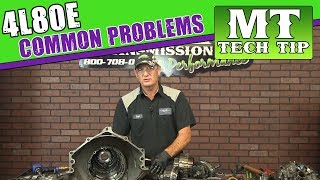
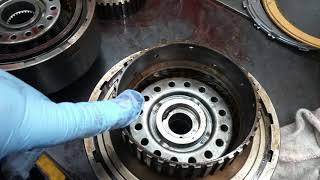
The 2002-2003 Silverado 1500 HD is typically equipped with the robust 4L80-E automatic transmission, designed for heavy-duty use. While durable, this transmission is very sensitive to fluid condition and hydraulic pressure. A P0731 code on this specific truck often points directly to issues with the 1-2 shift solenoid or hydraulic pressure loss within the forward clutch circuit. A particularly common and specific internal failure point is wear on the sealing ring lands of the forward clutch drum, which causes a pressure leak that prevents first gear from engaging properly. The provided TSB PIP4379M confirms this model can experience engagement issues related to a range of transmission codes, including P0731. [TSB #PIP4379M]
🎬 Watch: Diagnosing the causes and fixes for the P0731 code.Diagnostic Flowchart
Tap your situation to follow the diagnostic path that matches what you're seeing on this vehicle.
Symptoms You May Notice
- Delayed or no engagement into Drive. [TSB #PIP4379M]
- Hesitation or sluggish acceleration from a stop.
- Check Engine Light is on.
- Transmission gets stuck in one gear ('limp mode').
- Harsh or abrupt shifting.
- Engine RPMs rise without an increase in speed (slipping).
- Reduced fuel economy.
- Engine may stall when coming to a stop or when shifting into gear.
- Replacing speed sensors. While faulty input or output speed sensors can cause shifting issues and gear ratio codes, they are not a common cause for an isolated P0731 code and would typically be accompanied by other sensor-specific codes like P0717 or P0722.
Most Likely Causes
- Low or Dirty Transmission Fluid 🔴 High Probability → Shop Transmission Assembly The 4L80-E transmission requires clean fluid at the correct level to create the hydraulic pressure needed to engage gears. Over time, fluid breaks down and can leak, leading to slippage, which is a primary cause of P0731.
How to confirm: Check the transmission fluid dipstick with the engine running and the transmission warm. The fluid should be at the 'FULL' mark, appear bright red, and have no burnt smell. Dark, brownish, or burnt-smelling fluid indicates a problem.
Typical fix: If low, top off with the correct fluid. If dirty or burnt, perform a transmission fluid and filter change. Use a fluid that meets DEXRON-VI specifications, as this is the modern replacement for the original DEXRON-III.
Est. part cost: $60-$120 - Failed 1-2 Shift Solenoid ('A' Solenoid) 🟡 Medium Probability → Shop Transmission Valve Body Shift solenoids are electronic components that control the flow of fluid in the valve body. They are a very common failure point on the 4L80-E, either failing electrically or getting stuck due to debris.
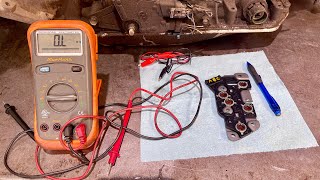
How to confirm: After dropping the transmission pan, the solenoid can be tested with a multimeter. The resistance for the 1-2 shift solenoid should be between 20 and 30 ohms. A reading that is open (infinite) or shorted (near zero) indicates failure. A more precise reading from the case connector should be around 21 ohms.
Typical fix: Replace the faulty shift solenoid. It is common practice to replace both the 1-2 ('A') and 2-3 ('B') solenoids at the same time as they are located together, are identical parts, and wear at similar rates.
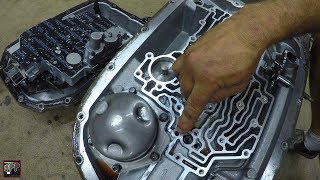
Est. part cost: $40-$80 - Internal Hydraulic Leak / Worn Forward Clutch Pack ⚪ Low Probability High mileage and heavy towing can cause wear on internal components. For first gear, the issue is almost always in the forward clutch circuit. Specifically, the sealing rings on the forward drum can wear grooves into the drum, creating a hydraulic leak that prevents the clutch from applying with enough force.
How to confirm: This is often a diagnosis of exclusion. If fluid and solenoids are good, the problem is likely internal. A large amount of metallic debris or black clutch material in the transmission pan is a strong indicator. A professional can perform a 'wet plate air test' by blowing compressed air into the forward clutch feed hole in the case (with the valve body removed) to listen for a solid 'thump' of engagement versus the 'hiss' of a leak.
Typical fix: Requires a complete transmission rebuild or replacement to replace the worn internal components, such as the forward clutch pack and potentially the forward drum itself.
Est. part cost: $1500-$3500+
Rare But Worth Checking
- Faulty Valve Body: → Shop Transmission Valve Body The valve body directs hydraulic fluid. Worn bores, sticking valves, or degraded check balls can cause pressure loss to the first gear circuit. A sticky accumulator valve is a possible culprit. This is less common than a solenoid failure but can happen if the fluid is very contaminated.
- Faulty Transmission Control Module (TCM): → Shop Transmission Assembly In rare cases, the computer that controls the transmission (in this truck, integrated into the Powertrain Control Module or PCM) can fail, sending incorrect signals or misinterpreting sensor data. This should only be considered after all mechanical and hydraulic possibilities have been definitively ruled out.
Diagnosis Steps
- Check the transmission fluid level and condition while the engine is running and warm. Top off or change the fluid and filter if necessary, using DEXRON-VI fluid.
- If the fluid is full and clean, scan for other pending or active trouble codes. A code like P0751 can immediately point to the 1-2 shift solenoid.
- Drop the transmission oil pan and inspect for excessive metal shavings or clutch material. A small amount of fine gray material is normal, but large pieces or a thick sludge indicate severe internal wear.
- While the pan is off, locate the 1-2 shift solenoid ('A' solenoid). Test its resistance with a multimeter. It should be between 20-30 ohms. If it's out of spec, replace it.
- If solenoids and fluid are good, the issue is likely a more significant internal problem. A transmission specialist may perform a line pressure test to check for low pressure.
- For definitive internal diagnosis, a professional may remove the valve body and perform a 'wet plate air test' on the forward clutch circuit to confirm an internal hydraulic leak, which would necessitate a rebuild.
Parts You'll Likely Need
- Transmission Fluid and Filter Kit — This is the first and most crucial step in diagnosis and is often the fix for issues caused by low or degraded fluid. Ensure the fluid is DEXRON-VI rated.
Trusted brands: ACDelco, Wix, ATP
OEM price range: $70-$120
Aftermarket price range: $50-$80 - 1-2 Shift Solenoid (Solenoid 'A')
(OEM #24230298 (Single Solenoid) or Kit 24230288 & 24230289 (A & B))— This solenoid is a very common failure point that directly causes the P0731 code. The 'A' and 'B' solenoids are identical and often replaced as a pair.
Trusted brands: ACDelco, Bosch, Rostra
OEM price range: $30-$50 (each)
Aftermarket price range: $20-$40 (each)
Related Codes That Often Appear With This One
- P0700 — This is a generic code that simply means the Transmission Control Module (TCM) has detected a fault and requested the Check Engine Light to be turned on. It will almost always be present with P0731.
- P0751 — This code for 'Shift Solenoid 'A' Performance/Stuck Off' directly points to a problem with the 1-2 shift solenoid, which is a primary cause of P0731. Seeing both codes together strongly suggests the solenoid is the root cause.
- P0732, P0733, P0734 — These codes indicate slipping in 2nd, 3rd, and 4th gear, respectively. If they appear with P0731, it points to a widespread problem like very low fluid, a clogged filter, or a failing transmission pump affecting all gears, rather than an isolated first-gear issue.
Technical Service Bulletins (TSBs) & Recalls
- PIP4379M: Mentions Diagnostic Trouble Codes including P0731 related to no or delayed gear engagement, and points to possible hydraulic circuit issues. [TSB #PIP4379M]
Platform-Specific Known Issues
- The provided Technical Service Bulletin (TSB #PIP4379M) indicates that these vehicles can suffer from a range of engagement issues and transmission codes, including P0731. The bulletin suggests investigating causes like low fluid level, a cracked transmission filter neck, or a stuck lube regulator valve, especially if the issue occurs after a fluid change or in cold weather. [TSB #PIP4379M]
Mechanic-Grade Diagnostic Values
- Transmission Line Pressure (at pressure tap on driver's side) — expected: Idle in Drive: 40-70 psi. Full Throttle Stall in Drive: 160-180 psi (hold for 2 seconds max).. Failure: Significantly lower pressure indicates a worn pump, internal leaks, or a pressure control solenoid issue. Significantly higher pressure can indicate a stuck pressure regulator or PCS issue.
- Shift Solenoid A/B Resistance (at case connector or solenoid) — expected: 20-40 Ohms, typically 21-22 Ohms.. Failure: A reading of near zero (short) or infinite (open) indicates a failed solenoid.
- Pressure Control Solenoid (PCS/Force Motor) Resistance — expected: 3.5 - 8 Ohms, depending on year. Early (Bosch) and late (Holley) models differ.. Failure: Out of range resistance indicates a faulty PCS.
- Transmission Fluid Temperature (TFT) Sensor Resistance — expected: Varies with temperature. Approx. 3520 Ohms at 68°F (20°C), approx. 333 Ohms at 176°F (80°C).. Failure: Readings that are wildly inaccurate for the ambient or operating temperature suggest a failed sensor.
Scan Tool Commands That Help
- GM Tech2 or equivalent bidirectional scanner: Transmission Output Controls — This function allows a technician to manually command each shift solenoid (A and B) on and off while the vehicle is stationary. This can isolate a failed solenoid or a wiring issue from the PCM without dropping the pan. For P0731, you would command Solenoid 'A' and listen for a click from the transmission.
- GM Tech2 or equivalent bidirectional scanner: Transmission Adaptive Pressure (TAP) Reset — After replacing major transmission components or the entire unit, resetting the adaptive pressure values stored in the PCM is crucial. This forces the transmission into a 'fast learn' mode to adapt to the new components, ensuring correct shift timing and pressure, which can prevent premature wear.
Wiring & Ground Locations
- PCM Connector C1 (Blue) — The Powertrain Control Module (PCM) is located on the driver's side of the engine bay, near the battery and fuse box.. Pin 48 (Light Green) is the control for Shift Solenoid 'A' (1-2). Testing for a ground signal at this pin while commanding the gear can verify PCM output.
- PCM Connector C2 (Red) — Located next to the C1 connector on the PCM.. Pin 22 (Red) and Pin 23 (Dark Blue) are for the Input Speed Sensor (ISS). Checking for a signal here is critical for diagnosing ratio codes.
- G103 / G104 (Engine/Chassis Grounds) — There are multiple key grounds. One is on the engine block near the front, another is a strap from the firewall to the back of the cylinder head, and others are on the frame rail near the driver's side tire.. A poor ground connection to the PCM or from the engine to the chassis can cause erratic sensor readings and incorrect solenoid operation, potentially leading to false transmission codes.
Real Owner Repair Stories
- PerformanceTrucks.net Forums (GM Truck with 4L80-E and a 3200 RPM stall torque converter) — No first gear, but reverse engagement became instant instead of delayed.
❌ Tried (didn't work) Initial diagnosis was unclear.
✅ What actually fixed it The owner discovered that the high stall converter was causing the PCM to see lingering high RPMs during the 1-2 shift, which it misinterpreted as a slip or solenoid failure, triggering a false code. Disabling the specific trouble code in the tune resolved the issue, indicating a tuning problem rather than a mechanical fault. - LS1TECH Forums (1998 GM truck with 4L80-E from a 3500 HD, swapped into a 3/4 ton.) — Very harsh shifts in all gears since installation.
❌ Tried (didn't work) Replaced reverse servo piston and pin, installed a Sonnax boost valve. The issue persisted for 30,000+ miles.
✅ What actually fixed it The final diagnosis pointed towards either a sticky accumulator valve in the valve body or, more likely, excessive line pressure commanded by the PCM due to a sensor issue or someone having previously adjusted the pressure control solenoid. The fix required putting a pressure gauge on the transmission to verify and adjust line pressure back to specifications.
OEM Part Supersession History
10478131, 24047681, 24236521→24230298— Part consolidation and design updates by GM.
Heads up: The part is a direct replacement for the 1-2 and 2-3 shift solenoids on 4L80-E transmissions for this year range. No incompatibilities are noted.
Model Year Variations Within This Range
- Pre-1994 vs. Post-1994: The Pressure Control Solenoid (PCS) was changed in 1994 from a Bosch unit to a Holley unit with a different internal design and resistance. While the 2002-2003 models use the later design, it's a critical distinction when sourcing used parts or diagnosing pressure issues on older 4L80-E transmissions.
- Pre-1997 vs. Post-1997: Later model 4L80-E transmissions (after 1997) relocated one of the cooler line fittings from the front of the case to the rear, near the center support. This was a significant change to improve lubrication flow and address overheating issues in the rear planetaries. The 2002-2003 models have this updated cooler line arrangement.
Helpful Videos

We Have This Part in Stock

The information in this article is provided for general reference and educational purposes only. Vehicle specifications, procedures, and part compatibility can vary by production date, trim level, and region. Always consult your vehicle's factory service manual and verify part numbers before purchasing or performing repairs. Safety-critical components such as airbags, seat belts, and braking systems should be installed by a qualified professional.
- Chevrolet SILVERADO 1500 HD:
- 🧭 Diagnostic Flowchart
- 🎬 Helpful Videos
- 🛍️ Shop This Part
- What's Unique About the 2002-2003 Chevrolet SILVERADO 1500 HD
- Symptoms You May Notice
- Most Likely Causes
- Rare But Worth Checking
- Diagnosis Steps
- Parts You'll Likely Need
- Related Codes That Often Appear With This One
- Technical Service Bulletins (TSBs) & Recalls
- Platform-Specific Known Issues
- Mechanic-Grade Diagnostic Values
- Scan Tool Commands That Help
- Wiring & Ground Locations
- Real Owner Repair Stories
- OEM Part Supersession History
- Model Year Variations Within This Range
- 🎟️ Get 5% Off