

P0731 on 2007-2010 Ford Expedition 5.4L: Gear 1 Incorrect Ratio Causes and Fixes
On a 2007-2010 Expedition, P0731 is most often caused by internal hydraulic leaks. A specific Ford TSB points to a cracked front pump adapter seal or a sticking pressure regulator valve in the valve body. This is not a simple fluid change fix; it requires removing the transmission's valve body.
- P0731 on a 2007-2010 Expedition is not a simple fix; it points to an internal transmission hydraulic leak.
- The most likely culprits are a small cracked rubber seal (pump adapter seal) or a sticking valve in the valve body, as identified in Ford TSB 10-18-1.
- Always check the transmission fluid level and condition first, but do not expect a simple fluid change to resolve this code.
- This repair requires removing the transmission valve body and should be performed by a qualified technician.
- While the molded lead frame is a known issue on Ford 6R80 transmissions, it is a more common failure point on 2011 and newer models.
What's Unique About the 2007-2010 Ford Expedition
The 2007-2010 Expedition uses the 6-speed 6R75 or 6R80 automatic transmission. Unlike the later 2011+ models famous for molded lead frame failures which cause similar symptoms, this specific year range is covered by Ford Technical Service Bulletin (TSB) 10-18-1. This TSB directly links P0731 to either a small, cracked rubber seal (the front pump adapter seal, also called a 'bridge seal') or a sticking main pressure regulator valve inside the valve body assembly. These issues cause a loss of hydraulic pressure needed to properly engage first gear, especially when the transmission is cold.
Symptoms You May Notice
- Delayed or harsh engagement when shifting into Drive, sometimes with a clunk.
- Vehicle feels sluggish or has poor acceleration from a stop.
- Check Engine Light or wrench light is illuminated.
- Transmission may feel like it's slipping when trying to accelerate from a stop (engine RPMs rise without a corresponding increase in speed).
- Vehicle may get stuck in a higher gear (limp mode) to protect the transmission.
- Delayed forward or reverse transmission engagement, especially on a cold start.
- Replacing the entire transmission when only the pump adapter seal or valve body needed service.
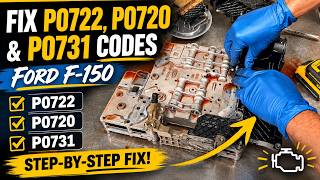
- Replacing the molded lead frame when the issue is actually the pump adapter seal 🎬 See: Step-by-step speed sensor and lead frame repair, as specified in TSB 10-18-1 for this year range.
- Assuming it's an engine misfire issue due to the poor acceleration symptoms.
- Replacing the fuel pump when symptoms are actually caused by a faulty Fuel Pump Driver Module (FPDM), which can cause similar hesitation issues.
Most Likely Causes
- Cracked Front Pump Adapter Seal (Bridge Seal) 🔴 High Probability This is a specific failure pointed out in Ford TSB 10-18-1 for this vehicle and powertrain combination. The seal can become brittle and crack over time, causing a critical loss of hydraulic pressure to the clutches. This is a well-documented failure on the 6R75/6R80 transmissions of this era.
How to confirm: The valve body (mechatronics unit) must be removed to visually inspect the seal for cracks. The cracks are often found in the corners of the molded frame.
Typical fix: Replace the front pump adapter seal. The OEM part number is 7L1Z-7D173-A. This is done with the valve body removed from the transmission.
Est. part cost: $20-$40 - Sticking Main Oil Pressure Regulator Valve 🔴 High Probability This is the second primary cause listed in TSB 10-18-1. Debris or varnish can cause this critical valve within the valve body to stick, leading to improper pressure regulation. Wear in the valve body bore can also cause the valve to bind.
How to confirm: After removing the valve body, the main oil pressure regulator valve must be removed from its bore to check for free movement. If it sticks, binds, or has visible scoring, it is the source of the problem. Vacuum testing the bore can also confirm wear.
Typical fix: Remove, clean, and de-burr the valve and its bore within the valve body to ensure smooth operation. If wear is excessive, an oversized valve and reaming kit (like those from Sonnax) can be used, or the entire valve body may need to be replaced.
Est. part cost: $0 if cleaning works; $50-$150 for a reaming kit; $500-$900 for a remanufactured valve body. - Low or Contaminated Transmission Fluid 🟡 Medium Probability → Shop Transmission Assembly While not specific to the platform, it's a universal first check. An owner on a forum reported getting a P0731 code immediately after a fluid service because the aftermarket filter's pickup tube was too long and restricted fluid flow.
How to confirm: Check the transmission fluid level and condition via the dipstick. The fluid should be at the correct level and be bright red (Motorcraft MERCON LV). Fluid that is dark, burnt-smelling, or low indicates a problem.
Typical fix: If low, top off the fluid and check for leaks. If dirty or burnt, perform a transmission fluid and filter change using an OEM Motorcraft filter to avoid fitment issues. This is often the first step but may not solve the underlying mechanical or hydraulic issue.
Est. part cost: $100-$200 for fluid and a filter. - Failing Shift Solenoid ⚪ Low Probability → Shop Transmission Valve Body
How to confirm: A diagnostic scan tool that can command individual solenoids is needed. A failed solenoid will not respond to commands or will have incorrect electrical resistance readings (typically around 5.5 Ohms for a 6R80).
Typical fix: Replace the faulty solenoid. This requires dropping the transmission pan and often the valve body.
Est. part cost: $50-$100 per solenoid.
Rare But Worth Checking
- Molded Lead Frame Failure: → Shop Transmission Valve Body While this is a very common cause for P0731 on 2011 and newer Fords with the 6R80 transmission (covered under Ford's 19N01 warranty extension), it is less common on the 2007-2010 models which used a slightly different design. However, it's still a possibility if speed sensor-specific codes (like P0720 or P0722) are also present.
- Internal Mechanical Failure: If the transmission fluid is full of metal shavings, it indicates a severe internal problem like a worn-out clutch pack or other hard part failure. This is the least likely cause and would typically require a full transmission rebuild or replacement.
Diagnosis Steps
- Check the transmission fluid level and condition. Ensure it is full of clean Motorcraft MERCON LV fluid.
- Use an advanced OBD-II scanner to check for other transmission codes. Note if P0741, P0735, P0720, or P0722 are present, as this helps differentiate between a hydraulic and electrical fault.
- Review TSB 10-18-1, as it specifically addresses P0731 on this vehicle for delayed engagement and incorrect ratio codes.
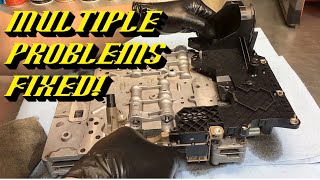
- The next step, following the TSB, is to drop the transmission pan and remove the mechatronics (valve body) assembly. 🎬 Watch: How to safely remove the 6R80 valve body
- Inspect the front pump adapter seal (bridge seal, P/N 7L1Z-7D173-A) for any signs of cracks, brittleness, or damage, especially in the corners.
- While the valve body is out, disassemble it enough to access the main pressure regulator valve. Check if it moves freely in its bore without sticking or binding.
- If the seal is cracked, replace it. If the valve is sticking, clean the valve and bore. If the bore is worn, consider a Sonnax repair kit or valve body replacement.
- If no issues are found with the seal or valve, further diagnosis of the solenoids, molded lead frame, and internal mechanical components is necessary.
Parts You'll Likely Need
- Front Pump Adapter Seal (Bridge Seal)
(OEM #7L1Z-7D173-A)— This is a primary suspect according to Ford TSB 10-18-1 for the P0731 code on this vehicle.
Trusted brands: Motorcraft
OEM price range: $20-$40
Aftermarket price range: $15-$30 - Transmission Filter Kit
(OEM #FT-188 (Motorcraft))— Must be replaced whenever the transmission pan is removed for service. Using an OEM filter is highly recommended to prevent fluid starvation issues caused by incorrect aftermarket filter dimensions.
Trusted brands: Motorcraft, Wix, ATP
OEM price range: $40-$60
Aftermarket price range: $20-$40 - Motorcraft MERCON LV Automatic Transmission Fluid
(OEM #XT-10-QLVC)— This is the required fluid for the 6R75/6R80 transmission. The system will need 7-8 quarts for a pan drop and refill.
Trusted brands: Motorcraft
OEM price range: $8-$12 per quart - Remanufactured Valve Body (Mechatronic Assembly) — If the main pressure regulator valve bore is excessively worn, or if multiple solenoids fail, replacing the entire assembly is often the most effective repair.
Related Codes That Often Appear With This One
- P0741 — Torque Converter Clutch Circuit Performance or Stuck Off. This code is also mentioned in TSB 10-18-1 and can be caused by the same hydraulic pressure loss issues.
- P0735 — Gear 5 Incorrect Ratio. This code is also listed in TSB 10-18-1, indicating the hydraulic issue can affect other gears as well.
- P0720 — Output Speed Sensor Circuit Malfunction. If this code is present, it may point towards a molded lead frame issue rather than the bridge seal, even on these earlier models.
- P0722 — Output Speed Sensor Circuit No Signal. Similar to P0720, this code suggests an electrical or sensor failure within the molded lead frame.
Technical Service Bulletins (TSBs) & Recalls
- TSB 10-18-1: Delayed Forward/Reverse Engagement, P0731, P0735, P0741: Published September 2, 2010. Applies to 2007-2010 Expedition, 2009-2010 F-150, and 2009-2010 Navigator. Addresses delayed engagement, often when cold, and various gear ratio codes. Points to a cracked front pump adapter seal or a sticking main pressure regulator valve as the primary causes.
Platform-Specific Known Issues
- TSB 10-18-1 was issued by Ford specifically for 2007-2010 Expeditions and other trucks with the 5.4L engine and 6R75/6R80 transmission, identifying a cracked pump adapter seal or sticking pressure regulator valve as the likely cause for P0731 and other engagement-related codes.
Mechanic-Grade Diagnostic Values
- Shift Solenoid Resistance (VBS/VFS Solenoids) — expected: 5.0-5.5 Ohms at 68°F (20°C). Failure: A reading significantly outside this range indicates a faulty solenoid coil.
- Shift Solenoid E (SSE) Resistance (pre-Nov 2010) — expected: ~10.5 Ohms. Failure: A reading significantly different from 10.5 Ohms indicates a failure of this specific on/off solenoid used in early 6R80 models.
- Shift Solenoid E (SSE) Resistance (post-Nov 2010) — expected: 17.5 to 18.6 Ohms. Failure: A reading outside this range points to a failure in the later design on-off solenoid.
- Main Pressure Regulator Valve Bore Vacuum Test — expected: 16 in-Hg or higher. Failure: A vacuum reading below 16 in-Hg indicates excessive wear in the valve bore, confirming a hydraulic leak path that can cause P0731.
Scan Tool Commands That Help
- Ford IDS (or FORScan): Datalogger - Transmission PIDs (TSS, OSS, Solenoid Status, etc.) — During a test drive, this function is used to monitor the live data from the Turbine Speed Sensor (TSS) and Output Speed Sensor (OSS) to see if the reported speeds match the commanded gear. This can confirm the slip condition that sets P0731.
- Ford IDS (or FORScan): Service Functions - Reset Transmission Adaptive Tables — This MUST be performed after replacing the valve body, solenoids, or the entire transmission. It clears the old learned shift strategies from the PCM/TCM, forcing it to relearn shift pressures and timings with the new components. Failure to do this often results in poor shift quality after a repair.
- Ford IDS (or FORScan): Module Programming - Transmission Characterization Update — When replacing a valve body or solenoid body, the new part comes with a specific 13-digit solenoid body strategy number. This function is used to program the new calibration data into the PCM to ensure correct shift quality and pressures.
Wiring & Ground Locations
- G106 / G107 — Located on the right rear of the engine compartment.. These are primary engine bay ground points. While not directly for the transmission's internal components, a poor ground here can cause electrical noise and affect the Powertrain Control Module (PCM), which controls the transmission, potentially leading to erroneous codes or behavior.
- G203 — Located behind the left kick panel inside the cabin.. This is a major interior ground point. The 4x4 control module grounds here, and it's part of the same harness bundle that includes communication lines to the PCM and Data Link Connector. A fault here could disrupt communication or power to related control modules.
- C175T — This is the main 16-pin electrical connector on the transmission case that connects the vehicle harness to the internal lead frame.. All power, ground, and sensor signals for the transmission's electronic controls pass through this connector. Corrosion or bent pins in this connector can directly cause codes like P0731 by interrupting signals from the speed sensors or power to the solenoids.
Real Owner Repair Stories
- Ford F150 Forum (2017 Ford F-150 5.0L (with 6R80), 207k miles) — Very harsh 5-4 downshift.
❌ Tried (didn't work) Replaced the original valve body with a rebuilt unit.
✅ What actually fixed it The user swapped in a rebuilt valve body but transferred the original lead frame. This resulted in new, severe shifting problems (flares, delayed shifts), making the truck undriveable. The issue was likely an incompatibility between the original lead frame/solenoid strategy and the different calibration of the rebuilt valve body, highlighting the critical need to update the solenoid strategy in the PCM via FORScan/IDS after such a repair.
OEM Part Supersession History
Pre-Nov 2010 Shift Solenoid E (SSE)→AL3Z-7G484-B (or similar)— Design change in the on-off solenoid.
Heads up: The early solenoid has a resistance of ~10.5 Ohms, while the later design (Nov 2010+) has a resistance of ~18 Ohms. They are not interchangeable. Using the wrong one will cause shifting problems and likely trigger solenoid performance codes.
Model Year Variations Within This Range
- 2009-2010: In 2009, Ford began making changes to the 6R80 valve body, including removing the D1 Regulator Valve Spring and eliminating four of the six VFS solenoid dampers on the separator plate. This means valve body components and separator plates may not be interchangeable between a 2008 and a 2010 model.
- 2007-2010: The 2007-2010 models use a 6R75 or early 6R80 transmission which contains an integrated Mechatronic Control Module on the lead frame inside the transmission. Later models (2011+) eliminated this internal module and moved transmission control to the main vehicle Powertrain Control Module (PCM). This makes the lead frames and diagnostic approaches different.
Diagnostic Flowchart
Other Known Issues on This Vehicle
Issues unrelated to this code that are worth knowing about as an owner of this generation:
- Ford 5.4L 3-Valve Cam Phaser Rattle 🔴 High — Very common, especially on higher mileage engines (75k+ miles). Caused by low oil pressure and wear in the phaser and timing components.
- Spark Plug Breakage During Removal 🟠 Medium — Extremely common on engines built before late 2007. Affects nearly every vehicle when plugs are first changed. (Ref: TSB 08-7-6)
- Fuel Pump Driver Module (FPDM) Corrosion 🔴 High — Very common, especially in regions with road salt. Can fail at any mileage.
Used vs. New Parts: Buying Guide for This Vehicle
When a used part is the smart pick: A used valve body assembly from a low-mileage donor vehicle can be a cost-effective option, but it is risky. It only makes sense if the donor vehicle's history is known and the part comes with a warranty from the dismantler. Given the high probability of bore wear, a remanufactured unit is a much safer bet.
Donor-vehicle mileage cap: roughly under 80000 miles for the part to have meaningful remaining life.
What to inspect on the donor part:
- Verify the donor vehicle's VIN to ensure it falls within the 2007-2010 range and has the same 6R75/6R80 transmission.
- Inspect the electrical connector pins for any corrosion or damage.
- Ask for the solenoid strategy ID number from the donor transmission case if possible; you will need to program this into your vehicle's PCM.
- Avoid any valve body that has been sitting exposed to the elements or shows signs of heavy sludge or contamination.
OEM-only on this vehicle (don't cheap out):
- Front Pump Adapter Seal (Bridge Seal) - The cost is low and the part is so critical, using a genuine Motorcraft seal is the only sensible choice.
- Transmission Filter - Aftermarket filters are known to have fitment issues with the fluid pickup tube, leading to fluid starvation. Use only the Motorcraft FT-188 filter.
- Transmission Fluid - Use only Motorcraft MERCON LV. The 6R80 is very sensitive to fluid type, and using a universal fluid can cause shifting problems.
Aftermarket brands forum-validated for this vehicle:
- Sonnax - For valve body repair components like oversized regulator valves and reaming kits, Sonnax is the industry standard for transmission professionals.
Brands owners have reported issues with on this vehicle:
- Generic, unbranded valve bodies or solenoids from online marketplaces. These often have incorrect calibrations or are untested, leading to new problems after installation.
Real Owner Stories
Aggregated from forums and TSBs cited above. Mileages and costs reflect what owners reported in those sources.
2008 Ford Expedition 5.4L V8 — 200000 miles
Symptoms: The bridge seal failed, causing the transmission to not shift past 2nd gear.
What fixed it: A transmission shop replaced the front pump adapter seal (bridge seal).
Source hint: BobIsTheOilGuy Forum: 6R80 Bridge Seal Replacement
2007-2010 Ford Expedition 5.4L V8
Symptoms: Vehicle would not move and threw code P0731 immediately after a transmission service.
What fixed it: Swapping out an aftermarket filter (which had a pickup tube that was too long and restricted flow) for an OEM Motorcraft filter.
Source hint: Ford Truck Enthusiasts Forum: Transmission service, would not move P0731
Related OBD-II Codes
Frequently Asked Questions
Does TSB 10-18-1 apply to my 2008 Ford Expedition with the 5.4L V8?
What is the specific part number for the bridge seal mentioned in the Ford TSB for P0731?
Could a simple transmission fluid change cause a P0731 code on my Expedition?
What transmission fluid should I use for my 2007-2010 Expedition to prevent shifting issues?
If my mechatronics unit is removed to fix P0731, what else should be inspected?
Is the P0731 code related to the common cam phaser rattle on the 5.4L 3V engine?
Helpful Videos
We Have This Part in Stock


The information in this article is provided for general reference and educational purposes only. Vehicle specifications, procedures, and part compatibility can vary by production date, trim level, and region. Always consult your vehicle's factory service manual and verify part numbers before purchasing or performing repairs. Safety-critical components such as airbags, seat belts, and braking systems should be installed by a qualified professional.
- Ford Expedition:
- 🧭 Diagnostic Flowchart
- 🎬 Helpful Videos
- 🛍️ Shop This Part
- What's Unique About the 2007-2010 Ford Expedition
- Symptoms You May Notice
- Most Likely Causes
- Rare But Worth Checking
- Diagnosis Steps
- Parts You'll Likely Need
- Related Codes That Often Appear With This One
- Technical Service Bulletins (TSBs) & Recalls
- Platform-Specific Known Issues
- Mechanic-Grade Diagnostic Values
- Scan Tool Commands That Help
- Wiring & Ground Locations
- Real Owner Repair Stories
- OEM Part Supersession History
- Model Year Variations Within This Range
- Other Known Issues on This Vehicle
- Used vs. New Parts: Buying Guide for This Vehicle
- Real Owner Stories
- 2008 Ford Expedition 5.4L V8 — 200000 miles
- 2007-2010 Ford Expedition 5.4L V8
- Related OBD-II Codes
- Frequently Asked Questions
- 🎟️ Get 5% Off