

P0733 on 2012-2017 Hyundai Accent 1.6L: Gear 3 Incorrect Ratio Causes and Fixes
P0733 on a 2012-2017 Accent means the A6GF1 transmission is slipping in third gear. While it can be caused by low fluid, it often points to a more serious internal transmission failure requiring professional diagnosis, as noted in Hyundai TSB 20-AT-001H. The official fix in many cases is a full transmission replacement.
- P0733 means your Accent's transmission is slipping in 3rd gear.
- Immediately check the transmission fluid level and condition, or have a shop do it. This is the simplest potential fix.
- Due to a manufacturer TSB, this code on this specific car has a high probability of indicating a serious internal transmission failure.
- Do not continue to drive with this code, as you risk catastrophic transmission damage and unsafe driving conditions.
- Professional diagnosis is essential to avoid wasting money on incorrect parts; the problem may be much more severe than a simple sensor.
What's Unique About the 2012-2017 Hyundai Accent
For the 2012-2017 'RB' generation Accent, this code is particularly concerning. Hyundai has issued Technical Service Bulletin 20-AT-001H, which explicitly covers this model for incorrect gear ratio codes. The TSB's diagnostic logic often leads to transmission replacement if no other solenoid codes are present, suggesting a known pattern of internal mechanical failure. Forum discussions and transmission repair guides point towards failures in components like the 3-5-R clutch pack or underdrive piston seals within the A6GF1 transmission, making this a more severe issue than a simple sensor fault on many other vehicles.
Symptoms You May Notice
- Check Engine Light illuminated
- Transmission slipping, flaring, or engine RPMs jumping during the 2-3 shift
- Harsh, jerky, or delayed engagement into third gear
- Inability to shift into third gear
- Vehicle enters 'limp mode' (stuck in a single gear, often 2nd or 3rd, to prevent further damage)
- Poor or hesitant acceleration
- Increased fuel consumption
- Burning smell from the transmission fluid
- Replacing speed sensors without first thoroughly checking the transmission fluid level and condition. Low or burnt fluid is a more direct cause of slippage.
- Assuming it's just an external sensor or solenoid when the fluid is dark and full of clutch material, which strongly indicates a much larger internal mechanical problem requiring transmission replacement.
Most Likely Causes
- Low or Dirty Transmission Fluid 🔴 High Probability → Shop Transmission Assembly The A6GF1 transmission is 'sealed' and lacks a traditional dipstick, which discourages regular fluid level checks and leads to neglected fluid service. Contaminated or low fluid is a leading cause of poor hydraulic pressure, overheating, and transmission slipping.
How to confirm: A technician must check the fluid level and condition via a fill/check plug on the transmission case while the vehicle is at a specific operating temperature. The fluid should be at the correct level, bright red, and not smell burnt.
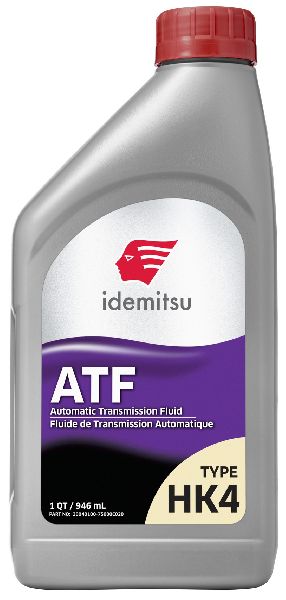
Typical fix: Perform a transmission fluid drain-and-fill or a complete fluid exchange using the correct Hyundai-specified fluid, which is SP-IV.
Est. part cost: $75-$200 for 5-8 quarts of fluid - Internal Transmission Failure 🟡 Medium Probability → Shop Transmission Assembly Hyundai TSB 20-AT-001H directly addresses incorrect ratio codes on this model, often concluding with transmission replacement. This indicates a known weakness. Specific failure points in the A6GF1 transmission include worn or damaged seals on the 3-5-R clutch pack and cracked underdrive pistons, which cause a loss of hydraulic pressure needed to hold the gear.
How to confirm: After ruling out fluid and sensor issues, a technician will perform a transmission pressure test. If pressures for the third gear clutch circuit are low, internal failure is confirmed. Finding significant metal debris in the transmission pan is also a definitive sign.
Typical fix: Replacement of the entire transmission assembly with a new or remanufactured unit is the most common repair according to the TSB.
Est. part cost: $3500-$5800 for a remanufactured transmission assembly. - Faulty Input or Output Speed Sensor ⚪ Low Probability
How to confirm: A technician will use a scan tool to monitor the live data from both the input and output speed sensors. If one sensor shows an erratic, dropping, or nonexistent reading while the vehicle is moving, it is likely faulty. The wiring to the sensors should also be inspected for damage.
Typical fix: Replace the failed speed sensor. These are typically mounted externally on the transmission case, making them relatively accessible.
Est. part cost: $60-$150 per sensor. - Faulty Shift Solenoid ⚪ Low Probability → Shop Transmission Valve Body
How to confirm: A technician can test the resistance of the specific solenoid responsible for the 3rd gear shift. A professional scan tool can also be used to command the solenoid on and off to check its mechanical operation. If a solenoid-specific code (e.g., P0758) is present, this is more likely the cause.
Typical fix: Replace the faulty shift solenoid. This requires removing the transmission oil pan and sometimes the valve body.
Est. part cost: $100-$250
Rare But Worth Checking
- Faulty Transmission Fluid Temperature (TFT) Sensor: → Shop Transmission Assembly A known issue on some Hyundai transmissions (like the A6GF1 in the Elantra) where a faulty TFT sensor, often part of the internal wiring harness, provides incorrect data to the TCM, leading to harsh shifting and incorrect ratio codes. This is less common than other causes but is a documented failure pattern.
- Faulty Transmission Control Module (TCM): → Shop Transmission Assembly This is extremely rare. The TCM should only be considered after all other possibilities, including a full transmission inspection, have been exhausted.
Diagnosis Steps
- Verify the transmission fluid level and condition. This must be done by a shop as the A6GF1 transmission is sealed and requires a specific procedure at operating temperature. Fluid should be full, red, and not smell burnt.
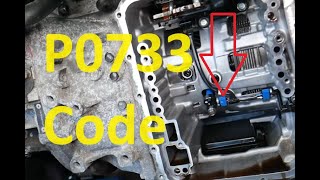
- Use a professional scan tool to check for any other active or pending DTCs. Note if the P0733 code is isolated or appears with other gear ratio 🎬 Watch: Understanding causes and fixes for the P0733 code or solenoid codes.
- Monitor the live data from the transmission input (TSS) and output (VSS) speed sensors while driving. Look for any dropouts, erratic signals, or a clear discrepancy in the ratio when 3rd gear is engaged.
- Check for any available TCM software updates from a Hyundai dealer, as outdated software can sometimes cause shifting issues.
- If fluid and sensors are good, perform a transmission line pressure test. Low pressure in the 3rd gear circuit points directly to an internal hydraulic leak or failing clutch pack.
- If pressures are low or the fluid is full of debris, the transmission has failed internally and needs to be replaced as per the diagnostic path in TSB 20-AT-001H.
Parts You'll Likely Need
- Automatic Transmission Fluid
(OEM #00232-19057)— Low or degraded fluid is a primary cause of shifting problems and is the first thing to check and service. Only the specified fluid should be used.
Trusted brands: Hyundai/Kia Genuine ATF SP-IV
OEM price range: $20-$30 per quart
Aftermarket price range: $15-$25 per quart (Aisin SP-IV) - Automatic Transmission Assembly — A Hyundai TSB suggests that this code on this vehicle often indicates a significant internal failure, making full replacement the most common major repair.
Trusted brands: Hyundai Genuine (Remanufactured)
OEM price range: $3500-$5800+
Aftermarket price range: N/A (Remanufactured units vary) - ABS/Wheel Speed Sensor
(OEM #95671-1R000 (Front Right))— This sensor provides the output speed signal to the TCM. A failure can cause incorrect ratio codes. Note that this is an ABS sensor, but it serves a dual purpose.
Trusted brands: Hyundai Genuine, Standard Motor Products
OEM price range: $80-$120
Aftermarket price range: $40-$70
Related Codes That Often Appear With This One
- P0730 — This is a general 'Incorrect Gear Ratio' code. It often appears alongside a more specific gear code like P0733 when the TCM detects slipping but hasn't isolated it to a single gear yet.
- P0731, P0732, P0734 — These are incorrect ratio codes for other gears. 🎬 Watch: Diagnosing and fixing a P0734 incorrect ratio code If multiple codes are present, it strongly points to a systemic issue like very low fluid, a failing torque converter, or widespread internal wear affecting multiple clutch packs.
- P0700 — This is a generic code sent by the TCM to the main Engine Control Module (ECM) to request that the Check Engine Light be turned on. It simply indicates a transmission-related fault has been stored and will always be present with a specific code like P0733.
Technical Service Bulletins (TSBs) & Recalls
- TSB 20-AT-001H: This TSB provides a procedure to diagnose and potentially replace an automatic transaxle experiencing Incorrect Ratio DTCs (P0731, P0732, P0733, P0734, etc.) on various models, including the 2012-2017 Accent (RB) 1.6L. It is the key document for this issue.
Platform-Specific Known Issues
- TSB 20-AT-001H: This TSB provides a direct diagnostic procedure for incorrect ratio DTCs (like P0733) on the 2012-2017 Accent (RB). If the code is present without any accompanying solenoid codes, the bulletin points towards internal failure and recommends transmission replacement.
- Sealed Transmission: → Shop Transmission Assembly The A6GF1 transmission in this Accent does not have a dipstick, making a simple fluid check impossible for most owners and leading to neglected fluid service.
Mechanic-Grade Diagnostic Values
- Variable Force Solenoid (VFS) Resistance — expected: Approximately 5.1 - 5.3 Ohms. Failure: A reading significantly higher or lower than the expected range, or an open circuit (infinite resistance).
- On/Off Shift Solenoid Resistance — expected: Approximately 10 - 11 Ohms. Failure: A reading outside of this range indicates a faulty solenoid coil.
- P0733 DTC Set Threshold — expected: The ratio of input speed to output speed must match the expected ratio for 3rd gear.. Failure: Code sets if the actual output speed is greater or less than the expected speed by a margin of ~200 RPM for more than 1-2 seconds.
- Transmission Fluid Temperature (TFT) Sensor Enable Condition — expected: Greater than -10°C (14°F). Failure: The TCM will not run the gear ratio diagnostic if the fluid temperature is too low. A faulty sensor reading outside the normal range can prevent the test from running or cause incorrect pressure calculations.
Scan Tool Commands That Help
- Hyundai GDS (Global Diagnostic System): Resetting Adaptive Values — After replacing the transmission, valve body, or solenoids, the adaptive learning values stored in the TCM must be reset. This forces the TCM to relearn the clutch application points and shift timing with the new components. Failure to do this can result in harsh shifting even after a successful mechanical repair.
- Hyundai GDS (Global Diagnostic System): Actuation Test — To individually command specific shift solenoids on and off while monitoring line pressure. This can help isolate a specific solenoid that is mechanically stuck or has an electrical fault without having to remove the valve body first.
- Hyundai GDS (Global Diagnostic System): Flight Record — For intermittent issues, the Flight Record function can capture transmission data during the specific event that triggers the fault. This is useful for diagnosing issues that don't happen consistently in the shop, as it can retrieve historical data even if no active codes are present.
Wiring & Ground Locations
- Primary Engine/Transmission Ground — The main battery ground cable attaches directly to a stud on the transmission case, near the top.. A poor ground at this location can cause a host of electrical issues, including erratic sensor readings and improper solenoid function. The TCM and its sensors rely on a stable ground reference. While not a primary cause of P0733, it should be checked and cleaned during diagnosis to rule out electrical interference.
- Transmission Pass-Through Connector — Located on the top or side of the transmission case, where the external vehicle harness connects to the internal transmission harness.. This is the main junction for all sensor and solenoid signals going to and from the TCM. Corrosion or damage to the pins in this connector can interrupt signals from the speed sensors or power to the solenoids, directly causing ratio codes.
- PCM/TCM Location — The Powertrain Control Module (which incorporates the TCM) is located in the engine compartment, typically on the driver's side near the firewall or strut tower.. All wiring from the transmission sensors and solenoids terminates here. A visual inspection of the connectors for damage or corrosion is a necessary step if wiring issues are suspected.
OEM Part Supersession History
46386-3B000, 46386-3B010→46386-3B900— The original internal transmission wiring harnesses were prone to failure, particularly the integrated Transmission Fluid Temperature (TFT) sensor. The updated part is designed for better durability.
Heads up: These parts are for the A6GF1 family but should be verified against the specific vehicle's VIN. Using an old-stock harness could lead to a repeat failure.
Model Year Variations Within This Range
- 2012-2017: While the A6GF1 transmission was used throughout this period, there were no major mechanical changes that would alter the diagnosis of a P0733 code. A new 'Value Edition' trim was added in 2017, but this did not affect the powertrain. The most significant variations are internal, such as updates to the internal wiring harness and potential software updates from the dealer.
Diagnostic Flowchart
Other Known Issues on This Vehicle
Issues unrelated to this code that are worth knowing about as an owner of this generation:
- ABS Module Fire Risk 🔴 High — Widespread enough to trigger a major safety recall (NHTSA ID: 23V-651). Affects many 2012-2015 models. (Ref: Recall 251 (NHTSA ID: 23V-651000))
- Engine Wiring Harness Chafing 🟠 Medium — A known issue where the harness can rub against a bracket, causing shorts, blown ignition fuses, or misfires. Often occurs between 30k-60k miles.
- Ignition Coil and Spark Plug Failure 🟡 Low — Frequently reported cause for rough idling, misfires, and hesitation. Can occur as early as 30,000-60,000 miles.
- Failing Canister Purge Valve 🟡 Low — A common failure part that can lead to rough running conditions, stalling after refueling, and EVAP system codes.
- Column-Mounted Motor Driven Power Steering (MDPS) Noises/Failures 🟠 Medium — The flexible coupling can wear out causing a clicking noise, or the motor/ECU can fail, leading to a loss of power steering. (Ref: TSB 20-ST-001H-2)
Used vs. New Parts: Buying Guide for This Vehicle
When a used part is the smart pick: A used transmission assembly from a low-mileage donor vehicle can be a cost-effective alternative to a new or remanufactured unit, which can be prohibitively expensive. This is only recommended if the donor vehicle's history is known and it comes with a warranty from the salvage yard.
Donor-vehicle mileage cap: roughly under 60000 miles for the part to have meaningful remaining life.
What to inspect on the donor part:
- Verify the exact transmission model (A6GF1) and part number. The A6MF1 looks similar but has different mounting points and may not be compatible without modification.
- Check the fluid from the donor transmission if possible. It should be reddish and not smell burnt. Dark, burnt-smelling fluid indicates internal wear or overheating.
- Ask for the VIN of the donor vehicle to check for a history of accidents or reported transmission problems.
- Inspect the case for cracks or damage, especially around mounting points and the front pump area.
OEM-only on this vehicle (don't cheap out):
- Transmission Assembly: While used is an option, remanufactured units from Hyundai are the most reliable, albeit expensive, choice. Avoid generic rebuilds unless from a highly reputable transmission specialist.
- Internal Wiring Harness/TFT Sensor: Given the high failure rate of the original part, only use the updated OEM part number (46386-3B900) or a quality aftermarket equivalent that specifically addresses the original flaw.
Aftermarket brands forum-validated for this vehicle:
- Valvoline MaxLife Full Synthetic ATF: Frequently cited by owners as a reliable and compatible alternative to the OEM Hyundai SP-IV fluid.
- Aisin SP-IV: Aisin is a major transmission manufacturer and their fluid is considered a high-quality equivalent to the OEM fluid.
Brands owners have reported issues with on this vehicle:
- Avoid using generic 'universal' ATF that does not explicitly state it is compatible with Hyundai/Kia SP-IV specifications. Using the wrong fluid type can cause shift problems and long-term damage.
Real Owner Stories
Aggregated from forums and TSBs cited above. Mileages and costs reflect what owners reported in those sources.
2012 Hyundai Accent 1.6L — 69000 miles
Symptoms: The owner experienced shifting problems that were eventually diagnosed as an internal transmission failure.
What fixed it: Replacement of the transmission assembly.
Source hint: Hyundai Forums (hyundai-forums.com) thread titled '2012 Accent Transmission Failure at 69k miles'
Cross-Manufacturer Reference: Hyundai Santa Fe
Symptoms: An owner reported the vehicle was stuck in only third gear, creating a significant distraction. Diagnostic codes P0121 and P0733 were present, indicating a throttle position sensor issue and a third gear ratio mismatch (NHTSA ODI #10576819).
Related OBD-II Codes
Frequently Asked Questions
Does TSB 20-AT-001H apply to my 2014 Hyundai Accent with a P0733 code?
How can I check the transmission fluid level on my 2012-2017 Accent to see if that's causing the P0733?
What specific transmission fluid should be used for the 1.6L Accent if I'm doing a drain-and-fill?
My Accent is stuck in one gear and won't shift into 3rd; is this 'limp mode'?
Are there any other major recalls I should be aware of while fixing my transmission issues?
Could a faulty speed sensor be the reason for my P0733 code?
Helpful Videos

We Have This Part in Stock





The information in this article is provided for general reference and educational purposes only. Vehicle specifications, procedures, and part compatibility can vary by production date, trim level, and region. Always consult your vehicle's factory service manual and verify part numbers before purchasing or performing repairs. Safety-critical components such as airbags, seat belts, and braking systems should be installed by a qualified professional.
- Hyundai Accent:
- 🧭 Diagnostic Flowchart
- 🎬 Helpful Videos
- 🛍️ Shop This Part
- What's Unique About the 2012-2017 Hyundai Accent
- Symptoms You May Notice
- Most Likely Causes
- Rare But Worth Checking
- Diagnosis Steps
- Parts You'll Likely Need
- Related Codes That Often Appear With This One
- Technical Service Bulletins (TSBs) & Recalls
- Platform-Specific Known Issues
- Mechanic-Grade Diagnostic Values
- Scan Tool Commands That Help
- Wiring & Ground Locations
- OEM Part Supersession History
- Model Year Variations Within This Range
- Other Known Issues on This Vehicle
- Used vs. New Parts: Buying Guide for This Vehicle
- Real Owner Stories
- 2012 Hyundai Accent 1.6L — 69000 miles
- Cross-Manufacturer Reference: Hyundai Santa Fe
- Related OBD-II Codes
- Frequently Asked Questions
- 🎟️ Get 5% Off