

P0740 on 1997-2001 Mitsubishi Galant: Torque Converter Clutch Circuit Malfunction Guide
On a 1997-2001 Galant, code P0740 most often points to a failed Torque Converter Clutch (TCC) solenoid within the F4A42 automatic transmission. If your car stalls at stops or shudders at highway speeds, this is the likely culprit. Expect to pay around $20-$60 for an aftermarket solenoid (OEM Part MD758981), with DIY replacement being moderately difficult as it requires dropping the transmission pan.
- For a 1997-2001 Galant, P0740 is very likely caused by a bad TCC solenoid (Part No. MD758981).
- Key symptoms to watch for are stalling when stopping and shuddering at highway speeds.
- Do not ignore this code. Continued driving can lead to severe transmission overheating and failure.
- When replacing the solenoid, you must also drop the transmission pan, so it's mandatory to change the transmission filter and fluid (Mitsubishi SP-III spec) at the same time.
What's Unique About the 1997-2001 Mitsubishi Galant
The eighth-generation Mitsubishi Galant (1997-2001) uses an F4A42 4-speed automatic transmission (also known as INVECS-II) which is known for reliability issues and premature failure. Unlike some vehicles where P0740 is a vague code, on this specific Galant, it very commonly points directly to a failing TCC solenoid. Owners frequently experience symptoms like stalling when coming to a stop, which is a classic sign of the solenoid being stuck 'on' and keeping the torque converter locked when it should be disengaged.
Symptoms You May Notice
- Check Engine Light is on
- Engine stalling when coming to a stop
- Transmission shuddering or vibrating at highway speeds (over 40 mph)
- Engine RPMs fluctuating up and down at a steady speed
- Noticeable decrease in fuel economy
- Transmission overheating, potentially leading to 'limp mode' or a burning smell
- Harsh or delayed gear changes
- Replacing the entire transmission when only the TCC solenoid is bad.
- Replacing the torque converter when the issue is electrical (solenoid or wiring).
Most Likely Causes
- Defective Torque Converter Clutch (TCC) Solenoid 🔴 High Probability → Shop Automatic Transmission Torque Converter This is a widely reported common failure point on this specific generation of Galant and its F4A42 transmission.
How to confirm: Test the solenoid's resistance with a multimeter. The value should be within the manufacturer's specified range of 2.7 - 3.4 Ohms at 20°C (68°F). An out-of-spec reading (open or shorted) confirms failure. You can also test for an audible click by applying 12v power, though this doesn't guarantee it works under load.
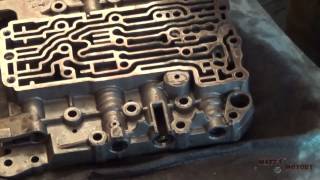
Typical fix: Replace the TCC solenoid. This is located inside the transmission on the valve body, accessible after removing the transmission pan. 🎬 Watch: F4A42 valve body and solenoid rebuild guide
Est. part cost: $20-$60 - Low or Dirty Transmission Fluid 🟡 Medium Probability → Shop Transmission Assembly
How to confirm: Check the transmission fluid dipstick for level and condition. The fluid should be bright red (for Mitsubishi Diamond SP-III spec) and not smell burnt. Dark, brown, or black fluid indicates a problem and may contain clutch material.
Typical fix: Perform a transmission fluid and filter change using the correct fluid type (Mitsubishi ATF SP-III or equivalent). If the fluid is very dark or contains metal shavings, it may indicate a more severe internal problem beyond the solenoid.
Est. part cost: $40-$100 - Damaged Wiring or Connectors ⚪ Low Probability
How to confirm: Visually inspect the external wiring harness going to the transmission for any breaks, corrosion, or loose pins at the main connector. Use a multimeter to check for continuity and for shorts to ground from the TCM connector to the transmission connector.
Typical fix: Repair or replace the damaged section of the wiring harness or clean/replace the connector.
Est. part cost: $10-$50
Rare But Worth Checking
- Internal Torque Converter Failure: → Shop Automatic Transmission Torque Converter While the code points to the control circuit, a mechanical failure inside the torque converter itself (e.g., a worn-out clutch) can sometimes trigger it, especially if accompanied by codes like P0741. This is often confirmed by significant metal debris in the transmission pan.
- Faulty Transmission Control Module (TCM): → Shop Transmission Assembly This is rare. The TCM should only be suspected after all other possibilities (solenoid, wiring, fluid) have been thoroughly ruled out with electrical testing.
Diagnosis Steps
- Check and verify the code with an OBD-II scanner. Note any other stored codes.
- Check the transmission fluid level and condition. If low, top it off. If dark, burnt, or gritty, a fluid/filter change is needed, but be aware this may be a symptom of a larger failure.
- Inspect the transmission wiring harness and connectors for any visible damage, corrosion, or loose connections.
- If possible, use an advanced scan tool to command the TCC solenoid on and off to see if it responds and to monitor TCC slip RPM.
- If the above steps don't reveal the issue, drop the transmission pan to access the solenoids.
- Disconnect the TCC solenoid and test its resistance with a multimeter. Compare the reading to the factory specification of 2.7 - 3.4 Ohms. An out-of-spec reading (e.g., infinite for an open circuit) indicates a bad solenoid.
- Check the internal wiring from the main transmission connector to the solenoid for continuity.
- If the solenoid and wiring test good, the problem may be a clogged valve body, a failing torque converter, or, rarely, the TCM itself.
Parts You'll Likely Need
- Torque Converter Clutch (TCC) Solenoid
(OEM #MD758981 (supersedes: MD757765, MR486941))— This is the most frequent point of failure for the P0740 code on this specific vehicle.
Trusted brands: Standard Ignition, Rostra, Genuine Mitsubishi
OEM price range: $60-$120
Aftermarket price range: $20-$60 - Automatic Transmission Filter Kit — The transmission pan must be removed to access the solenoid, so replacing the filter and gasket at the same time is standard and highly recommended practice.
Trusted brands: Wix, ATP, Raybestos
OEM price range: $30-$50
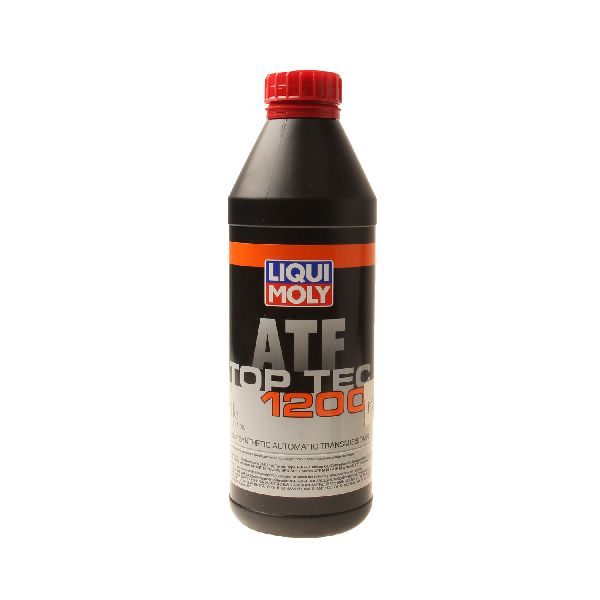
Aftermarket price range: $15-$30 - Mitsubishi Diamond SP-III ATF — Using the correct specification fluid is critical for the health and performance of this transmission. You will need several quarts to refill after dropping the pan.
Trusted brands: Genuine Mitsubishi, Idemitsu, ENEOS
OEM price range: $15-$25 per quart
Aftermarket price range: $8-$15 per quart
Related Codes That Often Appear With This One
- P0741 — P0741 indicates 'Torque Converter Clutch Performance or Stuck Off'. It's a performance code rather than a circuit code, but they are often related and can appear together if the solenoid is failing intermittently or if there's an internal hydraulic/mechanical issue.
Platform-Specific Known Issues
- The F4A42 automatic transmission in this generation of Galant is known for general reliability problems and premature failure, often before 120,000 miles.
Mechanic-Grade Diagnostic Values
- Torque Converter Clutch (Damper Clutch) Solenoid Resistance — expected: 2.7 - 3.4 Ω (at 20°C / 68°F). Failure: A reading of infinite resistance (open circuit) or near zero resistance (short circuit).
- Continuity Check for TCC Solenoid Circuit — expected: Continuity should exist between the TCM harness connector and the transmission-side harness connector for the TCC solenoid.. Failure: No continuity indicates a break in the wiring harness.
Scan Tool Commands That Help
- Mitsubishi MUT-II / MUT-III or equivalent professional scanner: TCC Solenoid Duty Cycle Live Data — Use this to monitor the command signal being sent from the TCM to the solenoid while driving. This helps determine if the TCM is commanding lock-up correctly. A 0% duty cycle means it's off; a high percentage (e.g., 90-100%) means it's commanded on. If the command is sent but symptoms persist, it points to a hydraulic or mechanical issue.
- Mitsubishi MUT-II / MUT-III or equivalent professional scanner: TCC Slip Speed Live Data — This PID shows the difference in RPM between the engine and the transmission input shaft. When the TCC is commanded to lock, this value should drop to near zero. If it remains high, it confirms the clutch is slipping, which could be due to a bad solenoid, low hydraulic pressure, or a worn torque converter.
Wiring & Ground Locations
- TCC Solenoid Circuit at Transmission Connector — The main electrical connector on the outside of the F4A42 transmission case.. The TCC solenoid (also called Damper Clutch Solenoid) signal is carried through terminals 7 and 10 of this connector. Testing for resistance across these two pins on the transmission side should yield the specified 2.7-3.4 Ohms. Testing for voltage on the harness side can verify if the TCM is sending a signal.
- Transmission Control Module (TCM) — On the 1997-2001 Galant, the TCM is typically located in the center console, below the radio/climate control unit.. This is the source of the command signal for the TCC solenoid. If the solenoid and wiring test good, the fault may lie within the TCM itself, although this is rare. Checking for a proper signal at the TCM's output pins is the final step in electrical diagnosis.
Real Owner Repair Stories
- Mitsubishi-Forums.com user (2000 Mitsubishi Galant ES V6) — Car would die when coming to a stop after it warmed up. Check engine light was on with code P0740.
❌ Tried (didn't work) Initially thought it might be a more severe transmission failure.
✅ What actually fixed it The user dropped the transmission pan, replaced all five solenoids (including the TCC solenoid), the transmission filter, and refilled with SP-III fluid. This completely resolved the stalling issue and the P0740 code.
OEM Part Supersession History
MD757765, MR486941→MD758981— Standard part evolution and consolidation by the manufacturer.
Heads up: MD758981 is the correct and final service part for this application and is backward compatible with the older numbers.
Model Year Variations Within This Range
- 1996-2013 (F4A42 lifespan): The F4A42 transmission had several valve body variations over its production life, with either 5 or 6 solenoids. While the TCC solenoid is a distinct part, it's important to verify the specific valve body configuration if replacing a full solenoid pack, as not all solenoids are identical across all versions.
Diagnostic Flowchart
Other Known Issues on This Vehicle
Issues unrelated to this code that are worth knowing about as an owner of this generation:
- Crankshaft Position Sensor Failure 🔴 High — A very common failure point, often occurring after 60,000-100,000 miles. Can cause sudden stalling while driving, creating a significant safety risk.
- Premature Automatic Transmission Failure 🔴 High → Shop Transmission Assembly — Beyond just the P0740 issue, the F4A42 (INVECS-II) transmission is widely reported to fail prematurely, often between 80,000 and 120,000 miles. Symptoms include harsh shifting, slipping gears, and complete loss of drive.
- Peeling Clear Coat Paint 🟡 Low — Particularly common on black and other dark-colored vehicles. The clear coat begins to fail, leading to a hazy appearance, white spots, and eventually peeling, which can lead to rust if not addressed. (Ref: No recall was issued for this cosmetic problem.)
- Front Suspension Wear (Ball Joints) 🟠 Medium — Owners report accelerated wear on front suspension components like ball joints, leading to clunking noises over bumps and imprecise steering feel.
- Throttle Body Clogging (GDI Engines) 🟠 Medium — On models equipped with Gasoline Direct Injection (GDI), carbon buildup can clog the throttle body, causing rough idle, hesitation, and lack of power.
Used vs. New Parts: Buying Guide for This Vehicle
When a used part is the smart pick: For this repair, a used TCC solenoid from a junkyard is a high-risk, low-reward option. Given that new aftermarket solenoids are inexpensive (often under $40), the labor involved in dropping the transmission pan makes it unwise to install a used part with an unknown history. A used part only makes sense if it's part of a complete, low-mileage, tested transmission assembly being swapped in.
Donor-vehicle mileage cap: roughly under 80000 miles for the part to have meaningful remaining life.
What to inspect on the donor part:
- Verify the donor vehicle's mileage is under 80,000 miles, as these transmissions have known reliability issues.
- Ask for a vehicle history report if possible to check for prior accidents or flood damage.
- When pulling the part yourself, check the donor car's transmission fluid. If it's dark, burnt, or has metal shavings, avoid all parts from that transmission.
- Test the resistance of the used solenoid with a multimeter before purchase; it must be within the 2.7-3.4 Ohm spec.
OEM-only on this vehicle (don't cheap out):
- Transmission Fluid (Mitsubishi Diamond SP-III or a fully compatible equivalent is mandatory)
Aftermarket brands forum-validated for this vehicle:
- Standard Motor Products (Standard Ignition)
- Rostra
- Sonnax (for valve body repair kits)
Brands owners have reported issues with on this vehicle:
- No-name, unbranded solenoid kits from online marketplaces are a gamble. Stick to reputable brands, as the labor to replace a failed part is significant.
Real Owner Stories
Aggregated from forums and TSBs cited above. Mileages and costs reflect what owners reported in those sources.
2002 Mitsubishi Galant
Symptoms: Owners discussing the car's value relative to repair costs on an aging platform.
What fixed it: Evaluating repair costs against the vehicle's market value.
Source hint: Car Talk Community - 'Black 2002 Galant paint problems'
1997-2001 Mitsubishi Galant (F4A42 Transmission) — ~100000 miles
Symptoms: Harsh shifting, slipping gears, and complete loss of drive.
What fixed it: Replacement of the transmission due to premature internal failure.
Source hint: known_issues - Premature Automatic Transmission Failure
Related OBD-II Codes
Frequently Asked Questions
What specific transmission fluid should I use for my 1997-2001 Galant to avoid P0740 issues?
Is the P0740 code common for this generation of Galant?
Where is the TCC solenoid located on the Galant's F4A42 transmission?
What resistance should I look for when testing the TCC solenoid on my Galant?
Can I use a used TCC solenoid from a junkyard to fix my P0740 code?
Are there any other Mitsubishi models that have this same transmission problem?
Helpful Videos

We Have This Part in Stock


The information in this article is provided for general reference and educational purposes only. Vehicle specifications, procedures, and part compatibility can vary by production date, trim level, and region. Always consult your vehicle's factory service manual and verify part numbers before purchasing or performing repairs. Safety-critical components such as airbags, seat belts, and braking systems should be installed by a qualified professional.
- Mitsubishi Galant:
- 🧭 Diagnostic Flowchart
- 🎬 Helpful Videos
- 🛍️ Shop This Part
- What's Unique About the 1997-2001 Mitsubishi Galant
- Symptoms You May Notice
- Most Likely Causes
- Rare But Worth Checking
- Diagnosis Steps
- Parts You'll Likely Need
- Related Codes That Often Appear With This One
- Platform-Specific Known Issues
- Mechanic-Grade Diagnostic Values
- Scan Tool Commands That Help
- Wiring & Ground Locations
- Real Owner Repair Stories
- OEM Part Supersession History
- Model Year Variations Within This Range
- Other Known Issues on This Vehicle
- Used vs. New Parts: Buying Guide for This Vehicle
- Real Owner Stories
- 2002 Mitsubishi Galant
- 1997-2001 Mitsubishi Galant (F4A42 Transmission) — ~100000 miles
- Related OBD-II Codes
- Frequently Asked Questions
- 🎟️ Get 5% Off