

P0741 on 1997-2005 Cadillac DeVille: TCC Solenoid and Internal Seal Failure Guide
On a 1997-2005 Cadillac DeVille, P0741 almost always points to an internal transmission problem, not just a simple solenoid swap. The most common cause is worn internal seals causing a loss of hydraulic pressure, which then damages the Torque Converter Clutch (TCC) solenoid and the torque converter itself. This is a complex, expensive repair requiring transmission removal.
- P0741 on a 1997-2005 DeVille is a serious code indicating a probable internal transmission failure.
- The most common cause is worn internal seals, which leads to the failure of the torque converter and TCC solenoid.
- Do not simply replace the TCC solenoid; this is a temporary fix at best and will not solve the underlying hydraulic leak.
- The correct repair is a major service that involves removing the transmission to replace the torque converter, internal seals, and TCC solenoid.
- This is not a DIY-friendly repair and should be handled by a professional transmission shop.
What's Unique About the 1997-2005 Cadillac DeVille
On the 4.6L Northstar V8 paired with the 4T80-E transmission, P0741 is a notoriously common and serious issue. Unlike many other vehicles where a P0741 might just be a faulty solenoid, on these Cadillacs it's typically a symptom of a deeper mechanical failure. The root cause is often the failure of internal hydraulic seals within the transmission, specifically the TCC channel plate seals and drive sprocket support seals. Age and heat cause these seals to harden and lose their ability to contain the hydraulic pressure needed to apply the torque converter clutch. This pressure loss overworks and burns out the TCC solenoid and can destroy the torque converter itself. Simply replacing the solenoid without addressing the underlying seal failure is, at best, a temporary fix that will almost certainly result in the code returning.
Generation note: This guide covers the eighth (1997-1999) and ninth (2000-2005) generations of the Cadillac DeVille. Both generations use the 4T80-E automatic transmission with the Northstar V8, and the causes and fixes for P0741 are largely the same across this entire year range. The issue is a well-documented problem for this specific powertrain combination.
Symptoms You May Notice
- Check Engine Light is on.
- Engine RPMs are higher than normal at highway speeds (failure to lock up).
- Reduced fuel economy.
- A slight shudder or vibration during acceleration or at cruising speeds.
- Transmission may feel like it's slipping or shifting harshly.
- Transmission overheating, which can trigger a warning light.
- Replacing only the TCC solenoid. This is a common mistake. Because accessing the solenoid is so labor-intensive, it's a costly error if the root cause (bad seals) isn't addressed at the same time, as the code will likely return.
- Performing only a fluid change. While a fluid and filter change is good maintenance, it will not fix the internal hydraulic leaks from hardened seals that cause this code on the DeVille.
Most Likely Causes
- Worn Internal Transmission Seals (Channel Plate & Drive Sprocket Support) 🔴 High Probability → Shop Transmission Assembly This is the most widely documented failure point in the 4T80-E transmission. Age and mileage cause the seals that direct hydraulic fluid for the TCC to become hard and brittle, leading to pressure loss. A technical service bulletin (TSB) also points to seal damage as a primary cause.
How to confirm: This is difficult to confirm without disassembly. A transmission specialist can perform a pressure test on the TCC circuit. However, a P0741 code on a high-mileage Northstar DeVille strongly implies this is the root cause. A YouTube video shows the specific location of the channel plate seal that fails.
Typical fix: The transmission must be removed and partially disassembled to replace the channel plate seals, drive sprocket support seals, and any other related worn seals.
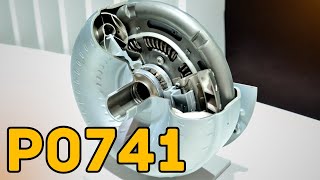
Est. part cost: $50-$150 for a seal kit - Failed Torque Converter 🔴 High Probability → Shop Automatic Transmission Torque Converter The constant slippage caused by low hydraulic pressure (from bad seals) overheats and destroys the clutch material inside the torque converter. Models before 2005 used a viscous clutch design that was prone to leaking its internal silicone fluid, causing slippage which can be seen in a teardown video. Even if the seals are the root cause, the converter is considered a wear item that should be replaced during the repair.
How to confirm: A failed torque converter is confirmed during transmission removal. If the internal seals have failed, the torque converter has been subjected to excessive stress and should be replaced as a rule to prevent a comeback failure.
Typical fix: Replace the torque converter with a remanufactured unit. This is done at the same time as the internal seal repair.
Est. part cost: $200-$400 for a remanufactured unit - Failed Torque Converter Clutch (TCC) Solenoid 🟡 Medium Probability → Shop Automatic Transmission Torque Converter The TCC solenoid is often a victim of the main problem. The PCM increases the electrical current to the solenoid to compensate for the hydraulic leak, which eventually burns out the solenoid. It can also fail on its own due to age or contamination from degraded fluid. However, replacing it alone is rarely the complete fix for this car.
How to confirm: A technician can command the solenoid on and off with a high-level scan tool (like a GM Tech2) and check for an electrical response with an amp clamp or scope. Even if the solenoid tests bad, it's likely a symptom of the larger seal failure. A resistance check should show around 10-15 ohms.
Typical fix: Replace the TCC solenoid (GM Part No. 24227792). This part is located behind the side cover of the transmission, making it a very labor-intensive job that requires lowering the engine/transmission cradle.
Est. part cost: $40-$100 - Low or Degraded Transmission Fluid ⚪ Low Probability → Shop Transmission Assembly While low or burnt fluid can cause a host of transmission issues, it's rarely the primary cause of a P0741 on this platform. It's more often a contributing factor or a result of overheating caused by the TCC slippage.
How to confirm: Check the transmission fluid level and condition via the dipstick. The fluid should be at the correct level, red in color, and not smell burnt.
Typical fix: Perform a transmission fluid and filter change. Some owners report temporary success with a complete fluid flush using a high-detergent fluid or adding a seal conditioner, which may free a sticking valve or slightly soften seals, but this is not a guaranteed or permanent fix for hardened, failed seals.
Est. part cost: $100-$200 for fluid and filter
Rare But Worth Checking
- Worn Valve Body: → Shop Transmission Valve Body Debris from a failing torque converter or old fluid can score the bores in the valve body, causing valves to stick. This typically requires valve body replacement or refurbishment by a specialist.
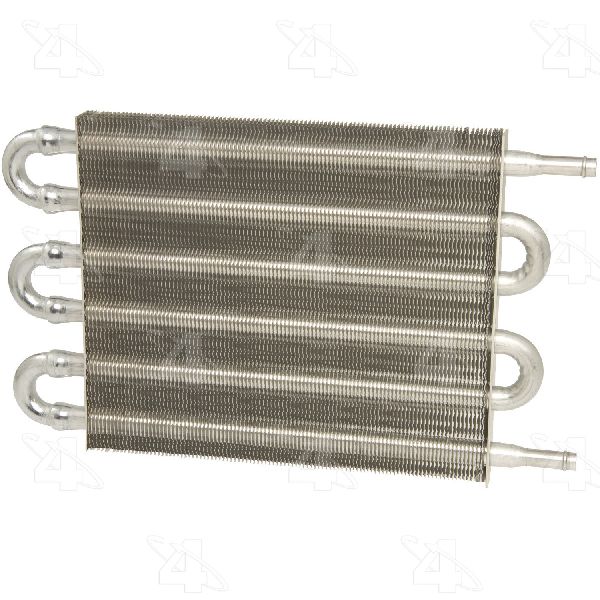
- Clogged Transmission Cooler or Lines: → Shop Transmission Assembly If the torque converter has started to come apart, debris can clog the transmission cooler and lines, which will cause a replacement transmission or converter to fail quickly if not flushed or replaced.
- Worn Drive Sprocket Support Bushing: ATRA documentation indicates that a worn drive sprocket support bushing can contribute to the hydraulic leak that causes P0741. This is inspected and replaced during the main seal replacement job.
Diagnosis Steps
- Verify the code with an OBD-II scanner.
- Check the transmission fluid level and condition. If it is very low, dark, or smells burnt, it indicates a significant problem.
- Using an advanced scan tool (like a GM Tech2), monitor the TCC slip speed while driving at a steady highway speed. If the PCM commands TCC lockup but the slip speed remains high (over 200 RPM), it confirms the clutch is not applying.
- A professional technician can test the TCC solenoid circuit electrically to rule out a wiring or PCM driver issue. This can be done by commanding the solenoid on and measuring the amperage draw with a scope.
- Given the high probability of internal failure on this specific vehicle, the next step is typically to recommend transmission removal for inspection and repair of seals, the TCC solenoid, and the torque converter. A GM TSB confirms that internal seal damage is a known cause.
Parts You'll Likely Need
- Torque Converter — The original torque converter is almost always damaged from excessive heat and slippage caused by the hydraulic leak. It must be replaced to ensure a lasting repair.
Trusted brands: ACDelco (Remanufactured), Transtar
OEM price range: $300-$500
Aftermarket price range: $200-$400 - Transmission Seal Kit (Channel Plate) — This contains the critical seals that fail and cause the pressure loss leading to the P0741 code.
Trusted brands: ACDelco, TransTec
OEM price range: $75-$150
Aftermarket price range: $50-$100 - Torque Converter Clutch (TCC) Solenoid
(OEM #24227792)— Often replaced as a preventative measure during the repair, as it is a known failure point and is inaccessible without major labor.
Trusted brands: ACDelco
OEM price range: $40-$80
Aftermarket price range: $30-$60
Related Codes That Often Appear With This One
- P1860 — P1860 is a code specifically for a fault in the TCC PWM Solenoid electrical circuit. If you have both P0741 and P1860, it points more strongly toward an electrical failure of the solenoid itself or its wiring, though the underlying cause may still be mechanical.
Technical Service Bulletins (TSBs) & Recalls
- TSB 00-07-30-002: Addresses TCC shudder and slip, often related to fluid contamination or valve body issues.
- TSB 03-07-30-034: Specifically mentions seal leakage as a cause for P0741 and lists required parts for correction.
- A TSB mentioned in a diagnostic video confirms that a torn internal seal can cause excessive TCC slip and advises against replacing the entire transaxle for this specific repair.
Platform-Specific Known Issues
- A GM Technical Service Bulletin (TSB) exists for this issue, noting that the cause is often a damaged seal in the channel plate allowing TCC apply fluid to leak. The bulletin advises repairing the transmission rather than replacing the entire unit.
Mechanic-Grade Diagnostic Values
- TCC PWM Solenoid Resistance — expected: 10-15 ohms @ 20°C (68°F), 11-25 ohms @ 80°C (176°F). Failure: A reading outside of this range indicates a faulty solenoid coil.
- TCC Slip Speed Threshold (when P0741 sets) — expected: Slip should be near zero when TCC is commanded ON. Code sets if slip is excessive for >5 seconds.. Failure: Slip > 80 RPM at 48 lb-ft torque, or > 280 RPM at 239 lb-ft torque.
Scan Tool Commands That Help
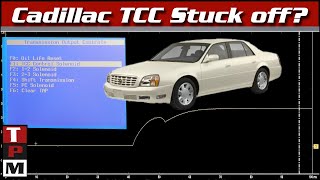
- GM Tech2 (or equivalent): Special Functions -> Transmission Output Controls -> TCC Control Solenoid — Use this bidirectional control to command the TCC solenoid on and off with the engine running and in gear (with brakes applied). A distinct click should be heard from the transmission case. The absence of a click points to a failed solenoid or wiring issue. If it clicks but the code persists and slip is high, the problem is hydraulic or mechanical (seals, converter).
Wiring & Ground Locations
- Transmission Case Connector Pins U & T — On the main electrical connector going into the 4T80-E transmission case.. These are the specific pins for the TCC PWM Solenoid. A technician can perform resistance checks of the solenoid directly from this connector without opening the transmission, helping to isolate an electrical fault from an internal mechanical/hydraulic issue.
Real Owner Repair Stories
- YouTube Channel 'hitec auto' (2003 Cadillac DeVille with 4.6L Northstar) — P0741 - Torque Converter Clutch Stuck Off.
❌ Tried (didn't work) The video focuses on direct diagnosis, showing that simply replacing the solenoid would be incorrect.
✅ What actually fixed it The root cause was a failed viscous torque converter. The internal silicone fluid had leaked out, preventing the clutch from locking up. The fix required removing the transmission, replacing the faulty viscous converter with a modern solid clutch-style remanufactured unit, and crucially, also replacing the hardened channel plate seal and front pump O-ring to ensure proper hydraulic pressure for the new converter. - YouTube Channel 'Advanced Level Diagnostics' (2002 Cadillac DeVille) — P0741 TCC Stuck Off, along with ABS and other warning lights.
❌ Tried (didn't work) N/A - This was a diagnostic video.
✅ What actually fixed it Using a Tech2, the technician commanded the TCC solenoid and confirmed it was clicking, ruling out a simple electrical failure. An oscilloscope confirmed the circuit was good. The diagnosis concluded with finding a GM Technical Service Bulletin (TSB) that identified the cause as internal seal damage allowing TCC apply fluid to leak. The final recommendation was that the transmission required internal repairs at a specialty shop, confirming the mechanical/hydraulic nature of the fault. - NHTSA ODI #10257277 — An owner reported that their service engine light came on and a computer diagnostic performed two days later revealed transmission code P0741, indicating the torque converter was stuck off.
OEM Part Supersession History
24212690→24227792— Standard part revision/update by GM.
Model Year Variations Within This Range
- 1997-2004: These models primarily used a viscous torque converter clutch (VCC). This design is known to fail by leaking its internal silicone fluid, leading directly to a P0741 code.
- 2005: For the final model year, the 4T80-E was updated to use a more conventional Electronically Controlled Converter Clutch (ECCC) instead of the VCC. While still susceptible to P0741 from seal failure, the specific failure mode of a leaking viscous clutch is not present on these models.
Diagnostic Flowchart
Other Known Issues on This Vehicle
Issues unrelated to this code that are worth knowing about as an owner of this generation:
- Northstar Head Gasket Failure (Pulled Head Bolts) 🔴 High — Very common on 1997-1999 models, less so but still present on 2000-2003 models. GM updated the head bolt design in 2004/2005. Failure can occur between 50,000 and 100,000 miles.
- Engine Oil Leaks (Lower Crankcase/Case-Half Seal) 🟠 Medium — Extremely common across all years. The lower crankcase seal is a major leak point that requires an engine-out service to properly re-seal.
- ABS/Traction Control Module Failure 🟠 Medium — Common failure item causing ABS, Brake, and Traction Control lights to illuminate. The issue is often a failed solder joint on the module's internal circuit board. (Ref: Commonly associated with DTC C1214.)
- Power Window Regulator Failure 🟡 Low — Very common. A plastic component in the regulator assembly breaks, causing the window to become inoperable or fall into the door. Multiple regulators may fail over the life of the vehicle.
- HVAC Blend Door Actuator Failure 🟡 Low — Common failure leading to inability to control cabin temperature or air direction (e.g., stuck on hot, or only blows from defrost).
- Crankshaft Position Sensor Failure 🟠 Medium — A known issue that can cause intermittent stalling, no-start conditions, and rough running.
Used vs. New Parts: Buying Guide for This Vehicle
When a used part is the smart pick: For this specific P0741 repair on a 1997-2005 DeVille, sourcing used parts is strongly discouraged. A used transmission from a donor vehicle will almost certainly have the same age-hardened internal seals that are the root cause of the problem, leading to a repeat failure. A used torque converter is also a significant gamble.
What to inspect on the donor part:
- Not applicable, as used transmission/converter is not recommended for this repair.
OEM-only on this vehicle (don't cheap out):
- While not strictly 'OEM-only', using a high-quality remanufactured torque converter and a reputable seal kit is critical. Avoid unbranded, cheap parts.
Aftermarket brands forum-validated for this vehicle:
- TransTec (Seal Kits)
- ACDelco (Remanufactured Torque Converter, Solenoid)
- Transtar (Remanufactured Torque Converter)
Brands owners have reported issues with on this vehicle:
- Unbranded or 'white box' torque converters and solenoids from online marketplaces are extremely high-risk and likely to fail prematurely.
Real Owner Stories
Aggregated from forums and TSBs cited above. Mileages and costs reflect what owners reported in those sources.
1998 Cadillac DeVille 4.6L Northstar V8
Symptoms: The owner identified a P0741 code and linked it to a specific internal seal failure.
What fixed it: Replacing the outer case cover to drive sprocket metal clad seal and the worn drive sprocket support.
Source hint: CadillacForums.com - 'p0741 code'
2004 Cadillac DeVille 4.6L Northstar V8
Symptoms: The code appeared alone, indicating the torque converter was slipping.
What fixed it: Transmission removal for internal seal replacement and a new torque converter.
Cost: $1200-$1200
Source hint: CaddyInfo.com - 'P0741 code only, 04 Deville'
1995-2003 Oldsmobile Aurora 4.0L V8 — ~15000 miles
Symptoms: The owner reported driving with the P0741 code active for a significant distance.
What fixed it: The discussion focused on longevity with the code rather than an immediate repair, noting the shared 4T80-E architecture with the DeVille.
Source hint: Aurora Club of North America (ACNA) Forum - 'P0741 - How long will transmission last?'
Related OBD-II Codes
Frequently Asked Questions
Does TSB 03-07-30-034 apply to my Cadillac DeVille's P0741 code?
Can I just replace the TCC solenoid (GM Part No. 24227792) to fix the P0741?
Is it true that I have to remove the entire engine or transmission cradle to fix a solenoid?
Will a fluid flush fix the P0741 code on my high-mileage Northstar DeVille?
Does TSB 00-07-30-002 cover the shuddering I feel at highway speeds?
If I have to pull the transmission for seals, should I replace the torque converter too?
Helpful Videos

We Have This Part in Stock

The information in this article is provided for general reference and educational purposes only. Vehicle specifications, procedures, and part compatibility can vary by production date, trim level, and region. Always consult your vehicle's factory service manual and verify part numbers before purchasing or performing repairs. Safety-critical components such as airbags, seat belts, and braking systems should be installed by a qualified professional.
- Cadillac DeVille:
- 🧭 Diagnostic Flowchart
- 🎬 Helpful Videos
- 🛍️ Shop This Part
- What's Unique About the 1997-2005 Cadillac DeVille
- Symptoms You May Notice
- Most Likely Causes
- Rare But Worth Checking
- Diagnosis Steps
- Parts You'll Likely Need
- Related Codes That Often Appear With This One
- Technical Service Bulletins (TSBs) & Recalls
- Platform-Specific Known Issues
- Mechanic-Grade Diagnostic Values
- Scan Tool Commands That Help
- Wiring & Ground Locations
- Real Owner Repair Stories
- OEM Part Supersession History
- Model Year Variations Within This Range
- Other Known Issues on This Vehicle
- Used vs. New Parts: Buying Guide for This Vehicle
- Real Owner Stories
- 1998 Cadillac DeVille 4.6L Northstar V8
- 2004 Cadillac DeVille 4.6L Northstar V8
- 1995-2003 Oldsmobile Aurora 4.0L V8 — ~15000 miles
- Related OBD-II Codes
- Frequently Asked Questions
- 🎟️ Get 5% Off