

P0744 on 2020-2021 Nissan Versa: Torque Converter Clutch Circuit Intermittent Explained
On a 2020-2021 Nissan Versa, code P0744 almost always indicates a serious internal problem with the Jatco CVT7 WR (JF020E) transmission, often requiring the replacement of the valve body or the entire transmission unit. This is a known issue documented by Nissan in service bulletins and is not a simple or cheap fix.
- P0744 on a 2020-2021 Versa is a serious code that points to a significant, known issue with the CVT transmission.
- The most common fix is not simple; it usually involves replacing the CVT valve body or the entire transmission.
- This is not a DIY-friendly repair. Professional diagnosis is essential to avoid unnecessary, expensive part replacements.
- Do not ignore this code. Driving with an active P0744 can lead to a complete transmission failure and a potential breakdown.
- Always ensure genuine Nissan NS-3 fluid is used for any transmission service on this vehicle.
What's Unique About the 2020-2021 Nissan VERSA
The 2020-2021 Nissan Versa uses a Jatco CVT7 Wide Range (model JF020E, also known as RE0F11B), which is known to have specific failure points. Unlike many other vehicles where a P0744 code might point to a simple wiring issue or an inexpensive solenoid, on this platform, it is frequently a symptom of a larger internal problem. Nissan has issued Technical Service Bulletins (TSBs) that group P0744 with other codes, indicating a known pattern of failure often linked to the CVT's control valve body or internal belt/pulley damage. The diagnostic procedure outlined by Nissan for this code often leads directly to replacing one of these two major components.
Diagnostic Flowchart
Tap your situation to follow the diagnostic path that matches what you're seeing on this vehicle.
Symptoms You May Notice
- Check Engine Light is on
- Hesitation or shuddering, especially during acceleration. 🎬 Watch: Why your Nissan CVT is shaking and how to fix it.
- Reduced engine power or vehicle entering 'limp mode', particularly after extended highway driving. The issue may temporarily resolve after shutting down and restarting the car.
- Harsh or erratic shifting.
- Engine RPMs fluctuate or surge at steady speeds, without input from the gas pedal.
- Poor fuel economy.
- Engine may stall when coming to a stop.
- Transmission overheating warning light may illuminate.
- Replacing only the external transmission wiring harness without checking internal components.
- Replacing the torque converter when the actual fault lies within the valve body's solenoid circuit or the CVT belt/pulleys.
- Replacing an individual TCC solenoid, as the issue is almost always the entire valve body assembly or worse.
Most Likely Causes
- Defective CVT Control Valve (Valve Body) 🔴 High Probability As documented in Nissan TSB NTB19-040c, a faulty valve body is the prescribed repair for P0744 if an internal inspection reveals no damage to the CVT belt. The valve body's solenoid bores can wear or become clogged with debris, preventing proper hydraulic control.
How to confirm: A technician follows the TSB diagnostic flow: after confirming codes, they will drop the transmission pan and inspect the CVT belt. If the belt is undamaged, the valve body is condemned as the cause.
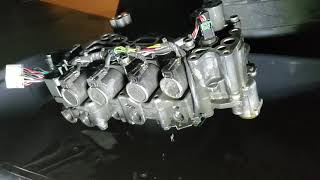
Typical fix: Replacement of the CVT valve body assembly and reprogramming the TCM. 🎬 See this walkthrough on replacing a Nissan CVT valve body.
Est. part cost: $800-$1500 - Internal CVT Assembly Failure 🟡 Medium Probability Excessive wear of the CVT belt and pulleys can generate metal shavings that contaminate the fluid and clog the valve body and solenoids. TSB NTB19-040c specifies that if there is any evidence of belt slippage or damage, the entire transmission must be replaced.
How to confirm: During the diagnostic procedure outlined in TSB NTB19-040c, a technician will visually inspect the CVT belt for damage after removing the valve body. Finding significant metallic debris in the fluid pan is also a strong indicator of major internal failure.
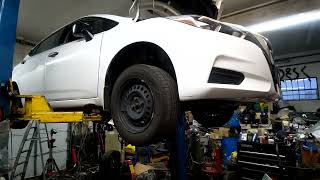
Typical fix: Complete replacement of the CVT transmission assembly. 🎬 Watch: A professional guide to replacing the 2020 Versa CVT.
Est. part cost: $3500-$5500 - Low or Contaminated Transmission Fluid ⚪ Low Probability → Shop Transmission Assembly
How to confirm: Check the transmission fluid level and condition according to the manufacturer's procedure. The fluid should be clean, at the correct level, and not smell burnt.
Typical fix: Perform a transmission fluid drain and fill using only genuine Nissan NS-3 CVT fluid. This is rarely a permanent fix if the code is already present and is more likely a symptom of one of the above failures.
Est. part cost: $150-$300
Rare But Worth Checking
- Damaged Wiring Harness or Connector: While less common on this specific vehicle for this code, it's always worth inspecting the wiring going to the transmission for any visible damage, corrosion, or loose connections before condemning expensive components.
- Faulty Transmission Control Module (TCM): → Shop Transmission Assembly It is rare for the TCM itself to fail, but it can happen. This should only be considered after all other possibilities, especially the valve body and wiring, have been exhaustively ruled out per the TSB.
Diagnosis Steps
- Verify the code with a professional OBD-II scanner. Note all other active or pending codes, as they are critical for diagnosis per Nissan TSBs.
- Check the level and condition of the CVT fluid. The fluid must be Nissan NS-3. Look for a dark color, burnt smell, or significant metal particles in the fluid or on the pan magnets.
- Visually inspect the transmission housing, connectors, and wiring harness for any signs of damage, corrosion, or fluid leaks.
- Follow the diagnostic flow chart in TSB NTB19-040c. This is the most critical step.
- The TSB procedure involves removing the oil pan and control valve (valve body) to visually inspect the CVT belt for slippage or damage.
- If the belt shows NO signs of damage, the procedure is to install a new control valve assembly.
- If the belt IS damaged, the procedure is to reinstall the old valve body and replace the entire CVT assembly.
- After replacement of either the valve body or the full CVT, the TCM must be reprogrammed.
Parts You'll Likely Need
- CVT Control Valve Body Assembly
(OEM #31705-50X5B, superseded by 31705-50X5C)— This is the most frequent point of failure for this code on the 2020-2021 Versa when no internal belt damage is found, as specified by Nissan's own service bulletins.
Trusted brands: Nissan (OEM)
OEM price range: $800-$1500
Aftermarket price range: $600-$1200 - CVT Assembly (Remanufactured or New)
(OEM #31020-50X1A, 31020-50X5A, 3102M-50X5ARE)— Required if diagnosis finds significant internal mechanical damage (belt/pulley failure) or widespread contamination from metal debris.
Trusted brands: Nissan (OEM)
OEM price range: $4000-$5500
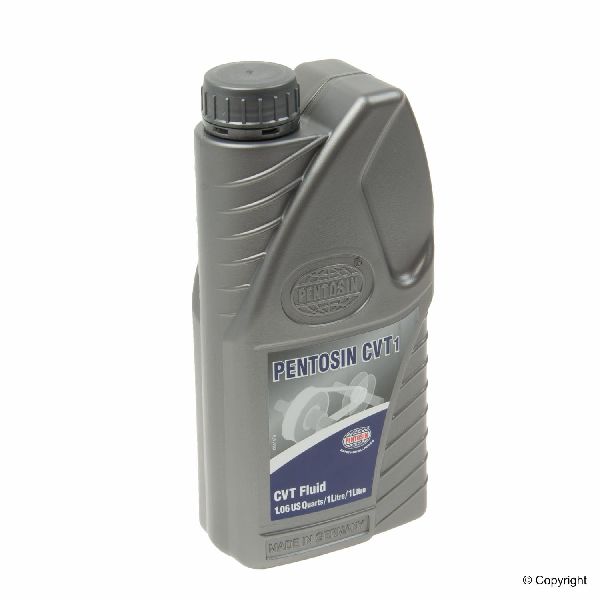
Aftermarket price range: $2200-$4500 - Nissan CVT Fluid NS-3
(OEM #999MP-NS300P)— This specific fluid is required for any service involving the transmission. Using incorrect fluid will cause damage and void warranties.
Trusted brands: Nissan (OEM)
OEM price range: $20-$30 per quart
Related Codes That Often Appear With This One
- P0741 — Also relates to the Torque Converter Clutch, indicating a performance issue or being stuck off. It is listed in the same TSBs.
- P0841 — Indicates a fault with the transmission fluid pressure sensor, which is often linked to the same internal hydraulic issues and is part of the same TSB group.
- P17F2 — A manufacturer-specific code for CVT Judder, pointing directly to an internal transmission problem related to the torque converter.
- P2857, P2858, P2859, P285A — These codes are related to clutch pressure control solenoids within the CVT and are often triggered along with P0744, as noted in Nissan TSB NTB19-040c.
Technical Service Bulletins (TSBs) & Recalls
- NTB19-040c: The key document that lists P0744 and provides a specific repair flow chart for 2020 Versa and 2018-2020 Kicks. The procedure involves inspecting the CVT belt to decide whether to replace the valve body or the entire transmission assembly.
- NTB19-040H: A later, superseded bulletin. Its final version directs technicians with a P0744 code to refer to the vehicle's main Electronic Service Manual (ESM) for diagnostic procedures, indicating the issue is well-documented in standard factory repair info.
Platform-Specific Known Issues
- Nissan TSB NTB19-040c Diagnostic Procedure: This TSB is the primary guide for this issue. It directs technicians to inspect the CVT belt. If the belt is fine, the valve body is replaced. If the belt is damaged, the entire CVT is replaced. This confirms the two main failure paths.
- Highway Driving Trigger: A common owner complaint is that the transmission works fine in the city but goes into a limp/fail-safe mode after 20-30 minutes of sustained highway speeds (e.g., 70 MPH). The issue often clears after the vehicle is shut off and restarted, pointing to a potential thermal or hydraulic pressure control issue that gets reset.
- Factory Defects: Some repair sites note that certain CVT transmissions on 2020 Versa and 2018-2020 Kicks models may have been defective from the factory, leading to premature failure and this code.
Mechanic-Grade Diagnostic Values
- Torque Converter Clutch (TCC) Solenoid Resistance — expected: Approximately 6.1 Ω at 20°C (68°F), 6.9 Ω at 50°C (122°F), or 7.7 Ω at 80°C (176°F).. Failure: Resistance is significantly higher, lower, or shows an open circuit.
- Line Pressure Solenoid 'A' Resistance (for context) — expected: Approximately 5.3 Ω at 20°C (68°F).. Failure: A significantly higher reading (e.g., over 10 Ω) or an open circuit.
Scan Tool Commands That Help
- Nissan CONSULT-II / CONSULT-III plus: DTC WORK SUPPORT > TCC SN FNCTN P0744 — This is a specific self-test function within the dealer scan tool used to confirm if the mechanical malfunction that triggers P0744 is present as part of the DTC confirmation procedure.
- Nissan CONSULT-III plus: Clutch Point Learning — This relearn procedure is required after replacing the control valve (valve body) or the TCM to calibrate the new components.
- Nissan CONSULT-III plus: Save/Write Calibration Data — This function is required when replacing the entire CVT assembly or the TCM. It saves the unique calibration data from the old unit and writes it to the new one to ensure proper operation.
OEM Part Supersession History
31705-50X5A, 31705-50X5B→31705-50X5C— Part revision and improvement by the manufacturer.
Heads up: The newest part number (31705-50X5C) should always be used for replacement.31020-50X1A→31020-50X5A— Part revision and improvement for the complete CVT assembly.
Heads up: The newer part number (31020-50X5A) is the correct replacement for the 2020-2021 Versa.
Helpful Videos


We Have This Part in Stock

The information in this article is provided for general reference and educational purposes only. Vehicle specifications, procedures, and part compatibility can vary by production date, trim level, and region. Always consult your vehicle's factory service manual and verify part numbers before purchasing or performing repairs. Safety-critical components such as airbags, seat belts, and braking systems should be installed by a qualified professional.
- Nissan VERSA:
- 🧭 Diagnostic Flowchart
- 🎬 Helpful Videos
- 🛍️ Shop This Part
- What's Unique About the 2020-2021 Nissan VERSA
- Symptoms You May Notice
- Most Likely Causes
- Rare But Worth Checking
- Diagnosis Steps
- Parts You'll Likely Need
- Related Codes That Often Appear With This One
- Technical Service Bulletins (TSBs) & Recalls
- Platform-Specific Known Issues
- Mechanic-Grade Diagnostic Values
- Scan Tool Commands That Help
- OEM Part Supersession History
- 🎟️ Get 5% Off