

P0747 on 2018-2020 Chevrolet Equinox: Pressure Control Solenoid 'A' Stuck On Causes & Fixes
P0747 on a 2018-2020 Equinox indicates the Pressure Control Solenoid 'A' is stuck on, causing severe shifting issues. This code rarely points to a bad solenoid; it is almost always a symptom of a larger problem. The most common causes are internal mechanical failures, such as a broken or out-of-round clutch snap ring (TSB N202321840, PIP5974E), a faulty Body Control Module (BCM) creating a false code on startup (TSB PIP5697 series), or a worn valve body (TSB 24-NA-088). Proper diagnosis is cruci
- P0747 on a 2018-2020 Equinox is a critical code that can cause the vehicle to become immobile and should be addressed immediately.
- Do not assume the solenoid is bad. There are multiple documented TSBs pointing to other specific causes like a manufacturing defect (retaining ring) or an electrical fault (BCM/wiring).
- Diagnosis must differentiate between a true hydraulic/mechanical fault and a false code set by the BCM during engine start/stop.
- Due to the complexity and the need for specialized tools and internal inspection, this repair is strongly recommended for a professional technician familiar with GM transmissions.
What's Unique About the 2018-2020 Chevrolet EQUINOX
For the third-generation Equinox and its relatives using the 9T45/9T50 transmission, code P0747 is a complex diagnostic challenge. It is rarely a simple 'replace the solenoid' issue. Chevrolet has issued multiple Technical Service Bulletins (TSBs) pointing to three distinct, major problems. The first is a widespread manufacturing/design issue with the 1-2-3-4-5-6 clutch retaining rings (snap rings) which can be improperly seated, out-of-round, or broken, requiring transmission disassembly to fix (TSB #N202321840, #PIP5974E). [N202321840] The second is a well-documented electrical glitch where the Body Control Module (BCM) fails to keep the TCM powered during its shutdown self-test, triggering a false P0747 code on the next startup with no actual transmission fault present (TSB #PIP5697 series). [PIP5697B, PIP5697E] A third documented failure is a worn transmission valve body, which can cause the code and a default to 5th gear (TSB 24-NA-088). These known, distinct failure modes make shotgunning parts a costly mistake.
Diagnostic Flowchart
Tap your situation to follow the diagnostic path that matches what you're seeing on this vehicle.
Symptoms You May Notice
- Vehicle will not move when placed in Drive, Neutral, or Reverse. [PIE0720A, PIE0720]
- Extremely harsh or violent gear shifts, feeling like the transmission 'slams' into gear.
- Check Engine Light or other transmission warning lamp is illuminated. [N202321840]
- Delayed engagement when shifting from Park into a driving gear.
- Transmission may feel stuck in one gear (often 5th gear) or enter 'limp mode'.
- Slipping during acceleration, where engine RPMs rise without a corresponding increase in speed.
- Engine stalls when coming to a stop.
- Replacing the Pressure Control Solenoid 'A' when the true cause is a broken internal snap ring, a faulty BCM, or a worn valve body.
- Replacing the entire transmission when the root cause is the BCM/wiring issue described in TSBs #PIP5697B/E, which is an external electrical repair.
- Replacing the valve body or transmission when the fluid is clean and the code only sets on startup (strong indicator of the BCM issue).
Most Likely Causes
- Improperly Seated, Out-of-Round, or Broken Clutch Snap/Retaining Ring 🔴 High Probability This is a documented manufacturing and design issue for the GM 9TXX transmission family. TSB #N202321840 addresses rings that were not fully seated from the factory, causing failures at low mileage. [N202321840] TSB #PIP5974E addresses rings for the 1-2-3-4-5-6 clutch that are out-of-round, causing a loss of clutch pressure. TSB #PIE0720 suggests a broken return spring can also be a cause. [PIE0720A, PIE0720]
How to confirm: A complete transmission teardown and physical inspection of the 1-2-3-4-5-6 clutch pack components is required. This is the last step after ruling out other causes.
Typical fix: The transmission must be removed and disassembled to replace the affected clutch retaining rings, springs, and any collateral damaged components (clutch plates, piston housing). In many cases, a full transmission rebuild or replacement is the most practical repair.
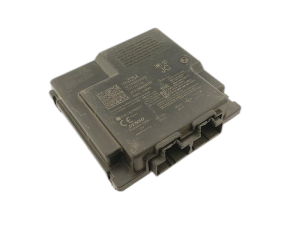
Est. part cost: $100-$500 (for internal rebuild components) or $3000-$5000+ (for a replacement transmission) - Body Control Module (BCM) or Wiring Circuit Fault 🟡 Medium Probability → Shop Body Control Module TSBs #PIP5697B and #PIP5697E detail a specific failure where the BCM fails to supply voltage to the TCM for ~15 seconds after ignition off. This interrupts the TCM's power-down solenoid test, causing a false P0747 to be set on the next engine crank. [PIP5697B, PIP5697E] The fault is often in the BCM itself or the GMLAN communication enable circuit (5985). [PIP5697E]
How to confirm: This is diagnosed by observing if the code only appears at engine start-up and was not present before shutdown. The specific diagnostic in TSB #PIP5697E involves checking voltage at BCM connector X4, terminal 22, after turning the key off. Voltage must remain for at least 15 seconds. [PIP5697E]
Typical fix: Inspect and repair circuit 5985 between the BCM and TCM. If the circuit is intact, the BCM is faulty and must be replaced and reprogrammed. [PIP5697E]
Est. part cost: $300-$700 (for a new BCM) - Worn Transmission Valve Body 🟡 Medium Probability → Shop Transmission Valve Body TSB 24-NA-088, released in May 2024, identifies a failed control valve body as a likely cause for P0747, especially if the transmission defaults to 5th gear. Wear in the valve body bores, particularly the feed limit valves, can cause pressure loss that mimics a stuck solenoid.
How to confirm: Diagnosis per TSB 24-NA-088. If the transmission fluid is clean and red with no burnt odor or excessive material, the valve body is the likely suspect. If the fluid is dark, burnt, or full of debris, it indicates a deeper mechanical failure (like the snap ring).
Typical fix: If the fluid is clean, replace the transmission control valve body. If the fluid is contaminated, the transmission must be disassembled for inspection and repair in addition to valve body replacement.
Est. part cost: $800-$1500 (for an OEM valve body) - Faulty Pressure Control Solenoid 'A' Very low Probability → Shop Transmission Valve Body While this is the component named in the code, experts and repair data for this transmission show that the solenoid itself is robust and rarely the actual point of failure. It is almost always a symptom of a mechanical, hydraulic (valve body), or external electrical (BCM) problem.
How to confirm: After all other TSB-related causes are ruled out, the solenoid can be tested. Use a bi-directional scan tool to command the solenoid on and off while monitoring pressure data. An electrical test of the solenoid's resistance can also be performed.
Typical fix: Replace the Pressure Control Solenoid 'A'. This should only be done after definitively ruling out the more common snap ring, BCM, and valve body issues.
Est. part cost: $50-$150
Rare But Worth Checking
- Faulty Transmission Control Module (TCM): → Shop Transmission Assembly While rare, the TCM itself can fail, sending an incorrect signal to the solenoid. This is usually diagnosed after all other possibilities, including the complex BCM handshake issue, have been eliminated.
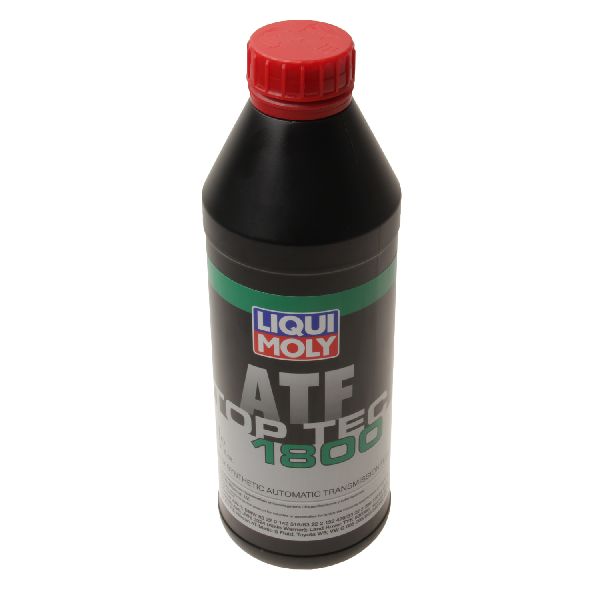
- Low or Contaminated Transmission Fluid: → Shop Transmission Assembly While listed as a generic cause, on this platform, contaminated fluid is more of a *symptom* of the snap ring failure than a root cause. If the fluid is low, it indicates a leak that must be addressed. If it is dark and full of material, it confirms a major internal failure.
Diagnosis Steps
- Scan for all codes in the TCM and BCM. Note the exact conditions under which the code sets. Does it only appear after engine start-up? (Points to BCM issue per TSB #PIP5697 series). [PIP5697B, PIP5697E]
- Check vehicle history and mileage. Is the vehicle low mileage? (Points to manufacturing defect TSB #N202321840). [N202321840]
- Inspect the transmission fluid level and condition. This is a critical decision point. Per TSB 24-NA-088: - Clean, red fluid: Suspect the valve body. Proceed with valve body diagnostics. - Dark, burnt fluid with debris: Suspect a major internal mechanical failure (e.g., snap ring). The transmission will need to be removed and disassembled for inspection.
- If the code was set during cranking/shutdown, follow the diagnostic procedure in TSB #PIP5697E. Check for sustained voltage on BCM connector X4, terminal 22 for at least 15 seconds after key-off. [PIP5697E]
- If the fluid is clean but valve body replacement is suspected, use a professional scan tool to monitor solenoid commands and line pressure response to confirm a hydraulic control fault.
- If the fluid indicates internal damage, the transmission must be removed and disassembled. Inspect the 1-2-3-4-5-6 clutch pack for broken or out-of-round snap rings and a broken return spring, per TSBs #N202321840 and #PIP5974E.
- Only consider replacing the solenoid itself if all other mechanical, hydraulic, and external electrical causes have been definitively ruled out.
Parts You'll Likely Need
- Transmission Rebuild Kit or Replacement Transmission — Required if diagnosis points to the common internal mechanical failure of the clutch snap/retaining rings. A full replacement is often more cost-effective than a teardown and rebuild.
Trusted brands: ACDelco (OEM Remanufactured)
OEM price range: $3000-$5000+
Aftermarket price range: $2500-$4500 - Body Control Module (BCM) — Required if diagnosis confirms the specific electrical fault scenario described in TSBs #PIP5697B/E, where the BCM fails to keep the TCM powered during its shutdown self-test.
Trusted brands: ACDelco (OEM)
OEM price range: $300-$700 - Transmission Control Valve Body Assembly
(OEM #24043134)— This is the likely cause if the transmission fluid is clean but the vehicle exhibits symptoms like defaulting to 5th gear, as outlined in TSB 24-NA-088.
Trusted brands: ACDelco (OEM)
OEM price range: $800-$1500
Aftermarket price range: $600-$1200
Related Codes That Often Appear With This One
- P0746 — This code is for 'Pressure Control Solenoid 'A' Stuck Off'. TSBs #PIE0720, #PIE0720A, and #PIP5974E list P0746 and P0747 together. [PIE0720A] They point to the same hydraulic circuit (1-2-3-4-5-6 clutch) and underlying mechanical failures, which can manifest as the solenoid being stuck on or off.
Technical Service Bulletins (TSBs) & Recalls
- N202321840: Addresses a clutch spring retaining ring that may not be fully seated, causing P0747 at low mileage.
- PIP5697E: Details the diagnostic procedure for a false P0747 caused by a BCM/wiring fault during engine shutdown/startup.
- PIE0720A: An engineering investigation to gather data on vehicles with P0746/P0747 and a no-move condition, often linked to broken internal springs.
- PIP5974E: Points to out-of-round 1-2-3-4-5-6 clutch snap rings as a cause for P0746 or P0747.
- 24-NA-088: Provides diagnostics for a failed transmission control valve body as the cause for P0747, with guidance based on fluid condition.
Platform-Specific Known Issues
- A known manufacturing defect where a clutch spring retaining ring may not be fully seated can cause P0747 at low mileage (TSB #N202321840).
- A potential BCM or wiring circuit (5985) fault can trigger a false P0747 code during engine cranking or shutdown when no actual transmission hydraulic or mechanical issue exists (TSBs #PIP5697B, #PIP5697E).
- GM has initiated engineering investigations for vehicles that will not move and set codes P0746/P0747, indicating this is a known area of concern (TSBs #PIE0720, #PIE0720A).
- Out-of-round 1-2-3-4-5-6 clutch snap rings are a documented cause of P0747, requiring transmission disassembly (TSB #PIP5974E).
- A failed control valve body can be the cause if the transmission defaults to 5th gear and the fluid is still in good condition (TSB 24-NA-088).
Mechanic-Grade Diagnostic Values
- Control Solenoid Resistance — expected: 5.0 - 5.4 Ω. Failure: A reading outside of this range indicates a faulty solenoid coil.
- Transmission Fluid Temperature (TFT) for Level Check — expected: 85-95°C (185-203°F). Failure: Checking the fluid level outside this temperature range will result in an incorrect reading (under-filled if too hot, over-filled if too cold), which can cause shifting problems.
- BCM Voltage to TCM after Key-Off — expected: Battery voltage should be present for at least 15 seconds after the ignition is turned off.. Failure: If voltage drops out immediately, it confirms the BCM is not keeping the TCM powered for its shutdown self-test, triggering a false P0747 on the next startup.
Scan Tool Commands That Help
- GDS2 (or equivalent professional scanner): Transmission Service Fast Learn — This procedure is required after replacing the transmission, valve body, or TCM, or after a software update. It allows the TCM to learn the hydraulic characteristics of the clutches and solenoids. Failure to perform this can result in poor shift quality even after a successful repair.
- GDS2 (or equivalent professional scanner): Solenoid Valve Control — This bidirectional test allows a technician to command each pressure control solenoid on and off while monitoring transmission pressure data. It helps isolate a stuck solenoid or a hydraulic circuit issue without disassembly, but should be used after ruling out the more common BCM and snap ring faults.
Wiring & Ground Locations
- BCM Connector X4, Pin 22 — The Body Control Module (BCM) is located in the center console, accessible from the front passenger side. Connector X4 is a blue 27-pin plug.. This is the specific pin for Circuit 5985, the 'Serial Data Wake-Up Signal'. TSB #PIP5697E requires checking for sustained voltage at this pin for 15 seconds after key-off to diagnose the false code issue. A wiring diagram confirms this pin's function.
- Circuit 5985 — This is the GMLAN Communication Enable circuit that runs between the Body Control Module (BCM) and the Transmission Control Module (TCM).. A fault in this circuit can cause the BCM to fail to keep the TCM powered during its shutdown test, leading to a false P0747 code as described in TSB #PIP5697E. [PIP5697E, 19]
- Main Engine/Transmission Grounds (e.g., G101, G103, G105) — Key ground points are typically located on the engine block, near the front of the engine compartment, and on the chassis frame rails. For example, G101 is often at the left front of the engine compartment.. Poor ground connections can cause erratic behavior in electronic modules, including the BCM and TCM. While not a primary cause listed in TSBs for P0747, checking and cleaning main grounds is a crucial step when diagnosing any complex electrical issue.
Real Owner Repair Stories
- Chevy Equinox Forum user (2018 Chevrolet Equinox) — Random, oddball electrical gremlins and problems.
❌ Tried (didn't work) Initial battery test showed the battery was 'good'.
✅ What actually fixed it Six months after the initial problems started, the battery tested bad. Replacing the battery resolved all the random electrical issues.
OEM Part Supersession History
Unknown→24043134— This is a current OEM part number for the complete valve body assembly for the 9T45/9T50 transmission.
Heads up: There are versions with and without ETRS (Electronic Transmission Range Selection). Ensure the correct version is ordered for the specific vehicle.
Helpful Videos


Used OEM Parts in Stock
New Aftermarket Parts Available

The information in this article is provided for general reference and educational purposes only. Vehicle specifications, procedures, and part compatibility can vary by production date, trim level, and region. Always consult your vehicle's factory service manual and verify part numbers before purchasing or performing repairs. Safety-critical components such as airbags, seat belts, and braking systems should be installed by a qualified professional.
- Chevrolet EQUINOX:
- 🧭 Diagnostic Flowchart
- 🎬 Helpful Videos
- 🛍️ Shop This Part
- What's Unique About the 2018-2020 Chevrolet EQUINOX
- Symptoms You May Notice
- Most Likely Causes
- Rare But Worth Checking
- Diagnosis Steps
- Parts You'll Likely Need
- Related Codes That Often Appear With This One
- Technical Service Bulletins (TSBs) & Recalls
- Platform-Specific Known Issues
- Mechanic-Grade Diagnostic Values
- Scan Tool Commands That Help
- Wiring & Ground Locations
- Real Owner Repair Stories
- OEM Part Supersession History
- 🎟️ Get 5% Off